 flip
flipOlives and Cheese in Must for the Road (Travel Epityrum)
Olives and Cheese in Must for the Road (Travel Epityrum)
Why this dish? Theodosius II moved his court and envoys between Constantinople, Antioch, and Jerusalem; these imperial relay stations required provisions that traveled well. Crushed olives and cheese preserved in oil and vinegar were the road snack of Byzantine elites.
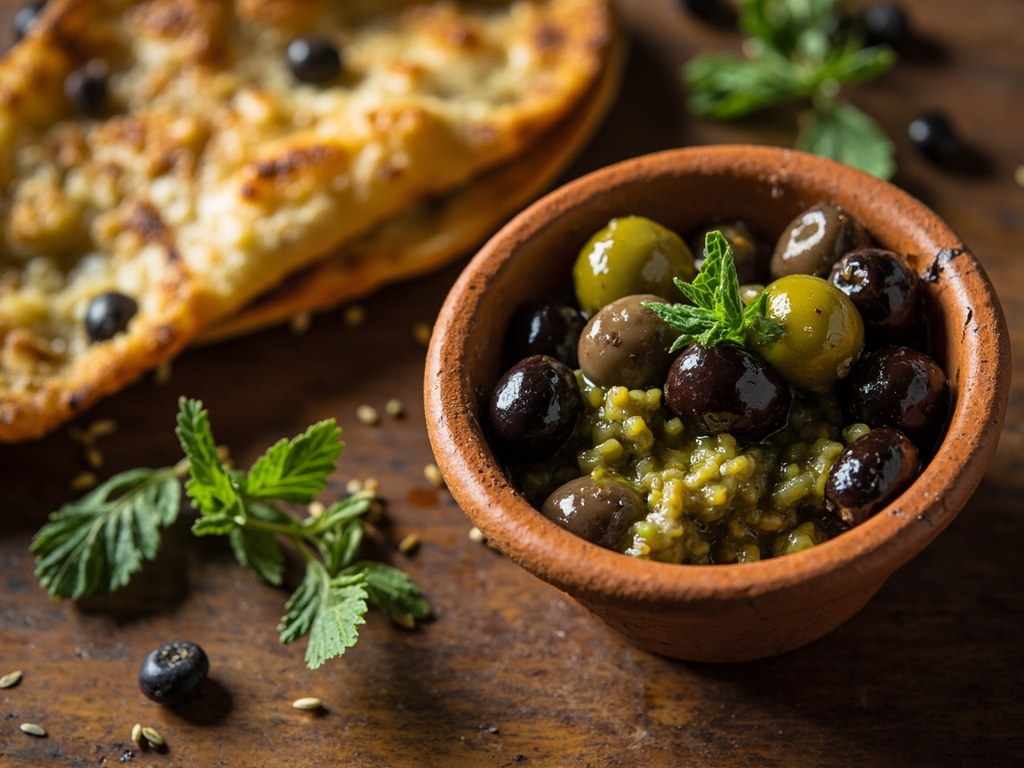
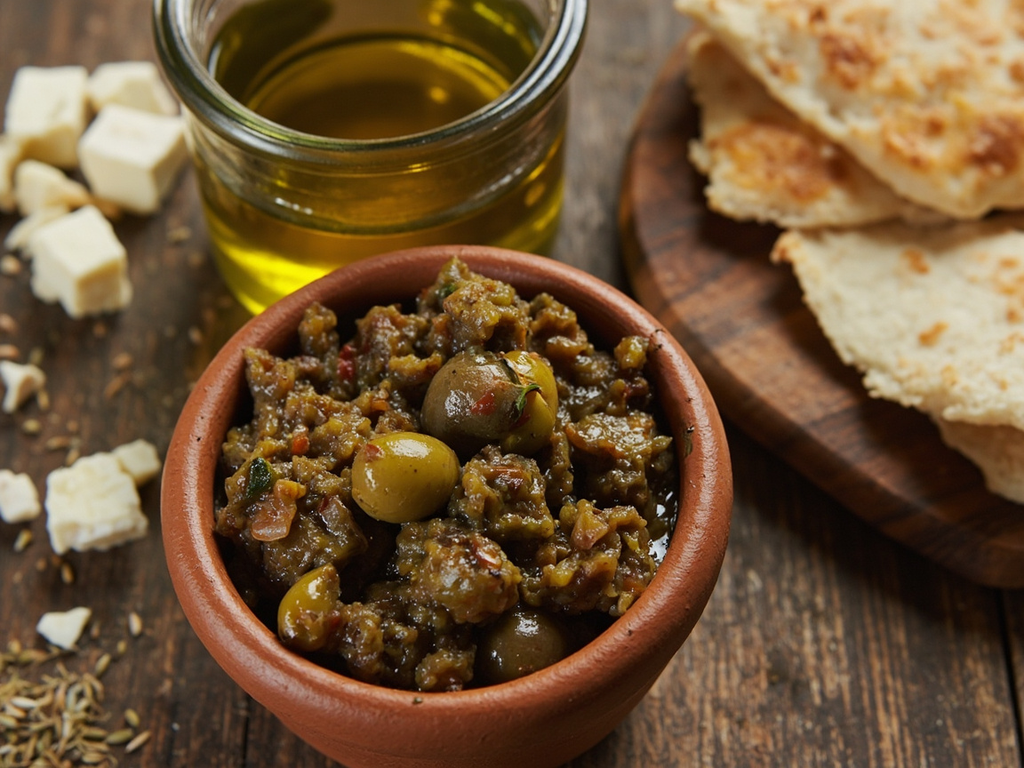
A rustic tapenade of olives, herbs, and spices, accompanied by cheese preserved in oil — food that keeps and transports, perfect for the long roads of the Empire.
When my messengers depart for Antioch or the Holy City, they are not sent away with empty stomachs. Epityrum is prepared for them: olives pounded in a mortar with rue, cumin, and fennel, bound with oil and vinegar, in a sealed pot that defies the days of travel. A piece of cheese kept in oil, a hunk of bread, and there is the meal of a man who carries my word across the Empire. The road is long, stranger; eat what lasts.
- •Olives (green and black) — two handfuls (base)
- •Olive oil — to cover (preservation)
- •Wine vinegar — a dash (preservative acidity)
- •Cumin, fennel, coriander — a pinch (spices)
- •Rue and mint — a little (herbs)
- •Dry ewe's cheese — a piece (preserved protein)
Olives and Cheese in Must for the Road (Travel Epityrum)
A rustic tapenade of olives, herbs, and spices, accompanied by cheese preserved in oil — food that keeps and transports, perfect for the long roads of the Empire.
Why this dish? Theodosius II moved his court and envoys between Constantinople, Antioch, and Jerusalem; these imperial relay stations required provisions that traveled well. Crushed olives and cheese preserved in oil and vinegar were the road snack of Byzantine elites.
When my messengers depart for Antioch or the Holy City, they are not sent away with empty stomachs. Epityrum is prepared for them: olives pounded in a mortar with rue, cumin, and fennel, bound with oil and vinegar, in a sealed pot that defies the days of travel. A piece of cheese kept in oil, a hunk of bread, and there is the meal of a man who carries my word across the Empire. The road is long, stranger; eat what lasts.
Ingredients (period version)
- Olives (green and black) — two handfuls (base)
- Olive oil — to cover (preservation)
- Wine vinegar — a dash (preservative acidity)
- Cumin, fennel, coriander — a pinch (spices)
- Rue and mint — a little (herbs)
- Dry ewe's cheese — a piece (preserved protein)
Ingredients
- Pitted olives (mix green/black) — 200 g (base)
- Extra virgin olive oil — 6 tbsp + enough to cover cheese (preservation)
- Wine vinegar — 1 tbsp (preservative acidity)
- Ground cumin, fennel, coriander — 1/2 tsp each (spices)
- Dried mint — 1 tsp (herb)
- Feta or dry pecorino — 200 g in cubes (preserved protein)
Method
- Roughly pound the olives in a mortar (or chop with a knife) with the spices and mint.
- Bind with oil and vinegar to obtain a rustic paste: this is the epityrum.
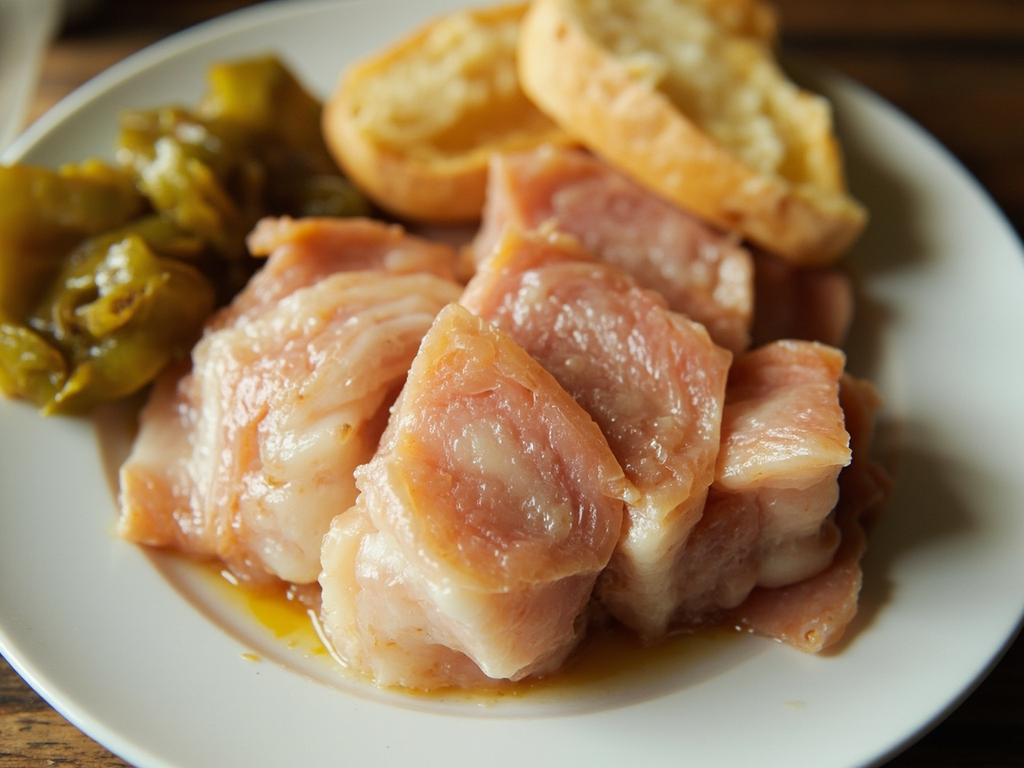
- Place the cheese cubes in a clean jar and cover completely with olive oil.
- Store both preparations in a cool place; they keep for several days.
- Serve on bread, with the cheese drained of its oil alongside the olive paste.
How it was made : Epityrum (olives pounded with herbs and vinegar) is described as early as Cato; preserving cheese and olives in oil was the ancient method to make them last on journeys. Without refrigeration, salt, oil, and vinegar were the only defenses against spoilage, essential on long imperial roads.
The contemporary twist : Served in a meze bowl with a drizzle of fresh oil and toasted fennel seeds, this travel provision becomes a contemporary Mediterranean appetizer.
Sources : Cato the Elder, De agricultura (recipe for epityrum) · A. Dalby, Flavours of Byzantium (2003)
Theodosius · Charactorium