 flip
flipChicken Fricassée à la française
Chicken Fricassée à la française
Why this dish? At the salon dinners where Voltaire shone with his conversation, the "French-style" dishes of the 18th century dominated: poultry in white sauce, bound with egg yolk and sharpened with a dash of verjuice. The chicken fricassée is the emblematic dish of this refined social table that the writer frequented.
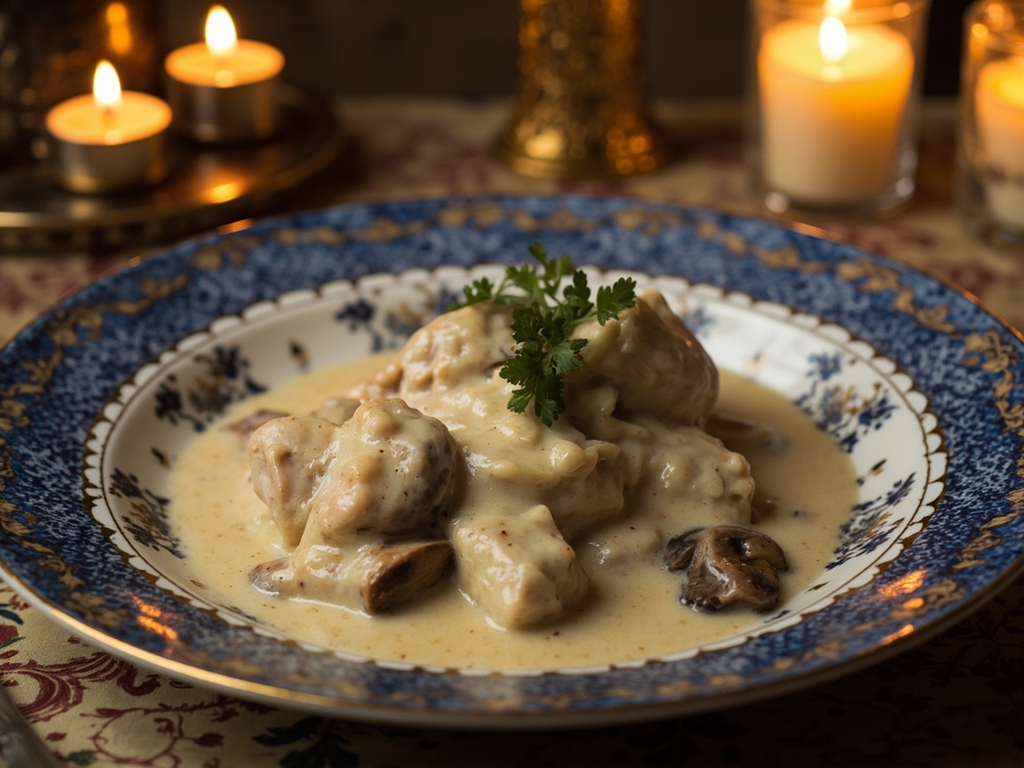
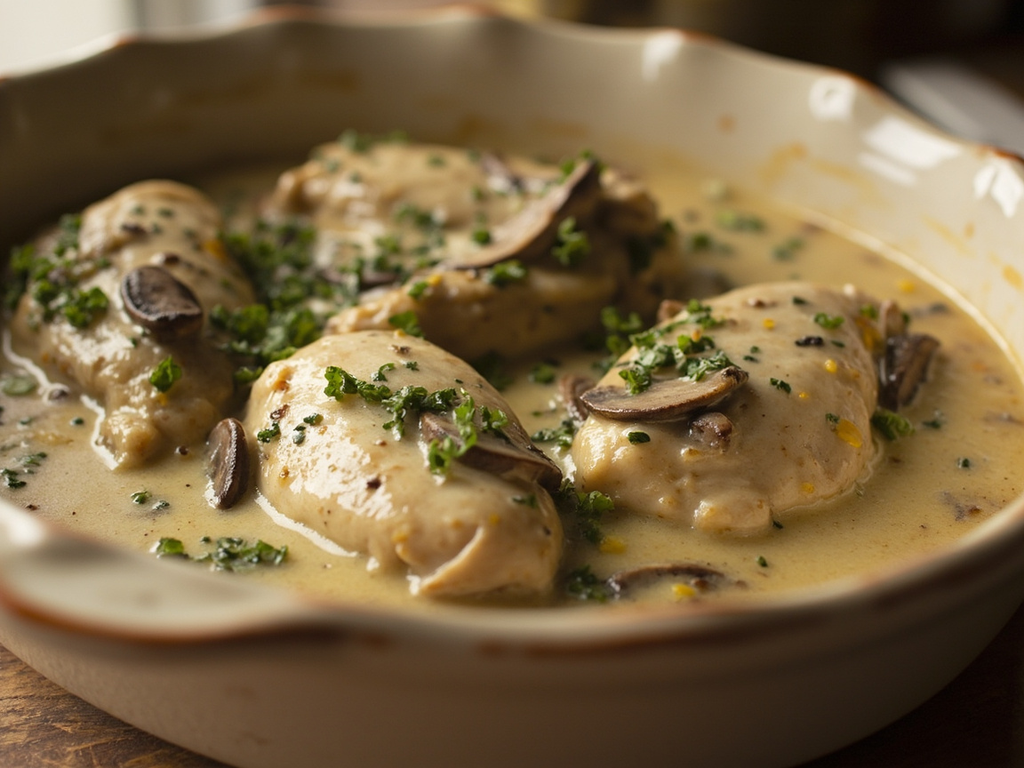
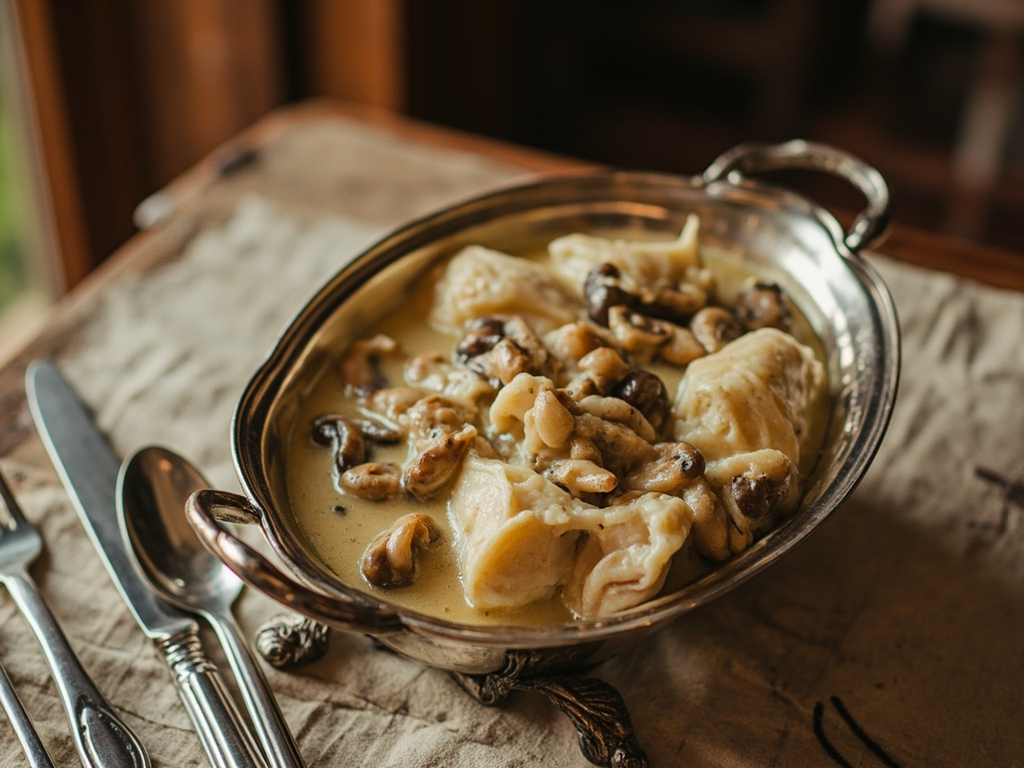
Chicken pieces simmered in a velvety white sauce, mounted with butter and bound with egg yolks, scented with mushrooms and a touch of acidity. A creamy gentleness of high cuisine.
I am reproached for loving society, and it is true that a good supper where wit sparkles is worth ten sermons. At these tables, one serves fricassée as one serves a bon mot: white, fine, not too loaded with coarse spices that mask everything. The secret, I confide to you, lies in the binding: one removes the saucepan from the fire before mixing in the beaten yolks, otherwise the sauce turns like a cabal. A hint of verjuice to awaken the palate, and there is a dish worthy of a conversation among honest people.
- •Young chicken — one, in pieces (meat)
- •Fresh butter — a good lump (fat, binding)
- •Wheat flour — a pinch (thickener)
- •Mushrooms (cultivated) — a handful (garnish, umami)
- •Egg yolks — two or three (sauce binder)
- •Verjuice (or lemon juice) — a dash (acidity)
- •Poultry broth — as needed (liquid)
- •Nutmeg, salt, white pepper — moderately (seasoning)
Chicken Fricassée à la française
Chicken pieces simmered in a velvety white sauce, mounted with butter and bound with egg yolks, scented with mushrooms and a touch of acidity. A creamy gentleness of high cuisine.
Why this dish? At the salon dinners where Voltaire shone with his conversation, the "French-style" dishes of the 18th century dominated: poultry in white sauce, bound with egg yolk and sharpened with a dash of verjuice. The chicken fricassée is the emblematic dish of this refined social table that the writer frequented.
I am reproached for loving society, and it is true that a good supper where wit sparkles is worth ten sermons. At these tables, one serves fricassée as one serves a bon mot: white, fine, not too loaded with coarse spices that mask everything. The secret, I confide to you, lies in the binding: one removes the saucepan from the fire before mixing in the beaten yolks, otherwise the sauce turns like a cabal. A hint of verjuice to awaken the palate, and there is a dish worthy of a conversation among honest people.
Ingredients (period version)
- Young chicken — one, in pieces (meat)
- Fresh butter — a good lump (fat, binding)
- Wheat flour — a pinch (thickener)
- Mushrooms (cultivated) — a handful (garnish, umami)
- Egg yolks — two or three (sauce binder)
- Verjuice (or lemon juice) — a dash (acidity)
- Poultry broth — as needed (liquid)
- Nutmeg, salt, white pepper — moderately (seasoning)
Ingredients
- Farm chicken thighs and breasts — 1 kg, in pieces (meat)
- Butter — 60 g (fat)
- Flour — 30 g (thickener)
- Button mushrooms — 250 g (umami garnish)
- Egg yolks — 3 (binder)
- Poultry broth — 50 cl (liquid)
- Crème fraîche — 10 cl (creaminess)
- Lemon juice or verjuice — 1 tbsp (acidity)
- Nutmeg, salt, white pepper — to taste (seasoning)
Method
- Gently sauté the chicken pieces in butter without browning (white sauce requires it).
- Sprinkle with flour, stir for one minute, then gradually moisten with hot broth.
- Add sliced mushrooms, season with salt, white pepper and nutmeg, and let simmer covered for 30 to 35 minutes.
- Beat the egg yolks with the cream and lemon juice in a bowl.
- Off the heat, incorporate this mixture into the sauce while stirring vigorously, then reheat very gently without boiling so the sauce coats without curdling.
- Serve immediately, very hot.
How it was made : The fricassée appears in all major 18th-century cookbooks, including Menon's La Cuisinière bourgeoise (1746). Refined cuisine of the time favored finely bound white sauces and moderate use of spices — a break from highly spiced medieval cuisine. Verjuice (green grape juice) remained the preferred acidulant before the widespread use of lemon.
The contemporary twist : A touch of fresh tarragon snipped at the last moment and serving in individual cocottes for the family table.
Sources : Menon, La Cuisinière bourgeoise (1746) · François Marin, Les Dons de Comus (1739)
Voltaire · Charactorium