Imaginary dialogue between Hermóðr and Baldr
by Charactorium · Baldr · Mythology · 6 min read
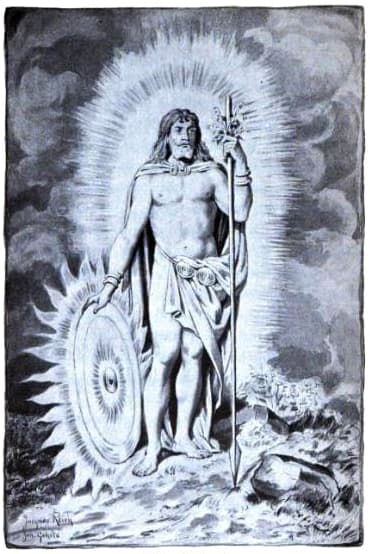
It is on the misty shores of Hel, where the river roars beneath the bridge Gjallarbrú guarded by the giantess Móðguðr, that Hermóðr finds his brother. He has ridden nine nights on Sleipnir through valleys so deep that no daylight penetrates, and the ring Draupnir still gleams on his finger. Baldr waits in a brightness that does not belong to this realm of the dead, seated at the seat of honor that Hel has reserved for him. The two brothers have known each other since the dawn of the Æsir, and Hermóðr comes seeking less a god than a brother to bring back among the living.
—My brother, you who shone in Asgard, how could a sprig of mistletoe fell the one whom nothing could wound?
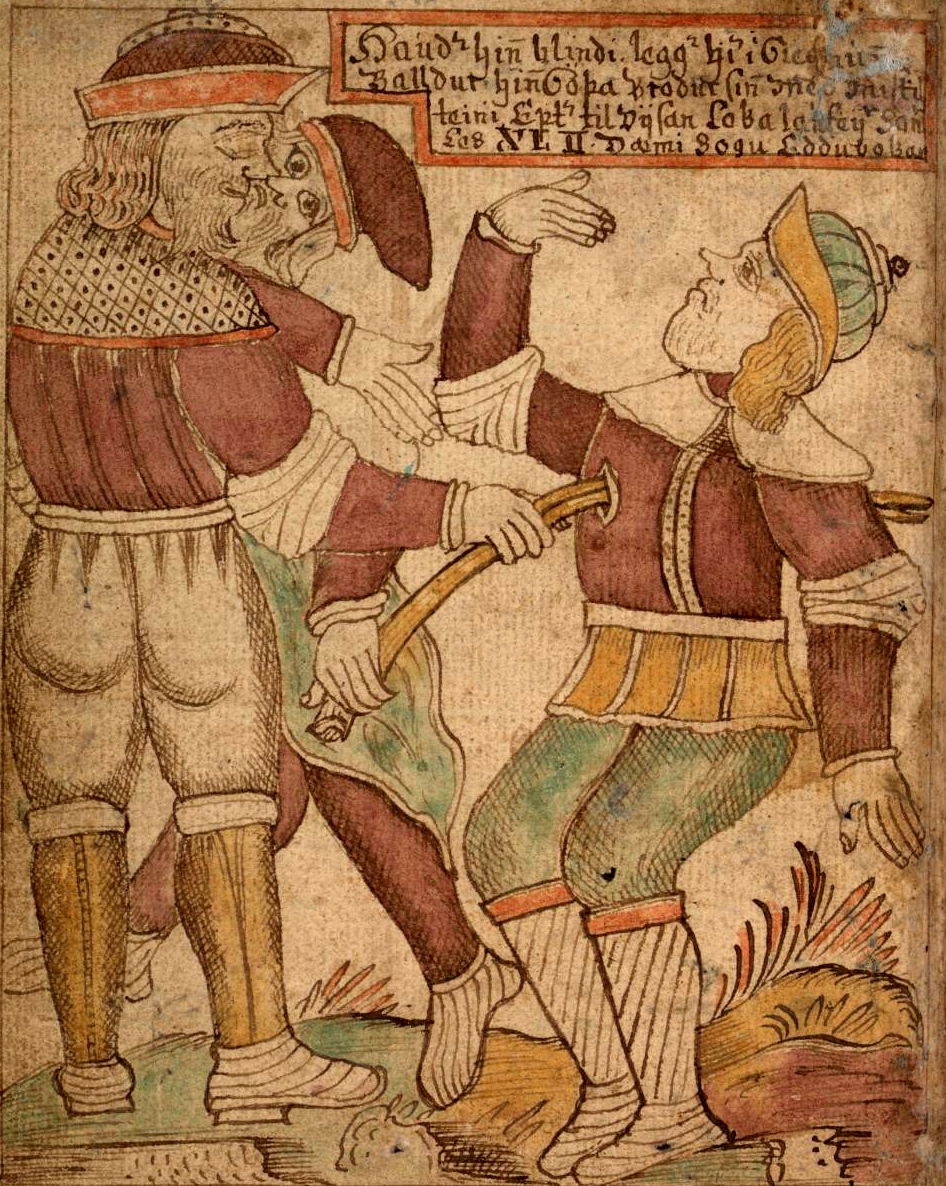
You remember, Hermóðr, the games we played in the fields of Asgard: the gods threw spears, stones, and swords at me, and everything ricocheted without touching me. Our mother Frigg had traveled the entire world, extracting from every being, every plant, every metal the oath never to harm me. But she deemed the mistletoe too young, too tender, unworthy of an oath — and that oversight was my undoing. It was that despised sprig that Loki carved into a dart, that he slipped into the hand of blind Höðr, guiding his arm. What seemed most harmless proved the surest weapon. The Völuspá says it: higher than the plains stood the mistletoe, slender and fair, become a dangerous weapon.
What seemed most harmless proved the surest weapon.
—Before that day, heavy dreams troubled your nights. Father Odin himself was worried enough to act, was he not?
Yes, brother. Night after night, grim omens darkened my dreams, and soon they troubled the feasts of the Æsir as well, who saw the shadow pass over my face. Our father did not merely worry: he mounted his steed himself and descended to the gates of this realm where we speak. There, by seiðr, he awakened a völva long dead, a seeress whose staff commanded the secrets of fate. The Baldrs draumar preserves the memory of that interrogation: she revealed to him that my bed was already prepared here in Hel, and who would strike me. My fate was fixed before the dart ever flew. No oath could undo what prophecy had sealed.
My fate was fixed before the dart ever flew.
—You were called the purest of the Æsir, at Breiðablik. Tell me what it truly meant to bear that light among us.
My dwelling Breiðablik was the brightest in Asgard, with silver walls and a golden roof, and it was said that no unclean thing could cross its threshold. The Edda will confirm it: a light radiated from me, and nothing impure could remain in my presence. Each morning, dressed in white, I presided over the assemblies of the Æsir, listening to complaints and rendering judgments meant to be just and gentle. But to bear the light, brother, is also to be the one believed safe from the night. My very purity made me precious, and therefore coveted by the shadow. The beauty attributed to me was the target Loki aimed at to wound all the gods at once.
To bear the light is to be the one believed safe from the night.
—I saw your funeral with my own eyes before I left: that immense ship, that fire. How did you experience it, you who were being burned?
You were there, Hermóðr, before you set out on my trail. I was carried onto the Hringhorni, the greatest ship in the world, so heavy that the gods could not launch it: they had to summon the giantess Hyrrokkin to move it. Our father placed his ring Draupnir upon it, the one that births nine rings every nine nights — a mourning gift that I have since sent back to him; you will return it to him. The pyre rose, and I left the light for this shore. But Ragnarök is not an end: when gods and giants have perished, when the old world has burned, I will return to rule a renewed earth. My death is only a passage toward that promised morning.
My death is only a passage toward that promised morning.
—You know better than anyone the price I paid to come here. Tell me: what is still needed to bring you back?
I know, brother, the nine nights you rode on Sleipnir through the dark valleys, and the golden bridge you crossed to sit beside me. Hel set her condition, and it is simple to state, impossible to fulfill: that every thing in the world weep for me, living or dead, stone as well as creature. If even one refuses, I remain. Go, carry this word to the Æsir, and let them make the whole world weep. But I fear a trick hidden in some forgotten corner — as the mistletoe was once. Give our father back his ring Draupnir, and tell our mother that I think of her from this shore. The rest is no longer up to us.
Her condition is simple to state, impossible to fulfill.
—And if a single creature refused its tears, my brother? Have you already sensed that the return might elude me?
I have learned, here, to read the silences. It would take only one giantess lurking in a cave, one mouth that said it had never received anything from me, for the door to close again. And you know the one who loves to slip in where he is not expected, taking whatever face he wants. Loki already armed the blind hand; what would stop him from refusing my tears under the guise of an old woman? I do not tell you this to extinguish your hope, brother — your ride will remain one of the finest deeds ever done for me. But my gaze reaches far from this shore, and I see that the whole world might weep, save one. Then I would stay until renewal.
The whole world might weep, save one.
—Höðr, our blind brother, threw the dart without knowing. Do you resent him, you who saw him grow up among us?
No, brother. Höðr saw nothing — neither the mistletoe in his hand, nor the smile of the one guiding his arm. He was the bow, not the archer; the instrument of a trick, not its author. One does not hate the arrow; one seeks the hand that carved it. All the malice belongs to Loki, who discovered the secret of the mistletoe by tricking our mother disguised as an old woman, and who placed the fatal dart in the only hand incapable of seeing its fault. Our father knows this, and his vengeance will take its course as fate demands. Höðr and I, it is said, will meet again reconciled after Ragnarök, on the new earth. The light and the blind, finally seated at the same table.
He was the bow, not the archer.
—Here, in this realm of shadows, you who were all brightness — what remains of your light far from Breiðablik?
Look around you, brother: this shore is the abode of those who die of sickness or accident, not of the warriors of Valhöll. I came here not by the sword but by trickery, and yet Hel has done me great honor, setting for me the highest seat and the clearest mead. My light did not stay at Breiðablik: it accompanies me, more veiled but not extinguished, like an ember under ash. A god of brightness does not cease to be so because he is plunged into night — he only learns how vast the night is. And this brightness I keep here is the very promise I will bring to the morning of the renewed world.
A god of brightness learns, in the night, only how vast it is.
—Those dreams that foretold your end — did you understand them at the time, or did they weigh on you without your knowing?
They weighed at first like a nameless shadow, brother. I would wake with a heavy heart without being able to say what I had seen, and this unease gradually spread to our feasts, until the Asynjur themselves held council. It was the völva awakened by our father who gave a face to my dreams: my imminent death, my bed already prepared beneath this vault. Understanding one's fate does not make it lighter — it only makes it inevitable. I have learned that the dreams of the gods do not lie; they merely precede the facts that the thread of the Norns has already woven. Since then, I no longer fear dreams: I know they only announce what, in any case, must come to pass.
Understanding one's fate does not make it lighter — it makes it inevitable.
—When you speak of this return after the great end, my brother, do you truly believe it, or is it hope that sustains you?
It is not only hope, Hermóðr — it is what the seeress saw, and her word does not fail. After the gods and giants have slain each other at Ragnarök, after the sun has sunk and the earth plunged back beneath the waves, a new, green earth will emerge. And among the survivors, I will be seen returning from this realm where I speak to you, to sit in the rebuilt halls. The ring Draupnir I send back to our father is not a farewell: it is a pledge that nothing is entirely lost. My death today prepares that morning. Go then, brother, try to bring me back now; but if the world refuses me its tears, know that I will await you on the renewed earth.
The ring I send back is not a farewell: it is a pledge that nothing is entirely lost.
Read further
This imaginary interview was generated by artificial intelligence from sources documented in Baldr's profile. It dramatises what the figure might have said based on what we know about them, but does not constitute attested historical testimony. For primary sources and factual documentation, refer to the full profile.