Imaginary interview with Baldr
by Charactorium · Baldr · Mythology · 5 min read
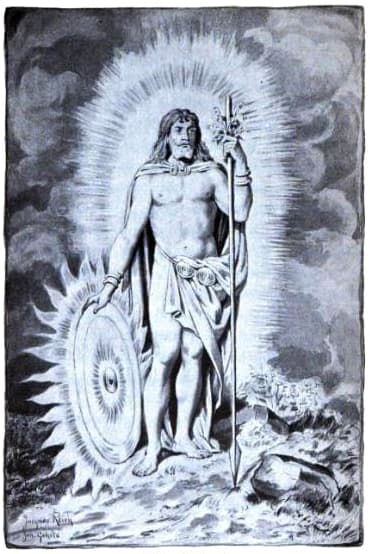
In the hall of Breiðablik, where no lie crosses the threshold, a golden light bathes the silver walls. Baldr, the gentlest of the Æsir, agrees to speak of his already-written fate — that of a god whom death only temporarily removed from the world of the living.
—They say your home is the purest place in Asgard. How would you describe what one feels entering it?
Here, at Breiðablik, the walls are silver and the roof is gold, and nothing defiled can cross its threshold — no lie, no deceit, no troubled thought. The Æsir say a radiance shines from me like a spring, and I believe they are right: I wake each morning wrapped in a light that is not my own, only that which passes through me. My father Odin calls me the most merciful of the gods, the most eloquent too, but these words sometimes weigh on me. For a place where nothing impure enters is also a place that the world's pain cannot reach — and yet it found me.
A place where nothing impure enters is also a place that the world's pain cannot reach.
—Before any tragedy, there were your dreams. What did you see at night, in the sleep of the gods?
Dreams so heavy, so heavy that Asgard's feasts darkened as I recounted them. I did not understand their language, but I felt their weight — like a hand pressed on my chest. My father could not bear this mystery: he mounted Sleipnir and rode eastward to the grave of a völva long dead, whom he awakened with his incantations, with that seiðr he knows better than anyone. The seeress told him what he dreaded: my end was near, and it would be the first sign of Ragnarök, that fate of the gods where all must perish before being reborn. So my dreams were not dreams — it was the future knocking at my door.
My dreams were not dreams — it was the future knocking at my door.
—Your mother supposedly attempted the impossible to protect you. What exactly did she do?
Frigg, my mother, took these dreams as a declaration of war against fate. She traveled the entire world, every realm, every forest, every shore, and made everything swear — fire and water, iron and stone, beasts, snakes, diseases themselves — never to harm me. And the oath was sworn by the entire universe. But she passed by a tender shoot climbing west of Valhöll, the mistletoe, and deemed it too young, too frail to demand a promise from it. An insignificant sprout. You see: it was not hatred that killed me, nor the strength of a giant. It was a mother's tenderness for a plant she thought harmless.
It was not hatred that killed me; it was a mother's tenderness for a plant she thought harmless.
—They say the gods made a game of your invulnerability. How did it go?
Once Frigg's oath was secured, I became for the Æsir a wonder and a pastime. They placed me in the center of the assembly, and they threw at me everything that could wound — spears, swords, stones hurled with full force. Nothing harmed me; the weapons ricocheted, slid, veered away from my skin like water off a rock. The gods laughed, seeing it as an honor paid to me, living proof that the whole world watched over me. I laughed too, I admit. We did not know — or we pretended not to know — that a game built on a single flaw only awaits the hand that knows that flaw to cease being a game.
A game built on a single flaw only awaits the hand that knows that flaw.
—That hand was a blind man's. How was the fatal blow struck?
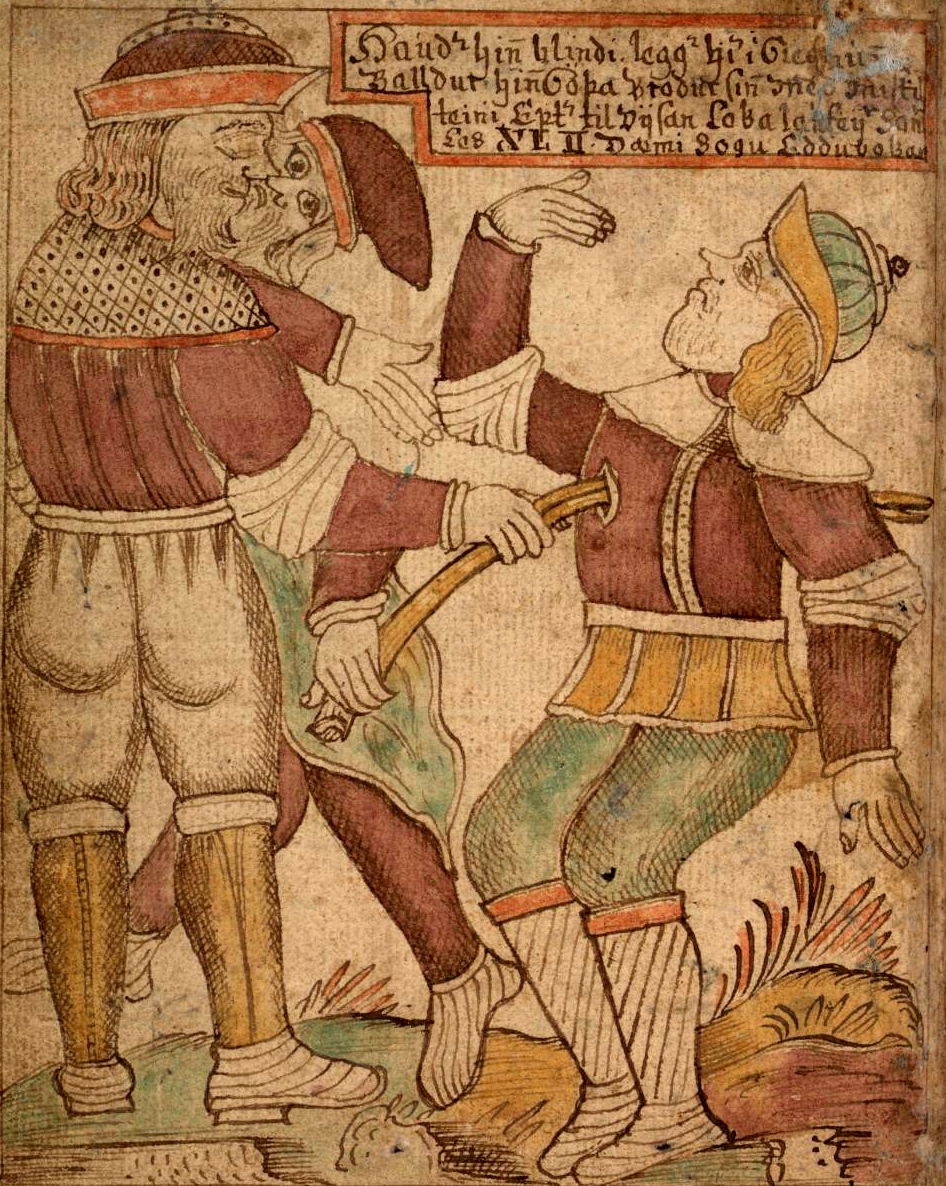
Loki could not bear my light nor the laughter rising toward me. He disguised himself as an old woman and went to my mother, who, unsuspecting, confided the one oversight: the mistletoe, west of Valhöll. From that plant he carved a sharp dart, then approached my brother Höðr, who stood apart from the circle because he was blind and could not aim. 'Do honor to your brother like the others,' Loki whispered, placing the weapon in his hand and guiding his arm. The mistletoe flew. It pierced me. I fell without a cry, and Asgard's laughter turned into a silence the gods had never known — the first mourning of the immortals.
I fell without a cry, and Asgard's laughter turned into the first mourning of the immortals.
—After your death, a god descended to fetch you. Can you tell of that ride?
My brother Hermóðr did not resign himself. My father lent him Sleipnir, that eight-legged horse alone able to cross the worlds, and he rode for nine nights through valleys so deep and dark he could see nothing. He finally reached Gjallarbrú, that golden bridge guarded by the giantess Móðguðr, and crossed it into the realm of Hel, where I now sat in the seat of honor. The goddess of the dead set her condition: that everything in the world, living or dead, weep for me. Then, she said, she would return me to the living. Hermóðr departed bearing hope — and the ring Draupnir that my father had laid on my pyre and that I sent back to him, a paltry gift from a dead man to his father.
A paltry gift from a dead man to his father.
—That return never happened. What prevented it?
The whole world wept. Men and gods, beasts and earth, stones and trees shed tears for me — as iron and stone weep when brought from frost into warmth. Nothing was missing for my deliverance, almost nothing. In a cave lived a giantess named Þökk, and when asked to weep, she replied in a dry voice that Baldr had never given her anything and she would leave him to Hel. That giantess was Loki again, in one last mask. A single creature refused a single tear, and that missing tear holds me in the realm of the dead until the end of time.
A single missing tear holds me in the realm of the dead until the end of time.
—Your funeral remains famous. What do you remember of that final farewell?
They laid me on Hringhorni, the greatest ship in the world, to make it my pyre. But the gods, in their grief, could not push it to sea; they had to summon from the land of giants the old Hyrrokkin, who came riding a wolf, with serpents for reins, and launched the vessel with a single push so violent that the earth trembled. My father placed Draupnir on it, his ring that spawns nine rings every nine nights. My wife Nanna, heartbroken, died of grief and was laid beside me in the flames. I watched everything I had loved burn — and there was more beauty in that fire than I deserved.
I watched everything I had loved burn.
—Poets have made your end an omen. How do you understand this place you hold in prophecy?
The völva of the Völuspá sang it: she saw me, the blood-stained god, the son of Odin, and she saw the frail, fair mistletoe rise taller than the plains to become a deadly weapon. I am not just a god who dies; I am the first thread pulled, and the whole fabric of the world comes with it. After me, oaths will be broken, brothers will kill each other, the wolf will devour the sun: this will be Ragnarök, the fate of the gods. My death is not an end in itself — it is the dawn of a very long night, the one that must fall before the day can be reborn.
I am the first thread pulled, and the whole fabric of the world comes with it.
—You speak of renewal. What do you await, in the silence of Hel?
Here, in the realm of Hel, time does not flow as it does above; I wait, and my waiting itself is my task. The seeress foretold it: when the old world has burned and the waters have receded, a new, green land will emerge, and I will rise from the dead. They say my brother Höðr will return with me — he whose blind hand pierced me — and we will dwell together in the new homes, without rancor, for the blood spilled will have been washed away by the end of all things. That is my consolation as an immortal: I am not the god whom death conquered, but the god kept to begin the world anew.
I am not the god whom death conquered, but the god kept to begin the world anew.
Read further
This imaginary interview was generated by artificial intelligence from sources documented in Baldr's profile. It dramatises what the figure might have said based on what we know about them, but does not constitute attested historical testimony. For primary sources and factual documentation, refer to the full profile.