Imaginary interview with Krishna
by Charactorium · Krishna (3227 av. J.-C. — 3101 av. J.-C.) · Mythology · 5 min read
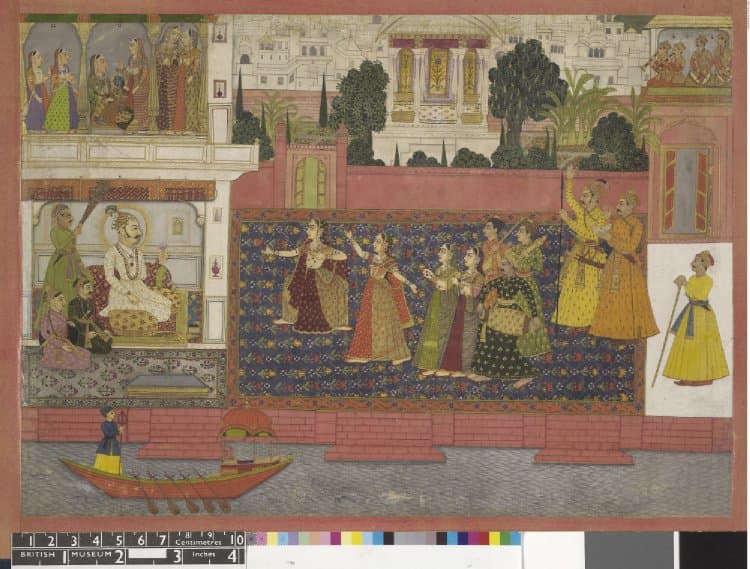
On the chariot halted between the two armies at Kurukshetra, in the suspended hour when the conches have not yet sounded, he who is called an avatar of Vishnu holds the reins of Arjuna's horses. Here he consents to speak — of the song he gave on that field, of his stolen childhood in Vrindavan, and of that distant death which will tip the world into another age.
—How did you survive a childhood said to be surrounded by threat from birth?
I was born in a prison cell, at Mathura, son of Vasudeva and Devaki, under the rule of an uncle who slaughtered newborns for fear of a prophecy. That same night, I was carried across the river to the cow sheds of Gokul, then to Vrindavan, where Nanda and Yashoda raised me as their son among the cowherds. The demoness Putana came, her breast poisoned, thinking me an ordinary infant; she left without breath. You see, they tried to kill me before I could speak, and it was in a yard of cows and dust that I grew up, far from the palaces attributed to me today.
They tried to kill me before I could speak.
—It is said that you lifted a mountain. What really happened that day?
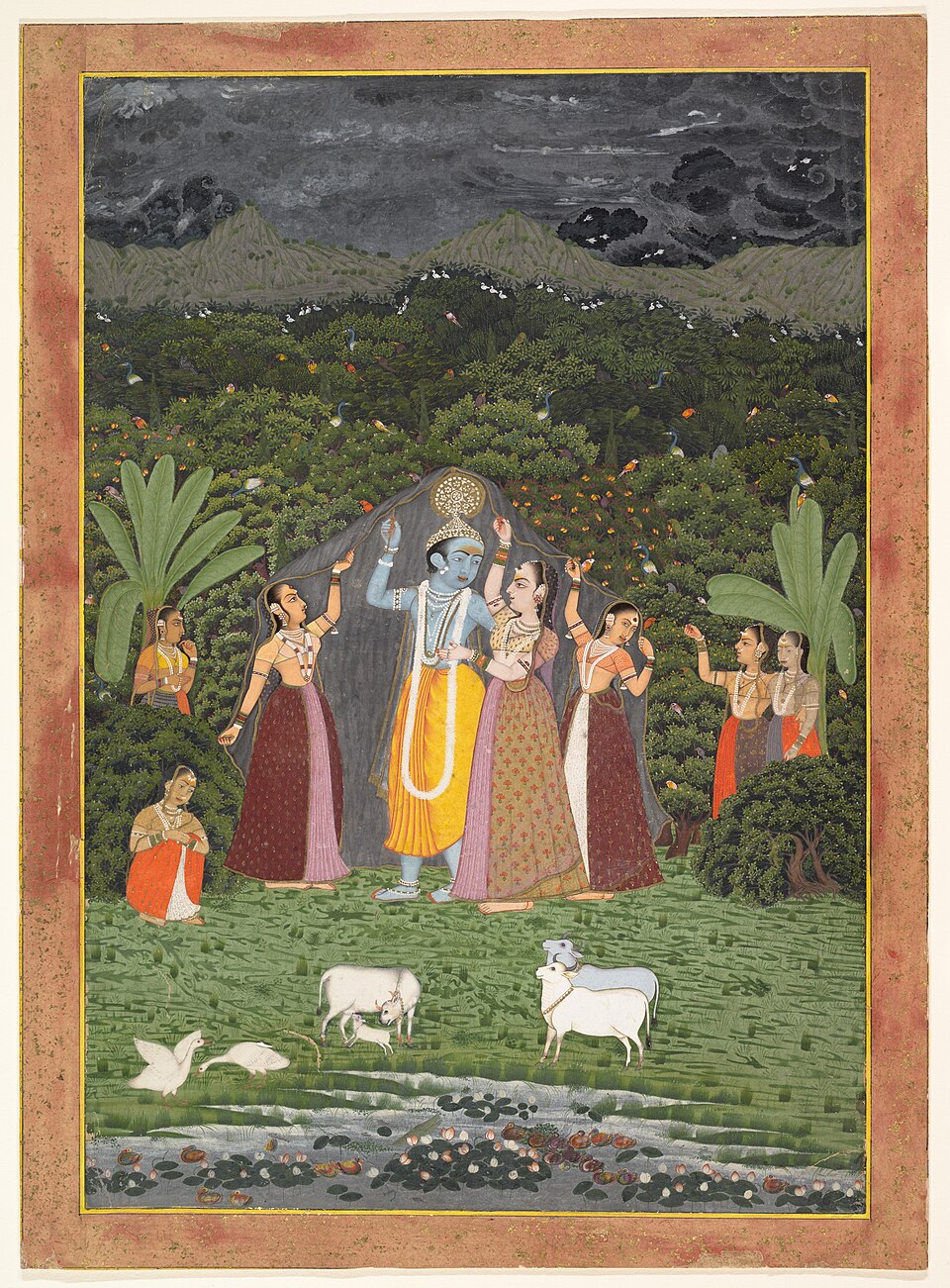
The cowherds of Vrindavan worshipped the god Indra to obtain rain; I told them to instead serve the hill that nourished their herds. Indra, in his fury, poured down a deluge to drown them. So I raised Mount Govardhan on the tip of my finger, like holding an umbrella, and the whole village sheltered beneath it — men, women, and beasts — for seven days. It was not to humiliate a god: it was to show that devotion is not bought by fear of the sky, but is directed to what gives you milk and grass under your feet.
—Why leave that happy village to return and confront Mathura?
Because one does not remain forever the child who charms the gopis with his flute on the banks of the Yamuna. The tyrant Kamsa still ruled at Mathura, and my true parents languished in his chains. I returned, broke his power, struck him down, and freed Vasudeva and Devaki. But that victory opened other wars: Jarasandha of Magadha harassed the city, and I had to found far to the west, on the sea, the kingdom of Dwarka. One never grows up without leaving a paradise behind.
One never grows up without leaving a paradise behind.
—Do you remember the conflict between the two royal families before the great battle?
The Pandavas and the Kauravas were cousins, heirs to the same throne, and I was cousin to both. I traveled the roads as a mediator, offering peace for just five villages to spare blood — it was refused. When war became inevitable, I was asked to choose my side: I gave each the choice between my armies and myself alone, unarmed. Arjuna chose me, without weapons, rather than my legions. Thus I became his charioteer at Kurukshetra, holding the reins rather than the sword.
They chose me alone, unarmed, rather than my legions.
—What did it mean to you to drive Arjuna's chariot rather than fight yourself?
A charioteer kills no one, but without him the hero does not advance. I sounded my conch Shankha at dawn, and its cry mingled with others to announce that the hour of dharma had come. Holding the reins meant steering the course without grasping the weapon — guiding without acting in place of the one who must act. That was my true place in this war: not to strike, but to show where to strike, and why. Arjuna had to shoot his own arrows; I carried his direction.
Holding the reins meant steering the course without grasping the weapon.
—What happened at the exact moment when Arjuna lowered his bow facing the two armies?
He saw before him his teachers, his uncles, his cousins, and his bow Gandiva slipped from his hands. He collapsed onto the chariot seat, refusing to fight, his heart troubled by doubt, preferring to die than to shed the blood of his kin. It was there, between the two motionless armies, that I spoke to him. I said: "You have the right to perform your duty, but not to expect its fruits. Let action be your sole concern, never its results." This dialogue, called the Bhagavad-Gītā, was not born in a peaceful temple — it was born in the paralysis of a warrior who no longer wished to kill.
You have the right to perform your duty, but not to expect its fruits.
—How can you ask a man to act while forbidding him to hope for the result of his deed?
Because the result does not belong to you — it depends on a thousand causes beyond your control. What belongs to you is the right action, performed without greed and without fear. Karma binds the one who acts for reward; it frees the one who acts as an offering. I taught Arjuna three paths: that of selfless action, that of knowledge, and that of devotion which surrenders everything to me. The goal is not to avoid action — fleeing action is impossible for a living being — but to act without the deed binding you to the cycle of rebirths.
Karma binds the one who acts for reward; it frees the one who acts as an offering.
—You are almost always depicted with a flute. What does it evoke, compared to the weapons also attributed to you?
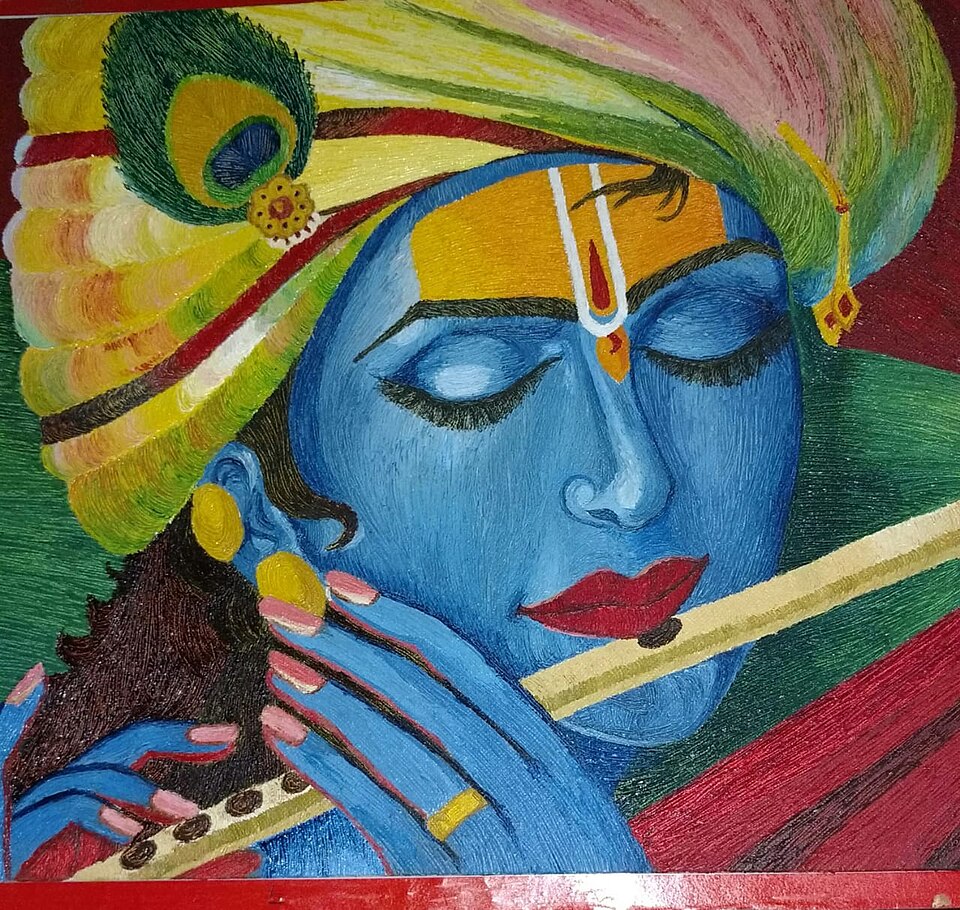
The flute, the Bansuri of bamboo, came before everything else. At Vrindavan, its music called the herds and the cowherdesses to the riverbank; it compelled no one, it charmed. Later I was painted with the peacock feather crown on my head and the sharp discus, the Sudarshan Chakra, spinning at the tip of my finger — the weapon of Vishnu's avatar, which cuts evil as light cuts shadow. But I tell you: between the reed pierced with holes and the discus that beheads, it is the reed that best says who I am.
Between the reed and the discus that beheads, it is the reed that best says who I am.
—Why so many symbols borrowed from nature — the peacock, the lotus — around your figure?
Because the divine does not descend into marble, but into the living. The lotus grows in the mud of ponds and opens pure above the water: that is the image of consciousness emerging without being tainted by its surroundings. The peacock feather I wear comes from the forests where I grew up among animals, not from the treasures of a palace. Those who seek me in gold are mistaken; I first showed myself in a cowshed, a flute at my lips, feet in the dust of Gokul.
—You say you are an incarnation of Vishnu. How do you understand this descent among humans?
When dharma weakens and injustice swells, Vishnu, who preserves the universe, clothes himself in a body and descends. I am one of these comings — an avatar, a word that means crossing from above to below. I am not a man who became a god through merit; I am the preserver who accepted to be born in prison, to drink the milk of a foster mother, to hold the reins of a chariot. This disconcerts: people expect the divine to remain distant. Yet it comes precisely where the world tears itself apart, to restore the balance.
The preserver accepted to be born in prison and to hold the reins of a chariot.
—What would you say about your own end, which is said to change the face of the world?
Every descent knows its end. When my body leaves the earth, at Dwarka, it will not be a simple king's death: it will be the closing of the Dvapara Yuga, the age that ends, and the opening of the Kali Yuga, the darkest of the four, where dharma will stand on only one leg. The men of that age will seek me in the memory of texts rather than on the roads. That is why I gave the song of Kurukshetra: so that once my flute is silent, words remain capable of guiding those who will no longer see me.
So that once my flute is silent, words remain capable of guiding those who will no longer see me.
This imaginary interview was generated by artificial intelligence from sources documented in Krishna's profile. It dramatises what the figure might have said based on what we know about them, but does not constitute attested historical testimony. For primary sources and factual documentation, refer to the full profile.