Imaginary dialogue between Arjuna and Krishna
by Charactorium · Krishna (3227 av. J.-C. — 3101 av. J.-C.) · Mythology · 5 min read
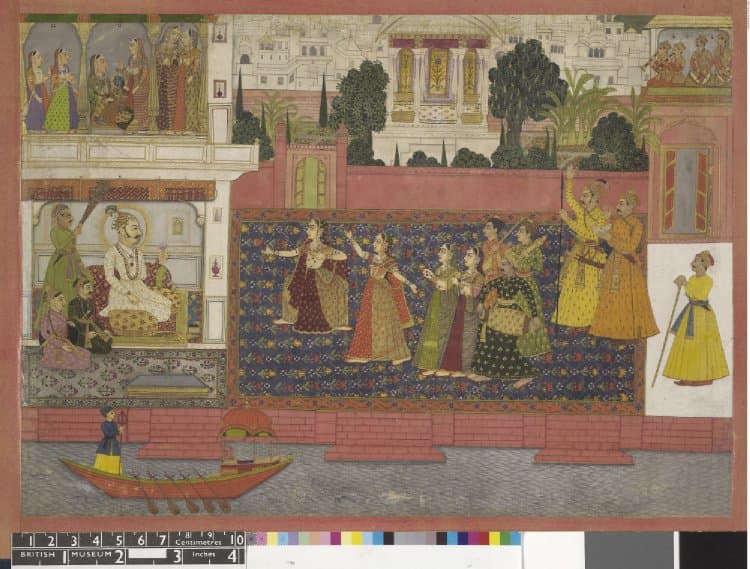
It is at dusk, on the plain of Kurukshetra, that I meet again the one who was my charioteer. The dust of the great war has settled, and the deep sound of the conch Panchajanya has fallen silent behind us. Krishna sits near the motionless chariot, his bamboo flute resting on his knees, the peacock-feather diadem still bound to his brow. I, Arjuna, who owe him my recovered courage, come at last to ask him the questions the battle did not leave me leisure to formulate.
—Govinda, do you remember the moment when, my bow Gandiva slipping from my hand, I refused to fight my own masters and cousins?
I remember it as if the wheel of our chariot were still turning, Arjuna. You trembled, your heart troubled by doubt, seeing before you beloved faces. Then I spoke to you those words you have not forgotten: "You have the right to perform your duty, but not to the fruits thereof. Let action be your sole concern, never its results." It was not an order to kill, but a teaching on dharma: act according to your nature as a warrior without being bound by fear of gain or loss. You sought to flee your condition; I only returned you to yourself. Detachment is not indifference, it is freedom.
Detachment is not indifference, it is freedom.
—On that chariot, why did you choose to hold my reins rather than weapons, you who alone could have overthrown the Kauravas?
Because my place was not to fight in your stead, Arjuna, but to guide you. I had sworn not to raise a weapon in this war, and I kept my word: to you the Gandiva, to me the reins. Driving a chariot, you see, is the entire teaching I owed you. I held the direction while you held the strength; I saw the whole field while you aimed at a target. He who masters his senses as one masters fiery steeds does not stray in battle. I did not hand you victory; I showed you the path to earn it yourself. A master never walks in his disciple's place.
I held the direction while you held the strength.
—Many whisper that you are not merely our ally, but the avatar of Vishnu himself. Tell me, cousin: who are you really?
You ask the question that sages take lifetimes to formulate. I was born of Vasudeva and Devaki, in Kamsa's prison, as a child of men; and yet I am he who descends whenever dharma wanes and injustice triumphs. Vishnu, the preserver, takes form to restore the order of the world: that is what it means to be an avatar. The disc Sudarshan that spins on my finger and the conch you heard are not princely ornaments; they are the signs of this charge. But do not cling to the image, Arjuna: what descends in me also dwells in the heart of every being. To recognize me is to recognize yourself.
I descend whenever dharma wanes and injustice triumphs.
—It is said that as a child, you lifted Mount Govardhan with a single finger. Is that legend from Vrindavan true?
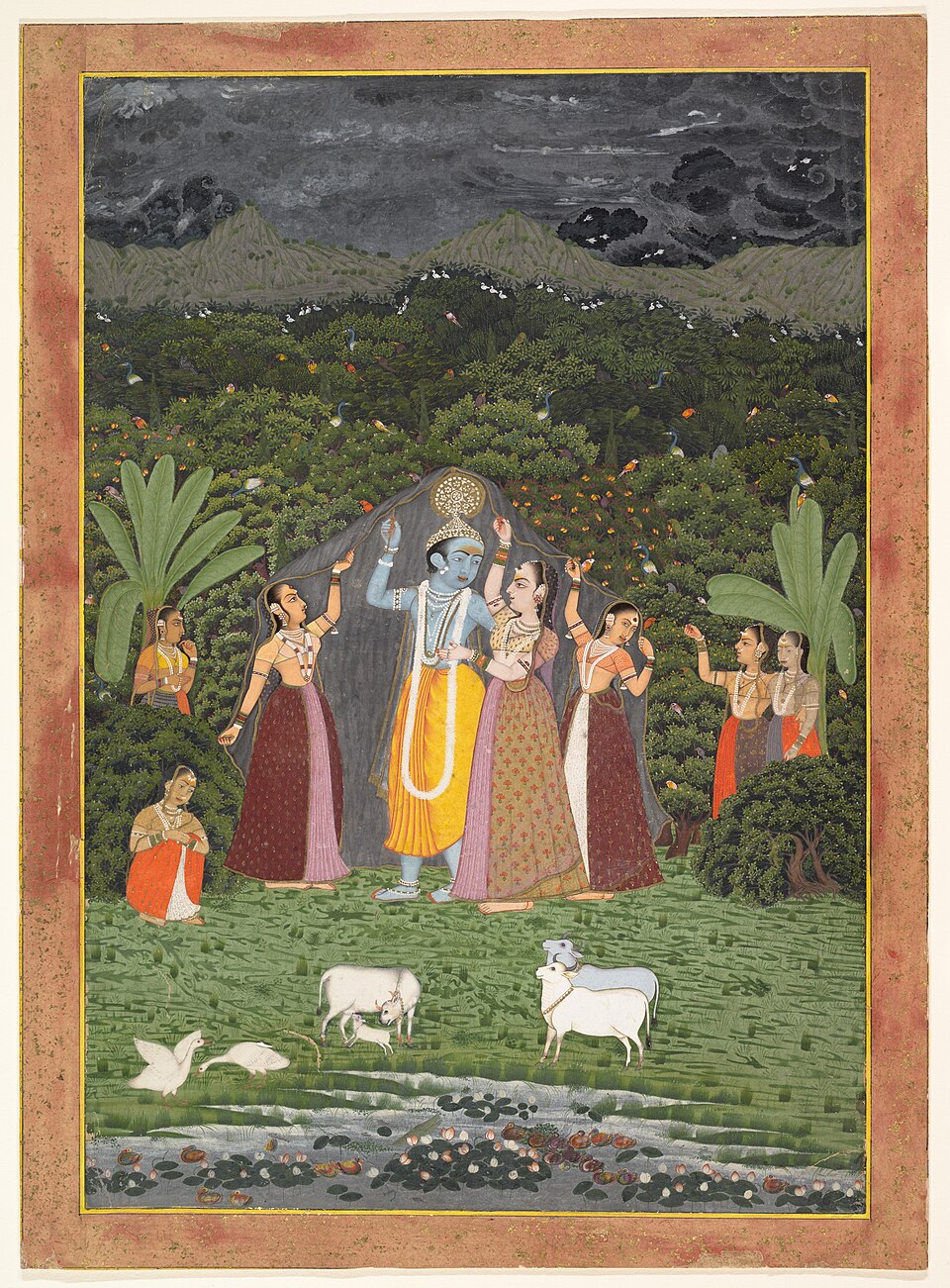
The cowherds of Vrindavan would confirm it better than I, they who sheltered under the mountain. Indra, jealous that the herdsmen honored me rather than him, poured rains to drown the land. So I raised the hill of Govardhan as one raises a parasol, and all the people, their cows and carts, stood beneath it for seven days. See what this gesture says: true protection comes not from gods one fears, but from one who loves his people. I was a child among the cows, raised by Nanda and Yashoda, and already I taught men not to tremble before the storm. Devotion is better than fear of the mighty.
True protection comes not from gods one fears, but from one who loves his people.
—Before the war, you faced the tyrant Kamsa who sought your death from birth. How could a child defeat him?
Kamsa had my brothers killed and my parents thrown in chains; throughout my childhood, he sent demons against me, the nurse Putana with poisoned breast and many other creatures. But fear grew in him as I grew in strength. When I returned to Mathura as a young man, I cast him down from his throne and freed Vasudeva and Devaki from their chains. It was not a man's vengeance, Arjuna; it was the order of the world being restored. A tyrant thinks to delay his fate by shedding the blood of innocents; he only hastens his fall. Remember this when you judge the powerful: no one thwarts dharma.
A tyrant thinks to delay his fate by shedding the blood of innocents; he only hastens his fall.
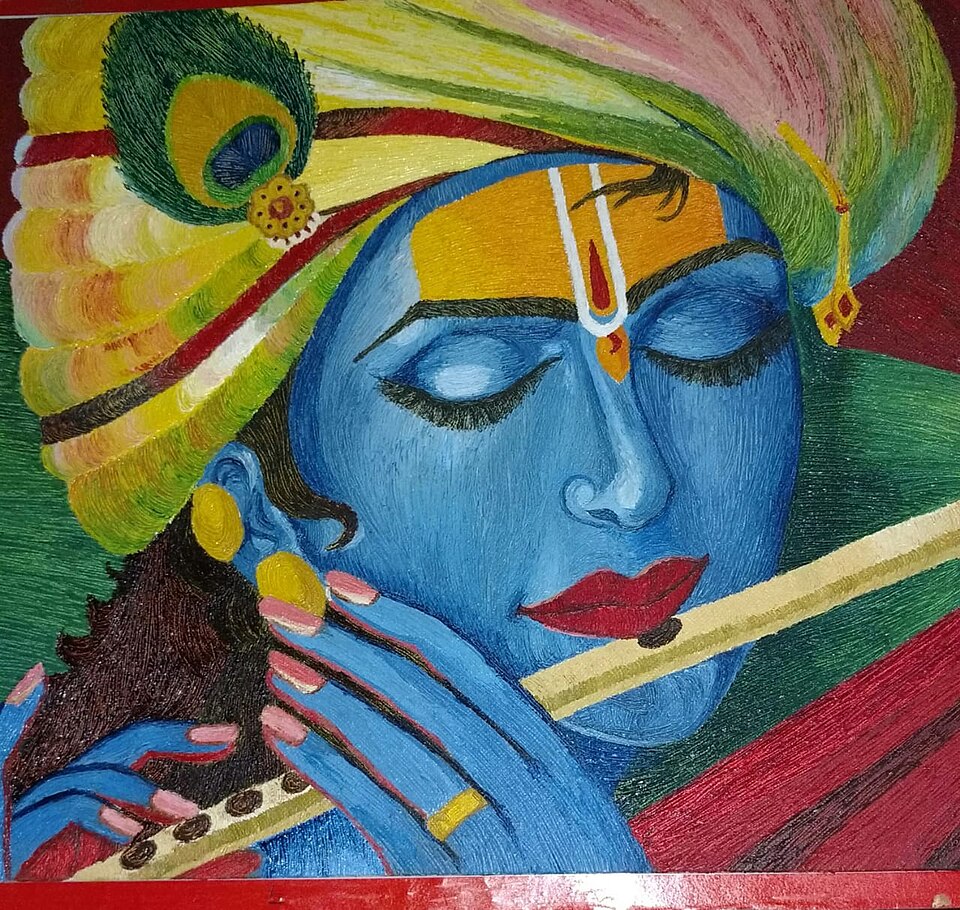
—That flute resting on your knees, I have so often heard it in the evening. What power do you put into this simple bamboo?
It is only a hollow reed, Arjuna, and that is its whole secret. The bansuri sings only because it is empty: the breath passes through it without it retaining anything. In the forests of Vrindavan, its song called the gopis and the herds at dusk, and those who heard it forgot their sorrows. But the true charm is not in the music: it is in the heart that lets itself be emptied of itself so that the divine may pass through. Be like this flute, my friend — empty yourself, and the teaching will pass through you effortlessly. Devotion, you see, is less about speaking to God than being silent enough to hear him play.
The bansuri sings only because it is empty.
—Before guiding me, you built Dwarka far from Mathura. Why did you flee Jarasandha rather than confront him at once?
Retreat is not always flight, Arjuna — you, the strategist, know this better than anyone. King Jarasandha of Magadha relentlessly swept down on Mathura, and my people paid with their blood for each assault. Rather than exhaust them between two walls, I led my people west, across the waters, and founded Dwarka, my city facing the sea. There my people could live in peace while the enemy wore himself out pursuing us. A guide must know when to hold and when to yield ground; saving one's own is better than sterile glory. Patience too is a weapon of dharma, and he who knows how to wait strikes more truly.
Retreat is not always flight; patience too is a weapon of dharma.
—When you reigned in Dwarka as king, why did you become counselor to us, the Pandavas, rather than keep your crown in peace?
Because a king who turns his eyes from injustice is no more than a man sitting on a throne. You, the sons of Pandu, were stripped of your kingdom by deceit, humiliated, exiled; Duryodhana would not even grant you five villages. I first sought peace, Arjuna — I went in person to speak at Hastinapura, hoping to avoid carnage. It was he who refused even the slightest justice. So I stood by your side, not out of bloodlust, but because dharma demanded that the oppressed be raised up. My crown of Dwarka was worth nothing if I let treachery triumph. Serving justice is the only reign that endures.
A king who turns his eyes from injustice is no more than a man sitting on a throne.
—You spoke to me on that chariot of several paths — action, knowledge, devotion. Which was I, the warrior, to follow?
There is not a single path to deliverance, Arjuna; there are as many as there are men. To the one who acts, I teach karma yoga: perform your duty without coveting the fruits. To the one who reflects, the path of knowledge, jnana. To the one who loves, bhakti, the surrender of the heart. You are a man of action, born to bend the bow; your path was not to flee to the desert, but to act with a detached soul. Do not deny your nature to imitate another's — better to perform your own duty imperfectly than to perform another's perfectly. All these paths, you see, lead to the same summit; you only needed to recognize your own.
Better to perform your own duty imperfectly than to perform another's perfectly.
—Now that the weapons are silent, tell me, Madhava: what will remain of all this when our age, the Dvapara, comes to an end?
Kingdoms fall, Arjuna; the cities I built will one day be returned to the sea, and our age will give way to the Kali Yuga, the time of shadow where dharma will stand on but one foot. Do not grieve. What perishes was never truly real; what is real never perishes. Bodies pass like changing garments, but that which dwells in them is neither born nor dies. What will remain are neither my battles nor my palaces, but the teaching you received on that chariot. Keep it alive in you: as long as a man seeks his duty with a sincere heart, I will be there, in one form or another. Nothing that is just is ever lost.
What perishes was never truly real; what is real never perishes.
This imaginary interview was generated by artificial intelligence from sources documented in Krishna's profile. It dramatises what the figure might have said based on what we know about them, but does not constitute attested historical testimony. For primary sources and factual documentation, refer to the full profile.