 flip
flipMaza, the Achaeans' Barley Flatbread
Maza, the Achaeans' Barley Flatbread
Why this dish? Before becoming the supreme commander of the armies, Agamemnon daily fed the household and garrison of Mycenae. The barley *maza*, the basis of every archaic Greek table, accompanied each meal — from the humblest soldier to the king himself, who broke the same bread as his men at the camp of Aulis.
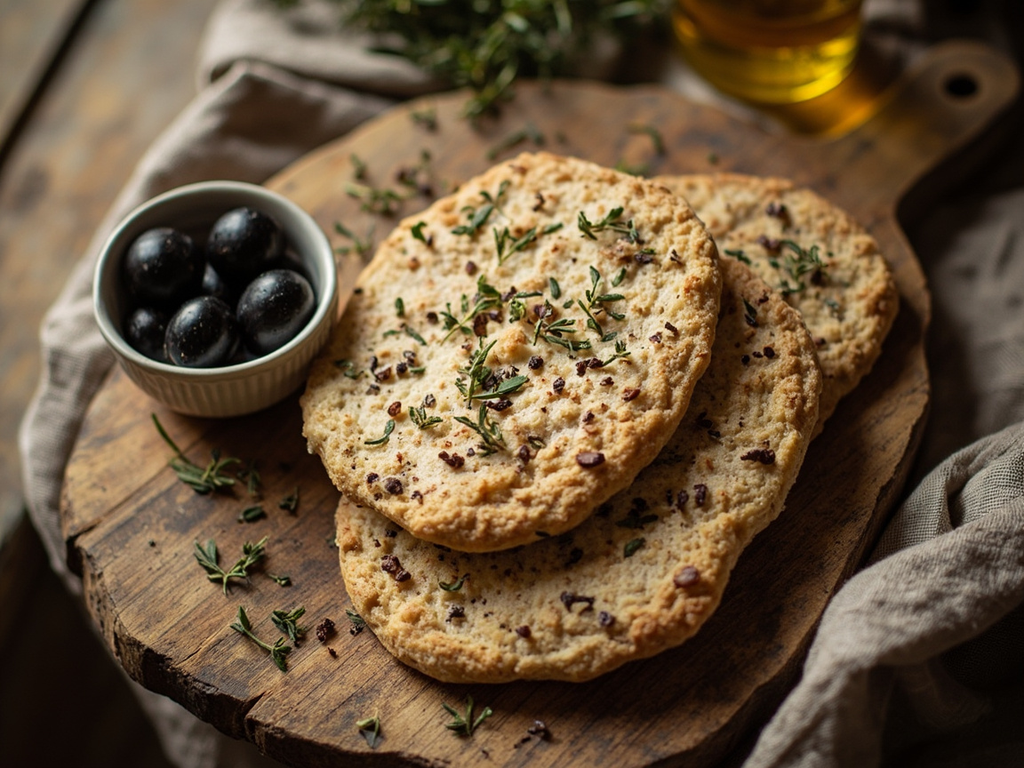
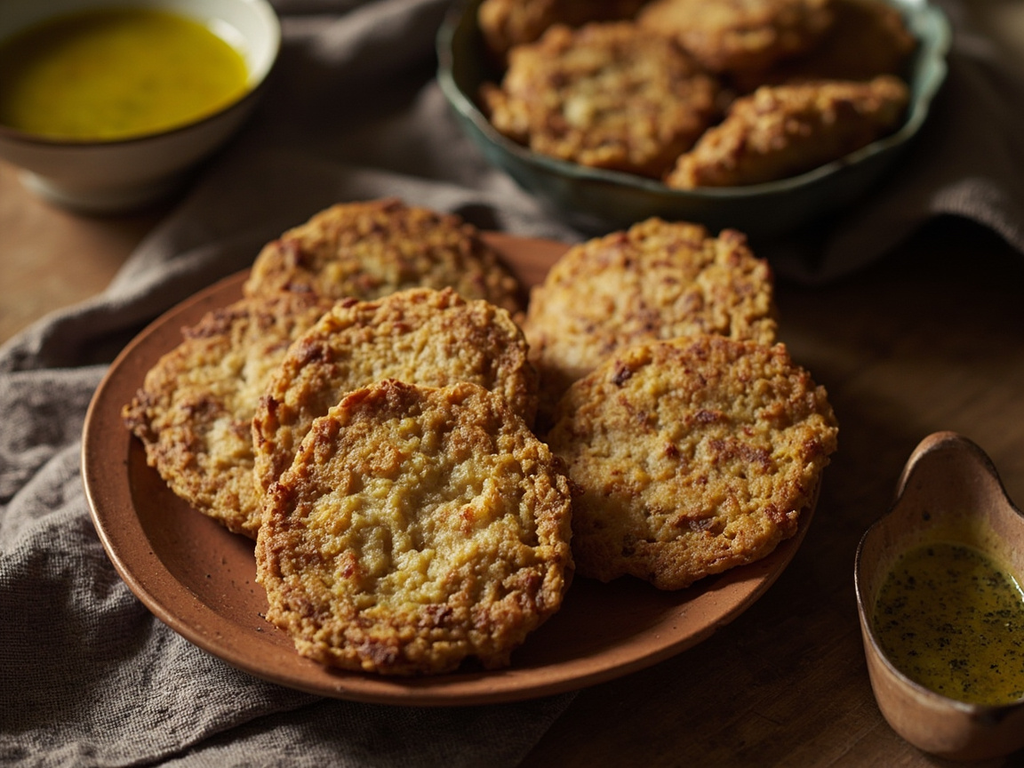
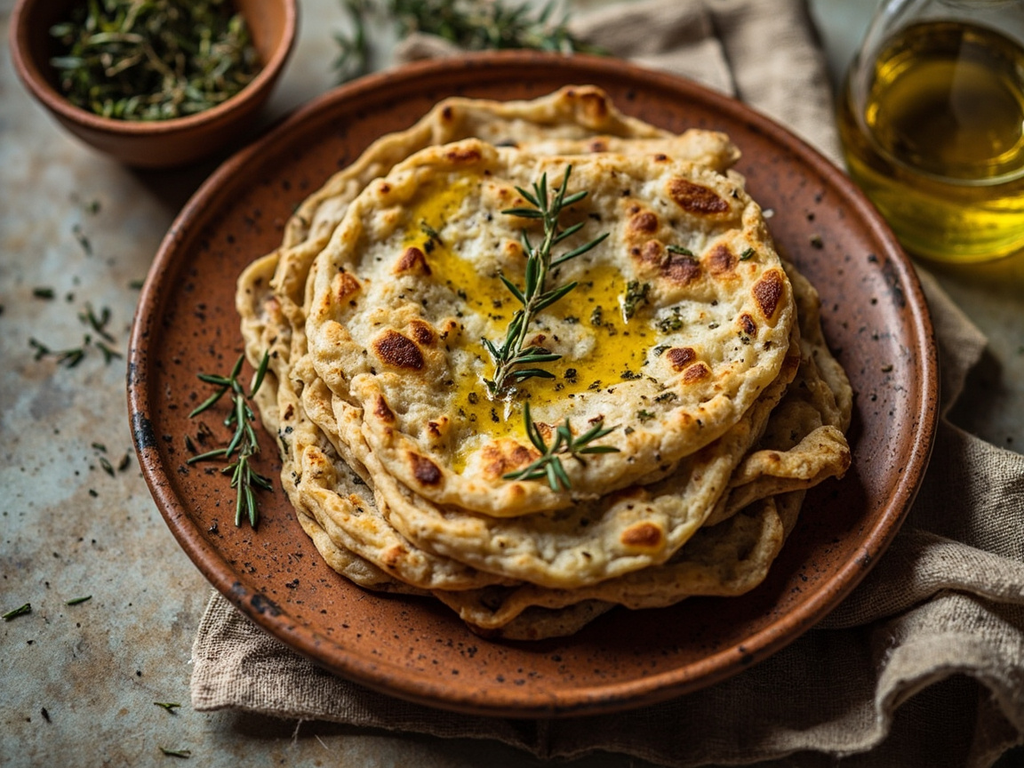
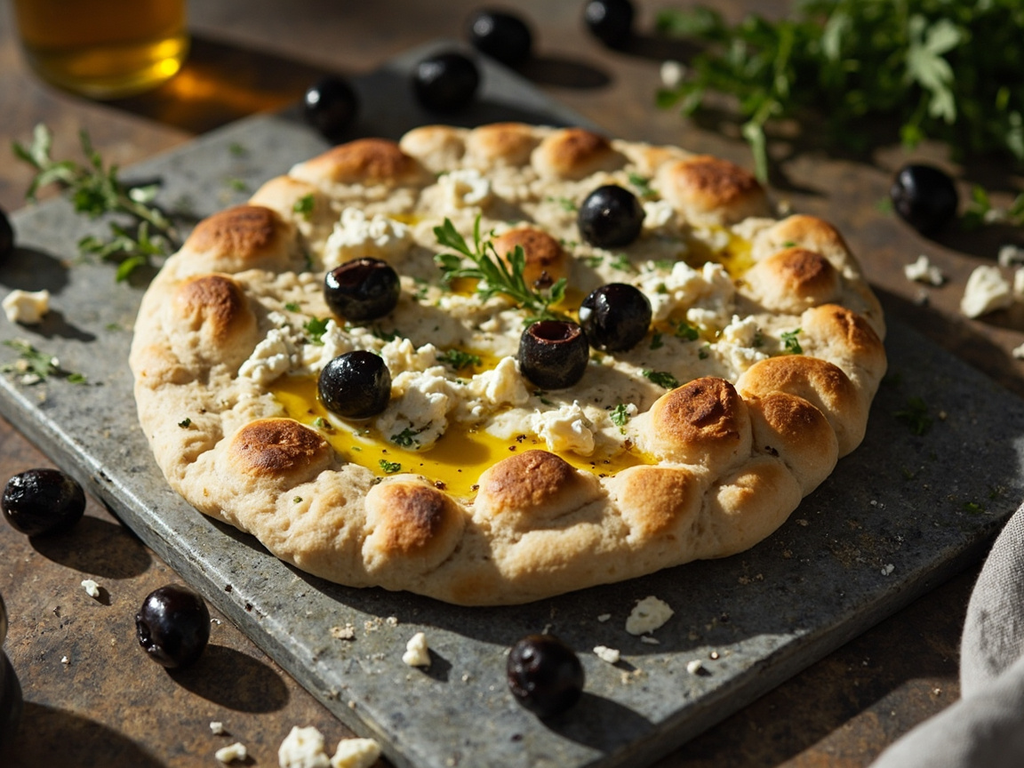
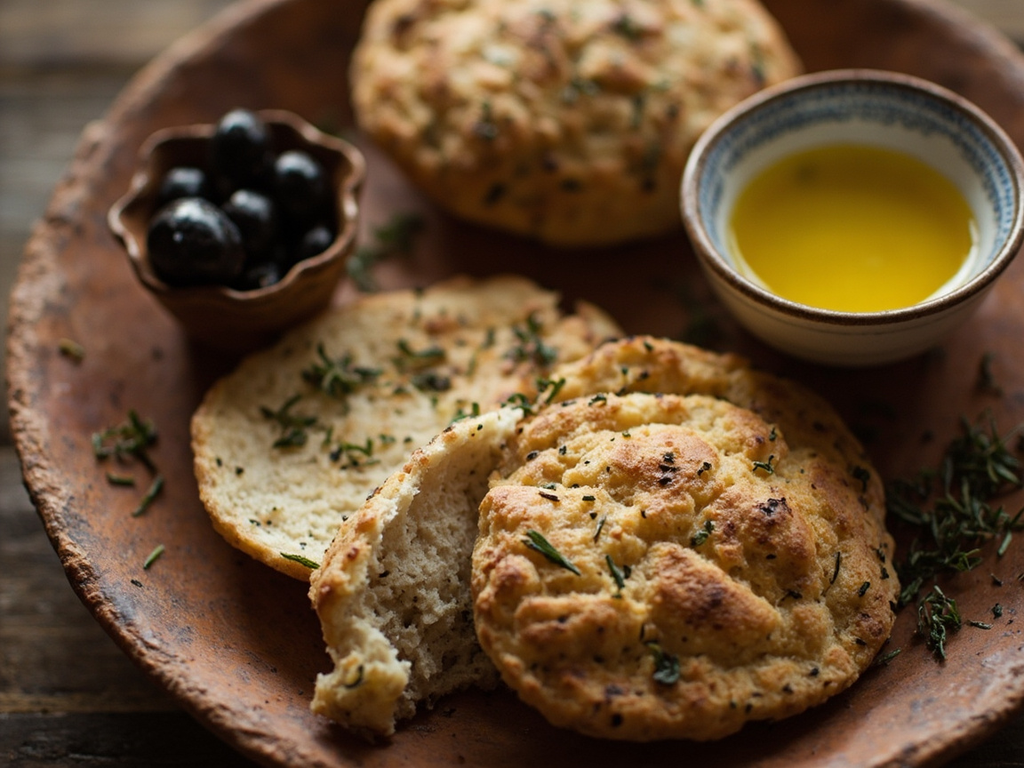
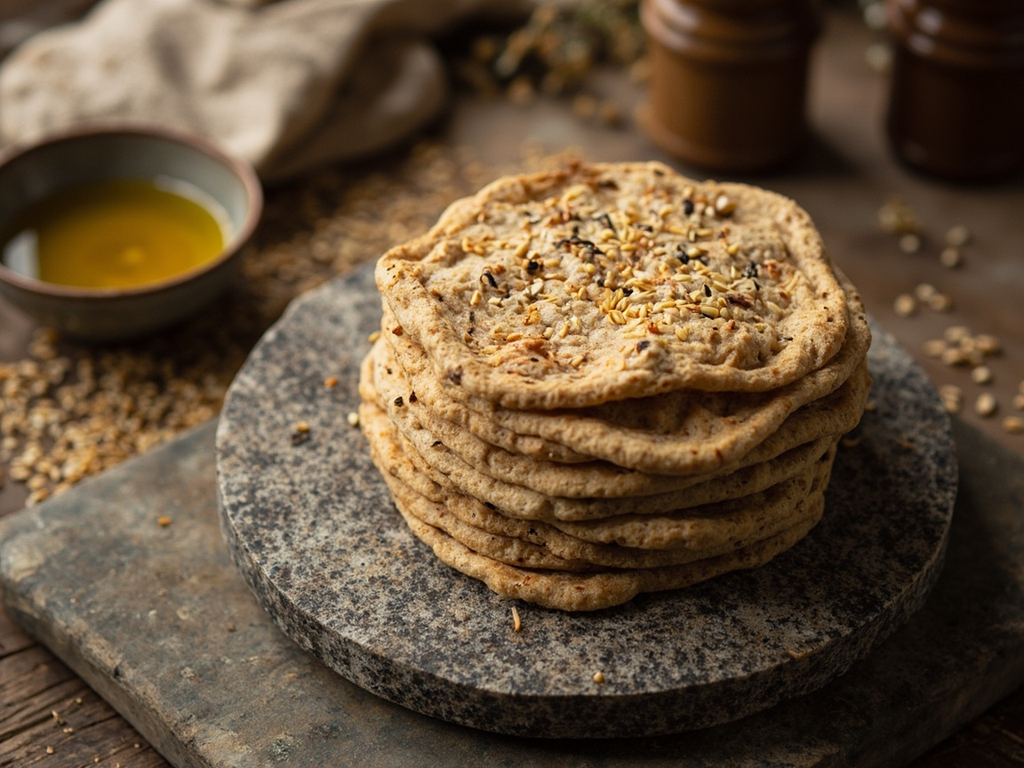
A thick flatbread of toasted barley flour, kneaded with water and a little oil, baked on a hot stone. Dense and rustic, it was dipped in wine or oil and served as an edible plate for meat.
Do not think that a king scorns his soldiers' bread. At Aulis, when my ships waited for the wind, I broke the same barley *maza* as the lowest rower. You toast the barley, grind it, mix it with water and a dash of oil, then bake it on the hot stone of the hearth. Dip it in your mixed wine, lay your share from the spit upon it: that is what keeps a man standing until the battle.
- •Toasted barley flour — two handfuls per man (cereal base)
- •Water — as needed (binder)
- •Olive oil — a drizzle (softness and flavor)
- •Sea salt — a pinch (seasoning)
Maza, the Achaeans' Barley Flatbread
A thick flatbread of toasted barley flour, kneaded with water and a little oil, baked on a hot stone. Dense and rustic, it was dipped in wine or oil and served as an edible plate for meat.
Why this dish? Before becoming the supreme commander of the armies, Agamemnon daily fed the household and garrison of Mycenae. The barley *maza*, the basis of every archaic Greek table, accompanied each meal — from the humblest soldier to the king himself, who broke the same bread as his men at the camp of Aulis.
Do not think that a king scorns his soldiers' bread. At Aulis, when my ships waited for the wind, I broke the same barley *maza* as the lowest rower. You toast the barley, grind it, mix it with water and a dash of oil, then bake it on the hot stone of the hearth. Dip it in your mixed wine, lay your share from the spit upon it: that is what keeps a man standing until the battle.
Ingredients (period version)
- Toasted barley flour — two handfuls per man (cereal base)
- Water — as needed (binder)
- Olive oil — a drizzle (softness and flavor)
- Sea salt — a pinch (seasoning)
Ingredients
- Barley flour — 250 g (base of the flatbread)
- Warm water — 150 ml approx. (binder)
- Olive oil — 2 tbsp (softness)
- Salt — 1 tsp (seasoning)
- Sesame seeds (optional) — 1 tbsp (traditional Greek garnish)
Method
- If possible, briefly dry-toast the barley flour in a pan to awaken its flavor, then let cool.
- Mix the flour, salt, oil, and warm water gradually until a supple but non-sticky dough forms.
- Knead for a few minutes, form flatbreads 1 cm thick.
- Optionally sprinkle with sesame seeds and cook on a hot stone, griddle, or dry pan, 4–5 minutes per side.
- Serve warm, to dip in olive oil or wine mixed with water.
How it was made : Barley was the dominant cereal of Mycenaean Greece, far more than wheat: the Linear B tablets of the palaces of Pylos and Mycenae record vast rations of barley distributed to workers. The *maza* — unleavened barley paste — formed the daily foundation of the diet, wheat bread being a rarer luxury.
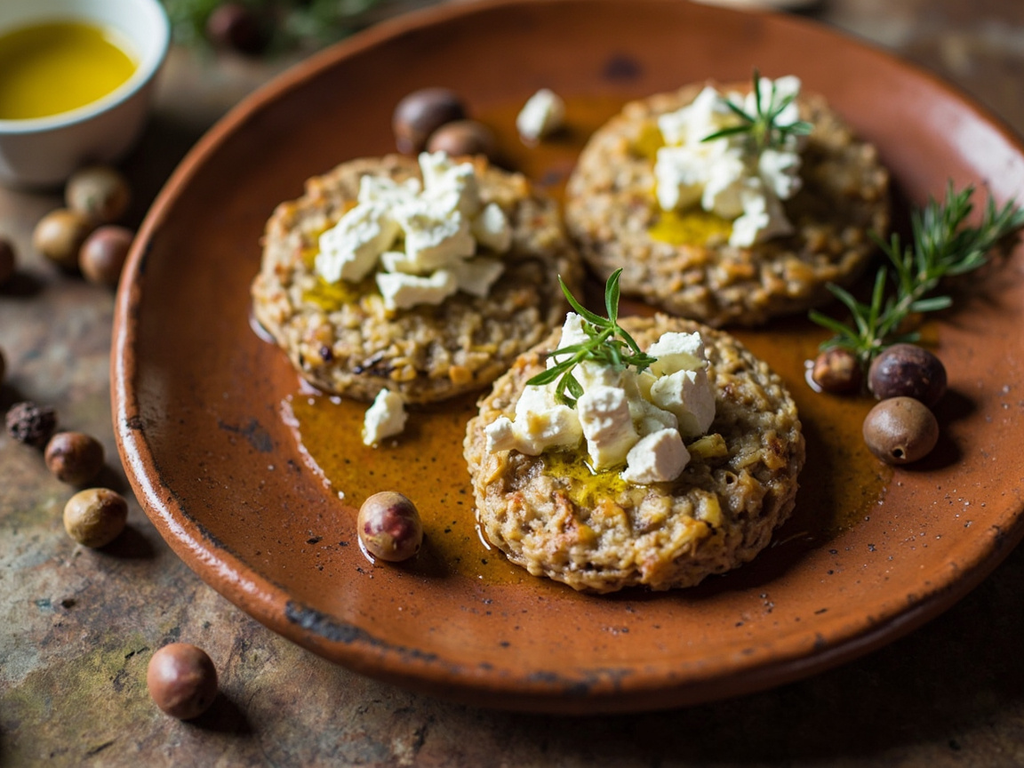
The contemporary twist : Cut the flatbread into strips to grill like "barley tortillas" and serve with a dipping sauce of olive oil, honey, and thyme.
Sources : Linear B tablets (Pylos, Mycenae) — barley rations · Andrew Dalby & Sally Grainger, The Classical Cookbook (1996)
Agamemnon · Charactorium