 flip
flipAttic olives in herb brine
Attic olives in herb brine
Why this dish? The olive tree, sacred to Athena and emblem of Athens, provided the quintessential preserved food. Plato, who taught at the Academy — a grove of olive trees dedicated to the hero Academus — literally lived surrounded by olive trees. Brined olives lasted all year and graced the humblest table.
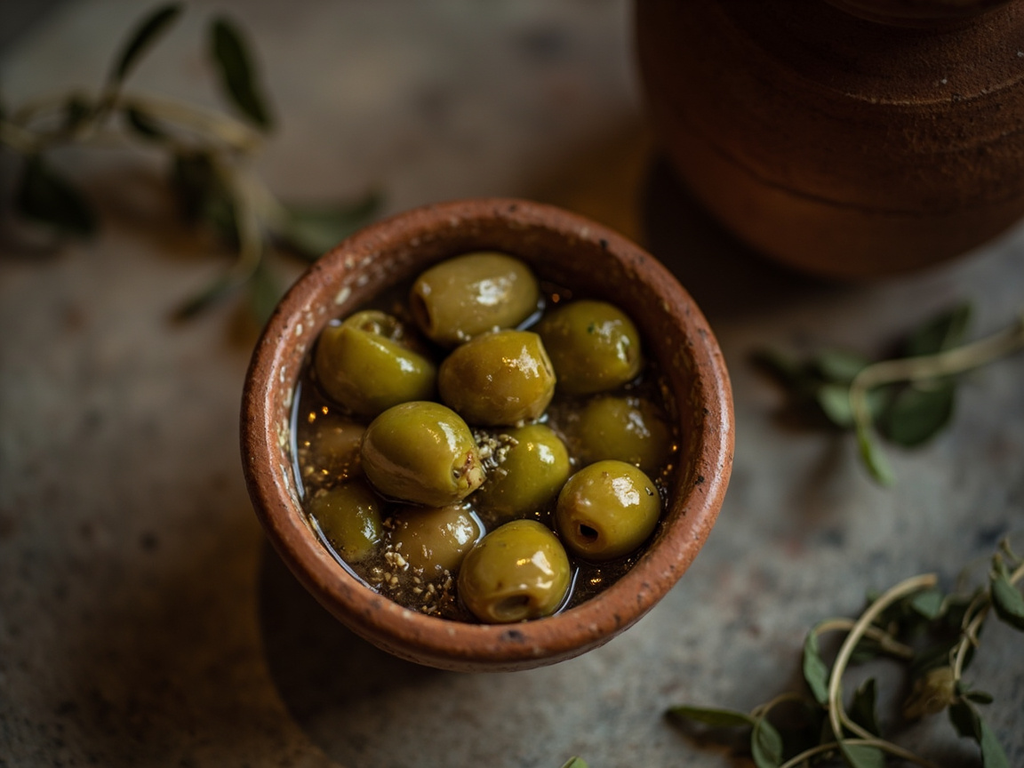
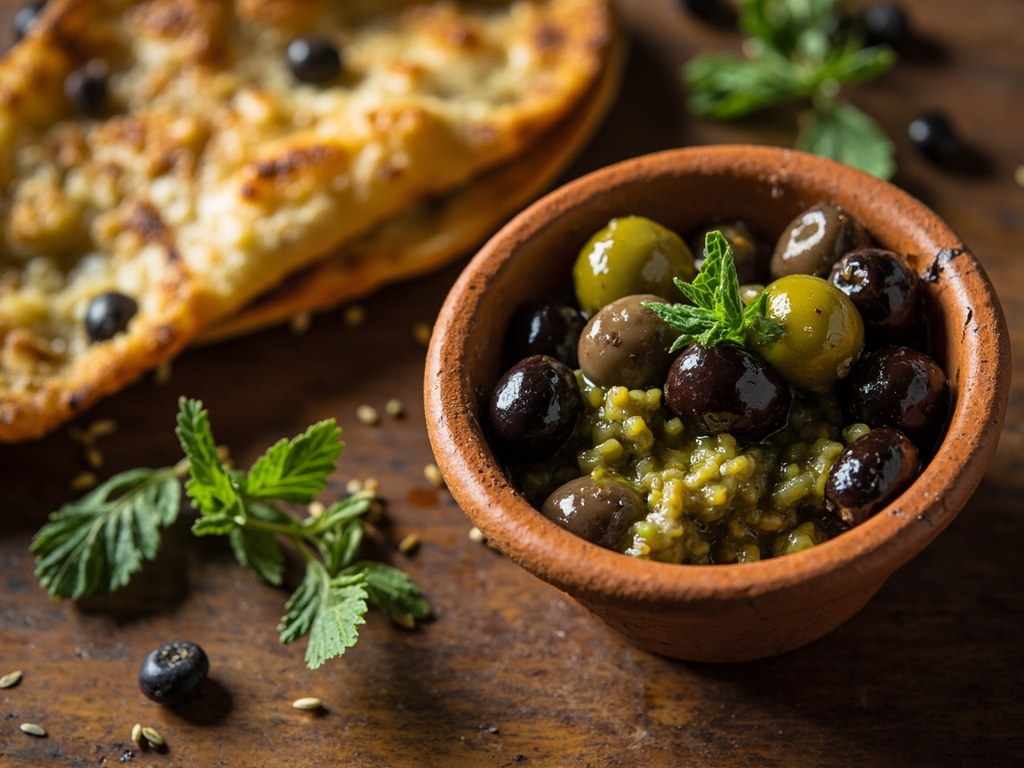
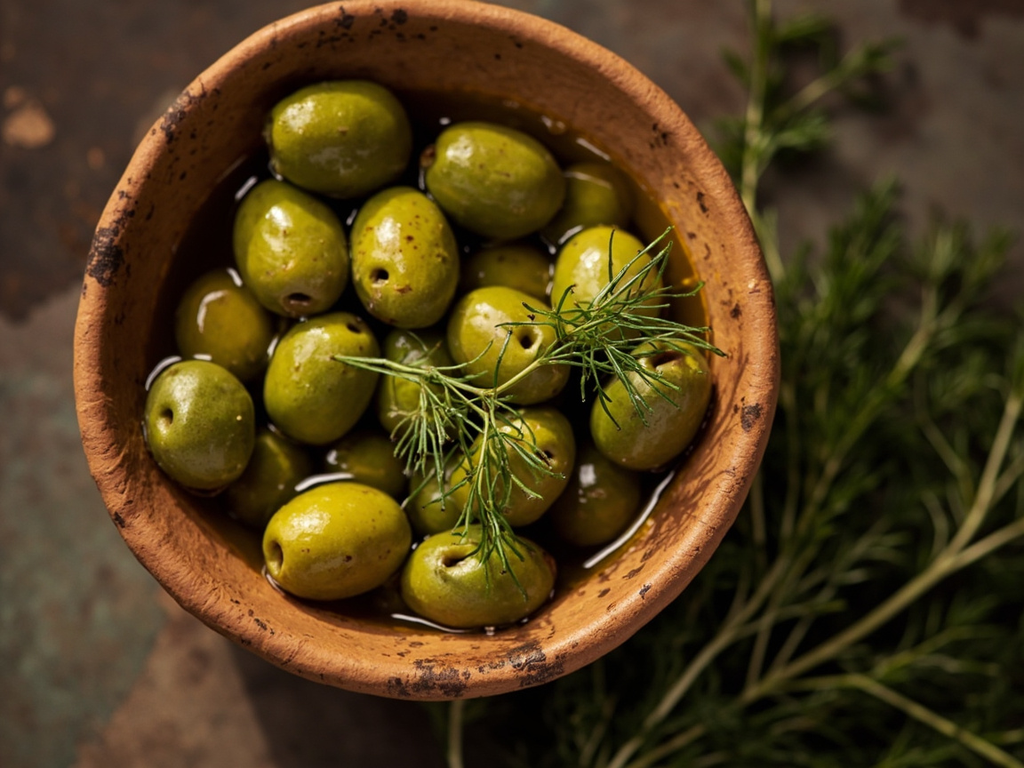
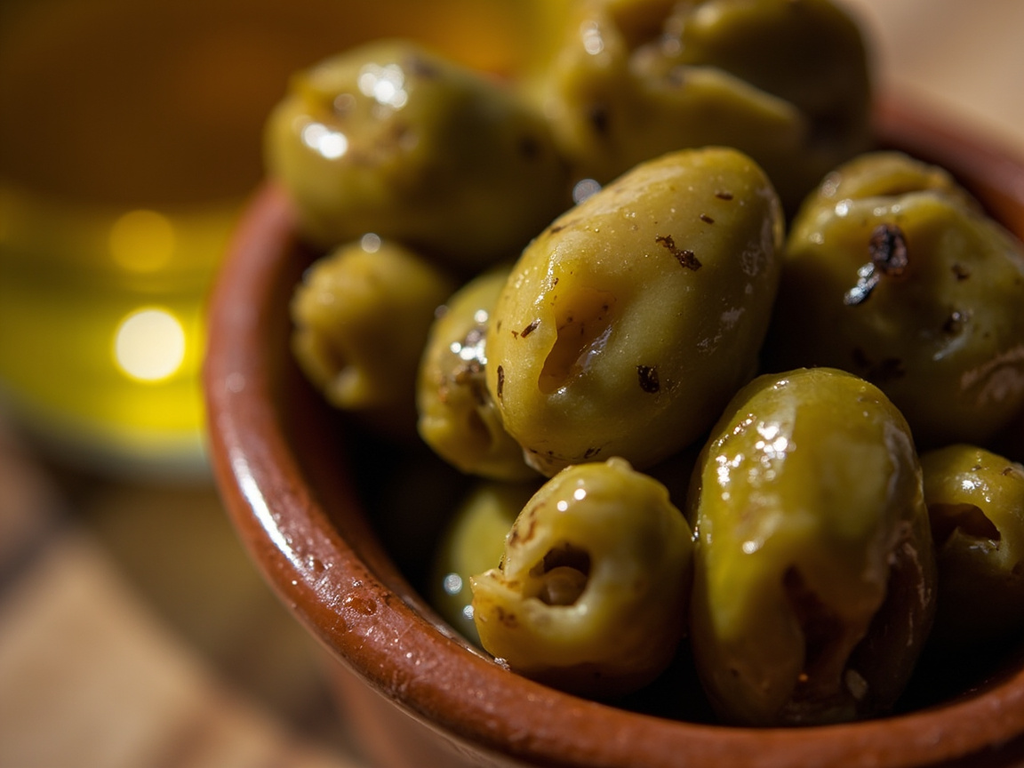
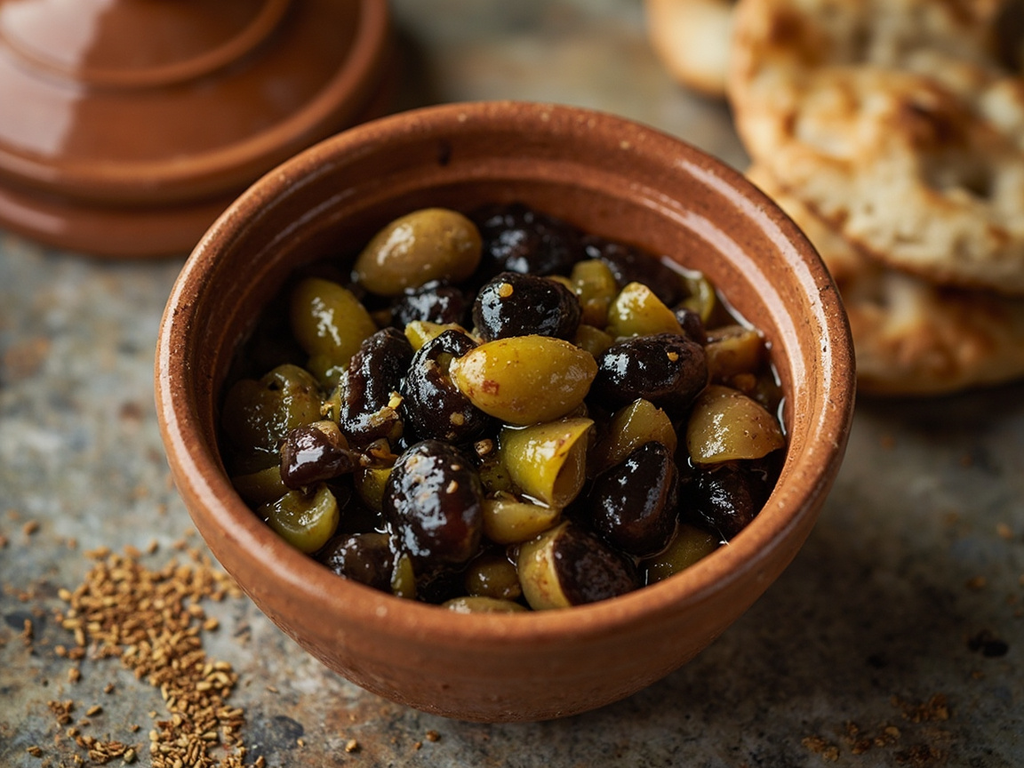
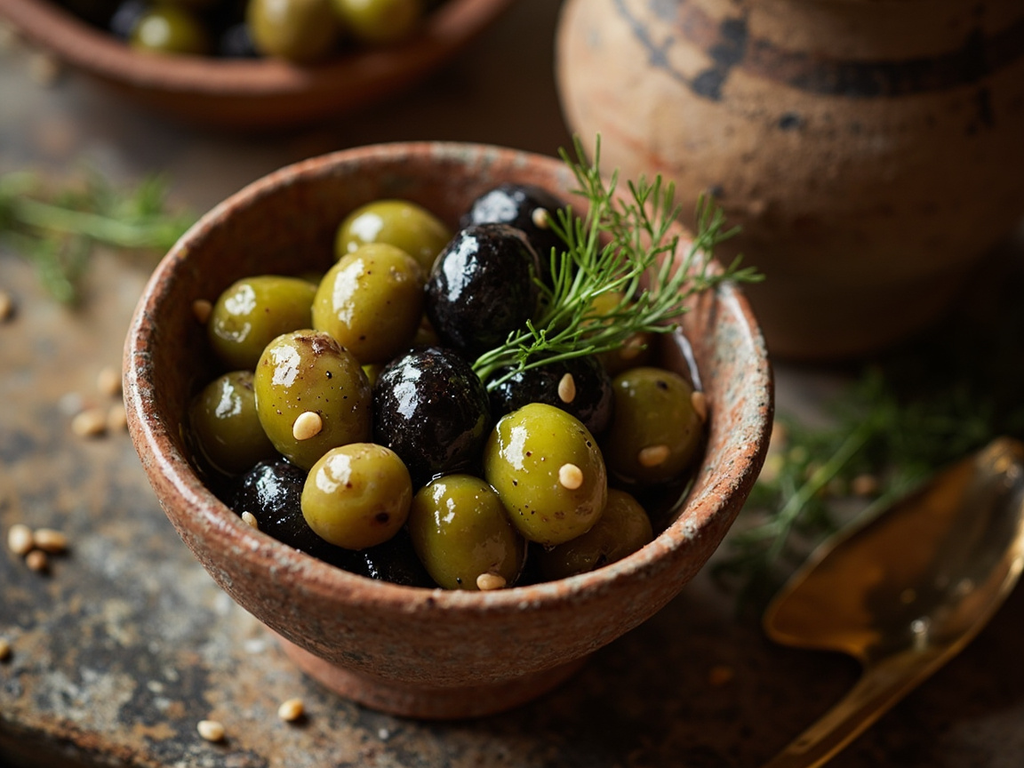
Green or black olives debittered and preserved in a brine flavored with fennel, vinegar, and herbs. Salty, still slightly bitter, tangy: the preserve that accompanied bread and cheese in every season.
Do you know where I teach? In a sacred olive grove, in the shade of Athena's own trees! The olive gives us everything: oil for the lamp and the table, wood, and this fruit that we keep in brine from one harvest to the next. Crack the olive, let it soak in salted water for several days to remove its bitterness, add fennel and a dash of vinegar — and you are provided for winter. A handful of olives, a piece of barley bread: on that table, a free man can philosophize without envying kings.
- •Fresh green or black olives — a full pot (preserved food)
- •Sea salt — abundant (brine and preservation)
- •Water — to cover (brine)
- •Wild fennel, coriander seeds — a few sprigs/seeds (aromatics)
- •Wine vinegar — a dash (acidity and preservation)
Attic olives in herb brine
Green or black olives debittered and preserved in a brine flavored with fennel, vinegar, and herbs. Salty, still slightly bitter, tangy: the preserve that accompanied bread and cheese in every season.
Why this dish? The olive tree, sacred to Athena and emblem of Athens, provided the quintessential preserved food. Plato, who taught at the Academy — a grove of olive trees dedicated to the hero Academus — literally lived surrounded by olive trees. Brined olives lasted all year and graced the humblest table.
Do you know where I teach? In a sacred olive grove, in the shade of Athena's own trees! The olive gives us everything: oil for the lamp and the table, wood, and this fruit that we keep in brine from one harvest to the next. Crack the olive, let it soak in salted water for several days to remove its bitterness, add fennel and a dash of vinegar — and you are provided for winter. A handful of olives, a piece of barley bread: on that table, a free man can philosophize without envying kings.
Ingredients (period version)
- Fresh green or black olives — a full pot (preserved food)
- Sea salt — abundant (brine and preservation)
- Water — to cover (brine)
- Wild fennel, coriander seeds — a few sprigs/seeds (aromatics)
- Wine vinegar — a dash (acidity and preservation)
Ingredients
- Raw green or black olives (untreated) — 500 g (preserved food)
- Coarse sea salt — 100 g per liter of water (brine and preservation)
- Water — about 1 liter (brine)
- Fennel seeds and coriander seeds — 1 tsp each (aromatics)
- White wine vinegar — 3 tbsp (acidity and preservation)
- Olive oil (when serving) — a drizzle (binder)
Method
- Crack or slash each raw olive with a knife to help debittering.
- Cover with cold water and change the water daily for 7 to 10 days, until the bitterness is tolerable.
- Prepare a brine (100 g salt per liter of boiled then cooled water), add fennel and coriander.
- Place olives in a jar, cover with brine and a dash of vinegar, seal; let mature for 3 to 4 weeks in a cool place.
- Serve drained, drizzled with olive oil, with bread and cheese.
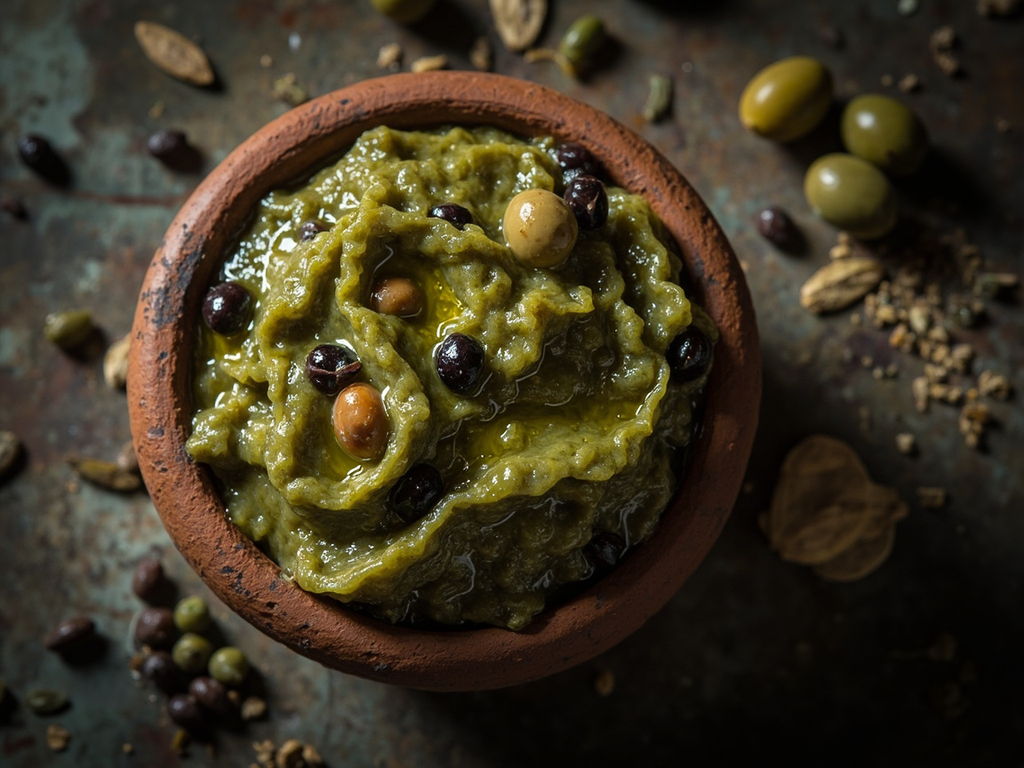
How it was made : Greeks preserved olives in brine, sometimes in vinegar or crushed with salt, because raw olives are too bitter to eat. This was an essential opson preserve, available all year and accessible to the poorest. Athena's olive tree was so sacred that uprooting a sacred olive could warrant banishment.
The contemporary twist : Served warm, just heated with a lemon zest and thyme, as "Academy olives" to nibble before a philosophical debate among friends.
Sources : Cato the Elder, De Agricultura (olive preservation recipes, Greco-Roman world) · Andrew Dalby, Food in the Ancient World from A to Z (2003)
Plato · Charactorium