 flip
flipCracked Olives with Fennel and Coriander
Cracked Olives with Fennel and Coriander
Why this dish? The olive was the soul of the Mediterranean pantry: preserved in brine, it accompanied every meal, from the humblest to the most refined. For Hypatia, whose frugal table made much of the olive and its oil, these flavored olives were the natural companion of daily bread and long evenings of discussion.
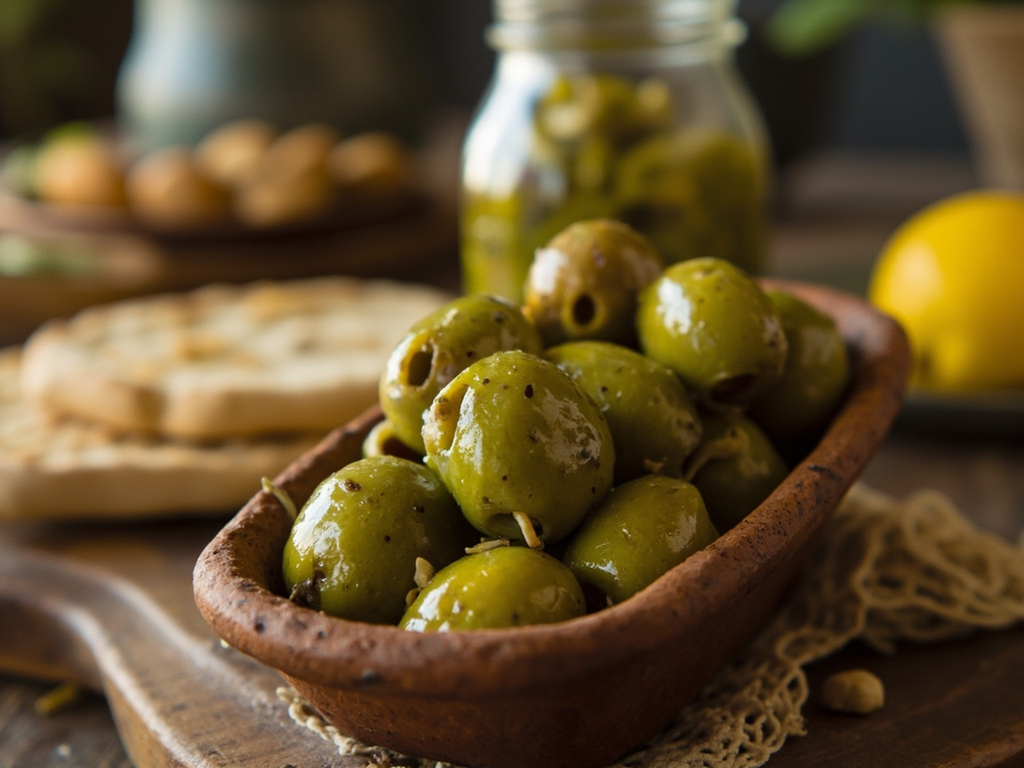
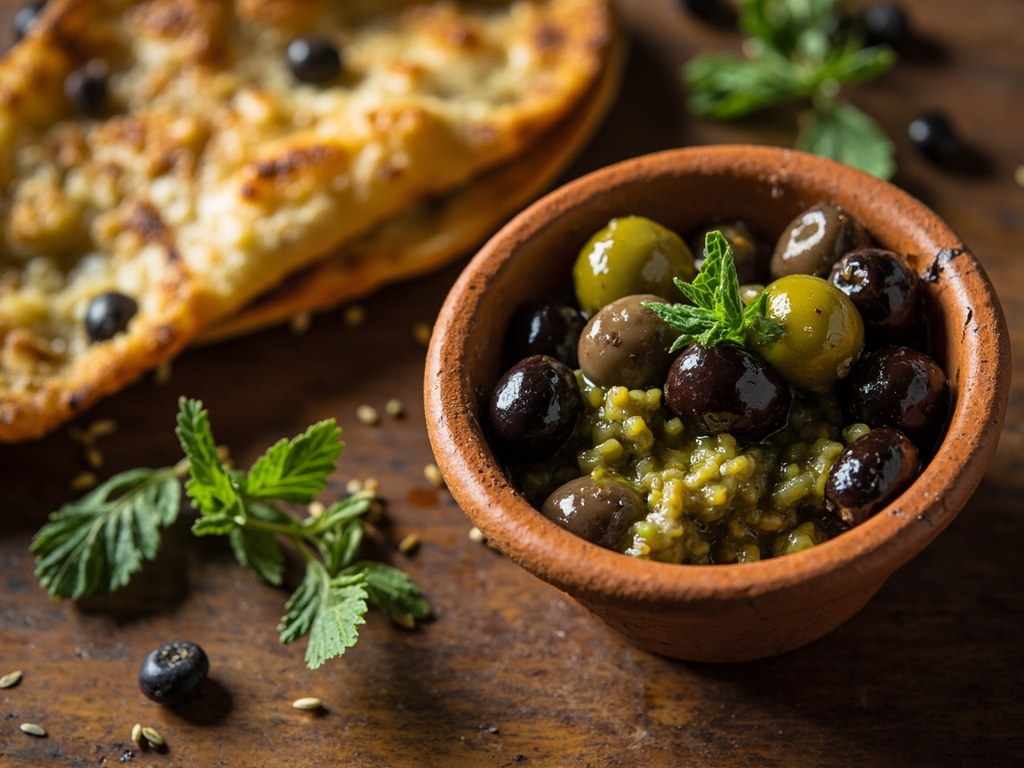
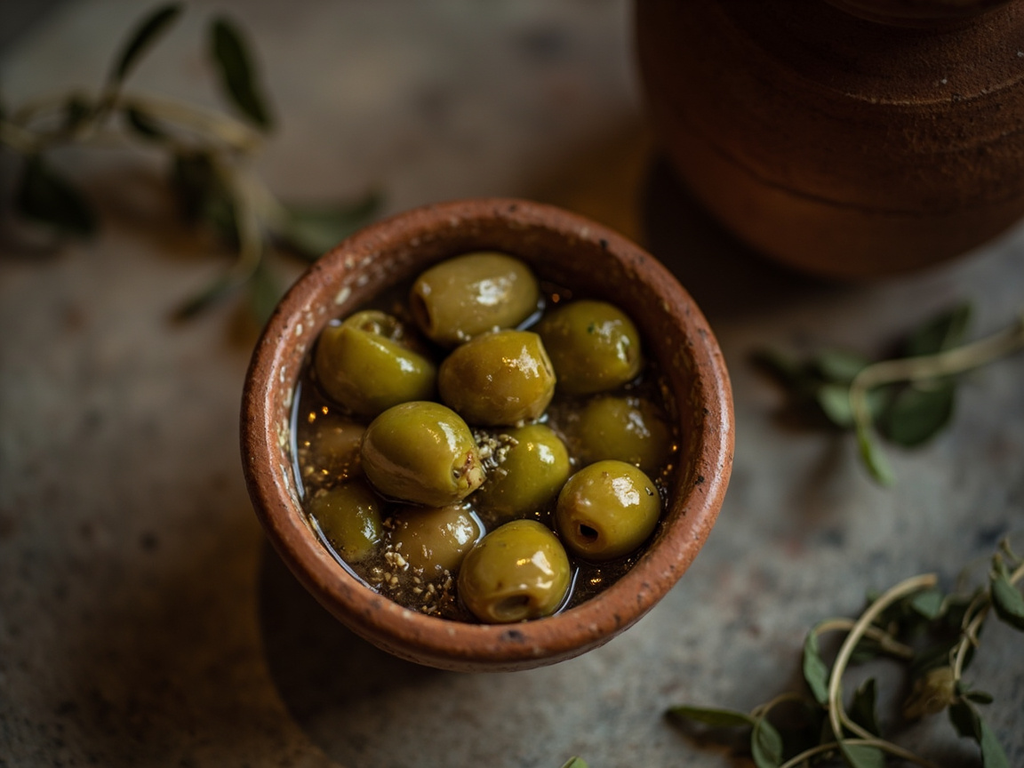
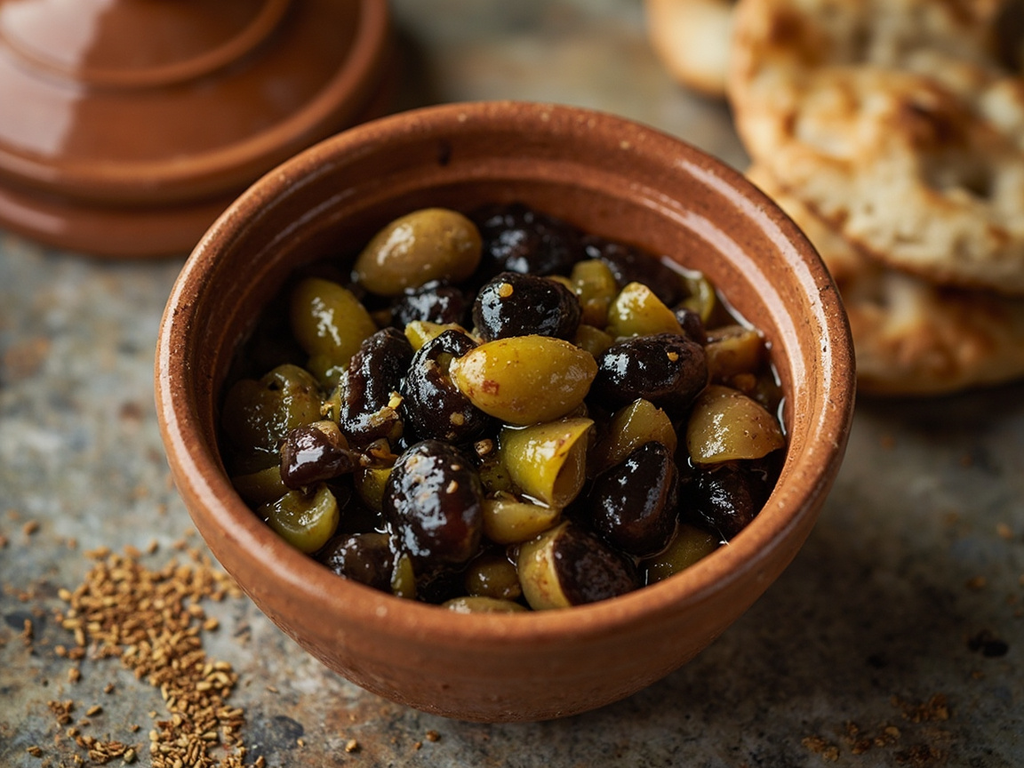
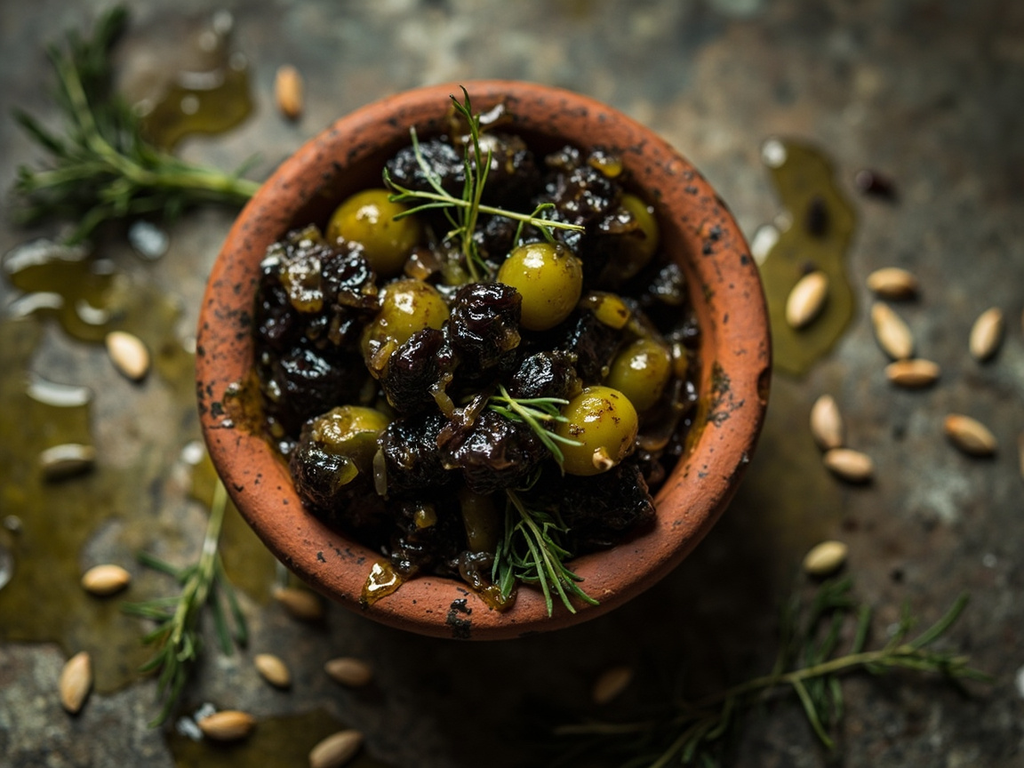
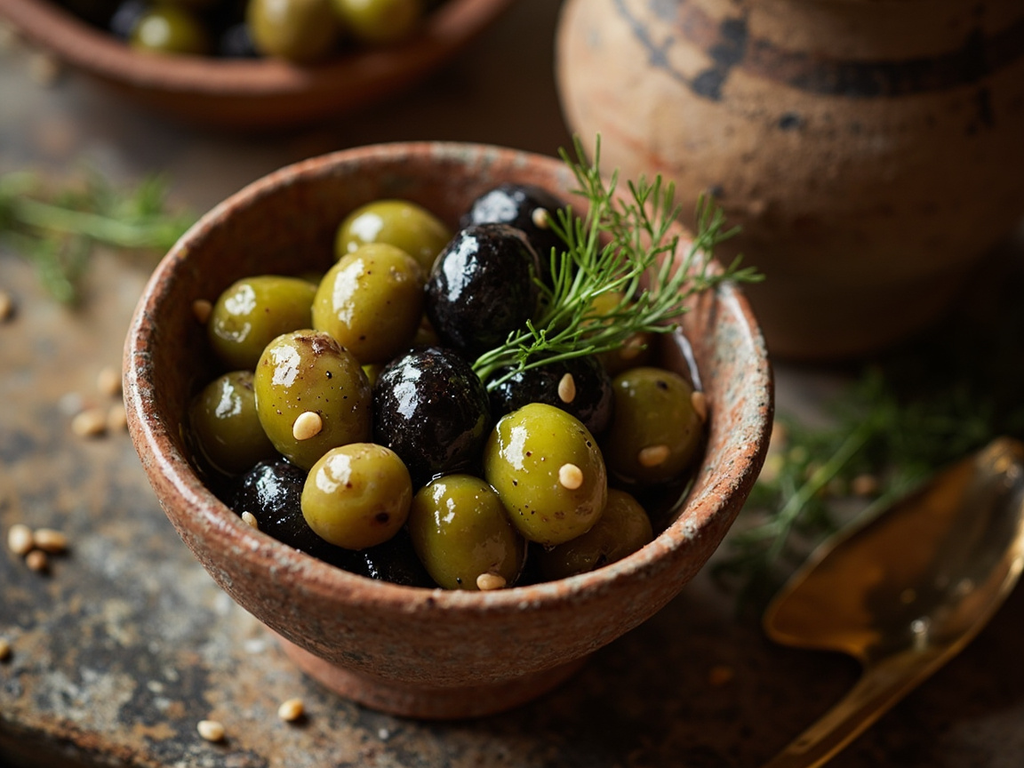
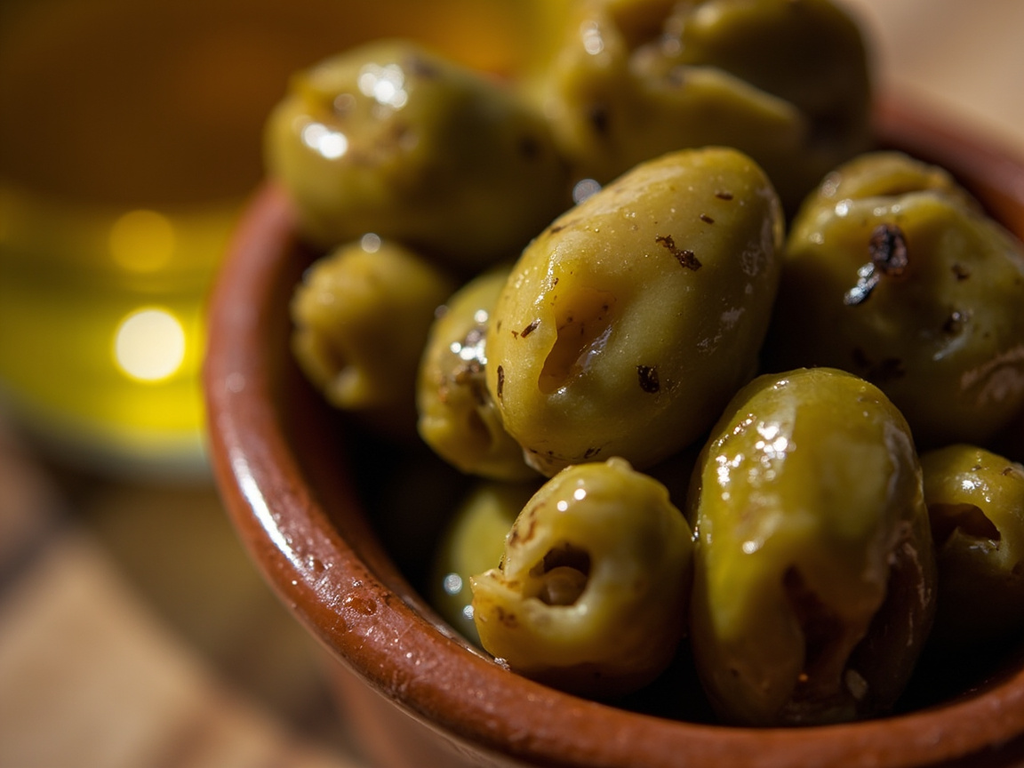
Fresh cracked olives, desalted and then scented with fennel, coriander, and vinegar. A homemade preserve that keeps and is nibbled throughout the meal.
The olive tree, you see, is the tree of the wise: it gives without haste and nourishes for a long time. We break our olives with a stone, bathe them in water for several days to remove the bitterness, then lay them in brine with fennel and coriander. Thus preserved, they wait patiently on the table for the moment when the guest's hand will reach for them, between two words. An olive, a little bread: what more does one need who knows how to think?
- •Fresh olives — a jar (base)
- •Salt — for brine (preservation)
- •Fennel seeds — a handful (flavor)
- •Coriander (seeds) — a handful (flavor)
- •Wine vinegar — a splash (acidity and preservation)
- •Olive oil — on top (protection and flavor)
Cracked Olives with Fennel and Coriander
Fresh cracked olives, desalted and then scented with fennel, coriander, and vinegar. A homemade preserve that keeps and is nibbled throughout the meal.
Why this dish? The olive was the soul of the Mediterranean pantry: preserved in brine, it accompanied every meal, from the humblest to the most refined. For Hypatia, whose frugal table made much of the olive and its oil, these flavored olives were the natural companion of daily bread and long evenings of discussion.
The olive tree, you see, is the tree of the wise: it gives without haste and nourishes for a long time. We break our olives with a stone, bathe them in water for several days to remove the bitterness, then lay them in brine with fennel and coriander. Thus preserved, they wait patiently on the table for the moment when the guest's hand will reach for them, between two words. An olive, a little bread: what more does one need who knows how to think?
Ingredients (period version)
- Fresh olives — a jar (base)
- Salt — for brine (preservation)
- Fennel seeds — a handful (flavor)
- Coriander (seeds) — a handful (flavor)
- Wine vinegar — a splash (acidity and preservation)
- Olive oil — on top (protection and flavor)
Ingredients
- Green olives in brine, lightly salted (or fresh olives if available) — 300 g (base)
- Fennel seeds — 1 tsp (flavor)
- Coriander seeds — 1 tsp (flavor)
- White wine vinegar — 2 tbsp (acidity)
- Olive oil — 3 tbsp (binder and protection)
- Garlic or onion ring (optional) — 1 clove (aromatic)
Method
- If using fresh olives, crack them and soak in water for 7 to 10 days, changing the water daily to remove bitterness.
- If using store-bought brined olives, rinse and drain.
- Lightly crack the olives so they absorb flavors.
- Crush fennel and coriander seeds in a mortar.
- Mix olives, spices, vinegar, and oil in a jar; cover with a film of oil on top.
- Marinate in the fridge for at least 48 hours before serving; keeps for several weeks.
How it was made : Cato the Elder (De agri cultura) and Columella (De re rustica) describe precisely the preservation of olives in brine flavored with fennel, mastic, and coriander. It was a basic domestic skill throughout the ancient Mediterranean world.
The contemporary twist : Serve in a small bowl with an orange zest and a fresh fennel frond, as a contemporary Mediterranean amuse-bouche.
Sources : Cato the Elder, De agri cultura · Columella, De re rustica, Book XII
Hypatia of Alexandria · Charactorium