 flip
flipEpityrum (black and green olive relish)
Epityrum (black and green olive relish)
Why this dish? A chopped olive spread that keeps in a jar, epityrum accompanied the opening of meals. When Ovid, exiled at Tomis, complained of the harsh local table and bad wine, it was such Mediterranean preserves — olives, oil — that he regretted from Rome.
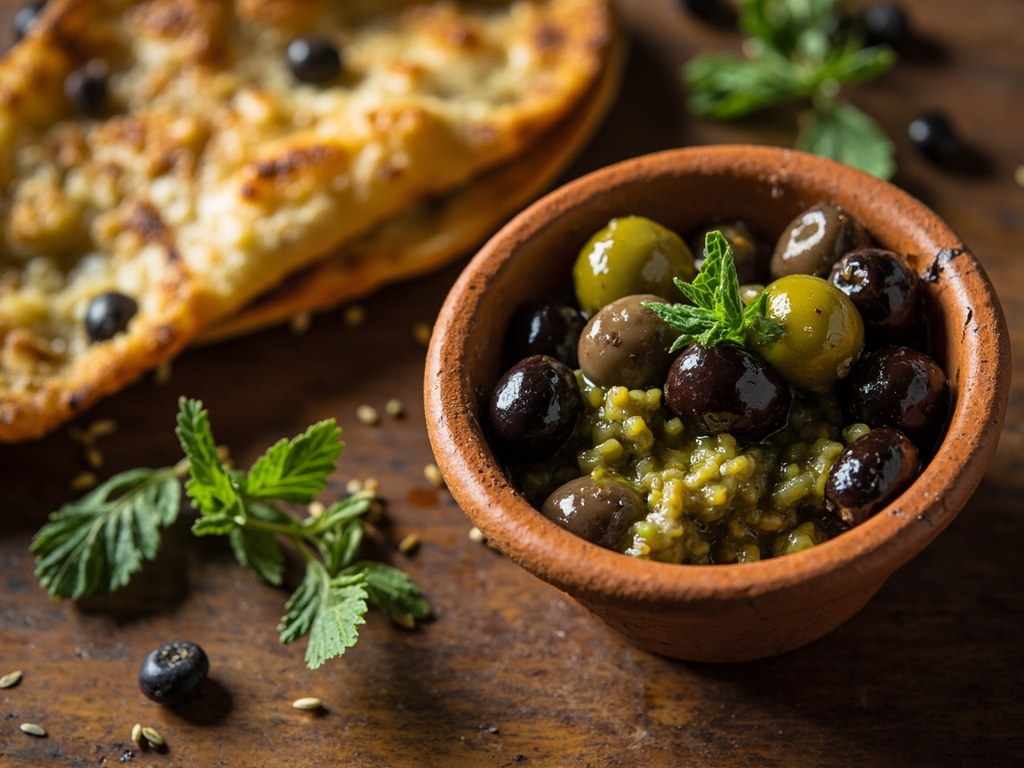
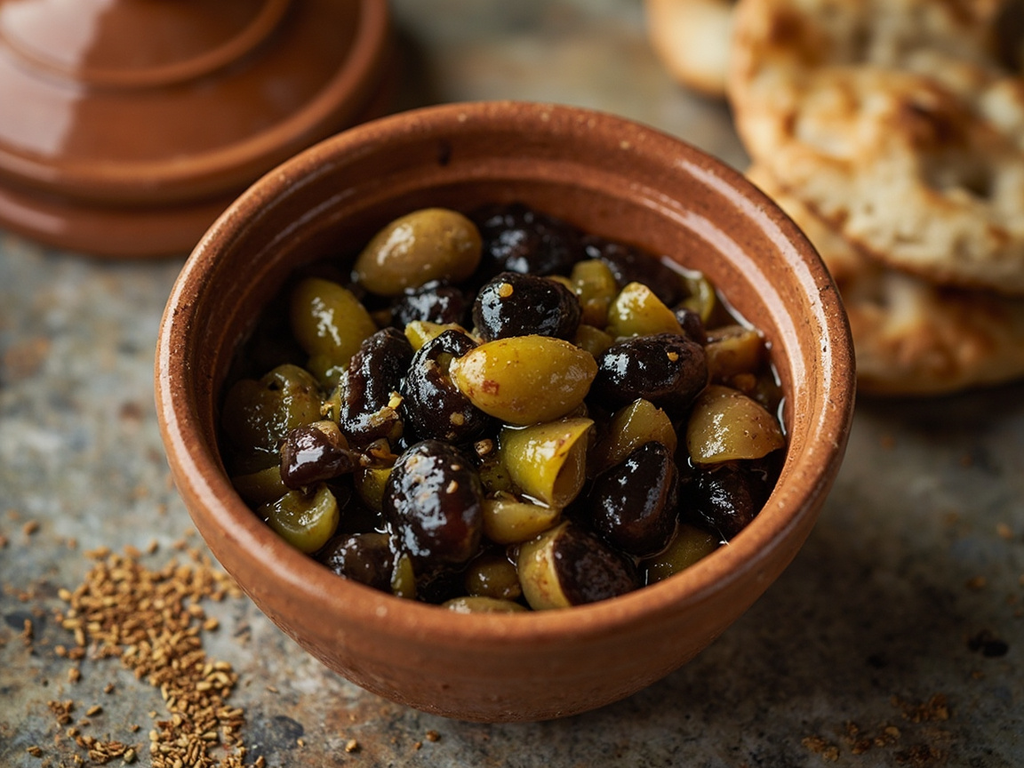
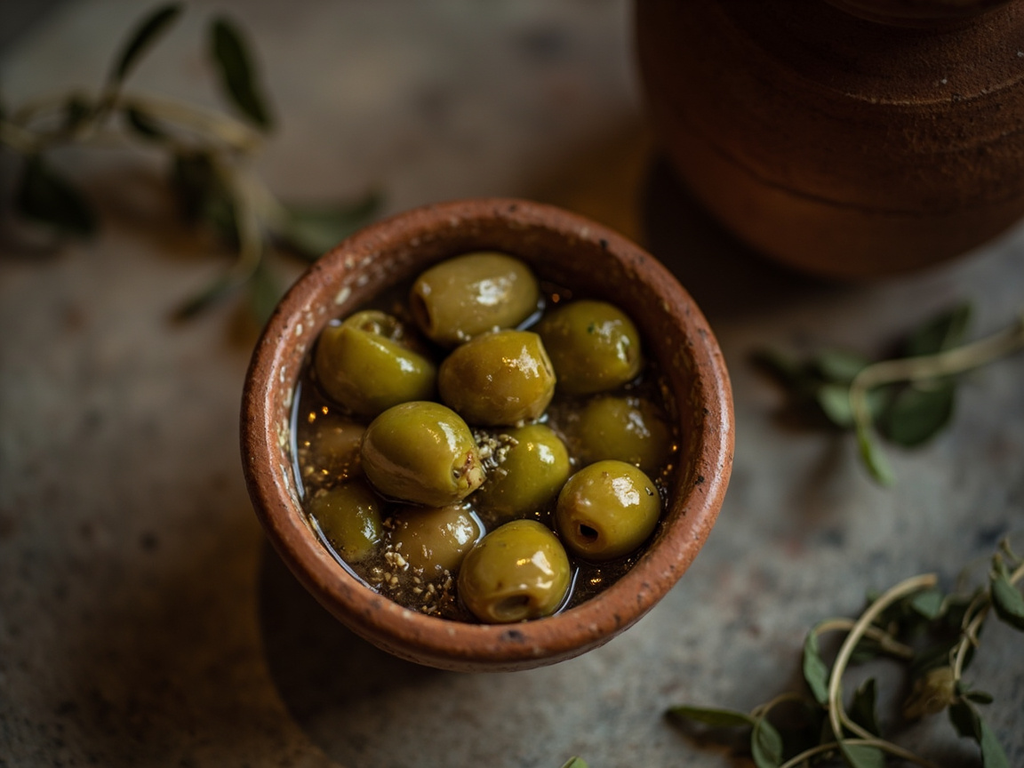
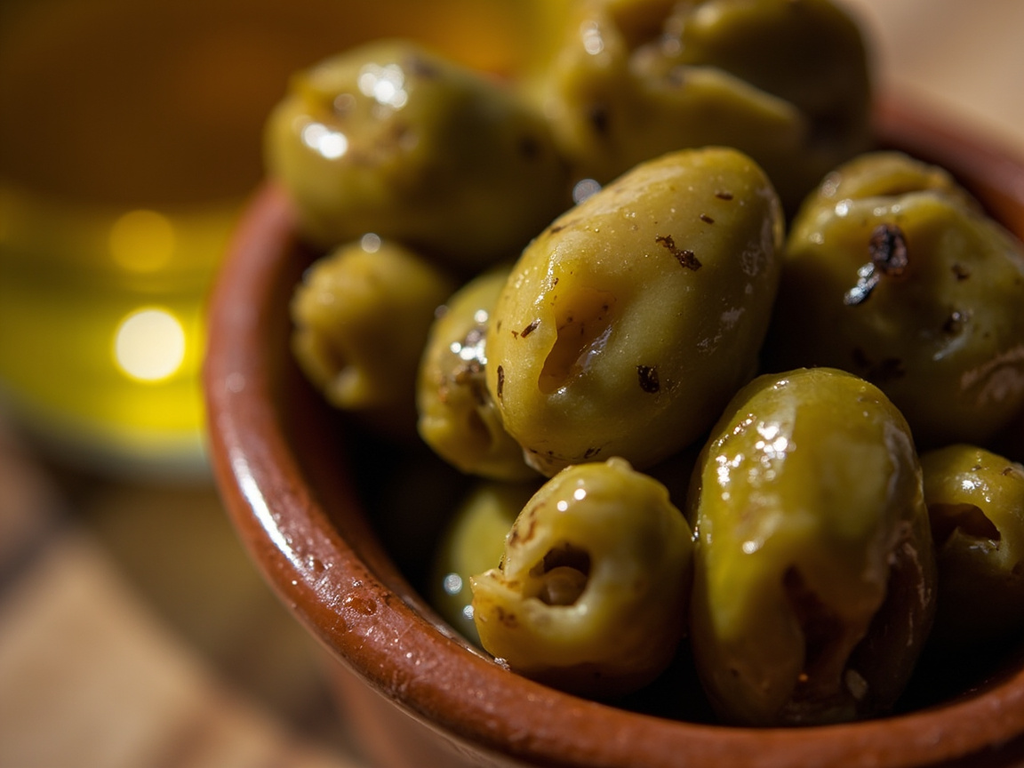
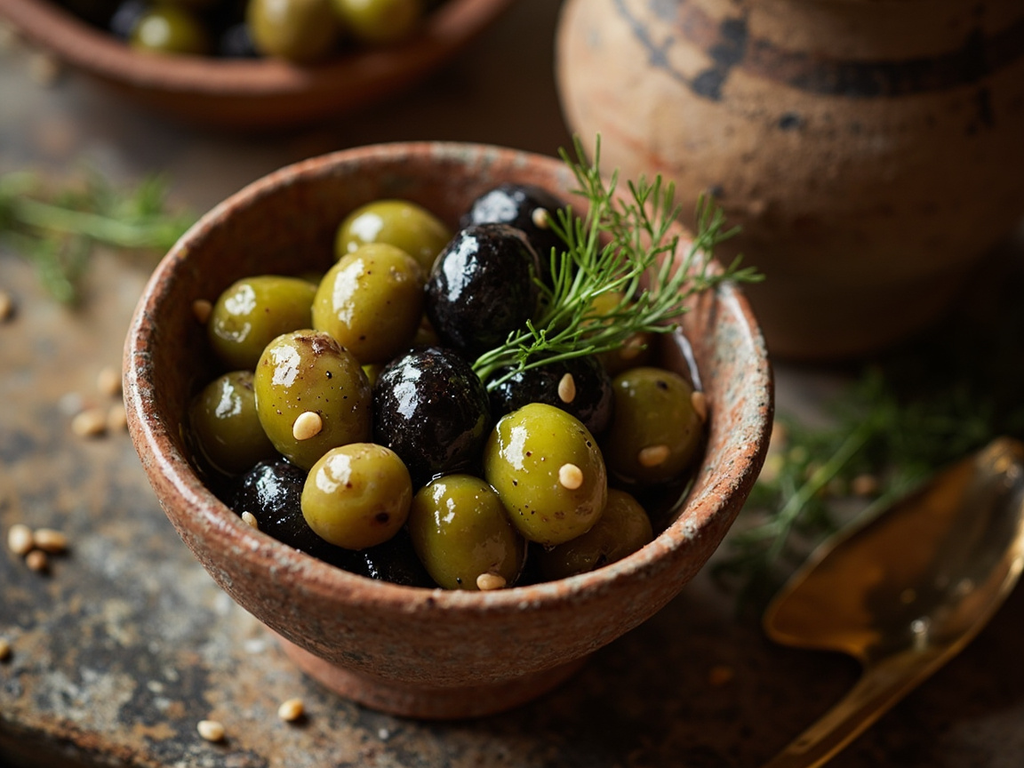
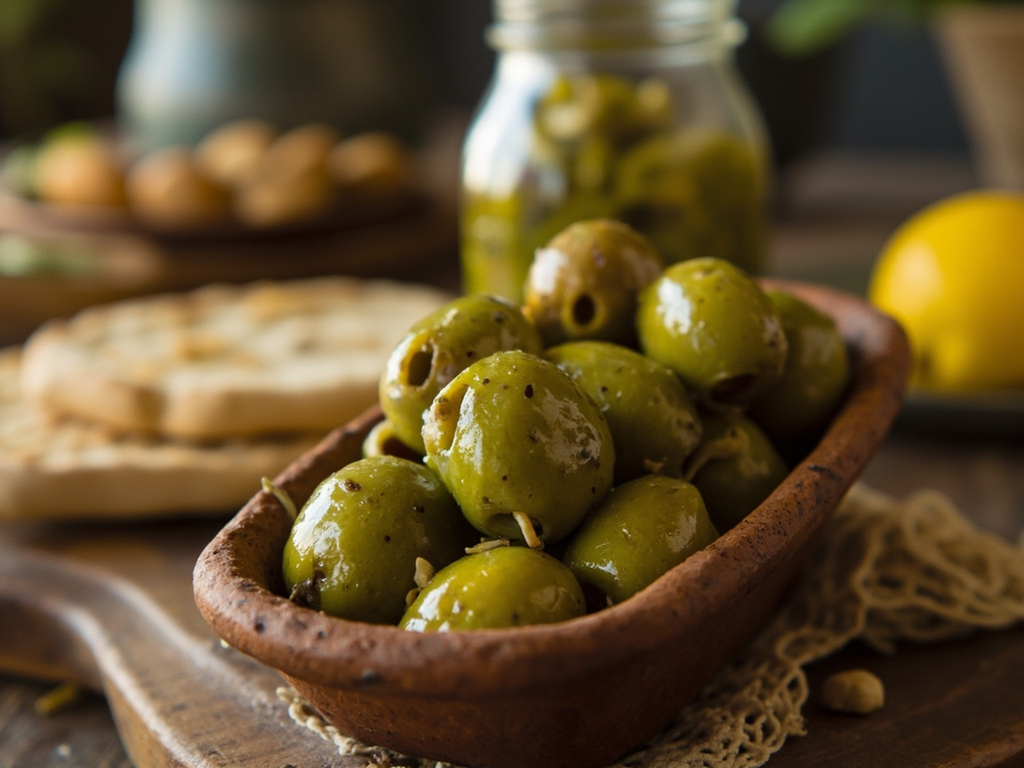
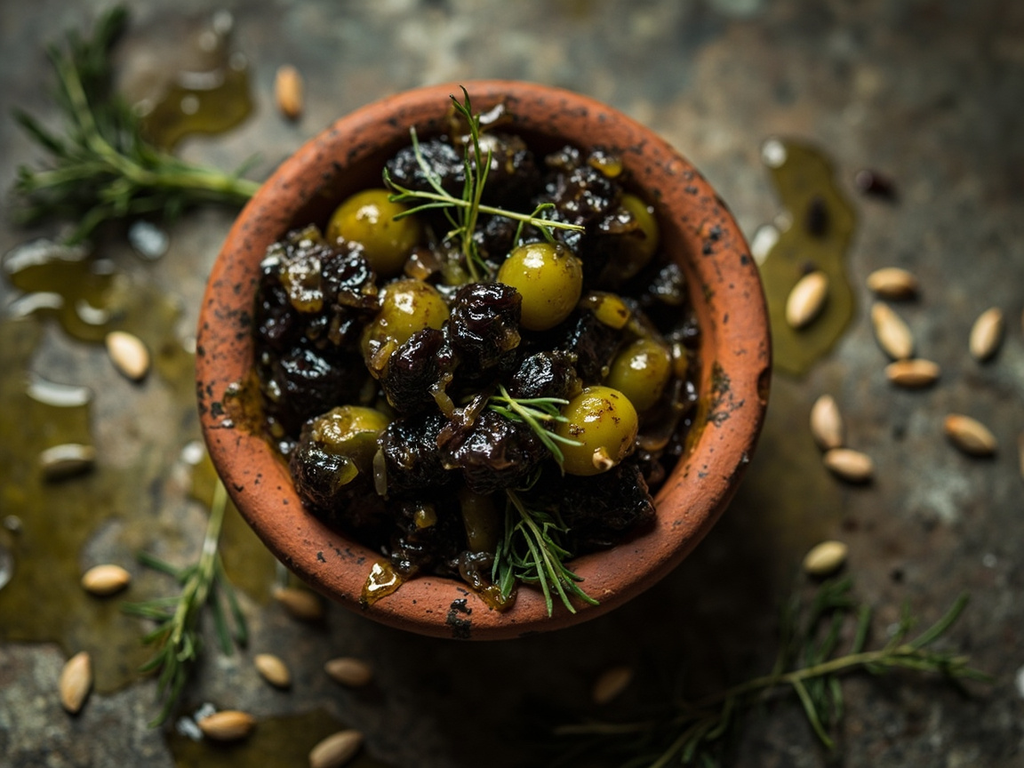
Chopped pitted olives seasoned with oil, vinegar, and herbs, preserved in a jar. A Mediterranean staple with a bold taste, at once bitter, sour, and salty.
On the shores of the Pontus where the cold bites and the wine smells of barbary, I dream of the olives of my homeland. In Rome, we pitted the black fruits, chopped them fine with oil, vinegar, and fennel, and packed it all in a jar — thus we kept a little summer for lean days. Taste this bitter and lively paste, reader: it is all the sun of Italy that I, an exile, can no longer reach.
- •Mixed black and green olives — a full jar (base)
- •Olive oil — generously (preservation and binder)
- •Vinegar — a dash (acidity and preservation)
- •Fennel seeds, cumin, mint — a pinch of each (aroma)
- •Fresh coriander — a few sprigs (freshness)
Epityrum (black and green olive relish)
Chopped pitted olives seasoned with oil, vinegar, and herbs, preserved in a jar. A Mediterranean staple with a bold taste, at once bitter, sour, and salty.
Why this dish? A chopped olive spread that keeps in a jar, epityrum accompanied the opening of meals. When Ovid, exiled at Tomis, complained of the harsh local table and bad wine, it was such Mediterranean preserves — olives, oil — that he regretted from Rome.
On the shores of the Pontus where the cold bites and the wine smells of barbary, I dream of the olives of my homeland. In Rome, we pitted the black fruits, chopped them fine with oil, vinegar, and fennel, and packed it all in a jar — thus we kept a little summer for lean days. Taste this bitter and lively paste, reader: it is all the sun of Italy that I, an exile, can no longer reach.
Ingredients (period version)
- Mixed black and green olives — a full jar (base)
- Olive oil — generously (preservation and binder)
- Vinegar — a dash (acidity and preservation)
- Fennel seeds, cumin, mint — a pinch of each (aroma)
- Fresh coriander — a few sprigs (freshness)
Ingredients
- Pitted black olives — 200 g (base)
- Pitted green olives — 100 g (bitterness)
- Extra virgin olive oil — 4 tbsp (binder and preservation)
- Wine vinegar — 1 tbsp (acidity)
- Fennel and cumin seeds — 1 tsp total (aroma)
- Fresh mint and coriander — 1 tbsp chopped (freshness)
Method
- Pit the olives if necessary.
- Chop them coarsely with a knife or in a mortar (not to a complete purée).
- Lightly crush the fennel and cumin seeds to release their aromas.
- Mix olives, oil, vinegar, spices, and chopped herbs.
- Pack into a jar, cover with a film of oil, and keep cool; best after a day's rest.
How it was made : Cato the Elder gives the recipe for epityrum in his *De Agricultura*: green, black, and variegated olives pitted, mixed with oil, vinegar, and herbs such as coriander, fennel, rue, and mint. It was a common preserve in Roman larders.
The contemporary twist : Served as an ancient tapenade on grilled crostini, with an orange zest to brighten the bitterness.
Sources : Cato the Elder, De Agricultura, 119
Ovid · Charactorium