 flip
flipMarinated Olives with Fennel and Coriander
Marinated Olives with Fennel and Coriander
Why this dish? The olive was part of the scholar's daily Mediterranean life, mentioned among his known foods. Preserved in brine, it could be stored for months — a basic provision always ready on the table, to nibble with bread between calculation sessions.
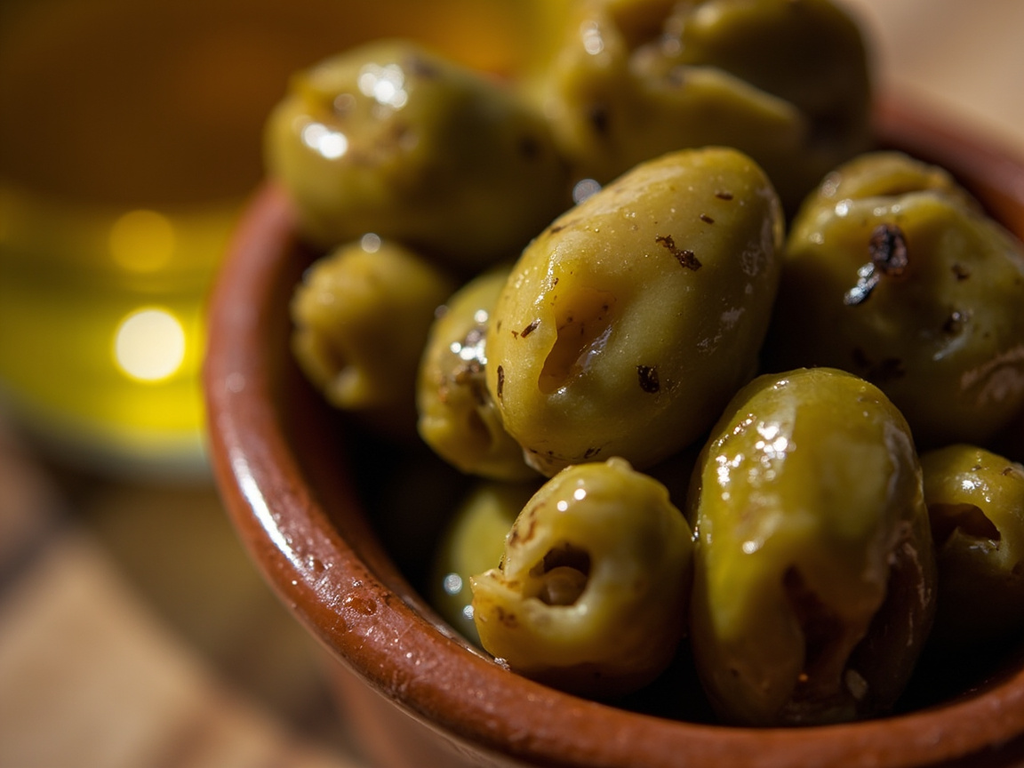
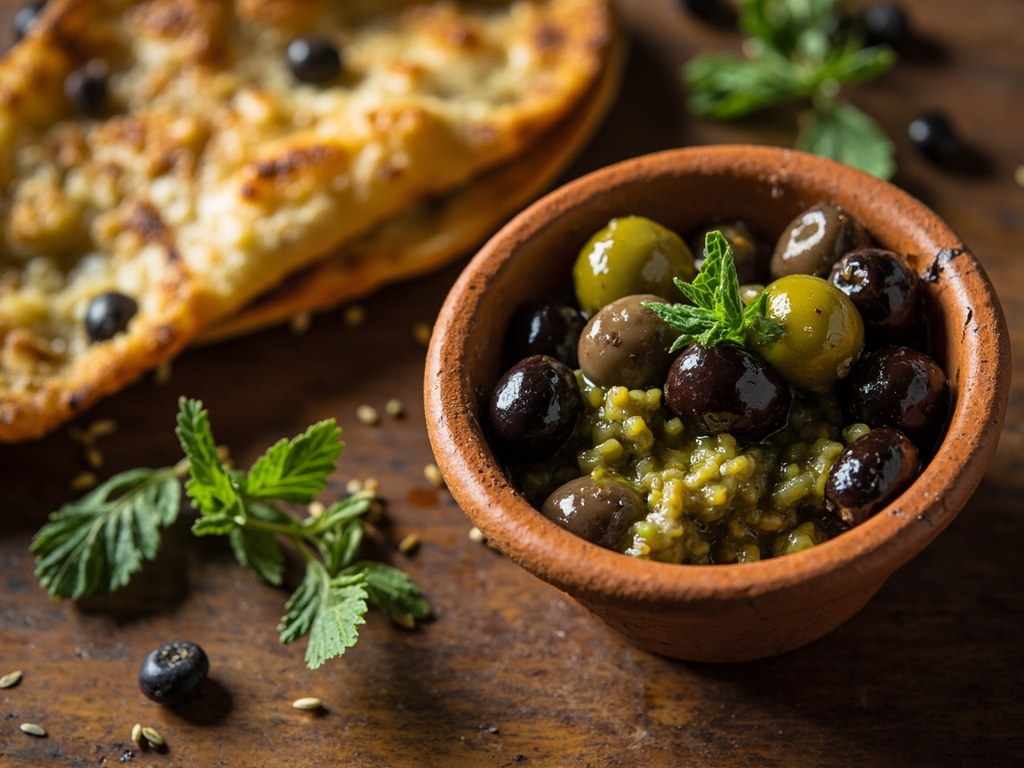
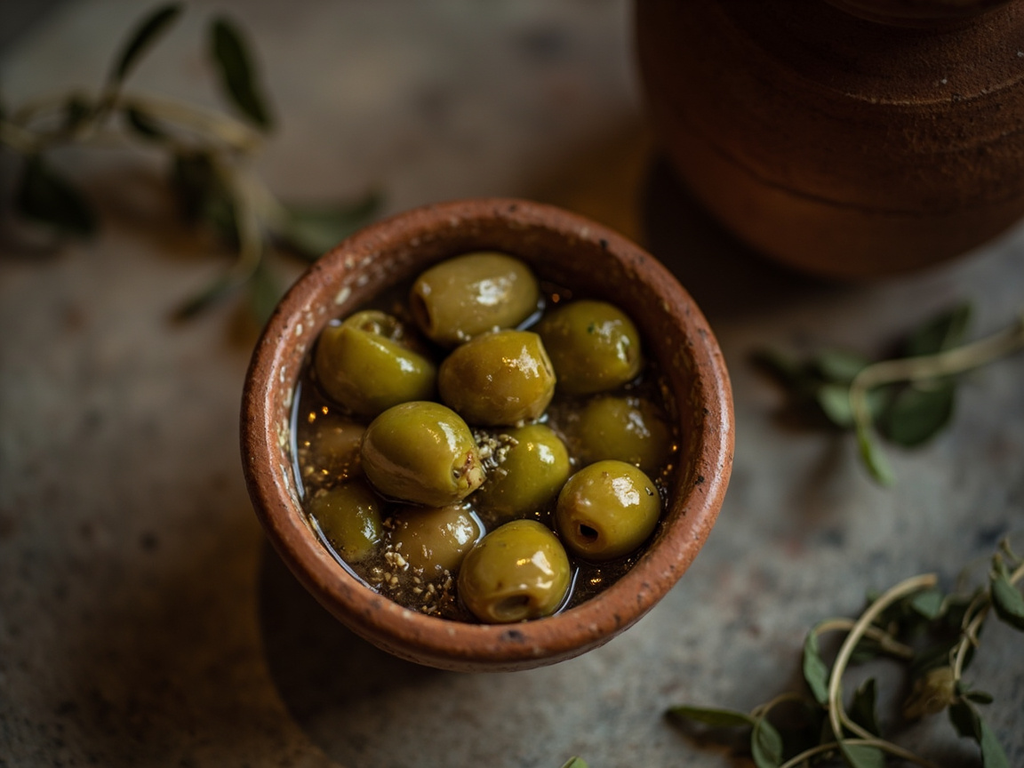
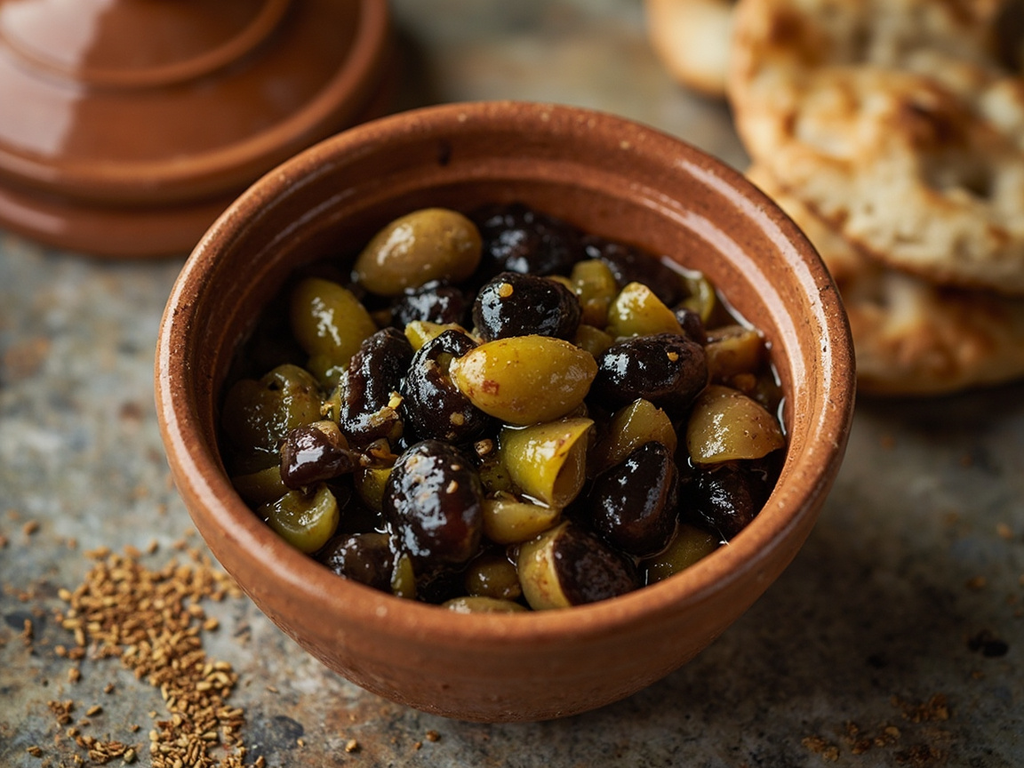
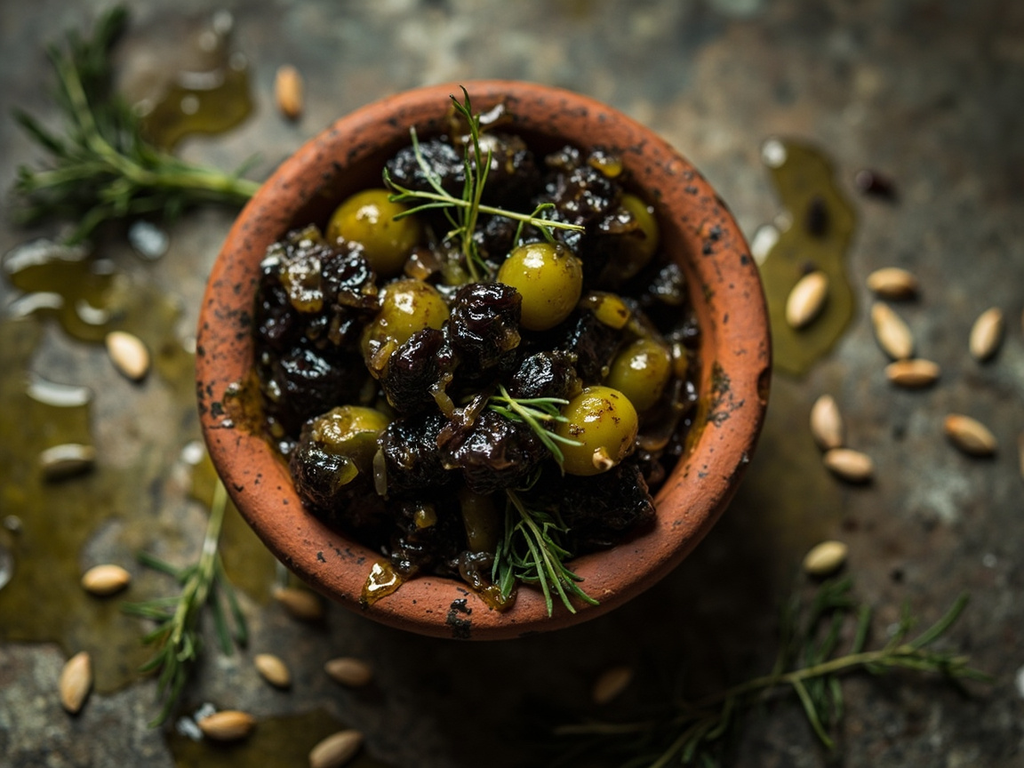
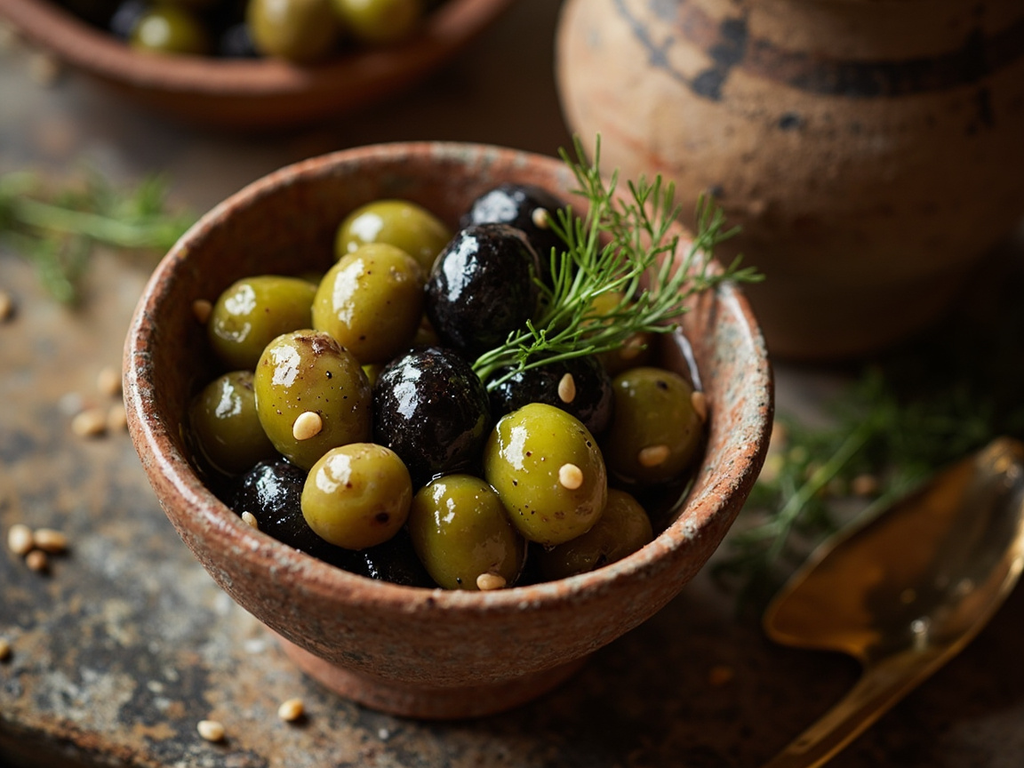
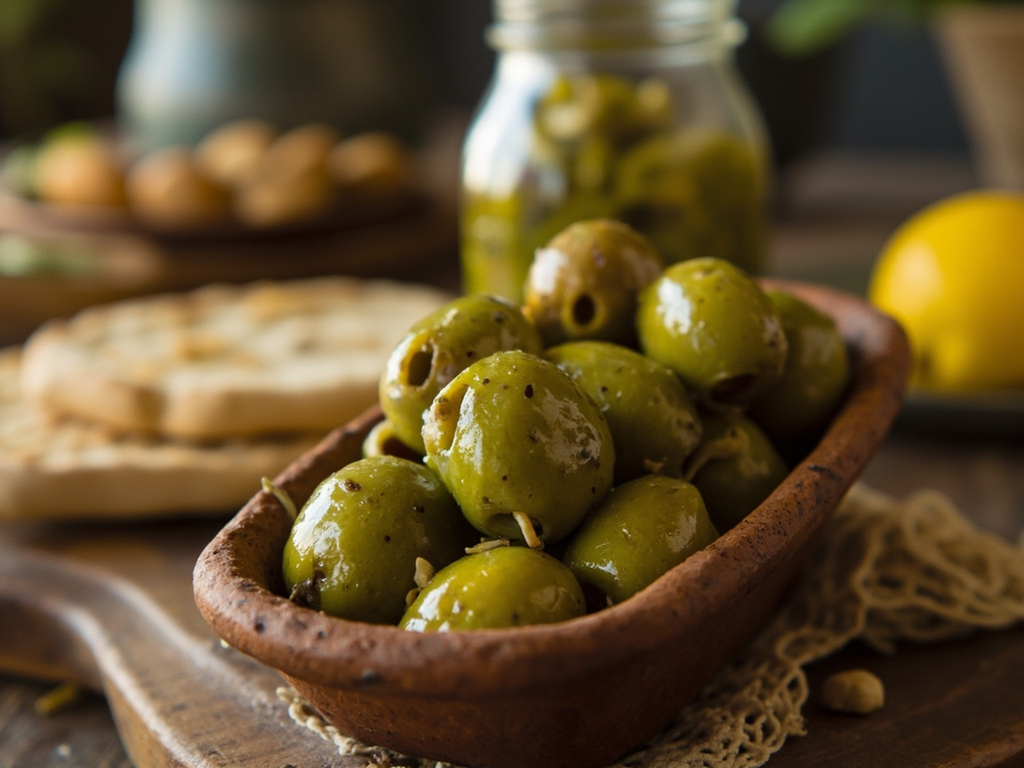
Split olives, purged of bitterness, then preserved in a brine flavored with fennel, coriander, and zest — bitter, tangy, and salty. The reserve that never runs out in the Alexandrian pantry.
A house without olives in brine is a poorly kept house. You split the fruits, let them purge their bitterness in water, then lay them in the brine with wild fennel and coriander. Patience: like an observation repeated night after night until it becomes certainty, the olive needs time to become good. When a disciple knocked at my door, bread and these olives were there, ready — hospitality is not prepared, it is kept.
- •Fresh olives — a full basket (base)
- •Salt — for brine (preservation)
- •Fennel (seeds and stalks) — a handful (signature flavor)
- •Coriander seeds — a handful (flavor)
- •Wine vinegar — a dash (acidity)
- •Olive oil — to cover (protection)
Marinated Olives with Fennel and Coriander
Split olives, purged of bitterness, then preserved in a brine flavored with fennel, coriander, and zest — bitter, tangy, and salty. The reserve that never runs out in the Alexandrian pantry.
Why this dish? The olive was part of the scholar's daily Mediterranean life, mentioned among his known foods. Preserved in brine, it could be stored for months — a basic provision always ready on the table, to nibble with bread between calculation sessions.
A house without olives in brine is a poorly kept house. You split the fruits, let them purge their bitterness in water, then lay them in the brine with wild fennel and coriander. Patience: like an observation repeated night after night until it becomes certainty, the olive needs time to become good. When a disciple knocked at my door, bread and these olives were there, ready — hospitality is not prepared, it is kept.
Ingredients (period version)
- Fresh olives — a full basket (base)
- Salt — for brine (preservation)
- Fennel (seeds and stalks) — a handful (signature flavor)
- Coriander seeds — a handful (flavor)
- Wine vinegar — a dash (acidity)
- Olive oil — to cover (protection)
Ingredients
- Green olives in brine (drained) — 300 g (base (modern shortcut))
- Fennel seeds — 1 tsp (signature flavor)
- Coriander seeds — 1 tsp, crushed (flavor)
- Lemon zest — 1 strip (fresh acidity)
- White wine vinegar — 2 tbsp (acidity)
- Olive oil — 5 tbsp (marinade)
- Fennel stalk or dill — a few sprigs (herb)
Method
- Drain and rinse the olives. If they have pits, lightly crack them with a knife to let the marinade penetrate.
- Roughly crush the fennel and coriander seeds in a mortar to release their aromas.
- Mix olives, spices, lemon zest, fennel sprigs, vinegar, and oil in a clean jar.
- Cover and marinate in the refrigerator for at least 3 days (ideally a week), shaking daily.
- Serve at room temperature with bread; keeps for several weeks in the fridge, covered with oil.
How it was made : Cato the Elder, in his agricultural treatise, already gives recipes for preserved olives (epityrum) with fennel and herbs. Brine preservation was essential for year-round supply throughout the ancient Mediterranean world.
The contemporary twist : Presented in a small glass jar with the zest and fennel sprigs, they make a gourmet 'ancient-style' gift — Ptolemy's aperitif to offer.
Sources : Cato the Elder, De agricultura (epityrum, preserved olives) · Columella, De re rustica (olive preservation)
Ptolemy · Charactorium