 flip
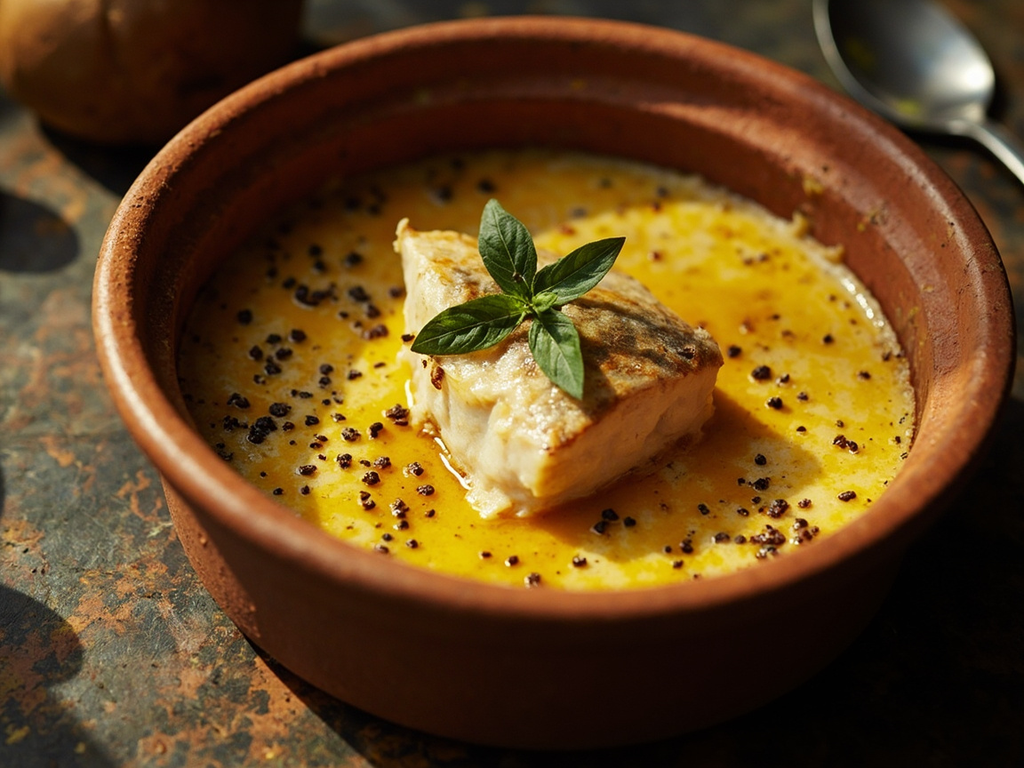
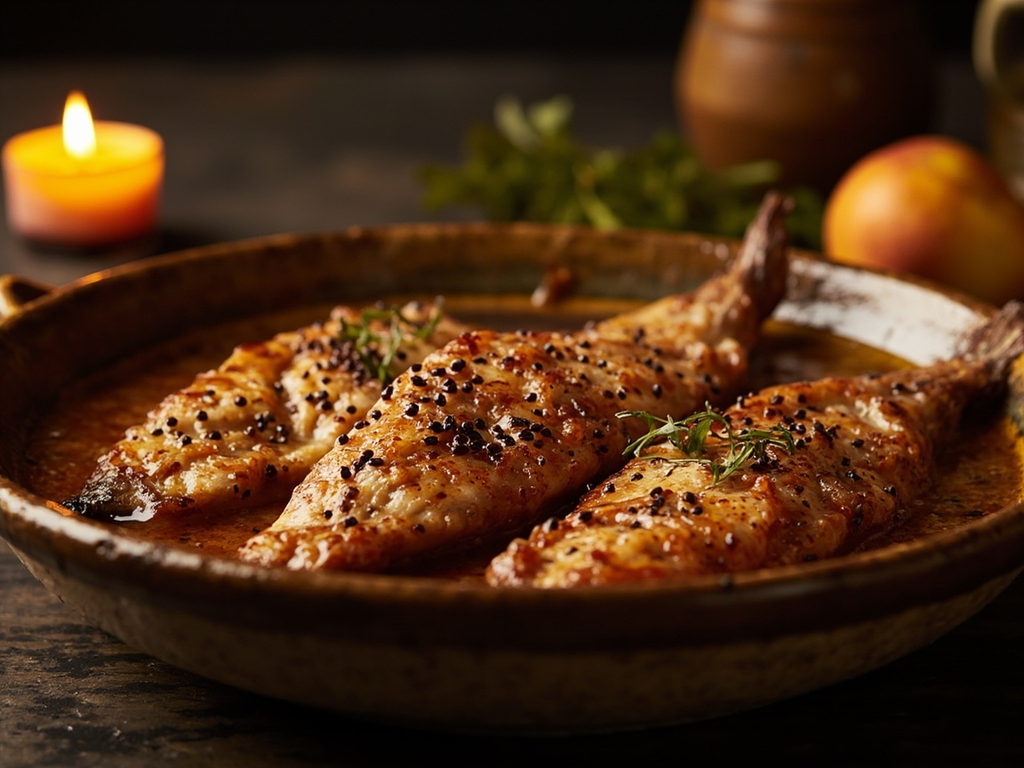
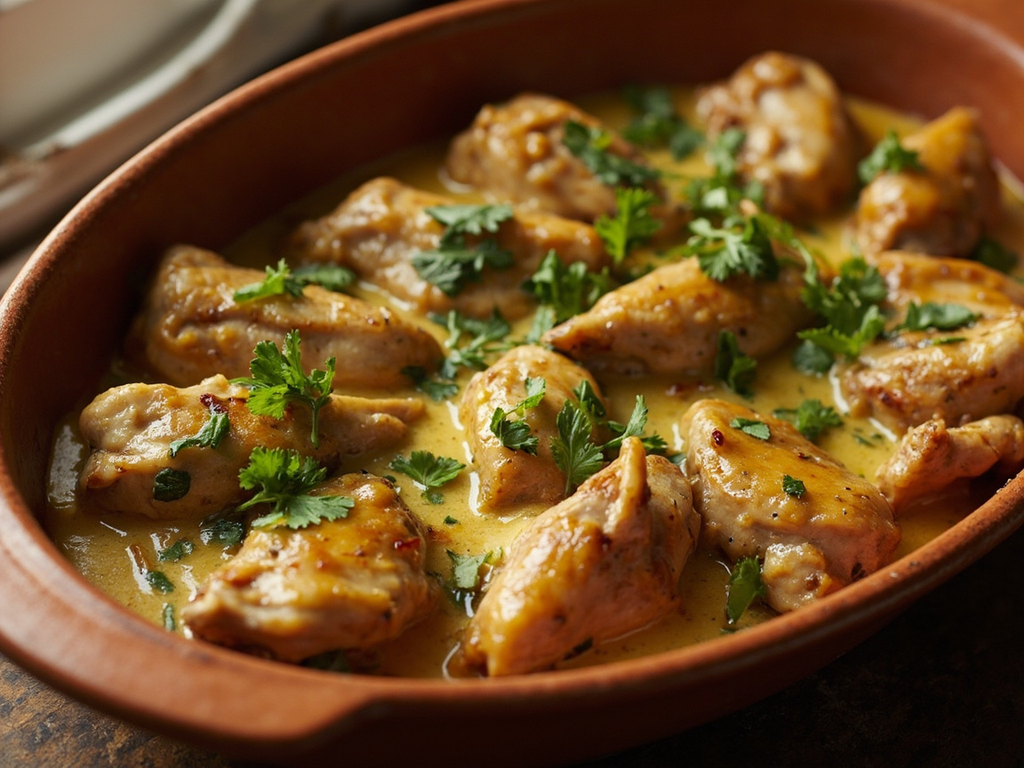
flipPullum in patina — braised chicken with garum and herbs
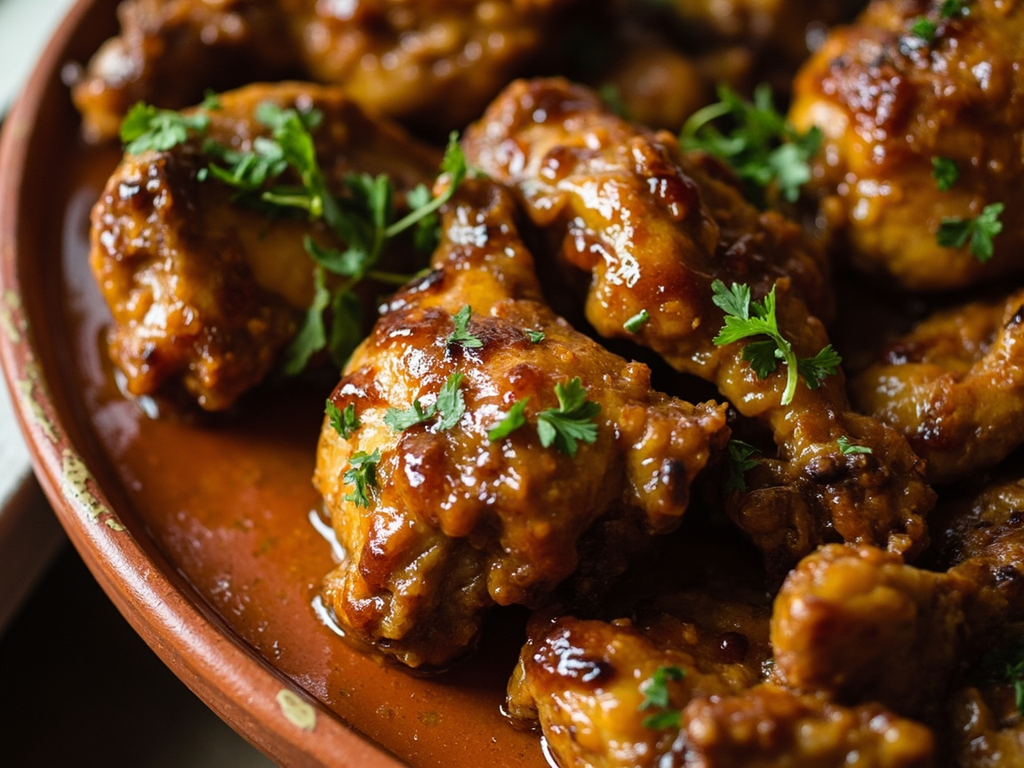
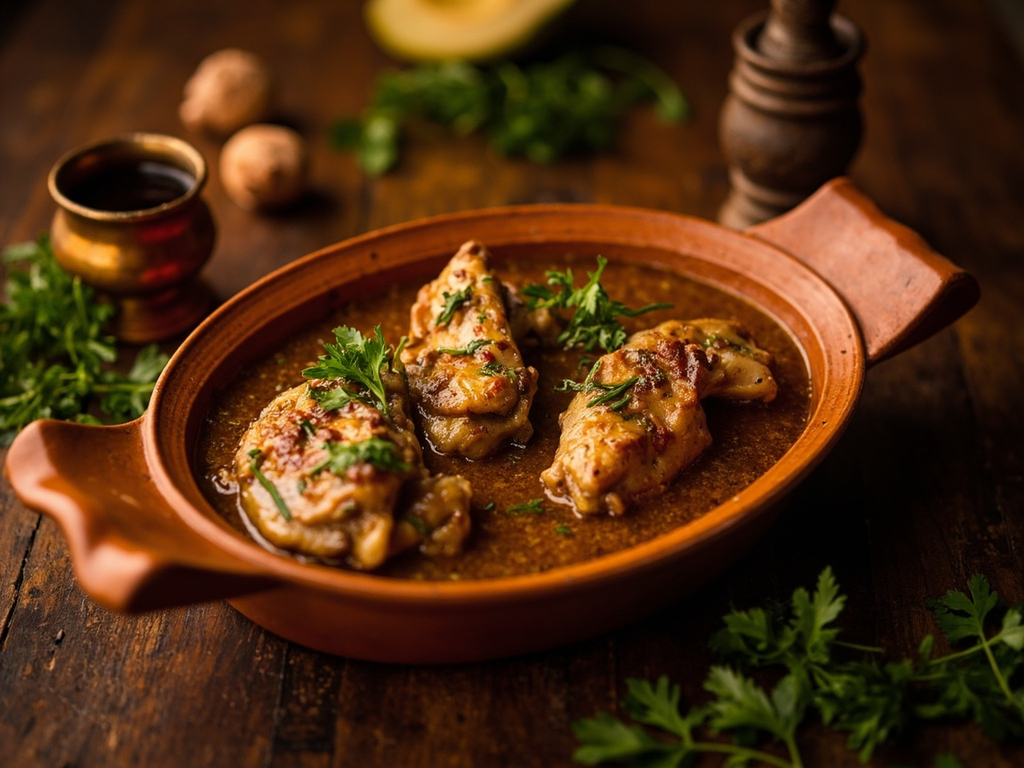
Pullum in patina — braised chicken with garum and herbs
Why this dish? While sources mention roasted peacocks and moray eels on Agrippina's table, these dishes are now difficult or illegal. Braised chicken in patina, a classic from Apicius served in all great houses, faithfully recreates the prima mensa of a Julio-Claudian imperial banquet accessible today.
Poultry braised in a broth flavored with garum, wine, lovage, and coriander, thickened with eggs. A tender, deeply umami, and slightly tangy dish, served warm as the centerpiece of the feast.
Under Claudius, my husband, I presided over banquets that Rome still talks about. The poultry was left to simmer in wine and garum, with lovage and coriander, until the flesh fell off. Then the sauce was thickened with eggs so it would coat the spoon — a refinement my cook learned from the best. I oversaw everything, down to the last dish: whoever controls an emperor's table already holds half his power. Eat, and judge whether a woman knew how to entertain.
- •Young rooster or poularde — one (meat)
- •Garum — a drizzle (umami seasoning)
- •White wine and passum (raisin wine) — a cup (braising liquid)
- •Lovage, coriander, oregano — a bunch (herbs)
- •Pepper, celery seeds — ground in mortar (spices)
- •Eggs — two (thickener)
Pullum in patina — braised chicken with garum and herbs
Poultry braised in a broth flavored with garum, wine, lovage, and coriander, thickened with eggs. A tender, deeply umami, and slightly tangy dish, served warm as the centerpiece of the feast.
Why this dish? While sources mention roasted peacocks and moray eels on Agrippina's table, these dishes are now difficult or illegal. Braised chicken in patina, a classic from Apicius served in all great houses, faithfully recreates the prima mensa of a Julio-Claudian imperial banquet accessible today.
Under Claudius, my husband, I presided over banquets that Rome still talks about. The poultry was left to simmer in wine and garum, with lovage and coriander, until the flesh fell off. Then the sauce was thickened with eggs so it would coat the spoon — a refinement my cook learned from the best. I oversaw everything, down to the last dish: whoever controls an emperor's table already holds half his power. Eat, and judge whether a woman knew how to entertain.
Ingredients (period version)
- Young rooster or poularde — one (meat)
- Garum — a drizzle (umami seasoning)
- White wine and passum (raisin wine) — a cup (braising liquid)
- Lovage, coriander, oregano — a bunch (herbs)
- Pepper, celery seeds — ground in mortar (spices)
- Eggs — two (thickener)
Ingredients
- Free-range chicken, cut into pieces — 1.3 kg (meat)
- Fish sauce (garum substitute) — 2 tbsp (salty umami)
- Dry white wine — 200 ml (braising liquid)
- Honey or blended raisins — 1 tbsp (passum note)
- Lovage leaves (or celery) — a few (signature herb)
- Fresh coriander and oregano — 1 handful (herbs)
- Pepper, celery seeds — 1/2 tsp each (spices)
- Eggs — 2 (sauce thickener)
Method
- Brown the chicken pieces in a little olive oil in a wide pot.
- Deglaze with white wine, add fish sauce, honey, crushed spices, and half the herbs.
- Cover and braise over low heat for 35-40 minutes until the meat is tender.
- Remove the chicken and keep warm. Beat the eggs, then whisk them into the hot juice off the heat to thicken without curdling.
- Pour the sauce over the chicken, sprinkle with the remaining fresh herbs, and serve warm.
How it was made : Apicius' patina refers to a dish thickened with eggs, cooked in a terrine. Garum, passum (sweet wine from dried grapes), and lovage form the aromatic triangle of haute Roman cuisine. It was served warm, as excessive heat was considered vulgar.
The contemporary twist : Plated as a single dish with a mirror glaze, garnished with edible borage flowers to evoke the gardens of the Palatine.
Sources : Apicius, De re coquinaria, book VI (poultry, patinae)
Agrippina the Younger · Charactorium