 flip
flipHerb-and-Garum Chicken, Apicius-Style
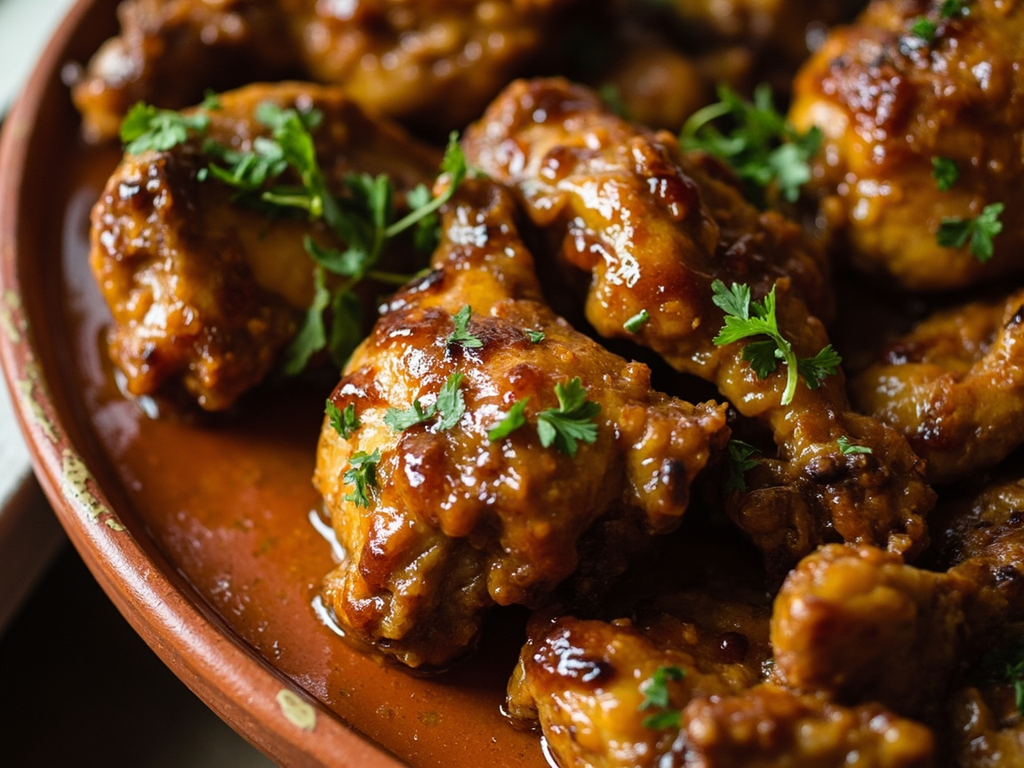
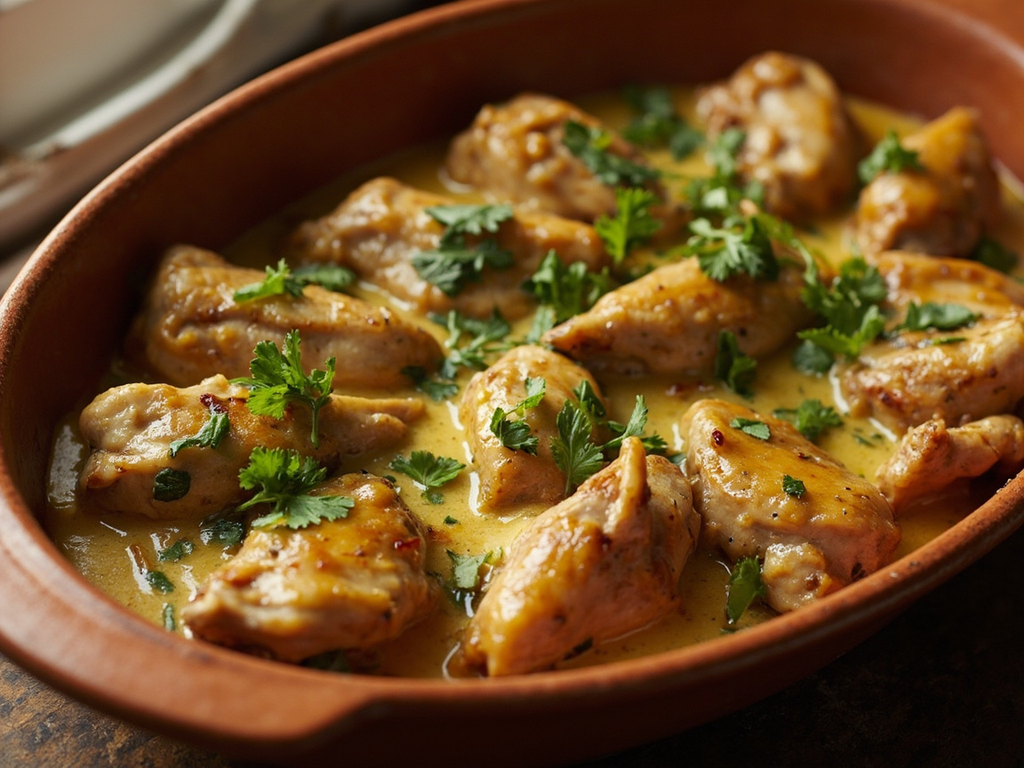
Herb-and-Garum Chicken, Apicius-Style
Why this dish? A member of the literary elite, friend of Maecenas and protégé of Augustus, Virgil was received at the great tables of Rome. Chicken prepared with garum, wine, and herbs is among the poultry served at the cena of the Augustan era later described by Apicius.
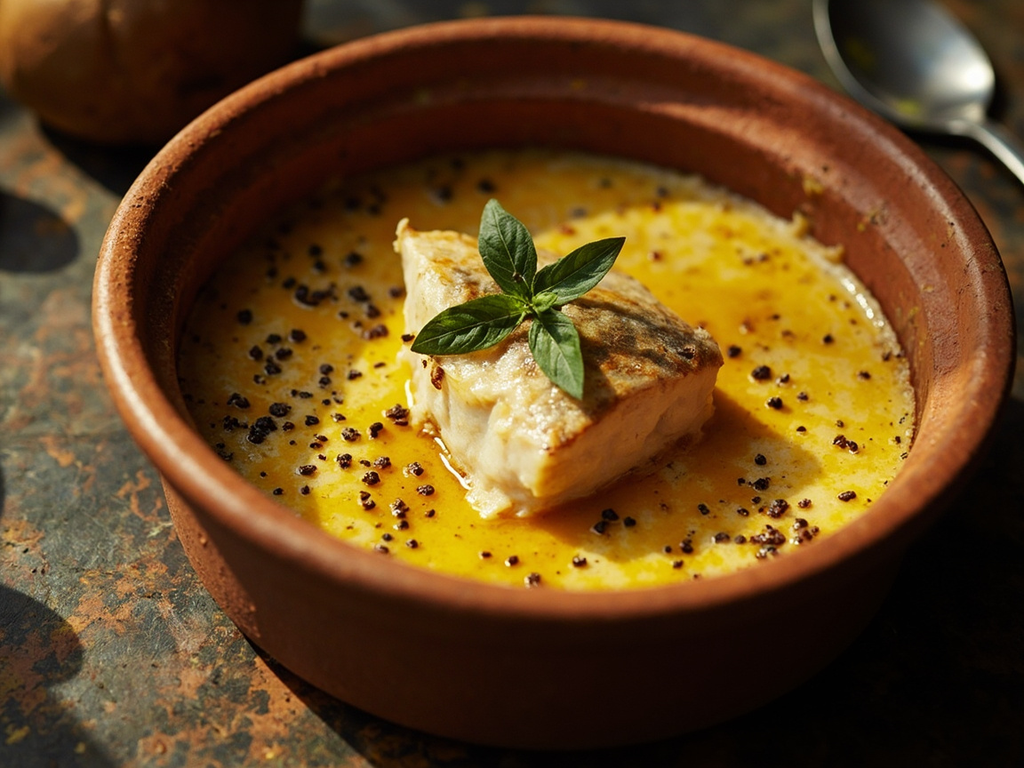
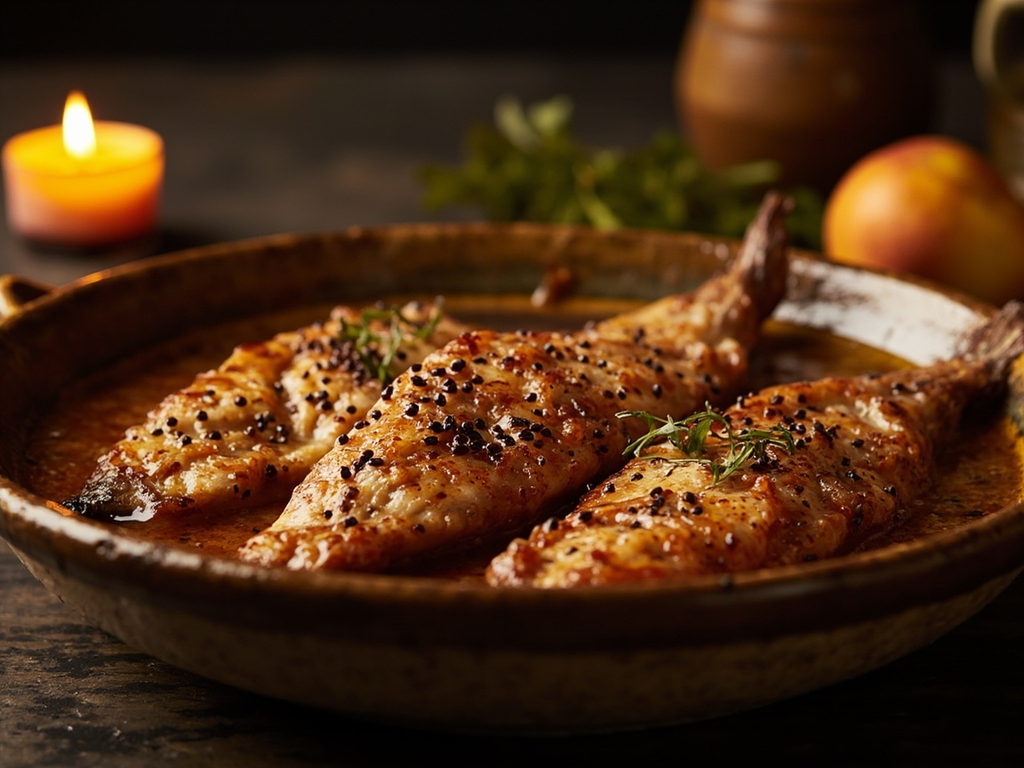
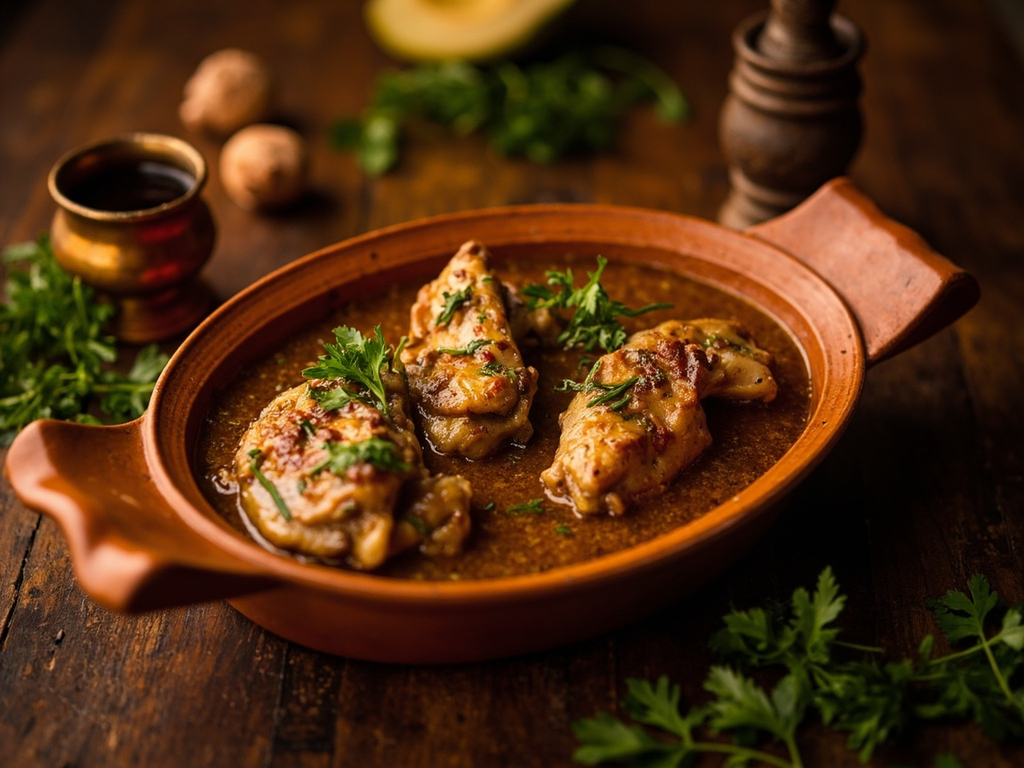
Poultry simmered in a broth flavored with garum, wine, lovage, and coriander, brightened with a touch of honey and vinegar — the characteristic sweet-and-sour of Roman banquets.
Reader, when Maecenas invited me to his table, poultry was served whose aroma alone was worth a poem. The cook moistened the bird with garum and wine, threw in lovage, coriander, a pinch of pepper from the East, then a tear of honey to soften the flavor of the sea. We dined reclining, cup in hand, while I recited a few lines of my Aeneid. Believe me: a good dish, like a good verse, must unite opposites — salt and sweet, strength and grace.
- •Chicken — one whole bird (centerpiece)
- •Garum (fermented fish sauce) — a few spoonfuls (salty umami)
- •White wine — a cup (cooking liquid)
- •Lovage and coriander — a handful (aromatics)
- •Honey — a spoonful (sweetness)
- •Pepper — a few grains (spice)
- •Olive oil — a drizzle (fat)
Herb-and-Garum Chicken, Apicius-Style
Poultry simmered in a broth flavored with garum, wine, lovage, and coriander, brightened with a touch of honey and vinegar — the characteristic sweet-and-sour of Roman banquets.
Why this dish? A member of the literary elite, friend of Maecenas and protégé of Augustus, Virgil was received at the great tables of Rome. Chicken prepared with garum, wine, and herbs is among the poultry served at the cena of the Augustan era later described by Apicius.
Reader, when Maecenas invited me to his table, poultry was served whose aroma alone was worth a poem. The cook moistened the bird with garum and wine, threw in lovage, coriander, a pinch of pepper from the East, then a tear of honey to soften the flavor of the sea. We dined reclining, cup in hand, while I recited a few lines of my Aeneid. Believe me: a good dish, like a good verse, must unite opposites — salt and sweet, strength and grace.
Ingredients (period version)
- Chicken — one whole bird (centerpiece)
- Garum (fermented fish sauce) — a few spoonfuls (salty umami)
- White wine — a cup (cooking liquid)
- Lovage and coriander — a handful (aromatics)
- Honey — a spoonful (sweetness)
- Pepper — a few grains (spice)
- Olive oil — a drizzle (fat)
Ingredients
- Chicken thighs — 4 pieces (centerpiece)
- Nuoc-mâm (modern substitute for garum) — 2 tablespoons (salty umami)
- Dry white wine — 20 cl (cooking liquid)
- Lovage (or celery) and fresh coriander — 1 handful (aromatics)
- Honey — 1 tablespoon (sweetness)
- Ground black pepper — 1/2 teaspoon (spice)
- Wine vinegar — 1 teaspoon (acidity)
- Olive oil — 2 tablespoons (fat)
Method
- Brown the chicken thighs in olive oil on all sides.
- Deglaze with white wine and add the nuoc-mâm (garum), pepper, and herbs.
- Cover and simmer over low heat for about 35 minutes, turning halfway through.
- Stir in the honey and vinegar, then let the sauce reduce uncovered for a few minutes.
- Serve drizzled with sauce, sprinkled with fresh coriander.
How it was made : Garum, a sauce made from salted fish fermented in the sun, was Rome's king condiment: it was produced in large quantities, especially in Hispania. Today, Asian nuoc-mâm is the closest equivalent. Apicius (De re coquinaria) lists numerous poultry recipes on this sweet-and-sour model.
The contemporary twist : Plate on a bed of millet polenta and name the dish 'Aeneid Chicken' — a nod to the wandering hero.
Sources : Apicius, De re coquinaria, book VI (Aves)
Virgil · Charactorium