 flip
flipThiéboudienne (rice with fish)
Thiéboudienne (rice with fish)
Why this dish? National dish cooked in Saint-Louis, its birthplace — the very cradle of thiéboudienne. For Aminata Sow Fall, it is the meal around which an entire household gathers, the living image of Senegalese commensality she describes in her work.
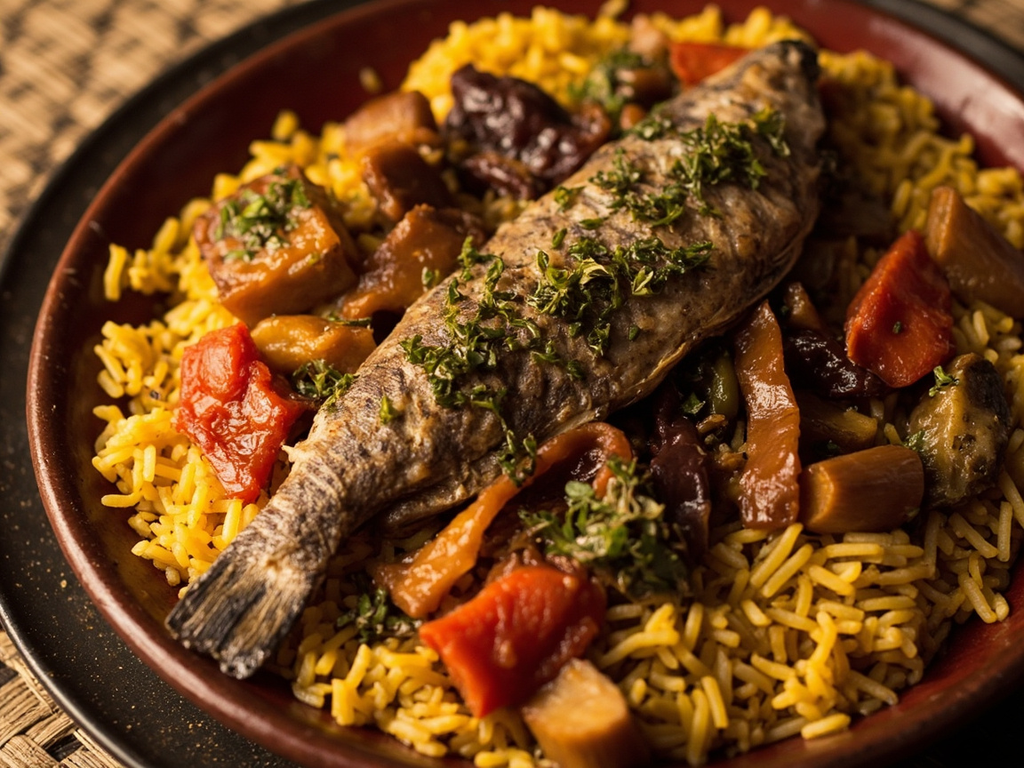
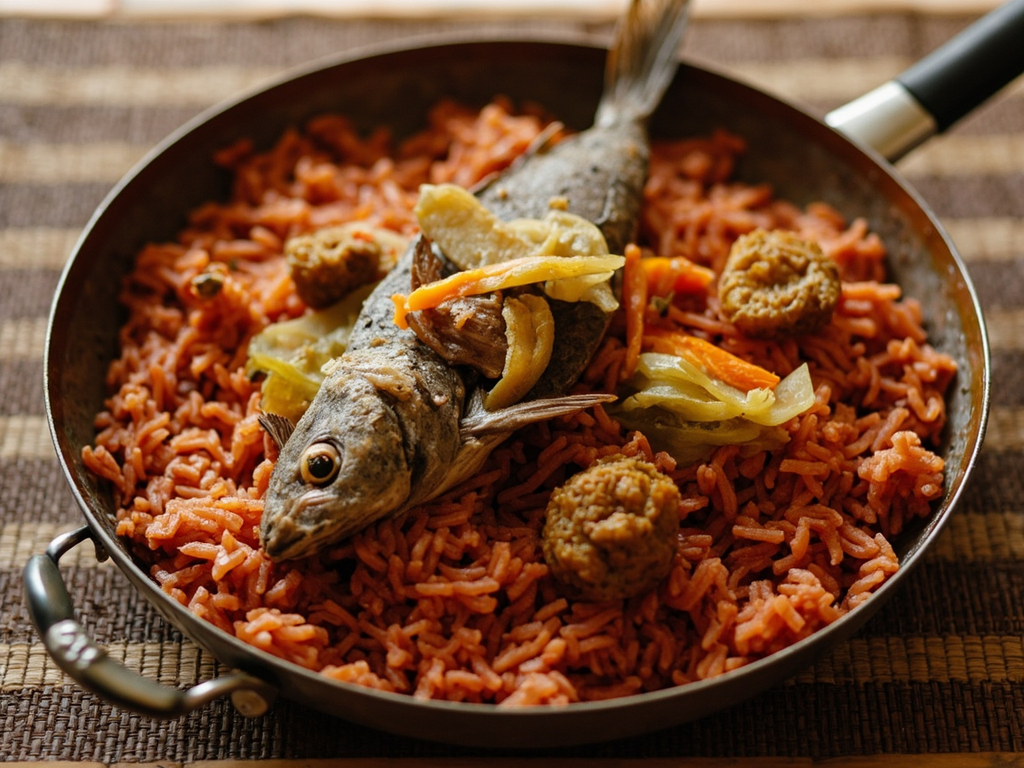
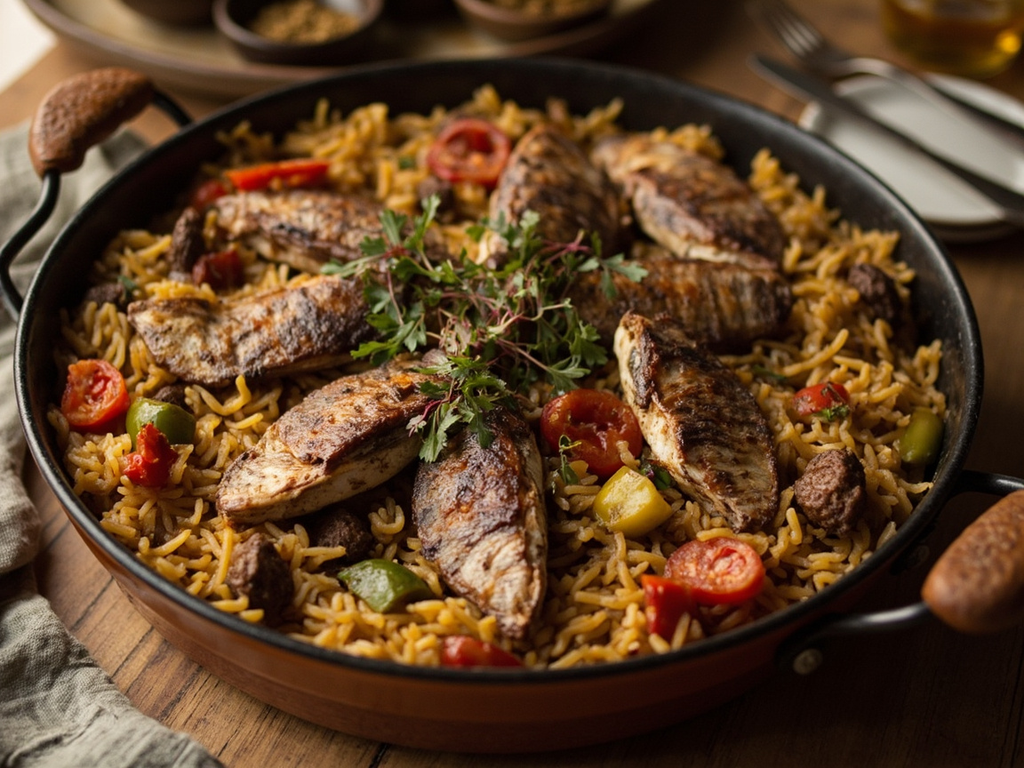
Rice slowly simmered in a broth of fish, tomato and tamarind, garnished with vegetables stuffed with parsley and chili, and pieces of thiof. The rice takes on an amber color and a caramelized crust at the bottom of the pot, the "xooñ", which everyone fights over.
You see, in our home in Saint-Louis, thiéboudienne is not a dish, it is a gathering. I would first make the fish sing in the oil with the roff, that stuffing of parsley and garlic slipped into the flesh, then I would let the rice drink all the broth, slowly, until it took on the color of the river at sunset. My mother said: watch the bottom of the pot, my child, for it is there, in the crispy xooñ, that the cook's honor lies. And when the large dish arrived on the mat, no one asked for their share: the hand that shares is always richer than the one that counts.
- •Broken rice — a large bowl for the household (base)
- •Thiof (grouper) or firm sea fish — several steaks (protein)
- •Guedj and yet — a few pieces (umami ferment)
- •Tomato paste — a good spoonful (color and base)
- •Tamarind — one soaked ball (acidity)
- •Parsley, garlic, chili — a pounded bunch (roff stuffing)
- •Cassava, carrot, cabbage, bitter eggplant (jaxatu) — according to the market (vegetables)
- •Oil — generous (cooking)
Thiéboudienne (rice with fish)
Rice slowly simmered in a broth of fish, tomato and tamarind, garnished with vegetables stuffed with parsley and chili, and pieces of thiof. The rice takes on an amber color and a caramelized crust at the bottom of the pot, the "xooñ", which everyone fights over.
Why this dish? National dish cooked in Saint-Louis, its birthplace — the very cradle of thiéboudienne. For Aminata Sow Fall, it is the meal around which an entire household gathers, the living image of Senegalese commensality she describes in her work.
You see, in our home in Saint-Louis, thiéboudienne is not a dish, it is a gathering. I would first make the fish sing in the oil with the roff, that stuffing of parsley and garlic slipped into the flesh, then I would let the rice drink all the broth, slowly, until it took on the color of the river at sunset. My mother said: watch the bottom of the pot, my child, for it is there, in the crispy xooñ, that the cook's honor lies. And when the large dish arrived on the mat, no one asked for their share: the hand that shares is always richer than the one that counts.
Ingredients (period version)
- Broken rice — a large bowl for the household (base)
- Thiof (grouper) or firm sea fish — several steaks (protein)
- Guedj and yet — a few pieces (umami ferment)
- Tomato paste — a good spoonful (color and base)
- Tamarind — one soaked ball (acidity)
- Parsley, garlic, chili — a pounded bunch (roff stuffing)
- Cassava, carrot, cabbage, bitter eggplant (jaxatu) — according to the market (vegetables)
- Oil — generous (cooking)
Ingredients
- Broken rice — 500 g (base)
- Grouper or cod steaks — 800 g (protein)
- Guedj (fermented fish) + yet — 1 tbsp each (umami ferment)
- Tomato paste — 2 tbsp (base)
- Tamarind paste — 1 tbsp (acidity)
- Parsley + 4 garlic cloves + 1 chili — 1 bunch (roff stuffing)
- Cassava, carrot, cabbage, eggplants — 500 g total (vegetables)
- Neutral oil — 10 cl (cooking)
Method
- Pound parsley, garlic and chili; score the fish steaks and stuff them with this roff.
- Sear the fish in hot oil, set aside.
- Fry the tomato paste in the same oil, add water, crumbled guedj and yet, and tamarind; bring to a boil.
- Cook the roughly cut vegetables in this broth, then remove them; briefly return the fish to warm through and set aside.
- Pour the rinsed rice into the broth, cover and let absorb over low heat until a crust forms at the bottom (xooñ).
- Spread the rice on a large dish, arrange fish and vegetables on top, sprinkle with crispy xooñ.
How it was made : Thiéboudienne is said to have been born in Saint-Louis in the 19th century, attributed to the cook Penda Mbaye. It was cooked on three stones over a wood fire, in a cast-iron pot where the rice formed its legendary crust; the fish came directly from the pirogues of the river and the ocean.
The contemporary twist : Served as an individual "bowl" version with a piece of xooñ placed like a crispy tuile on top, and a lime wedge.
Aminata Sow Fall · Charactorium