 flip
flipThiéboudiène (Rice with Fish)
Thiéboudiène (Rice with Fish)
Why this dish? Diop shared the thiéboudiène of his time: it is THE Senegalese national dish, served at midday to the household as well as to honored guests. For a man who spent his life demonstrating the dignity and precedence of African civilizations, this dish—rice, Atlantic fish, vegetables, and fermented fish around a shared bowl—embodies the richness of a full and complete Senegalese culture.
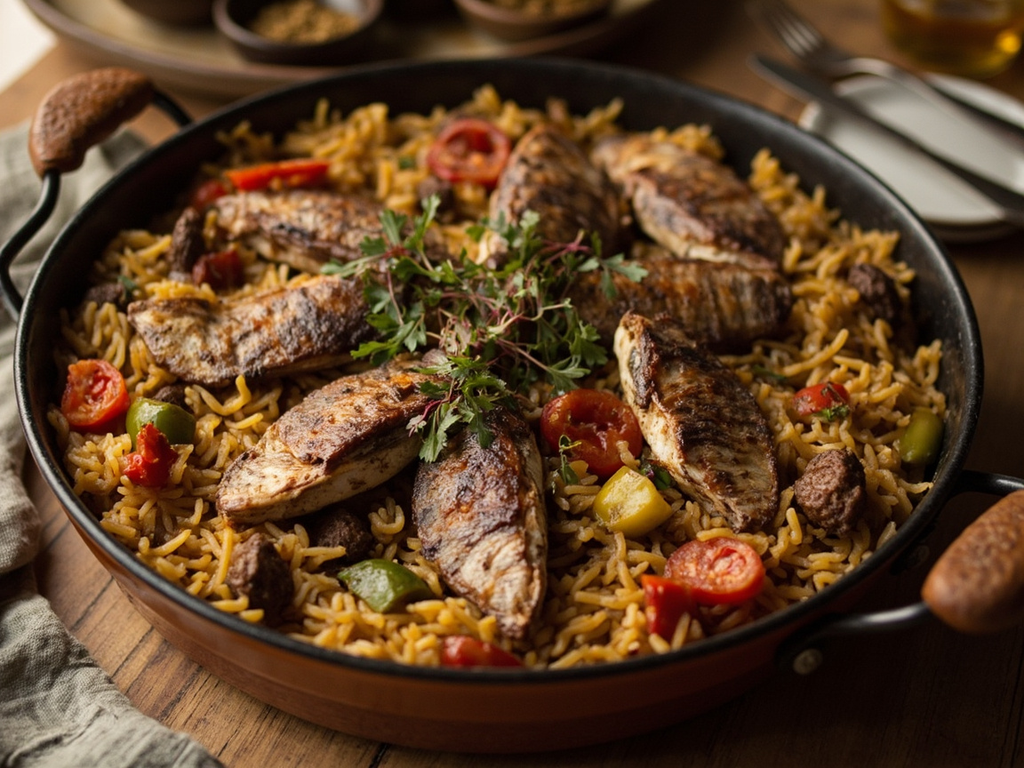
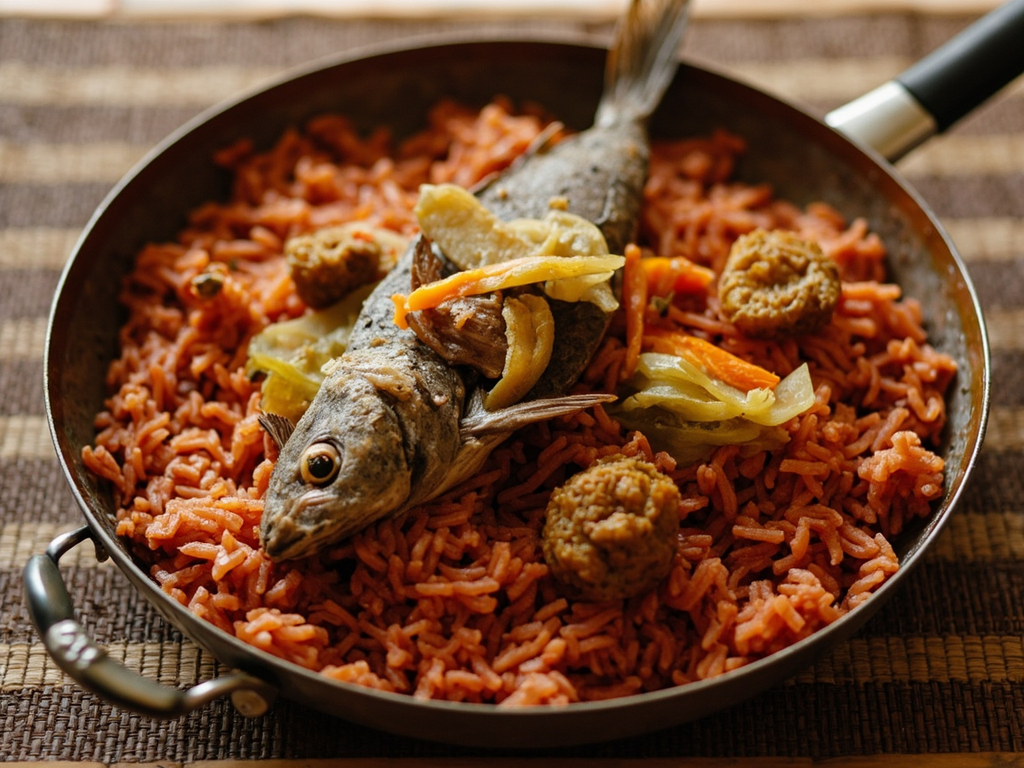
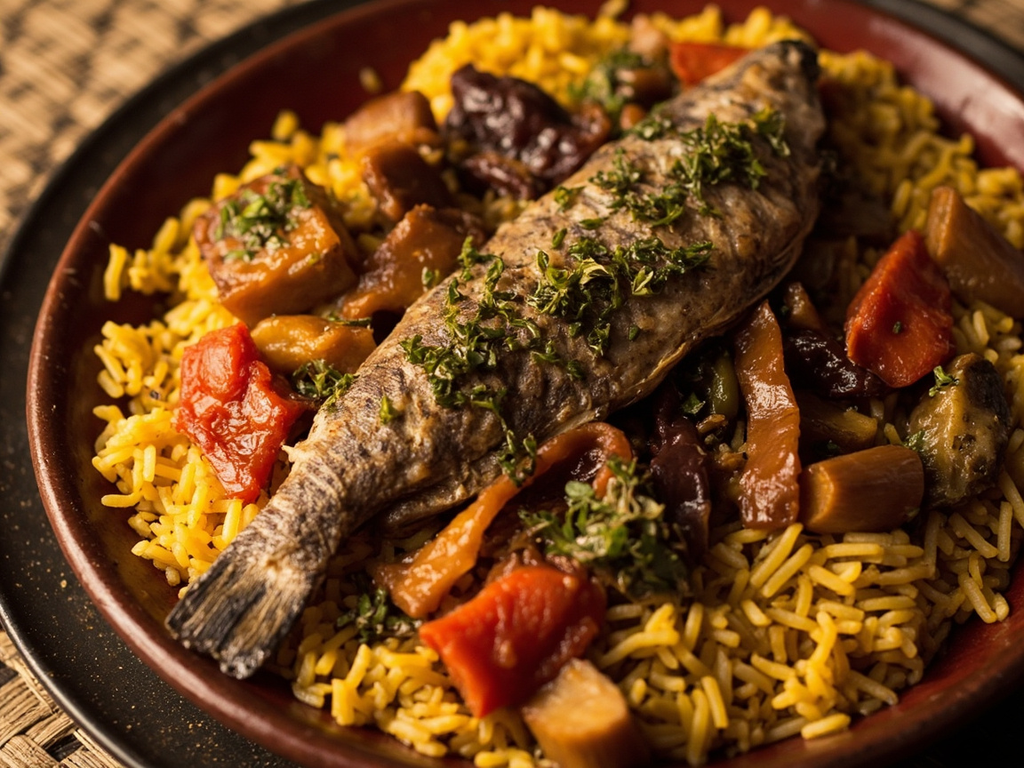
The great Dakar dish: broken rice tinted and perfumed, cooked in a tomato broth, with fish stuffed with herbs (the rof), tender vegetables, and guedj that gives all the depth. It is served on a large platter where each person helps themselves in front of them.
Allow me to introduce you to thiéboudiène, the dish of our Senegal. See: we choose a beautiful thiof, stuff it with a hash of parsley, garlic, and chili—what we call rof—then sear it in oil before laying it on the rice that drinks the tomato broth. Never forget the guedj, that fermented fish which gives the dish its deep foundation; it is what distinguishes a skilled cook from a beginner. At my table in Thieytou as in Dakar, we ate from this same dish, crouched around the bowl, and that, believe me, was a form of civilization as respectable as any other.
- •Broken rice — a large bowl for the household (base)
- •Thiof (grouper) or other Atlantic fish — a few thick steaks (heart of the dish)
- •Parsley, garlic, fresh chili, onion (the rof) — a good hash (aromatic stuffing for the fish)
- •Fresh and concentrated tomato — to taste (broth)
- •Guedj (fermented fish) and yét (fermented mollusk) — a small piece (signature umami)
- •Cassava, cabbage, carrot, bitter eggplant (jaxatu), okra — according to the market (broth vegetables)
- •Peanut oil — generous (cooking)
Thiéboudiène (Rice with Fish)
The great Dakar dish: broken rice tinted and perfumed, cooked in a tomato broth, with fish stuffed with herbs (the rof), tender vegetables, and guedj that gives all the depth. It is served on a large platter where each person helps themselves in front of them.
Why this dish? Diop shared the thiéboudiène of his time: it is THE Senegalese national dish, served at midday to the household as well as to honored guests. For a man who spent his life demonstrating the dignity and precedence of African civilizations, this dish—rice, Atlantic fish, vegetables, and fermented fish around a shared bowl—embodies the richness of a full and complete Senegalese culture.
Allow me to introduce you to thiéboudiène, the dish of our Senegal. See: we choose a beautiful thiof, stuff it with a hash of parsley, garlic, and chili—what we call rof—then sear it in oil before laying it on the rice that drinks the tomato broth. Never forget the guedj, that fermented fish which gives the dish its deep foundation; it is what distinguishes a skilled cook from a beginner. At my table in Thieytou as in Dakar, we ate from this same dish, crouched around the bowl, and that, believe me, was a form of civilization as respectable as any other.
Ingredients (period version)
- Broken rice — a large bowl for the household (base)
- Thiof (grouper) or other Atlantic fish — a few thick steaks (heart of the dish)
- Parsley, garlic, fresh chili, onion (the rof) — a good hash (aromatic stuffing for the fish)
- Fresh and concentrated tomato — to taste (broth)
- Guedj (fermented fish) and yét (fermented mollusk) — a small piece (signature umami)
- Cassava, cabbage, carrot, bitter eggplant (jaxatu), okra — according to the market (broth vegetables)
- Peanut oil — generous (cooking)
Ingredients
- Basmati or broken rice — 400 g (base)
- Grouper, sea bream, or mullet steaks — 4 pieces (heart of the dish)
- Parsley (1 bunch), 4 garlic cloves, 1 chili, 1 onion — ground into a paste (rof (stuffing))
- Crushed tomatoes + 2 tbsp tomato paste — 400 g (broth)
- Guedj + yét (African grocery stores) — 20 g (signature umami)
- Cassava, cabbage, carrot, 2 eggplants, 4 okra — 1 piece each (vegetables)
- Peanut oil — 8 cl (cooking)
Method
- Blend parsley, garlic, chili, and onion into a paste (the rof). Score the fish steaks and stuff them with this mixture.
- Brown the fish in hot oil, then set aside.
- In the same oil, sauté onion and tomatoes, add tomato paste, crumbled guedj and yét, cover with water, and let simmer.
- Add vegetables from hardest to softest (cassava, carrot, cabbage, then eggplant and okra), remove when cooked, and keep warm.
- Return the fish to the broth for 5 minutes, then remove gently.
- Ladle out some broth, add rice to the remaining broth, and cook covered until absorbed (add more broth if needed).
- Arrange the tinted rice on a large platter, place fish and vegetables in the center, and drizzle with broth. Eat together, with the right hand.
How it was made : Thiéboudiène is said to have originated in Saint-Louis in the 19th century, attributed to cook Penda Mbaye, and became the national dish. In Diop's time, it was cooked over a wood fire in a large pot, the rice slowly absorbing the fragrant broth. The caramelized rice crust at the bottom (the xooñ) was hotly contested.
The contemporary twist : Serve it deconstructed in a deep bowl for modern tables, but absolutely keep the crispy xooñ scraped from the bottom of the pot—it's the connoisseur's portion.
Sources : Pierre Thiam, Senegal: Modern Senegalese Recipes (2015) · UNESCO — inscription of ceebu jën on the intangible cultural heritage list (2021)
Cheikh Anta Diop · Charactorium