 flip
flipSour Cherry Varenye
Sour Cherry Varenye
Why this dish? Melikhovo had an orchard, and Chekhov—who immortalized an orchard in *The Cherry Orchard*—loved fruit trees so much he planted them everywhere, even in Yalta. Sour cherry varenye, made at the end of summer to last all winter, extended the sweetness of his cherry trees into the glass of tea.
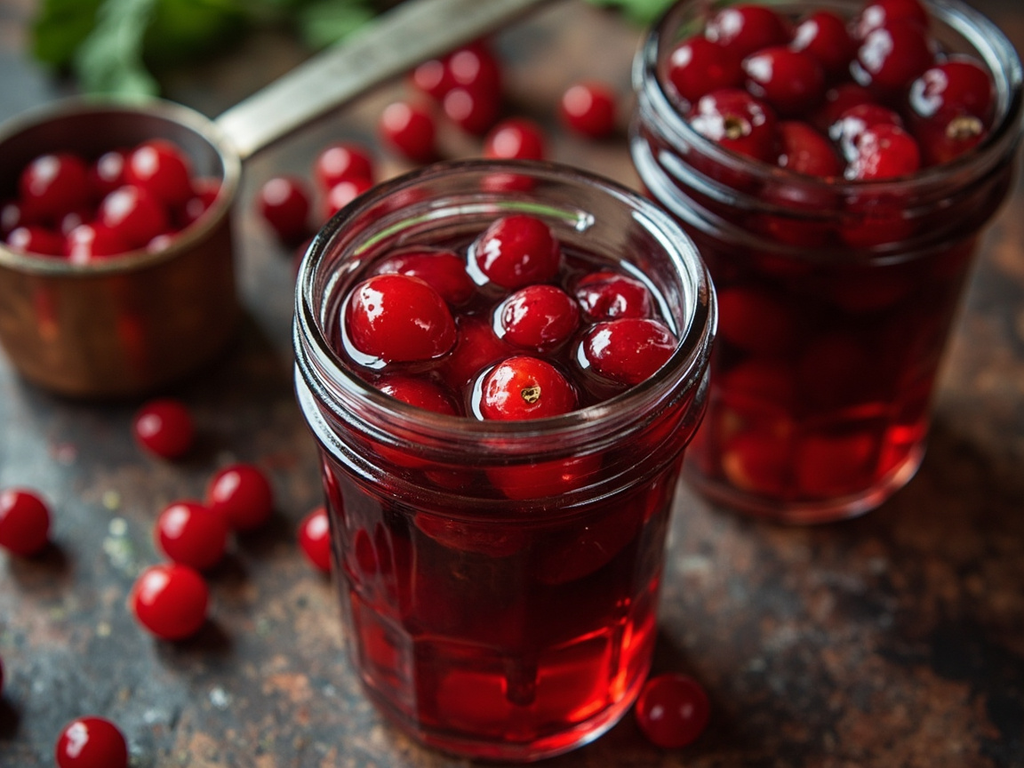
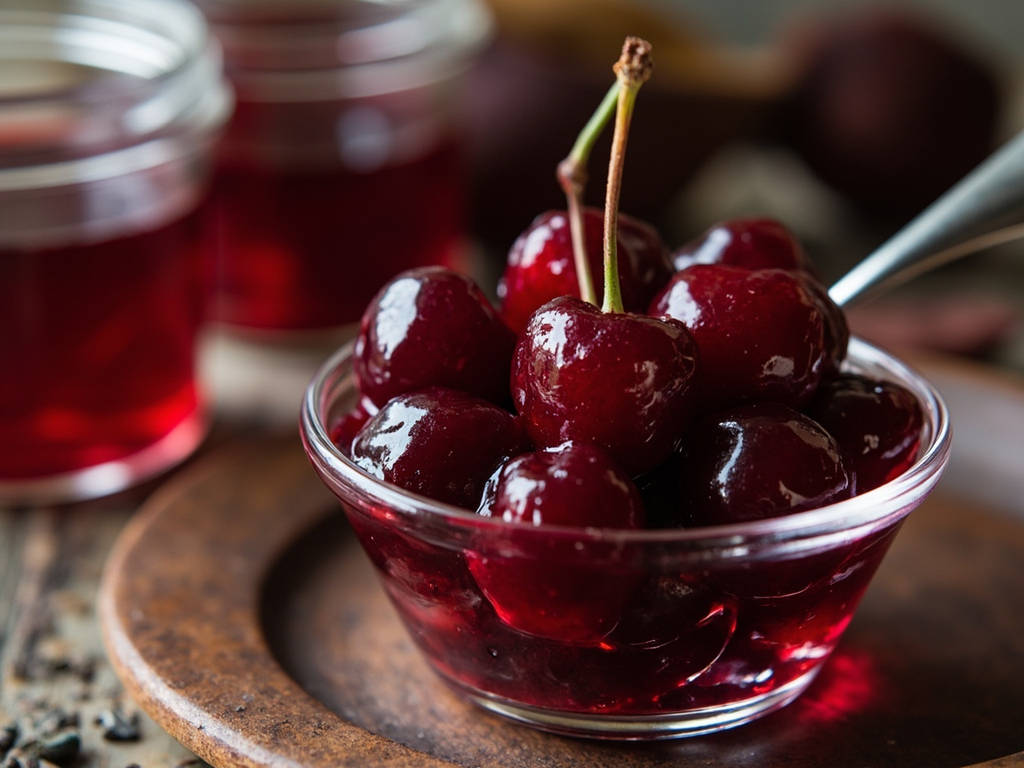
A whole-fruit preserve where sour cherries remain plump and glossy in a thick, translucent syrup. Neither jelly nor jam: a candied fruit bathing in its nectar, eaten by the teaspoon, as an accompaniment to tea rather than on bread.
They say I wrote a play about an orchard; know that before writing it, I planted one, and nothing consoles as much as a cherry tree that keeps its promises. At the end of summer, when the sour cherries bend the branches, we make varenye—patiently, skimming the pink foam that rises, never stirring too much so as not to bruise the fruit. When winter comes, a spoonful of this varenye in the glass of tea, and summer returns to sit at your table. It's a small thing, but life is made of such small things.
- •Sour cherries — a large basket (fruit)
- •Sugar — equal weight to fruit (preservation and syrup)
- •Water — a little, to start the syrup (syrup)
Sour Cherry Varenye
A whole-fruit preserve where sour cherries remain plump and glossy in a thick, translucent syrup. Neither jelly nor jam: a candied fruit bathing in its nectar, eaten by the teaspoon, as an accompaniment to tea rather than on bread.
Why this dish? Melikhovo had an orchard, and Chekhov—who immortalized an orchard in *The Cherry Orchard*—loved fruit trees so much he planted them everywhere, even in Yalta. Sour cherry varenye, made at the end of summer to last all winter, extended the sweetness of his cherry trees into the glass of tea.
They say I wrote a play about an orchard; know that before writing it, I planted one, and nothing consoles as much as a cherry tree that keeps its promises. At the end of summer, when the sour cherries bend the branches, we make varenye—patiently, skimming the pink foam that rises, never stirring too much so as not to bruise the fruit. When winter comes, a spoonful of this varenye in the glass of tea, and summer returns to sit at your table. It's a small thing, but life is made of such small things.
Ingredients (period version)
- Sour cherries — a large basket (fruit)
- Sugar — equal weight to fruit (preservation and syrup)
- Water — a little, to start the syrup (syrup)
Ingredients
- Pitted sour cherries — 1 kg (fruit)
- Granulated sugar — 1 kg (preservation and syrup)
- Water — 150 ml (syrup starter)
Method
- Pit the sour cherries, keeping their juice.
- Make a syrup with the sugar and water, bring to a boil until fully dissolved.
- Add the cherries, bring back to a simmer and remove from heat. Let rest several hours (or overnight): the fruits absorb the syrup without bursting.
- Gently bring back to a boil for 5–10 min, skimming the foam, without stirring too much. Repeat this cycle 2 to 3 times for well-candied fruit and a coating syrup.
- Check the set (a drop on a cold plate should gel), then pour into sterilized jars and invert them to create a vacuum.
- Store in a cool, dark place; serve by the spoonful with tea.
How it was made : Russian varenye differs from Western jam: the aim is to keep the fruit whole and intact in a clear syrup, hence the cooking in several short stages interspersed with resting. It was prepared in large quantities in copper basins, often outdoors, as a late-summer ritual to fill the pantry before the long months without fresh fruit.
The contemporary twist : Slip a half-crushed cardamom pod into the syrup: its aromatic bitterness echoes the tea it will accompany.
Sources : Elena Molokhovets, A Gift to Young Housewives (Подарок молодым хозяйкам), 1861 · William Pokhlebkin, History of Russian Cuisine
Anton Chekhov · Charactorium