 flip
flipOlla podrida (Castilian Feast Pot)
Olla podrida (Castilian Feast Pot)
Why this dish? From the very first page, Cervantes describes Don Quixote's daily fare: « una olla de algo más vaca que carnero » — a pot where beef outweighs mutton, a sign of a small purse. The *olla podrida* is its opulent feast-day version, the dream of every hungry hidalgo.
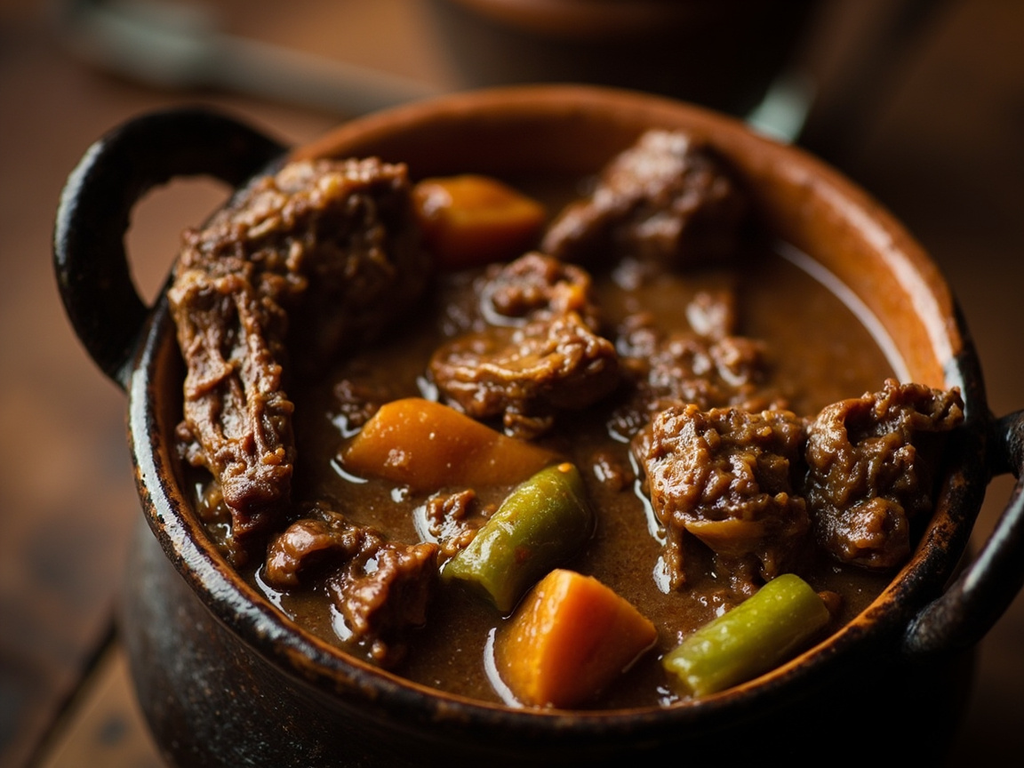
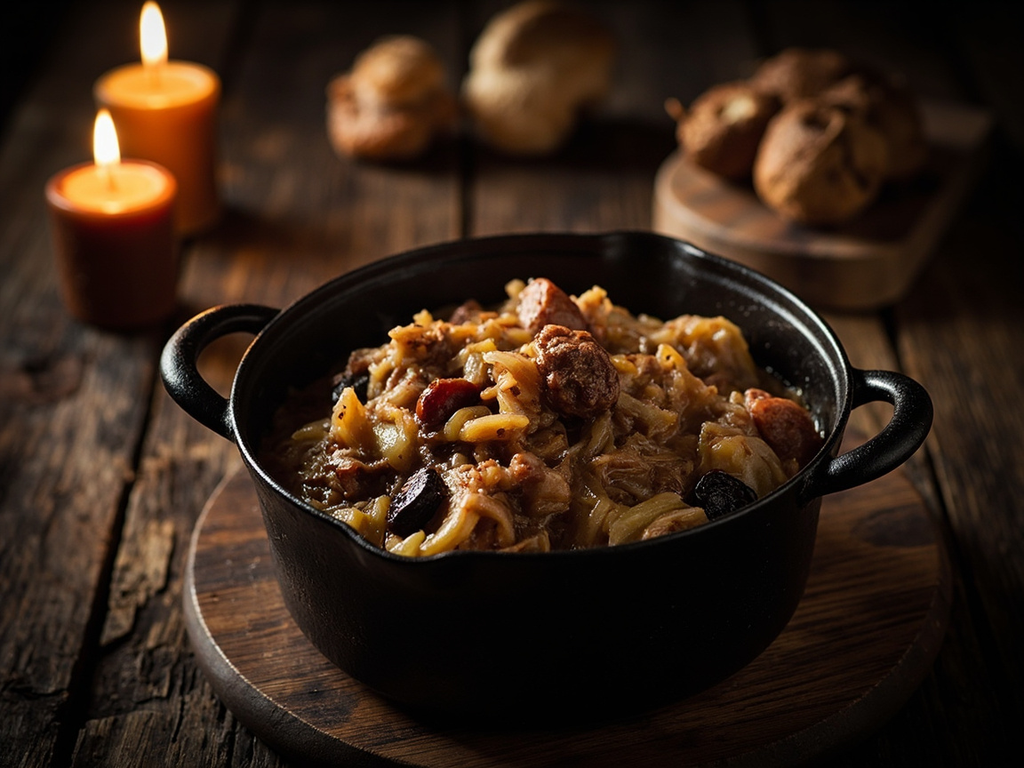
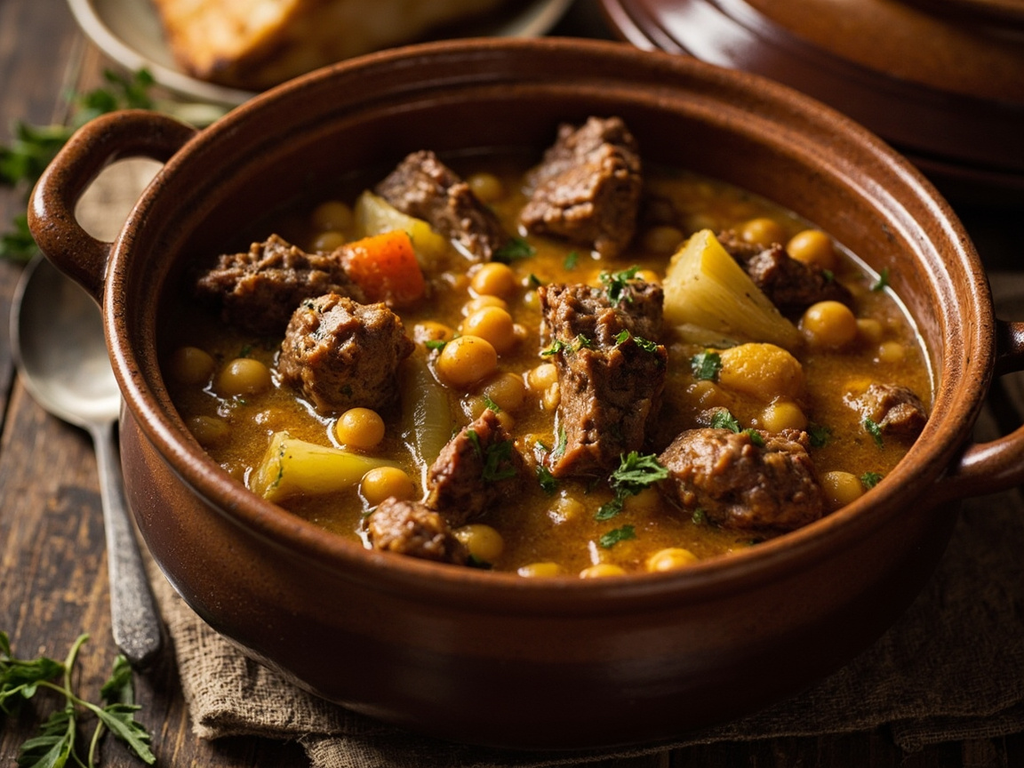
The great simmered pot of Castile: chickpeas, several meats, bacon and sausage, long-cooked together, perfumed with saffron. The feast of festive days as opposed to the lean daily *olla*.
Behold the dish of kings and the dream of the poor! When the purse allowed — which, alas, was rare in my life — we filled the earthenware pot with chickpeas soaked the night before, beef, mutton, a good piece of bacon and a sausage, and let it all simmer for hours near the fire. A pinch of saffron for the color of gold that I did not have, and the whole house smelled of it. Serve the broth first, then the meats: it is a whole meal in a single bowl.
- •Chickpeas — a good measure, soaked overnight (base)
- •Beef and mutton — according to the purse (meats)
- •Bacon and marrow bone — a piece (fat and broth)
- •Sausage (*longaniza*) — one (fermented sausage)
- •Turnip, cabbage, onion, garlic — a few (vegetables)
- •Saffron — a pinch of stigmas (color and perfume)
Olla podrida (Castilian Feast Pot)
The great simmered pot of Castile: chickpeas, several meats, bacon and sausage, long-cooked together, perfumed with saffron. The feast of festive days as opposed to the lean daily *olla*.
Why this dish? From the very first page, Cervantes describes Don Quixote's daily fare: « una olla de algo más vaca que carnero » — a pot where beef outweighs mutton, a sign of a small purse. The *olla podrida* is its opulent feast-day version, the dream of every hungry hidalgo.
Behold the dish of kings and the dream of the poor! When the purse allowed — which, alas, was rare in my life — we filled the earthenware pot with chickpeas soaked the night before, beef, mutton, a good piece of bacon and a sausage, and let it all simmer for hours near the fire. A pinch of saffron for the color of gold that I did not have, and the whole house smelled of it. Serve the broth first, then the meats: it is a whole meal in a single bowl.
Ingredients (period version)
- Chickpeas — a good measure, soaked overnight (base)
- Beef and mutton — according to the purse (meats)
- Bacon and marrow bone — a piece (fat and broth)
- Sausage (*longaniza*) — one (fermented sausage)
- Turnip, cabbage, onion, garlic — a few (vegetables)
- Saffron — a pinch of stigmas (color and perfume)
Ingredients
- Dried chickpeas — 400 g (soaked 12 h) (base)
- Beef shank — 400 g (meat)
- Mutton or lamb shoulder — 300 g (meat)
- Bacon / salt pork — 150 g (fat)
- Longaniza sausage or cooking sausage — 1 (sausage)
- Turnip, 1/4 cabbage, 1 onion, 2 garlic cloves — — (vegetables)
- Saffron — 1 pinch (12-15 stigmas) (color and perfume)
- Salt — to taste (seasoning)
Method
- Drain the soaked chickpeas. Place them in a large pot with the beef, mutton, bacon and bone; cover with cold water.
- Bring gently to a simmer, skim, then cook over low heat covered for 1 h 30 min.
- Add the studded onion, garlic, turnip pieces and saffron; continue for 45 min.
- Add the cabbage and sausage; cook another 30 min until chickpeas and meats are tender.
- Salt at the end of cooking. Serve the broth first, then the meats and vegetables as a main dish.
How it was made : The *olla podrida* (literally "rotten pot," meaning extremely rich and tender) was the prestige dish of 16th-17th century Castile, described by royal cooks. The everyday version of the humble, leaner, was simply called *olla* or *puchero*. It was cooked for hours in an earthenware pot, sometimes buried in the embers.
The contemporary twist : Present in two services as in the inns of the time: a cup of golden broth as a starter, then a platter of meats and chickpeas shared at the center of the table.
Sources : Miguel de Cervantes, *Don Quixote*, I, 1 (1605) · Diego Granado, *Libro del arte de cozina* (1599) · Francisco Martínez Montiño, *Arte de cocina* (1611)
Miguel de Cervantes · Charactorium