 flip
flipMaza, the everyday barley cake
Maza, the everyday barley cake
Why this dish? Maza is the daily bread of the ordinary Greek, and Anaximenes eats "like any Milesian": toasted barley flour, quickly kneaded with water, is the frugal base that nourishes the philosopher between two observations of the gnomon on the agora.
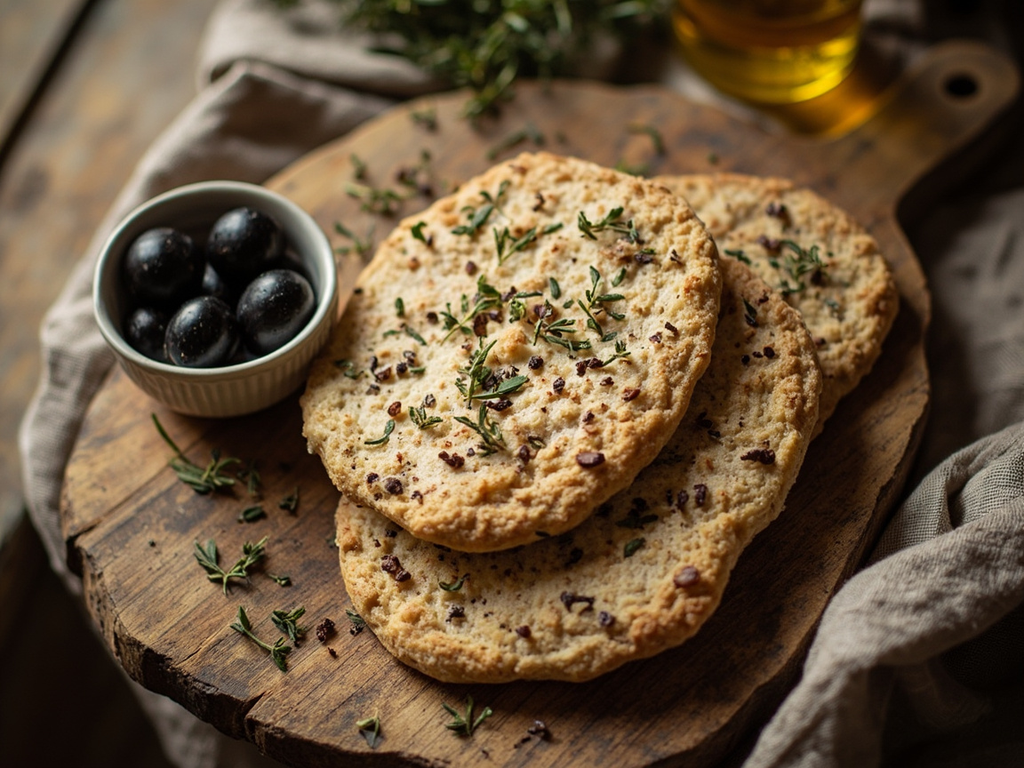
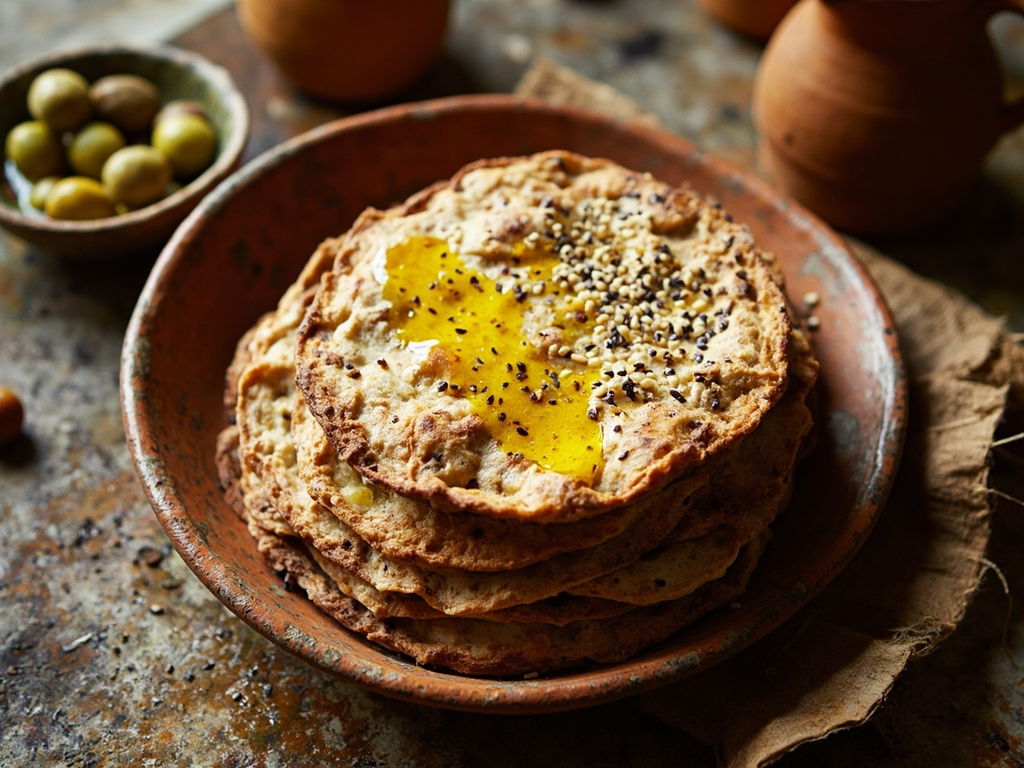
A dense cake of barley flour, barely kneaded, sometimes uncooked or simply dried. Frugal, nourishing, it is the staple of popular Ionian diet, dipped in oil or wine.
Look at the barley: we toast it before grinding, otherwise it stays bitter in the mouth. I knead my maza with my hands, in cold water, without waiting — no need for an oven when you are hungry and thinking. I break it, I dip it in a trickle of oil, and it keeps my mind clear from sunrise until the shadow of the gnomon has turned. A simple man lives on little; air and thought do the rest.
- •Toasted barley flour (alphita) — two handfuls (base)
- •Spring water — as needed (binder)
- •Ionian olive oil — a drizzle (seasoning)
- •Sea salt — a pinch (seasoning)
Maza, the everyday barley cake
A dense cake of barley flour, barely kneaded, sometimes uncooked or simply dried. Frugal, nourishing, it is the staple of popular Ionian diet, dipped in oil or wine.
Why this dish? Maza is the daily bread of the ordinary Greek, and Anaximenes eats "like any Milesian": toasted barley flour, quickly kneaded with water, is the frugal base that nourishes the philosopher between two observations of the gnomon on the agora.
Look at the barley: we toast it before grinding, otherwise it stays bitter in the mouth. I knead my maza with my hands, in cold water, without waiting — no need for an oven when you are hungry and thinking. I break it, I dip it in a trickle of oil, and it keeps my mind clear from sunrise until the shadow of the gnomon has turned. A simple man lives on little; air and thought do the rest.
Ingredients (period version)
- Toasted barley flour (alphita) — two handfuls (base)
- Spring water — as needed (binder)
- Ionian olive oil — a drizzle (seasoning)
- Sea salt — a pinch (seasoning)
Ingredients
- Barley flour — 150 g (base)
- Warm water — 80 to 100 ml (binder)
- Extra virgin olive oil — 2 tbsp (seasoning)
- Salt — 1 pinch (seasoning)
- Sesame seeds (optional) — 1 tbsp (garnish)
Method
- Lightly toast the barley flour in a dry pan for 2-3 minutes to soften its bitterness and bring out a nutty flavor.
- Mix the cooled flour with salt, then add warm water little by little, working with your hands until you get a soft, slightly sticky dough.
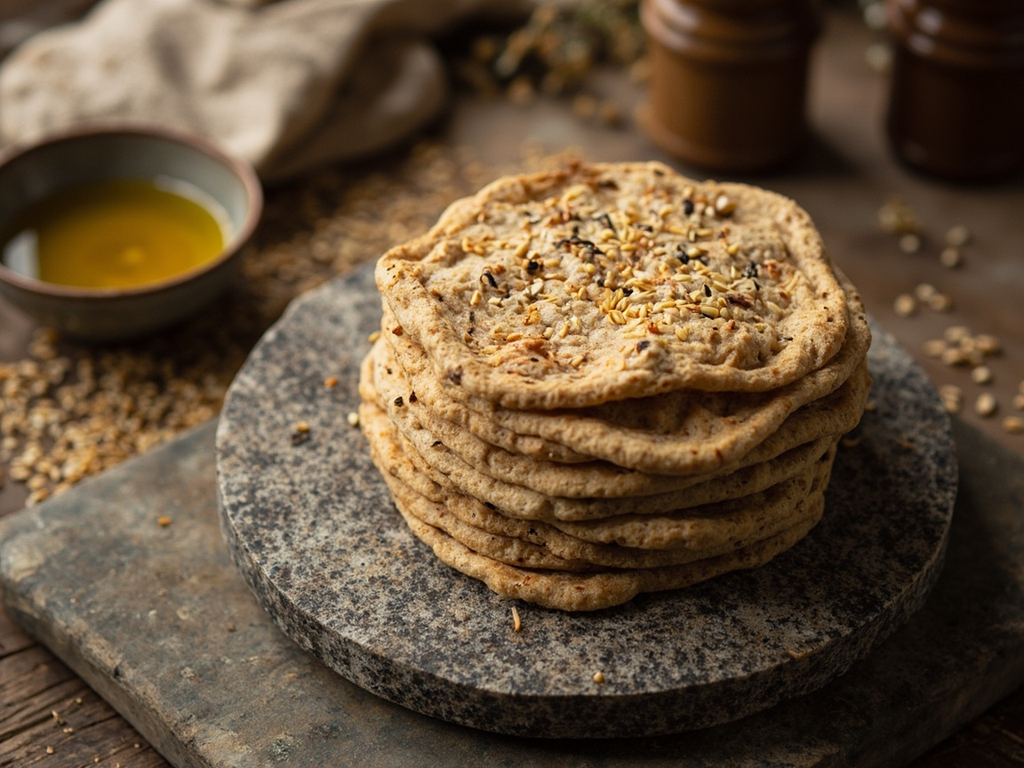
- Shape flat cakes about half a centimeter thick.
- Cook 3-4 minutes per side on a hot stone or dry pan, until they brown and firm up slightly.
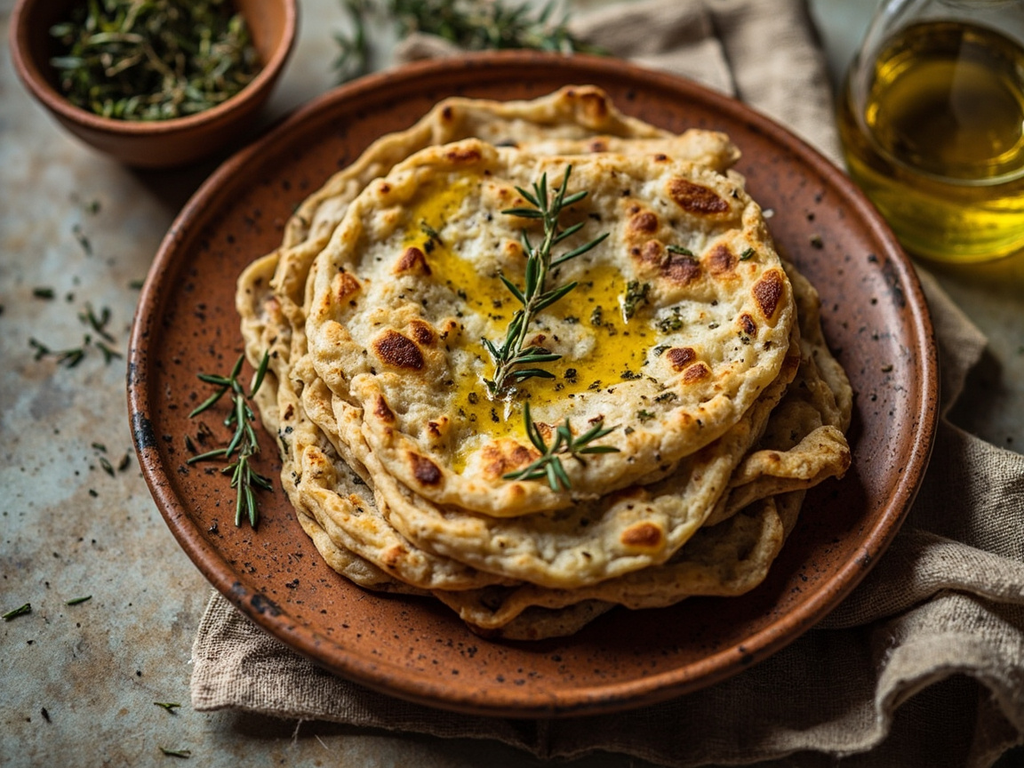
- Serve warm, drizzled with olive oil and a pinch of salt; sprinkle with sesame seeds if desired.
How it was made : Barley grew better than wheat in the dry soil of the Aegean and remained the people's grain. It was mostly eaten as unleavened maza — quicker than bread — often even raw, simply kneaded. Leavened wheat was a luxury reserved for special days and the wealthier.
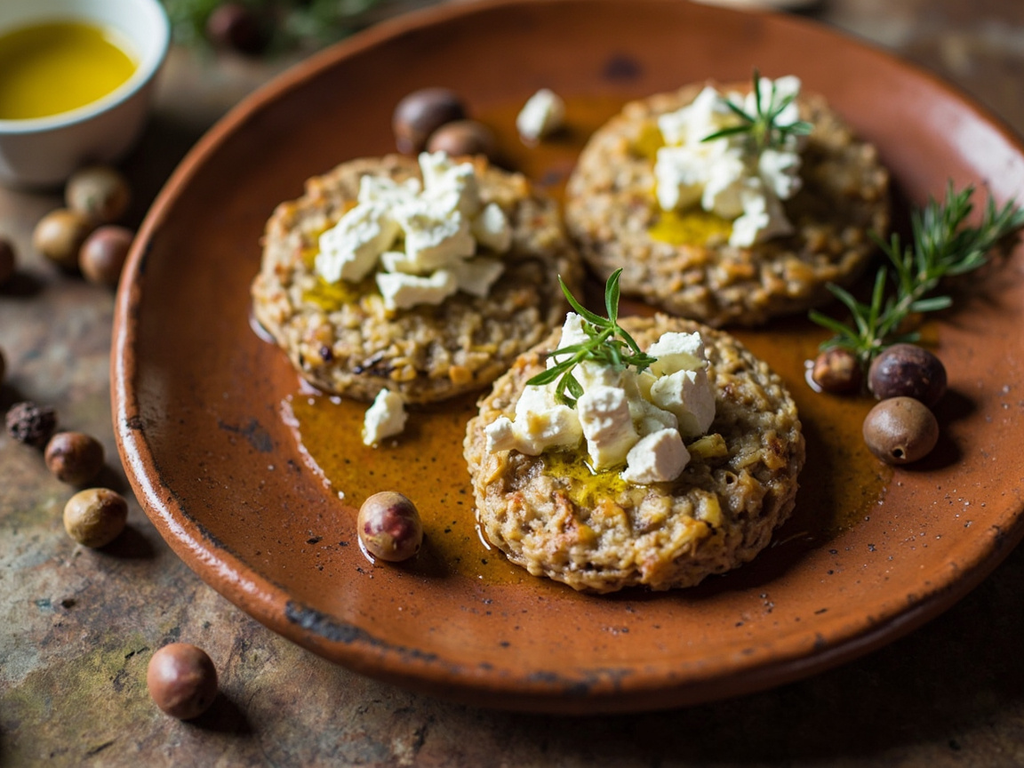
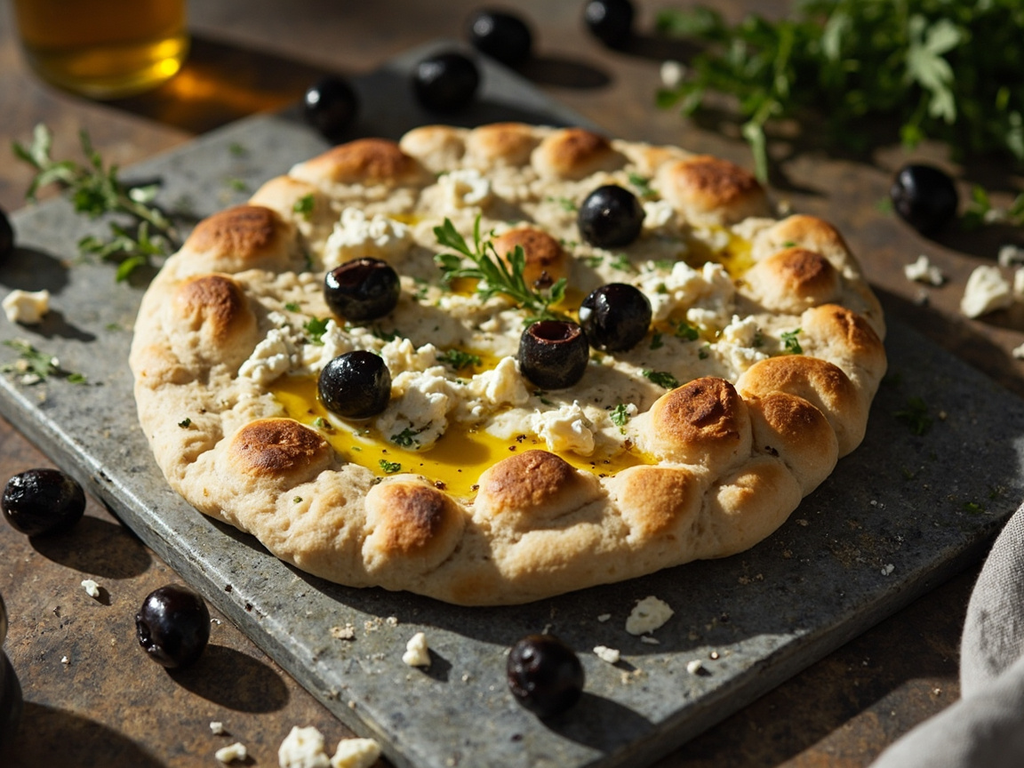
The contemporary twist : Served on an appetizer board as an "ancient cracker" with tapenade and fresh goat cheese, it surprises with its rustic toasted grain flavor.
Sources : Andrew Dalby, Siren Feasts: A History of Food and Gastronomy in Greece, Routledge, 1996 · Homer, Iliad and Odyssey (mentions of barley and maza)
Anaximenes · Charactorium