 flip
flipMinestra di ceci e herbe (chickpea and greens pottage)
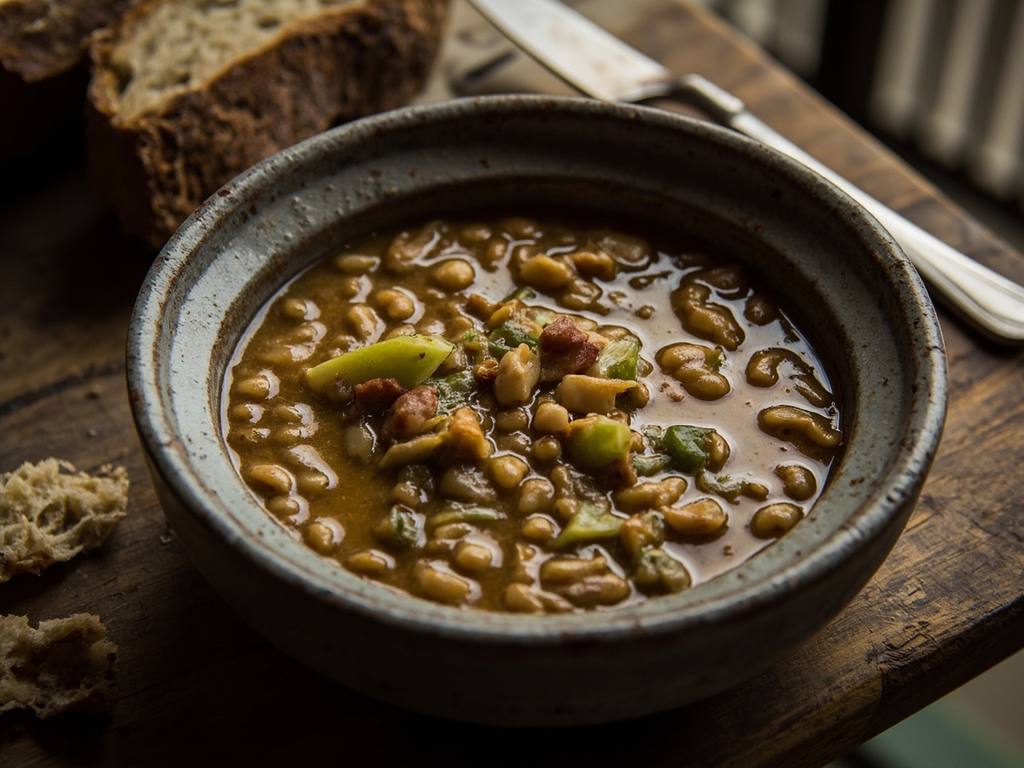
Minestra di ceci e herbe (chickpea and greens pottage)
Why this dish? As chaplain and secretary, De Beatis observed meatless days over a journey of more than a year. Between stages, far from episcopal banquets, a pottage of chickpeas and herbs, eaten with bread, was the sober and permitted comfort of meatless days.
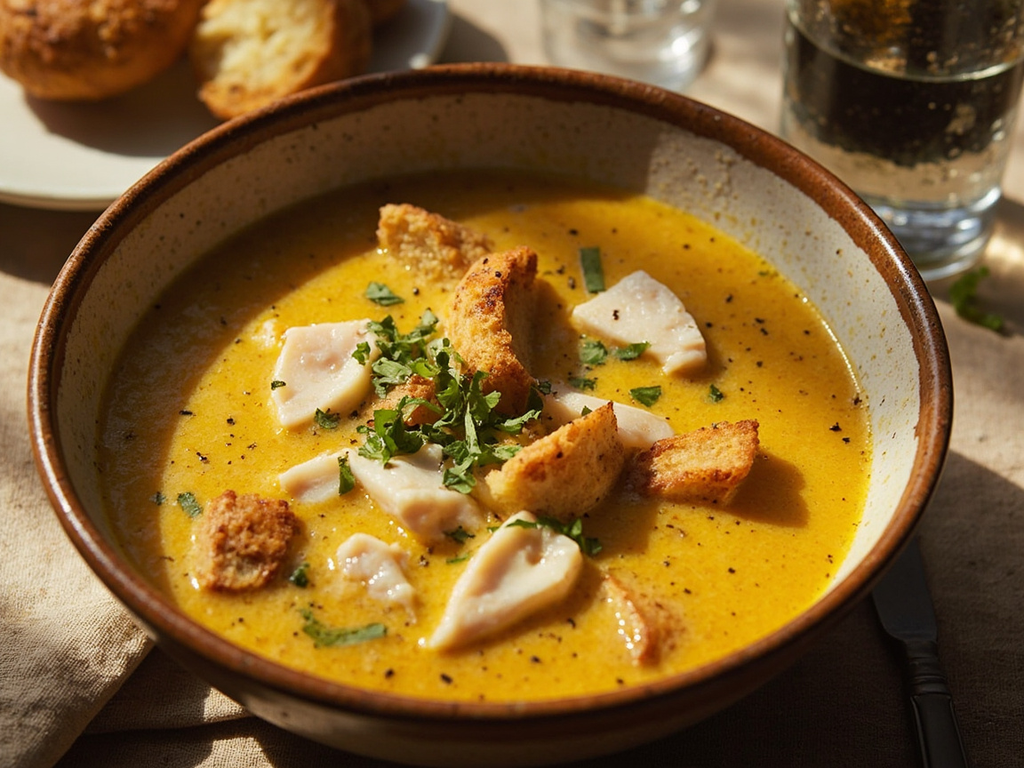
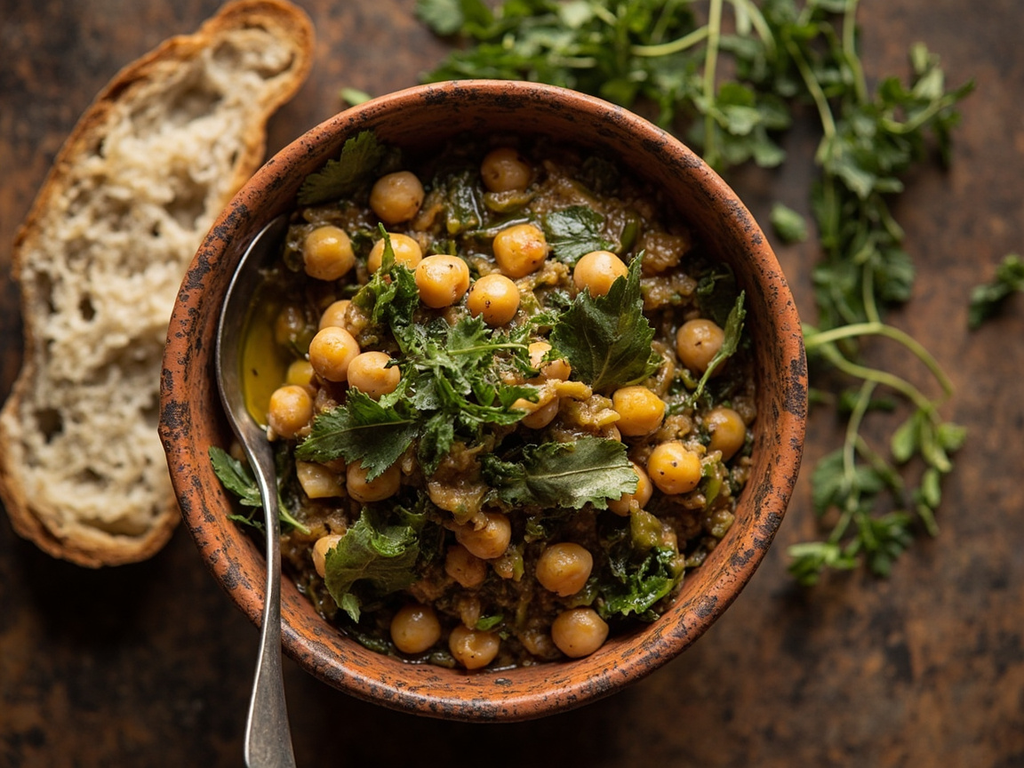
A thick, rustic pottage of long-simmered chickpeas, fragrant with fresh herbs, sweet onion, and a drizzle of olive oil, thickened with bread. Nourishing, meatless, it is the ordinary meal of a churchman on the road.
Know, reader, that throughout our journey through the lands of France and Flanders, not every day was a feast. When a fast day came, I gladly contented myself with this pottage of chickpeas, which is considered humble: they are left to melt gently with an onion, good garden herbs, and a drizzle of oil, then one dips one's bread in it. My lord the cardinal tasted the meats of princes; I, his chaplain, gave thanks over this bowl, and I assure you it nourishes a man as well as a holy word.
- •Chickpeas (ceci) — a good bowlful, soaked the night before (nourishing base)
- •Onion — one, sliced (aromatic base)
- •Herbs (parsley, chard, a little mint) — a handful (freshness and flavor)
- •Olive oil — a good drizzle (binding and roundness)
- •Stale bread — a few slices (thickener)
- •Salt — as needed (seasoning)
Minestra di ceci e herbe (chickpea and greens pottage)
A thick, rustic pottage of long-simmered chickpeas, fragrant with fresh herbs, sweet onion, and a drizzle of olive oil, thickened with bread. Nourishing, meatless, it is the ordinary meal of a churchman on the road.
Why this dish? As chaplain and secretary, De Beatis observed meatless days over a journey of more than a year. Between stages, far from episcopal banquets, a pottage of chickpeas and herbs, eaten with bread, was the sober and permitted comfort of meatless days.
Know, reader, that throughout our journey through the lands of France and Flanders, not every day was a feast. When a fast day came, I gladly contented myself with this pottage of chickpeas, which is considered humble: they are left to melt gently with an onion, good garden herbs, and a drizzle of oil, then one dips one's bread in it. My lord the cardinal tasted the meats of princes; I, his chaplain, gave thanks over this bowl, and I assure you it nourishes a man as well as a holy word.
Ingredients (period version)
- Chickpeas (ceci) — a good bowlful, soaked the night before (nourishing base)
- Onion — one, sliced (aromatic base)
- Herbs (parsley, chard, a little mint) — a handful (freshness and flavor)
- Olive oil — a good drizzle (binding and roundness)
- Stale bread — a few slices (thickener)
- Salt — as needed (seasoning)
Ingredients
- Dried chickpeas (or 400 g canned) — 200 g dried, soaked 12 h (nourishing base)
- Yellow onion — 1 medium (aromatic base)
- Chard or spinach — 200 g (tender greens)
- Flat-leaf parsley + a few mint leaves — 1 small bunch (freshness)
- Extra virgin olive oil — 4 tbsp (binding and roundness)
- Stale country bread — 2 slices (thickener)
- Salt, pepper — to taste (seasoning)
Method
- Cook the soaked chickpeas in unsalted simmering water until they crush under a finger (about 1 h 30), or warm canned chickpeas in a little water.
- Sauté the sliced onion in olive oil over low heat without browning.
- Add the chopped chard, cook 5 min, then add the chickpeas with a ladle of their cooking water.
- Roughly mash some of the chickpeas to thicken, add the crumbled bread, and simmer 15 min.
- Season with salt and pepper, sprinkle with parsley and mint, and drizzle with a final splash of raw olive oil before serving hot with bread.
How it was made : Legumes (chickpeas, fava beans, lentils) formed the basis of meatless days and popular food in Italy. Maestro Martino gives several minestre where the pottage is thickened with bread and oil replaces lard on abstinence days. They were cooked over a wood fire in an earthenware pot, at a gentle boil, for hours.
The contemporary twist : A spoonful of mint pesto and a lemon zest on top revive the pottage and wink toward the Neapolitan Mediterranean of De Beatis.
Sources : Maestro Martino da Como, Libro de arte coquinaria, c. 1465 · Bartolomeo Platina, De honesta voluptate et valetudine, 1474
Antonio de Beatis · Charactorium