 flip
flipBarley maza with oil and olives
Barley maza with oil and olives
Why this dish? Born in Colophon in Ionia and trained at the school of Sicyon, Apelles ate this barley cake all his life, the ordinary food of the well-off Greek, before he knew the feasts of Pella. It is the bread of the workshop, the one you chew between painting sessions.
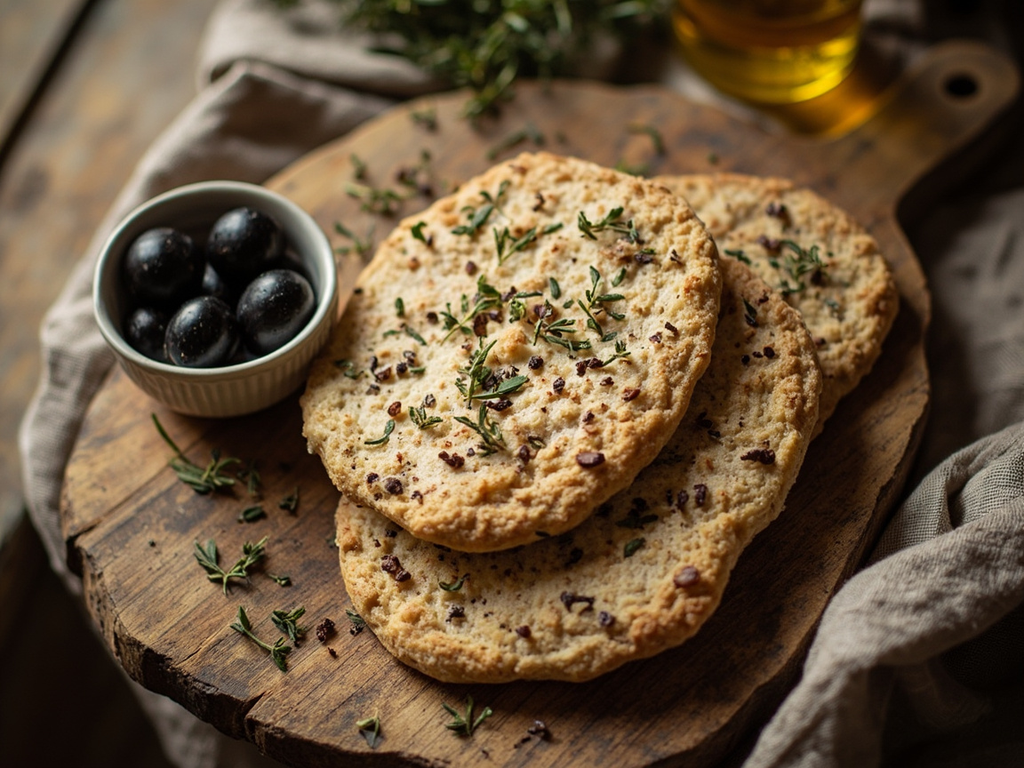
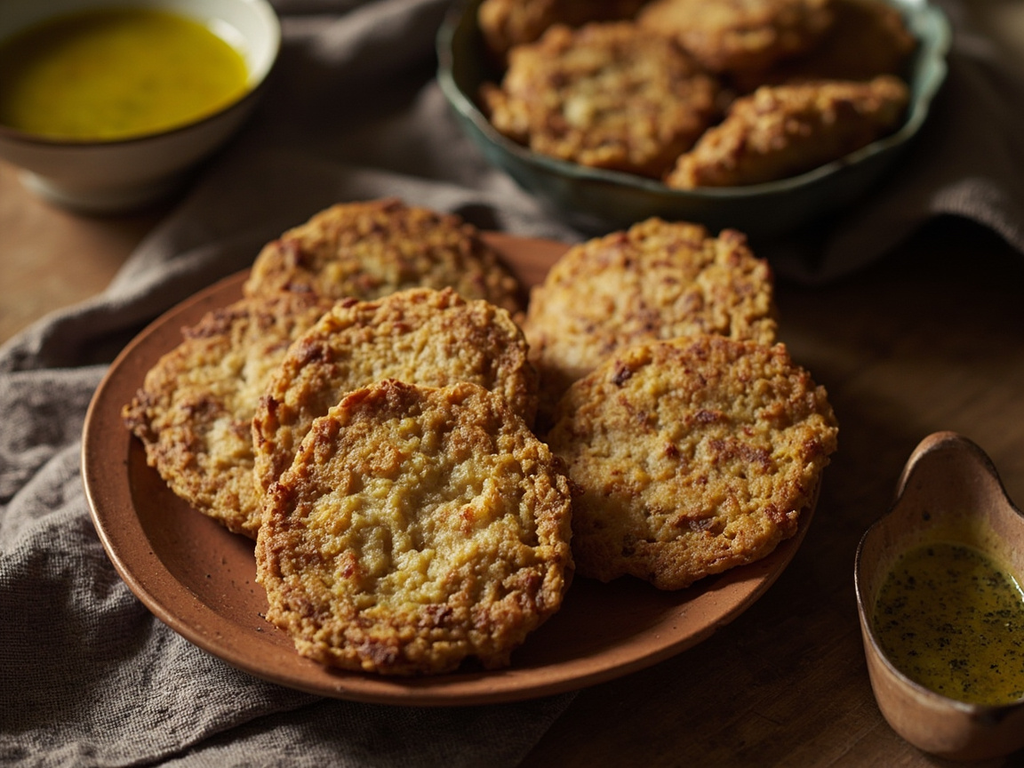
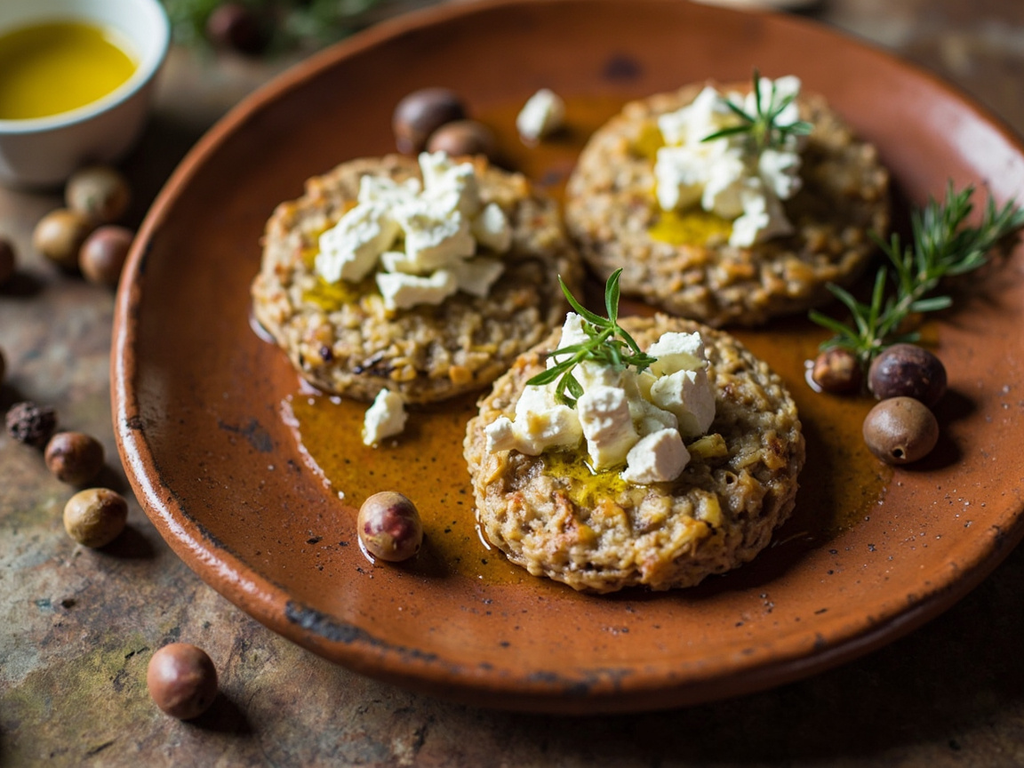
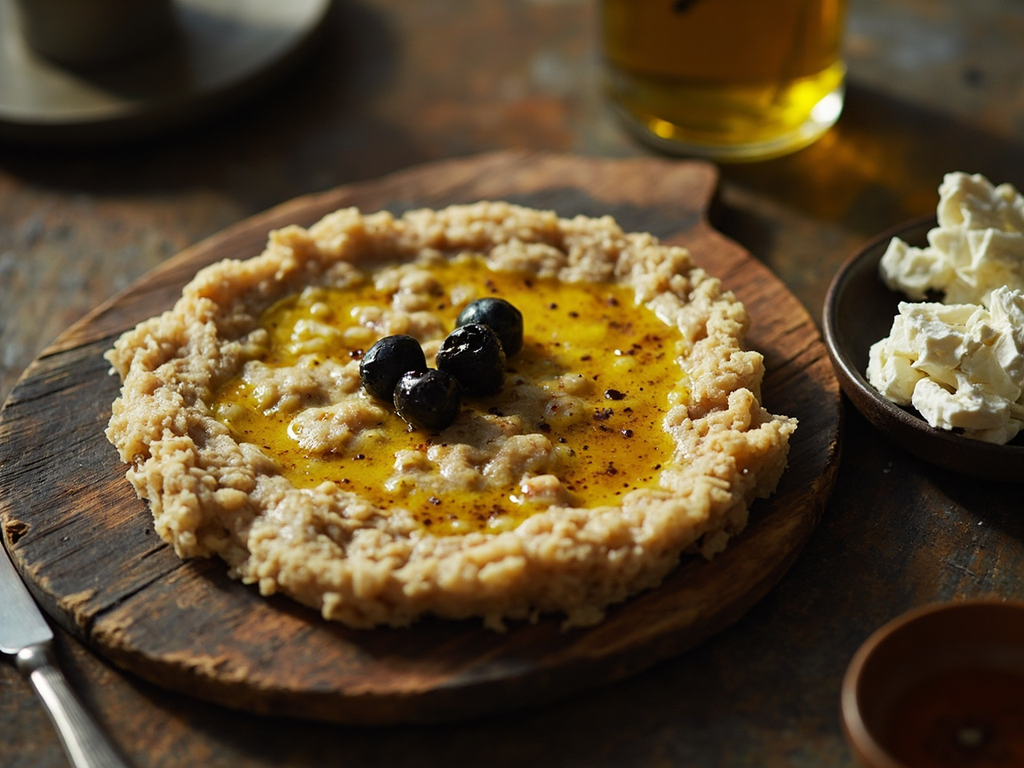
A barely cooked barley cake, dense and rustic, rubbed with olive oil and eaten with olives and a little cheese. The foundation of every Greek table, from peasant to painter.
Before my hand traces the first line of the day, I break this barley maza as my father broke it in Colophon. You knead it with water and a drizzle of oil, barely sear it, for barley does not want the baker's oven like wheat. Place three black olives on top, a shard of goat cheese, and you hold the meal that has sustained me before a thousand wooden panels. Do not despise its simplicity, stranger: no day without a line, and no day without this cake.
- •Toasted barley flour (alphita) — two handfuls (base of the cake)
- •Water — as needed (binder)
- •Olive oil — a drizzle (flavor and binder)
- •Black olives — a handful (opson, accompaniment)
- •Fresh goat cheese — a piece (opson, accompaniment)
- •Sea salt — a pinch (seasoning)
Barley maza with oil and olives
A barely cooked barley cake, dense and rustic, rubbed with olive oil and eaten with olives and a little cheese. The foundation of every Greek table, from peasant to painter.
Why this dish? Born in Colophon in Ionia and trained at the school of Sicyon, Apelles ate this barley cake all his life, the ordinary food of the well-off Greek, before he knew the feasts of Pella. It is the bread of the workshop, the one you chew between painting sessions.
Before my hand traces the first line of the day, I break this barley maza as my father broke it in Colophon. You knead it with water and a drizzle of oil, barely sear it, for barley does not want the baker's oven like wheat. Place three black olives on top, a shard of goat cheese, and you hold the meal that has sustained me before a thousand wooden panels. Do not despise its simplicity, stranger: no day without a line, and no day without this cake.
Ingredients (period version)
- Toasted barley flour (alphita) — two handfuls (base of the cake)
- Water — as needed (binder)
- Olive oil — a drizzle (flavor and binder)
- Black olives — a handful (opson, accompaniment)
- Fresh goat cheese — a piece (opson, accompaniment)
- Sea salt — a pinch (seasoning)
Ingredients
- Barley flour — 200 g (base of the cake)
- Warm water — about 120 ml (binder)
- Extra virgin olive oil — 3 tbsp (flavor and binder)
- Black olives (Kalamata type) — a handful (accompaniment)
- Fresh goat cheese — 100 g (accompaniment)
- Sea salt — 1 pinch (seasoning)
Method
- To evoke the Greeks' toasted barley, dry-toast the barley flour in a skillet over low heat for 3-4 minutes, until nutty and fragrant.
- Mix the cooled flour with salt, then gradually add warm water until a soft, slightly sticky dough forms.
- Stir in 1 tbsp olive oil and shape into two flat cakes about 1 cm thick.
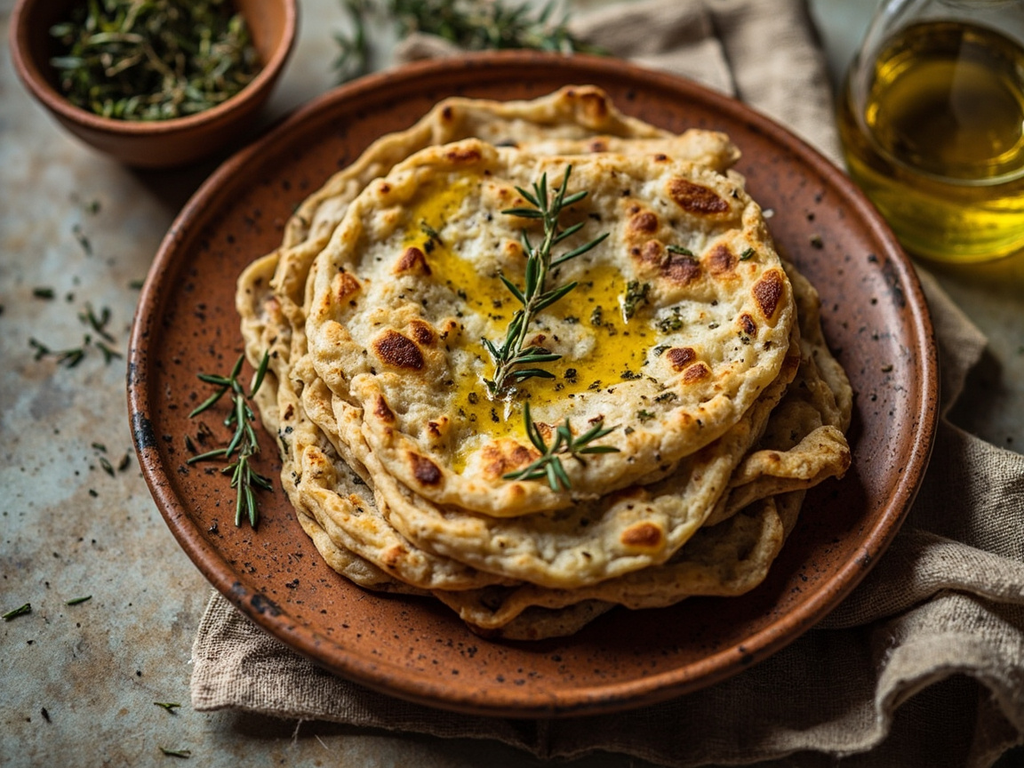
- Cook in a lightly oiled skillet over medium heat for 4-5 minutes per side: the maza stays dense, never puffed like wheat bread.
- Drizzle with remaining oil and serve with olives and crumbled fresh cheese.
How it was made : Maza, an unleavened barley cake, was the staple food of the Greeks, often simply mixed with water or milk without thorough cooking. Barley, easier to grow than wheat, remained the everyday grain; leavened wheat bread was a more urban luxury. It was accompanied by opson: olives, cheese, onion, salted fish.
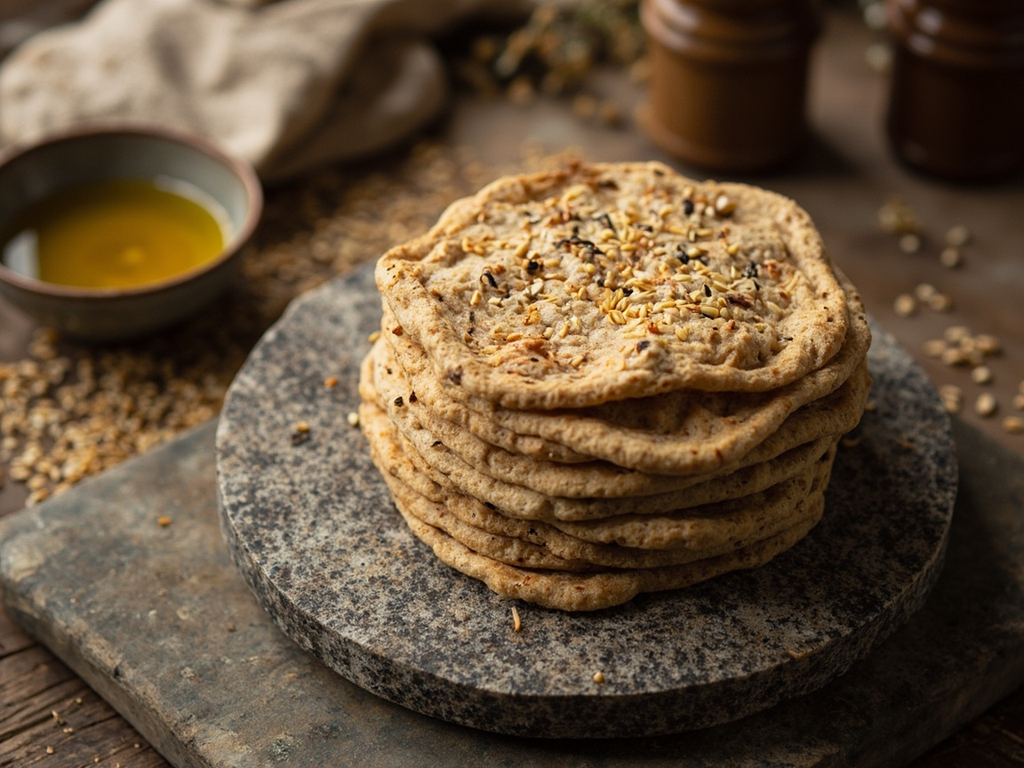
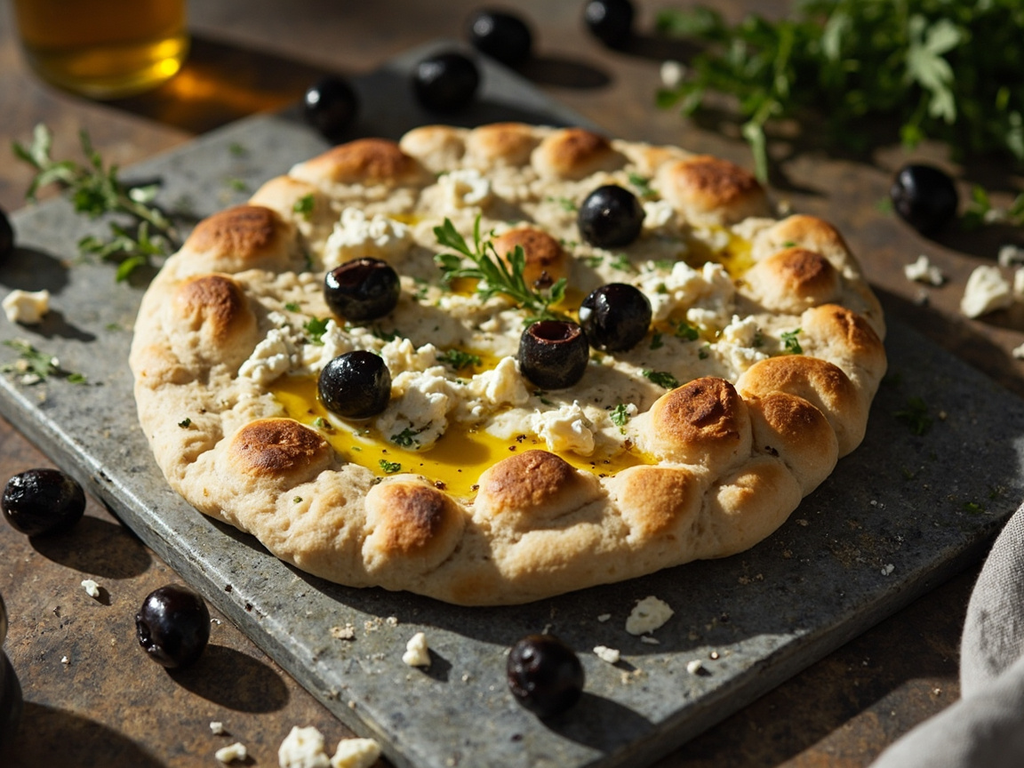
The contemporary twist : Serve the maza on a workshop board: place the cake on a slate like a painter's pinax, arrange olives and cheese in dabs of color.
Apelles · Charactorium