 flip
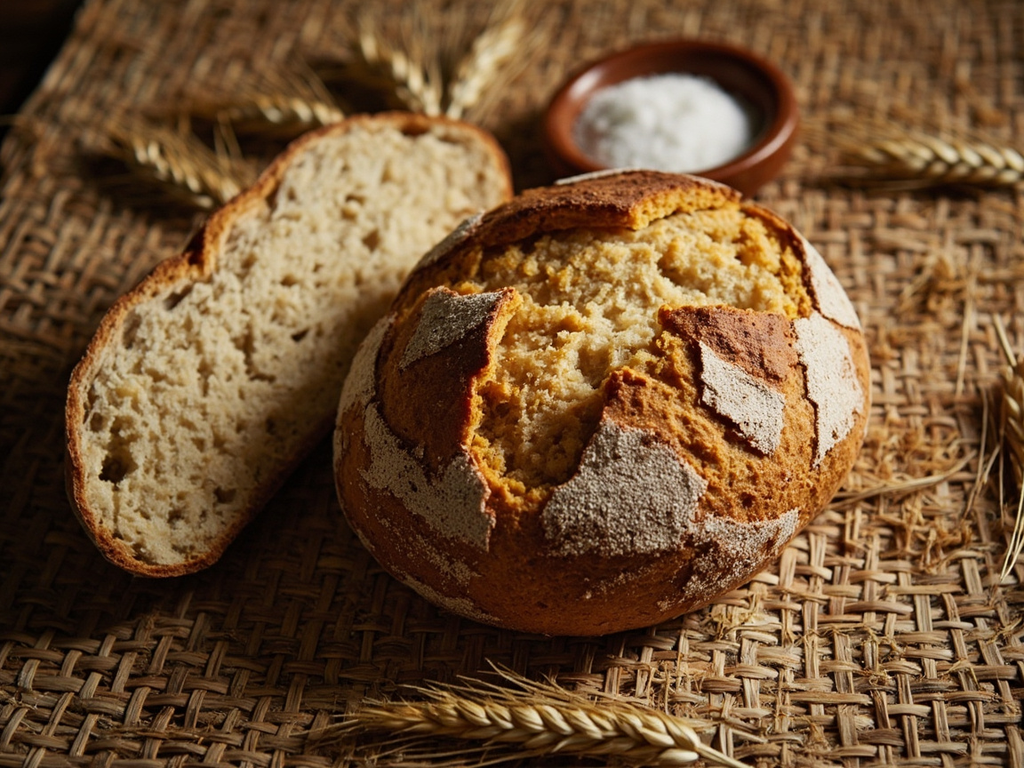
flipTa — Emmer Wheat Sourdough Round Bread
Ta — Emmer Wheat Sourdough Round Bread
Why this dish? Before donning the Pschent, Ay was a scribe, priest, and high official: his fortune was counted in jars of grain and loaves of bread distributed. The round emmer wheat bread was the daily ration of both temple and palace, the living currency of a dignitary who paid his servants in loaves.
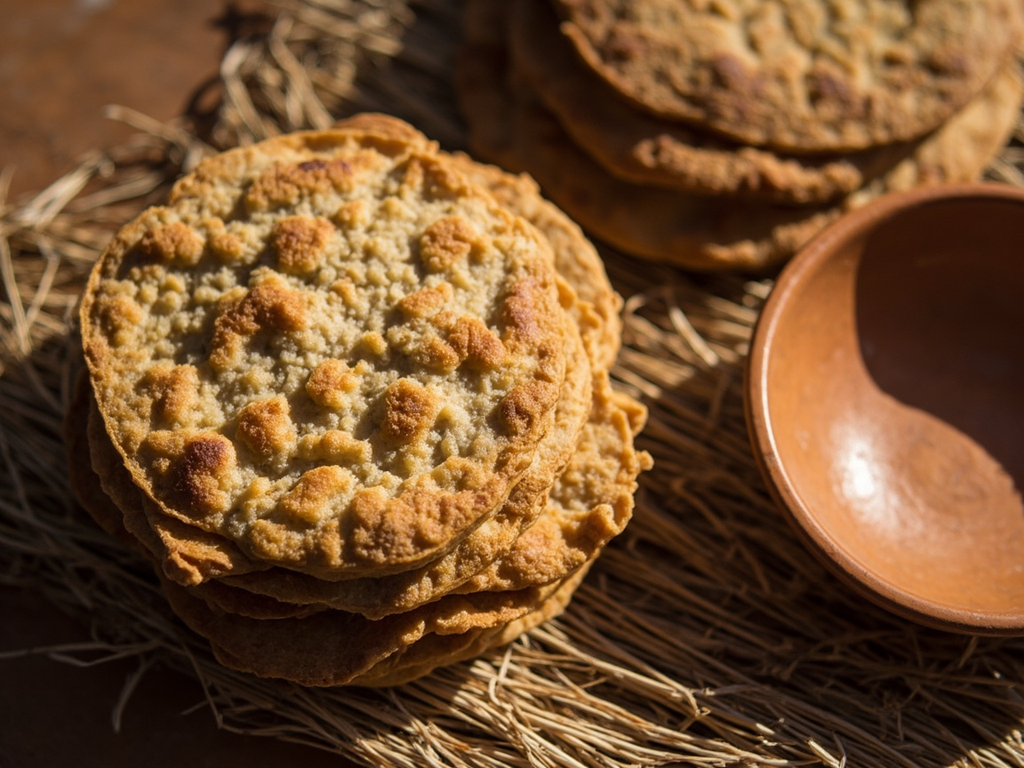
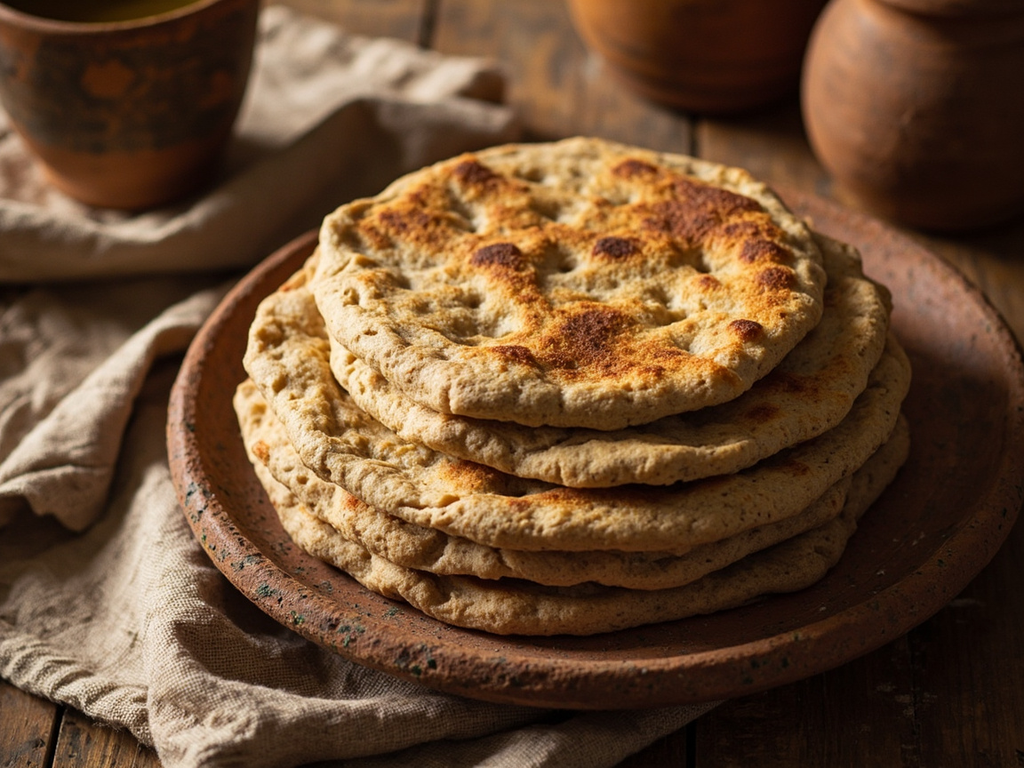
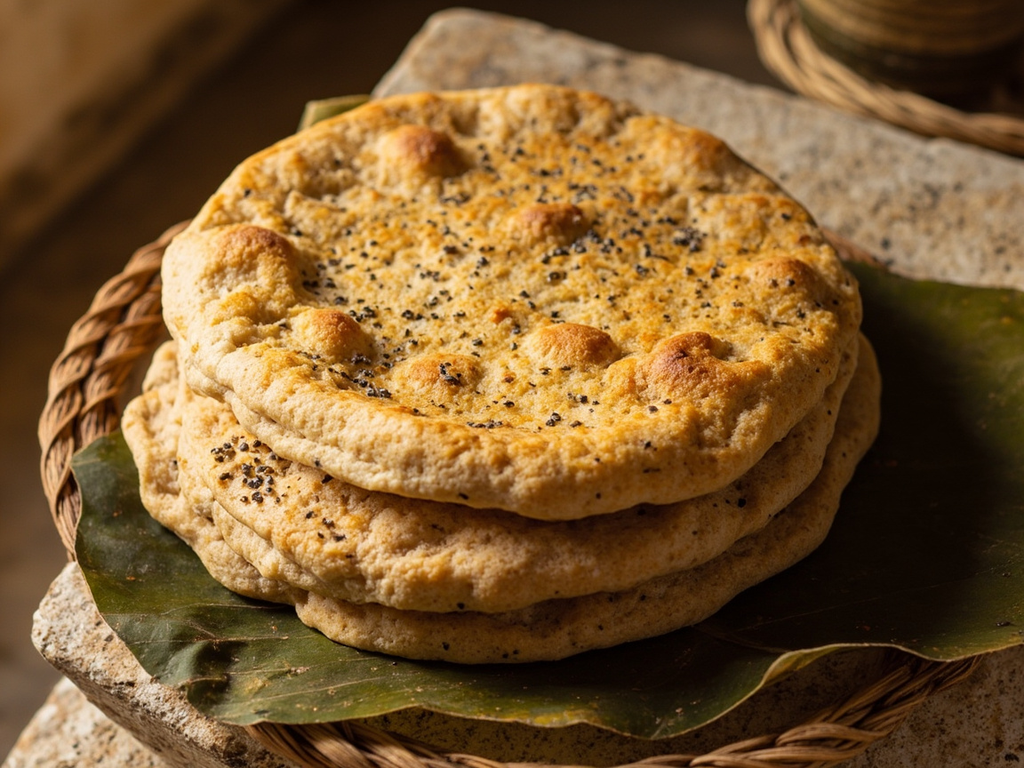
A dense, slightly tangy loaf, baked from emmer wheat flour that the Egyptians ground each morning. Rustic crust, compact crumb that tears by hand for dipping, accompanying beer, or wrapping a piece of meat.
Approach and look at my granaries: they overflow with the grain that the Nile has raised. In the time when I served at the king's feet, I distributed a thousand loaves to those who worked for Amun, for feeding the servant is honoring the god. The emmer is ground on the millstone until the woman's arms are white with flour, the dough is left to sour overnight under the breath of heat, then baked in hot molds. Break off a piece, dip it in beer: this is what keeps a man standing from the rising to the setting of Ra.
- •Freshly ground emmer wheat flour — the content of a basket (base)
- •Natural sourdough starter (yesterday's soured dough) — a handful (fermentation)
- •Nile water — as needed (binding)
- •Salt from the oases — a pinch (seasoning)
Ta — Emmer Wheat Sourdough Round Bread
A dense, slightly tangy loaf, baked from emmer wheat flour that the Egyptians ground each morning. Rustic crust, compact crumb that tears by hand for dipping, accompanying beer, or wrapping a piece of meat.
Why this dish? Before donning the Pschent, Ay was a scribe, priest, and high official: his fortune was counted in jars of grain and loaves of bread distributed. The round emmer wheat bread was the daily ration of both temple and palace, the living currency of a dignitary who paid his servants in loaves.
Approach and look at my granaries: they overflow with the grain that the Nile has raised. In the time when I served at the king's feet, I distributed a thousand loaves to those who worked for Amun, for feeding the servant is honoring the god. The emmer is ground on the millstone until the woman's arms are white with flour, the dough is left to sour overnight under the breath of heat, then baked in hot molds. Break off a piece, dip it in beer: this is what keeps a man standing from the rising to the setting of Ra.
Ingredients (period version)
- Freshly ground emmer wheat flour — the content of a basket (base)
- Natural sourdough starter (yesterday's soured dough) — a handful (fermentation)
- Nile water — as needed (binding)
- Salt from the oases — a pinch (seasoning)
Ingredients
- Spelt or einkorn flour (if emmer is unavailable) — 500 g
- Active liquid sourdough starter — 120 g
- Warm water — 300 ml
- Salt — 9 g
Method
- Mix the flour, starter, warm water, and salt until you get a supple, slightly sticky dough.
- Knead for 10 minutes, then let rise under a cloth in a warm place for 4 to 6 hours (the slow fermentation gives the characteristic tang).
- Shape into a round loaf, place on a floured baking sheet, and let rise for another hour.
- Score the top with a cross, bake at 230 °C in a preheated oven with a pan of water for steam.
- Bake for 35 to 40 minutes until the crust is golden and the loaf sounds hollow when tapped. Let cool slightly before breaking.
How it was made : Emmer was the wheat of the Egyptians: a 'hulled' wheat whose husks had to be broken with a pestle before grinding. The dough was baked in conical terracotta molds heated over fire, or as flatbreads slapped against the walls of a tannour oven. Analyses of bread found in tombs show sand grains from the millstones — which prematurely wore down the Egyptians' teeth.
The contemporary twist : Serve the warm loaf split, drizzled with olive oil and a dusting of toasted cumin: a nod to the still-living flavors of Egyptian bread today.
Sources : Delwen Samuel, "Bread Making and Social Interactions at the Amarna Workmen's Village", World Archaeology, 1999 · Pierre Tallet, La cuisine des pharaons, Actes Sud, 2015
Ay · Charactorium