 flip
flipZhì — Grilled Skewers with Sichuan Pepper
Zhì — Grilled Skewers with Sichuan Pepper
Why this dish? Ban Zhao frequented the Luoyang palace and was summoned to the court of Empress Deng. During imperial feasts, grilled meats (zhì) were a prestige dish—Han funerary bricks show servants turning skewers over coals. Here is the court dish she knew, in contrast to her domestic frugality.
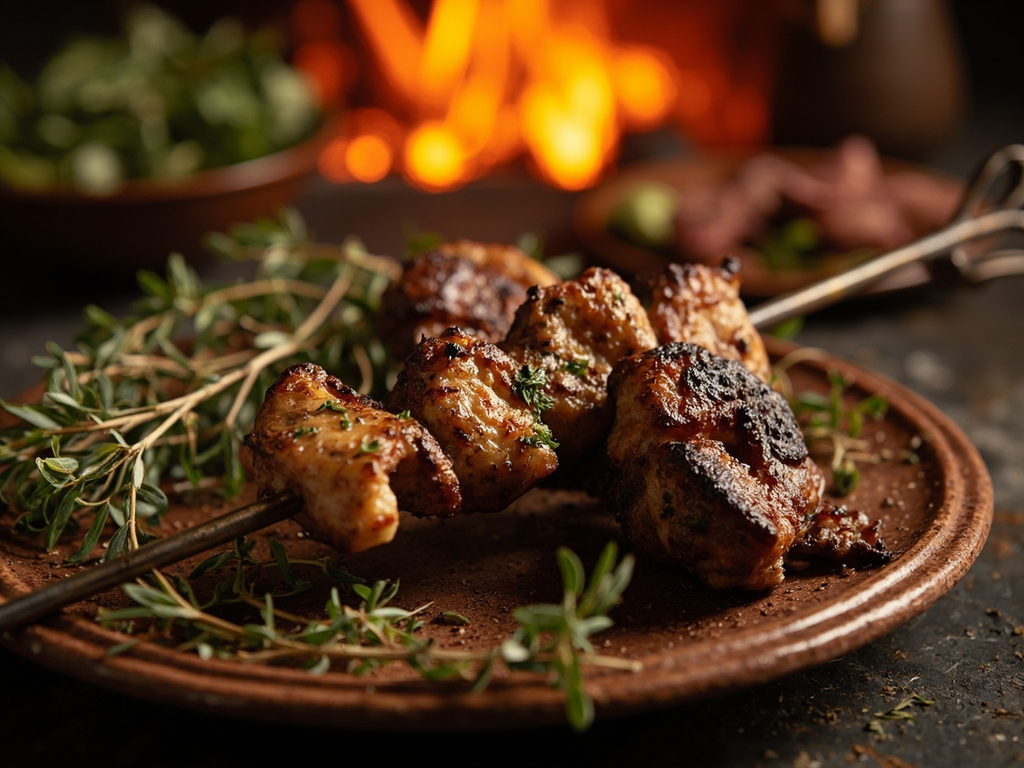
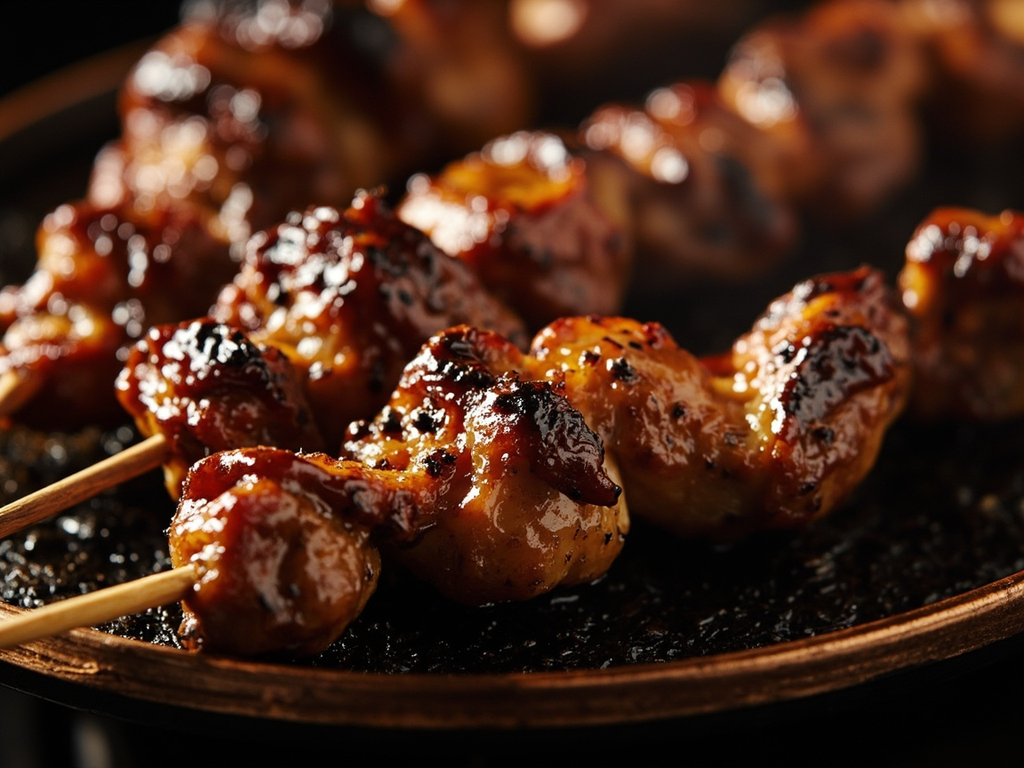
Pieces of meat marinated in jiàng and millet wine, perfumed with Sichuan pepper and ginger, then grilled over coals until caramelized. The controlled splendor of a palace banquet.
At the palace, during grand feasts, these grilled meats were brought over the coals, and the scent of pepper rose to the painted beams. I will tell you the way: let the flesh rest in jiàng and a dash of millet wine, sprinkle the peppercorn that tingles and numbs the tongue, then turn the skewers with a patient hand over the lively fire. Sit upright to eat, as befits such company: the court table demands as much measure in pleasure as in duty.
- •Pork or lamb — in pieces (main grilled item)
- •Jiàng (fermented cereal/soybean paste) — a few spoonfuls (umami marinade, signature)
- •Sichuan pepper (huājiāo) — generously (emblematic spice, numbing)
- •Ginger and scallion — chopped (aromatics)
- •Millet wine — a dash (tenderize, perfume)
Zhì — Grilled Skewers with Sichuan Pepper
Pieces of meat marinated in jiàng and millet wine, perfumed with Sichuan pepper and ginger, then grilled over coals until caramelized. The controlled splendor of a palace banquet.
Why this dish? Ban Zhao frequented the Luoyang palace and was summoned to the court of Empress Deng. During imperial feasts, grilled meats (zhì) were a prestige dish—Han funerary bricks show servants turning skewers over coals. Here is the court dish she knew, in contrast to her domestic frugality.
At the palace, during grand feasts, these grilled meats were brought over the coals, and the scent of pepper rose to the painted beams. I will tell you the way: let the flesh rest in jiàng and a dash of millet wine, sprinkle the peppercorn that tingles and numbs the tongue, then turn the skewers with a patient hand over the lively fire. Sit upright to eat, as befits such company: the court table demands as much measure in pleasure as in duty.
Ingredients (period version)
- Pork or lamb — in pieces (main grilled item)
- Jiàng (fermented cereal/soybean paste) — a few spoonfuls (umami marinade, signature)
- Sichuan pepper (huājiāo) — generously (emblematic spice, numbing)
- Ginger and scallion — chopped (aromatics)
- Millet wine — a dash (tenderize, perfume)
Ingredients
- Pork shoulder or lamb shoulder — 500 g in cubes (main grilled item)
- Fermented soybean paste (mild doubanjiang or brown miso) — 2 tablespoons (umami marinade, signature)
- Sichuan pepper — 1 teaspoon, crushed and toasted (emblematic spice)
- Grated ginger — 1 tablespoon (aromatic)
- Sliced scallion — 2 stalks (aromatic)
- Rice wine (or millet wine) — 2 tablespoons (marinade)
- Wooden skewers, soaked — 8 (cooking support)
Method
- Toast the Sichuan pepper dry for 1 minute, then crush it in a mortar.
- Mix fermented paste, ginger, scallion, wine, and half the pepper. Coat the meat and marinate at least 1 hour (overnight is better).
- Thread the meat onto skewers. Grill over coals or on a very hot grill, turning often, 8 to 10 minutes, until the edges caramelize.
- Sprinkle with the remaining toasted pepper off the heat and serve immediately.
How it was made : Zhì (meat grilled on skewers) is one of the most represented cooking techniques in Han funerary art. Sichuan pepper, native and very ancient in Chinese cuisine, provided the characteristic numbing sensation—it has nothing to do with New World chilies, which are forbidden here. Grilling was done over a bronze brazier.
The contemporary twist : Presented standing upright in a cylinder of coarse salt, with freshly ground Sichuan pepper as 'numbing snow' at serving time.
Ban Zhao · Charactorium