 flip
flipEmpanadas de pino
Empanadas de pino
Why this dish? When Bernardo proclaimed independence and became Supreme Director in 1817, empanadas were already the emblematic dish of large Chilean gatherings. On a festive table in Santiago, they were served by the dozens to celebrate a victory or a national holiday — a delicious symbol of the nascent fatherland.
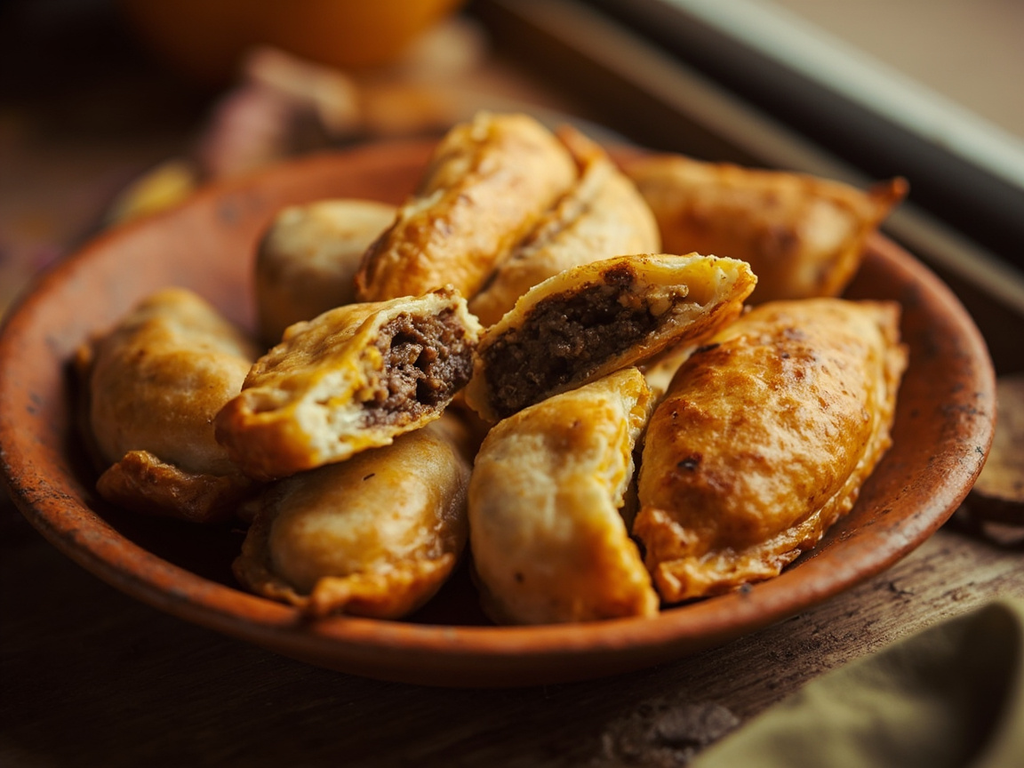
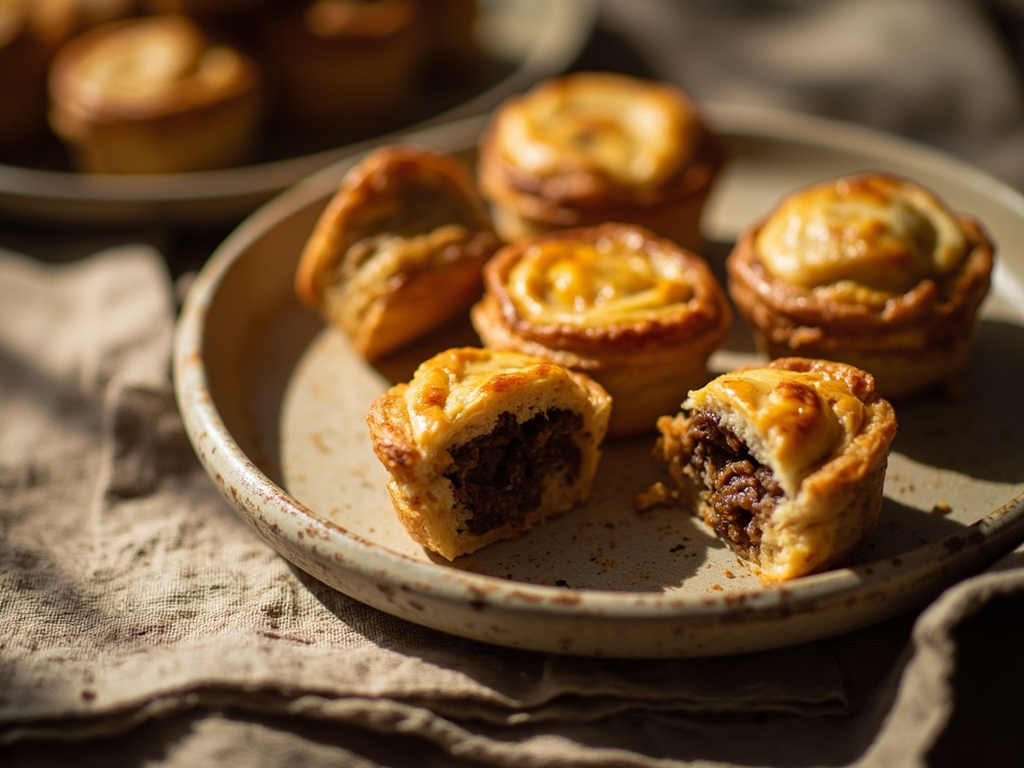
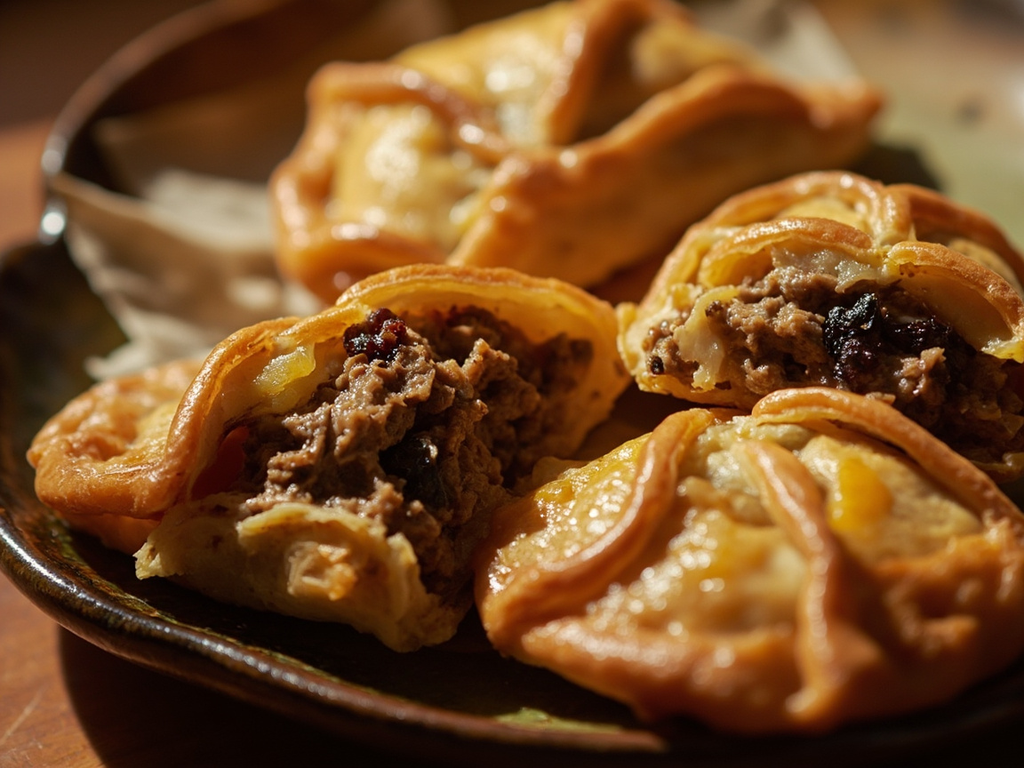
A golden baked wheat turnover filled with a melting *pino*: finely minced beef, slowly melted onion, cumin and ají, enhanced with a raisin, an olive, and a quarter of hard-boiled egg. Crispy outside, juicy inside.
The day we swore independence, there were empanadas on every table in Santiago — that is how my people celebrate what they hold dear. Let the *pino* simmer long, the onion must melt until sweet, and forget neither the olive nor the raisin, nor the egg that surprises in the center. A touch of ají, no more, for the fatherland wishes to be ardent but not brutal. Bite into it hot, and drink a glass of the country's wine to the health of Chile.
- •Wheat flour and lard — for the dough (envelope)
- •Beef, minced with a knife — a good portion (heart of the pino)
- •Onions — in large quantity (melting base of the pino)
- •Cumin, ají de color, salt — to taste (signature seasoning)
- •Raisins, olives, hard-boiled eggs — a few (traditional garnishes)
Empanadas de pino
A golden baked wheat turnover filled with a melting *pino*: finely minced beef, slowly melted onion, cumin and ají, enhanced with a raisin, an olive, and a quarter of hard-boiled egg. Crispy outside, juicy inside.
Why this dish? When Bernardo proclaimed independence and became Supreme Director in 1817, empanadas were already the emblematic dish of large Chilean gatherings. On a festive table in Santiago, they were served by the dozens to celebrate a victory or a national holiday — a delicious symbol of the nascent fatherland.
The day we swore independence, there were empanadas on every table in Santiago — that is how my people celebrate what they hold dear. Let the *pino* simmer long, the onion must melt until sweet, and forget neither the olive nor the raisin, nor the egg that surprises in the center. A touch of ají, no more, for the fatherland wishes to be ardent but not brutal. Bite into it hot, and drink a glass of the country's wine to the health of Chile.
Ingredients (period version)
- Wheat flour and lard — for the dough (envelope)
- Beef, minced with a knife — a good portion (heart of the pino)
- Onions — in large quantity (melting base of the pino)
- Cumin, ají de color, salt — to taste (signature seasoning)
- Raisins, olives, hard-boiled eggs — a few (traditional garnishes)
Ingredients
- All-purpose flour (T55) — 500 g (dough)
- Lard — 120 g (crispy dough)
- Salted warm water — 200 ml (to bind the dough)
- Ground beef — 500 g (heart of the pino)
- Sliced onions — 4 large (melting base of the pino)
- Ground cumin — 1 teaspoon (signature spice)
- Sweet paprika (ají de color) — 1 tablespoon (color and mild heat)
- Raisins — 1 handful (garnish)
- Black olives — 12 (garnish)
- Hard-boiled eggs — 3 (garnish)
Method
- Prepare the pino: cook the onions over low heat for 20 minutes until soft, add the beef, cumin, paprika, and salt, cook, then let cool (ideally overnight, as tradition dictates).
- Dough: rub the flour with the lard, add the salted warm water, knead, and let rest for 30 minutes.
- Roll out and cut 15 cm discs. Fill each with a spoonful of pino, a raisin, an olive, and a quarter of hard-boiled egg.
- Fold into a half-moon, seal the edges with the traditional pleat, and brush with beaten egg.
- Bake at 200°C for 25 to 30 minutes until golden brown. Serve hot.
How it was made : The *empanada de pino* comes from the Hispanic turnover adapted to Criollo products. The *pino* was prepared the day before to let the flavors meld, and the empanadas were baked in the wood-fired oven of the hacienda. The raisin-olive-egg trio remains the Chilean signature, distinct from Argentine empanadas.
The contemporary twist : A batch of miniature golden bites, served with *pebre* (fresh tomato-onion-coriander-ají sauce) for dipping, to transport the whole table to Chile.
Sources : Eugenio Pereira Salas, Apuntes para la historia de la cocina chilena, 1943 · Rachel Laudan, Cuisine and Empire
Bernardo O'Higgins · Charactorium