 flip
flipFestive Criollo Locro
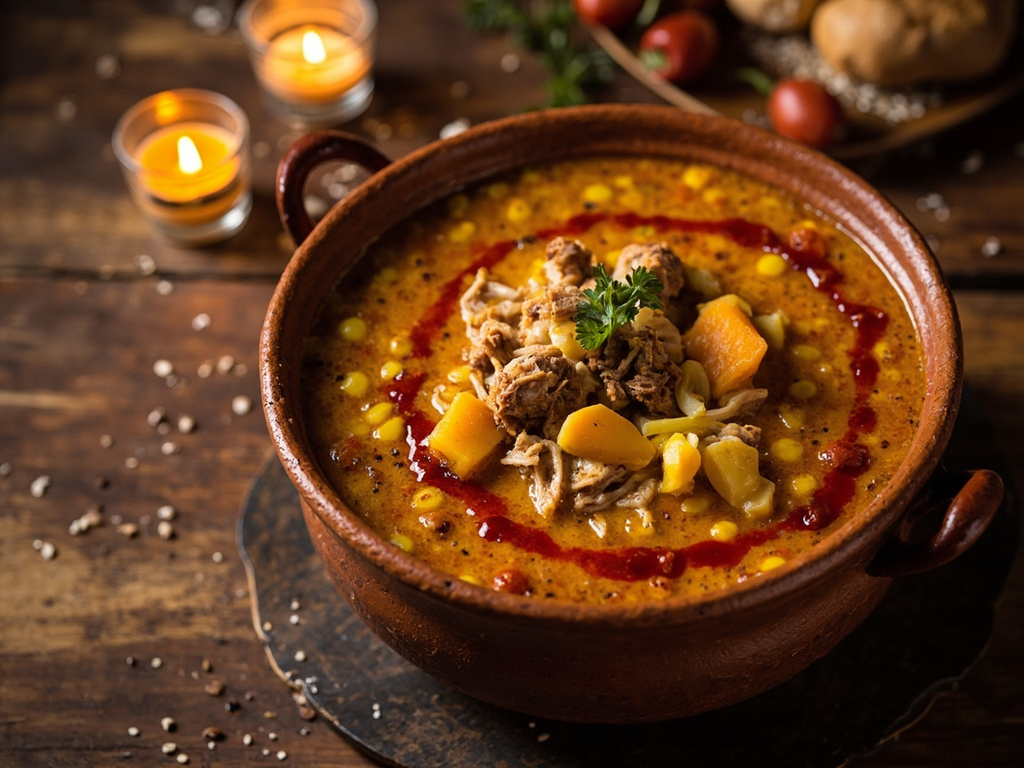
Festive Criollo Locro
Why this dish? Locro is the dish of great criollo occasions, served on patriotic holidays (May 25, July 9). In San Martín's world, this thick stew of corn and meats was shared on days of rejoicing, after a victory, or to celebrate the independence he fought to achieve.
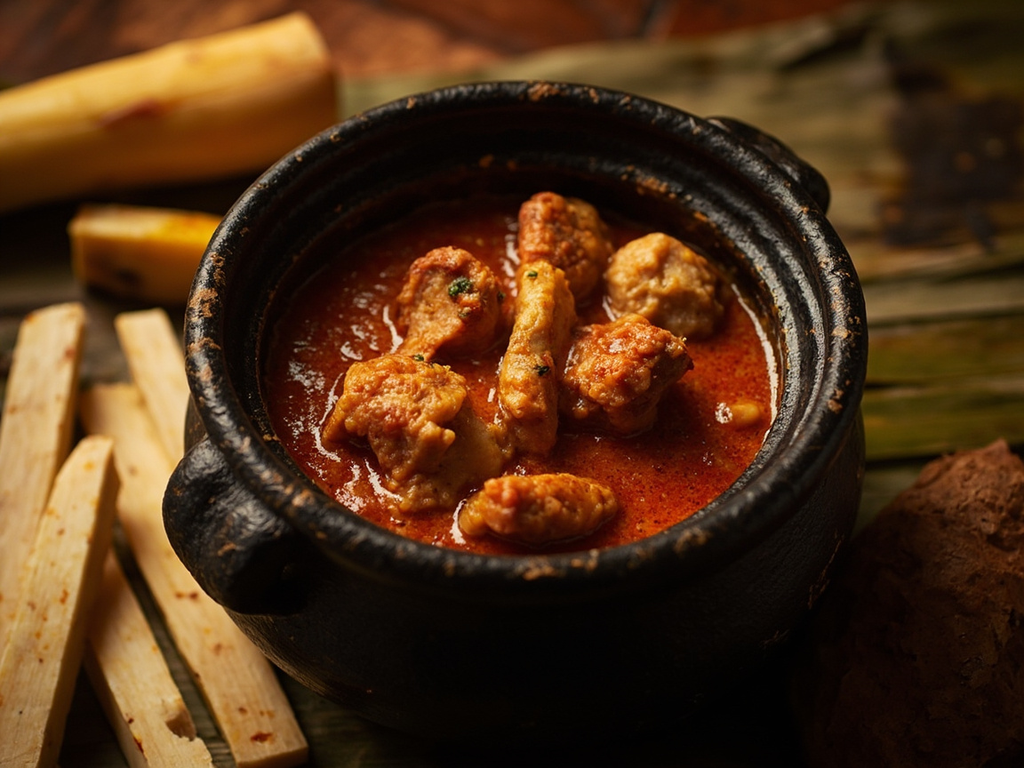
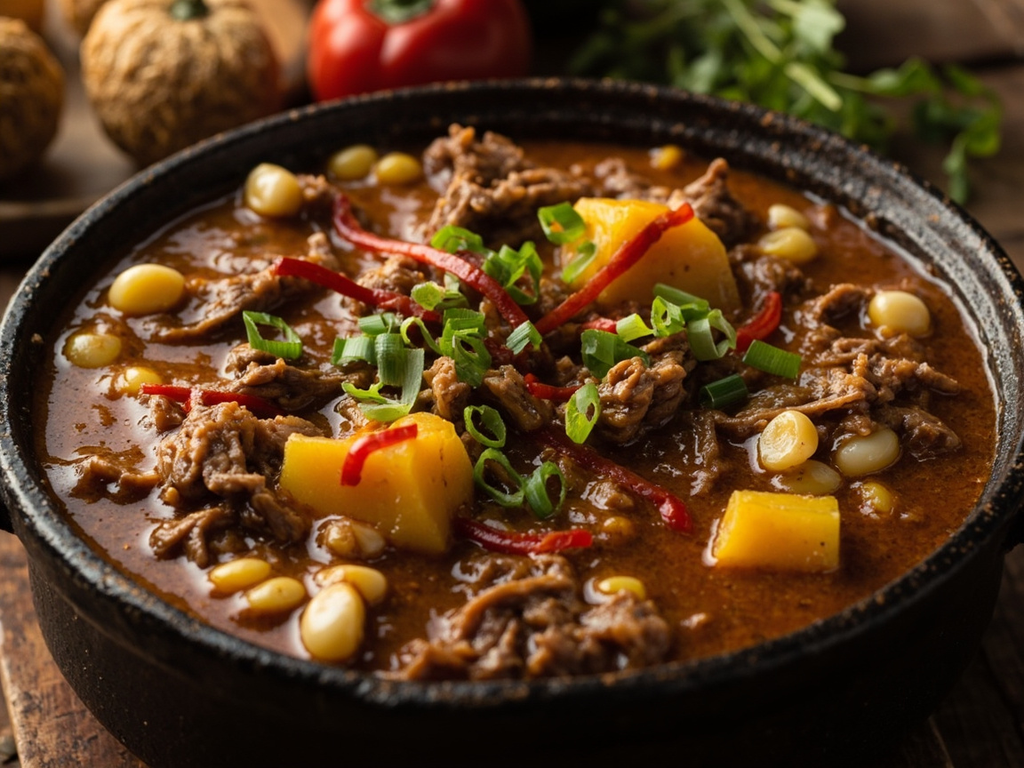
A thick, long-simmered stew of white corn, squash, and several meats, served with a spicy paprika oil sauce. The quintessential collective dish, gathering a whole table around a single large pot.
On feast days, soldier, we forget the frugality of camp: the great cauldron is lit at dawn and the locro simmers for hours, until the corn bursts and everything thickens. We throw in what fortune allows — beef, pork rind, pumpkin — and each serves himself from the same pot, for victory is shared like soup. On top, a spoonful of fat reddened with paprika: that is what wakes everything up. Such a dish is not eaten in haste; it demands that you sit and raise a glass to the fatherland.
- •Cracked white corn (maíz blanco) — a large measure (stew base)
- •Beef and pork meats, pork rind — various pieces (proteins)
- •Squash / pumpkin — generously (binder and sweetness)
- •Onion, paprika, fat — for the sauce (seasoning and garnish)
Festive Criollo Locro
A thick, long-simmered stew of white corn, squash, and several meats, served with a spicy paprika oil sauce. The quintessential collective dish, gathering a whole table around a single large pot.
Why this dish? Locro is the dish of great criollo occasions, served on patriotic holidays (May 25, July 9). In San Martín's world, this thick stew of corn and meats was shared on days of rejoicing, after a victory, or to celebrate the independence he fought to achieve.
On feast days, soldier, we forget the frugality of camp: the great cauldron is lit at dawn and the locro simmers for hours, until the corn bursts and everything thickens. We throw in what fortune allows — beef, pork rind, pumpkin — and each serves himself from the same pot, for victory is shared like soup. On top, a spoonful of fat reddened with paprika: that is what wakes everything up. Such a dish is not eaten in haste; it demands that you sit and raise a glass to the fatherland.
Ingredients (period version)
- Cracked white corn (maíz blanco) — a large measure (stew base)
- Beef and pork meats, pork rind — various pieces (proteins)
- Squash / pumpkin — generously (binder and sweetness)
- Onion, paprika, fat — for the sauce (seasoning and garnish)
Ingredients
- White locro corn (or cracked white corn) — 400 g, soaked overnight (stew base)
- Beef short ribs — 400 g (meat)
- Pork shoulder + a bit of rind — 300 g (meat and richness)
- Pumpkin — 500 g, cubed (binder)
- Onion — 2, sliced (aromatic base)
- Sweet and smoked paprika, oil — 2 tsp + 4 tbsp (finishing sauce (quiquirimichi))
Method
- Soak the white corn overnight in cold water.
- The next day, put the drained corn in a large pot with the meat cut into large pieces and cover generously with water.
- Simmer over low heat for 2-3 hours, stirring occasionally, until the corn opens up.
- Add the cubed pumpkin and continue cooking until it breaks down and thickens the stew.
- Prepare the sauce: fry the onion in oil, remove from heat and add sweet and smoked paprika.
- Serve the locro very hot in bowls, topped with a spoonful of this red sauce.
How it was made : Locro predates the Spanish conquest: it is an Andean stew of corn and squash, to which cattle brought by the Spaniards added meats. A humble and nourishing dish, it became the culinary symbol of Argentine national holidays, rightly associated with the era of the Wars of Independence. It was prepared in large quantity in a single cauldron to gather an entire community.
The contemporary twist : Offer a vegetarian version with only pumpkin, corn, and beans, and serve the paprika sauce on the side so each person can adjust the heat.
José de San Martín · Charactorium