 flip
flipGraubrot mit Schmalz und Gurke — rye bread with lard and pickle
Graubrot mit Schmalz und Gurke — rye bread with lard and pickle
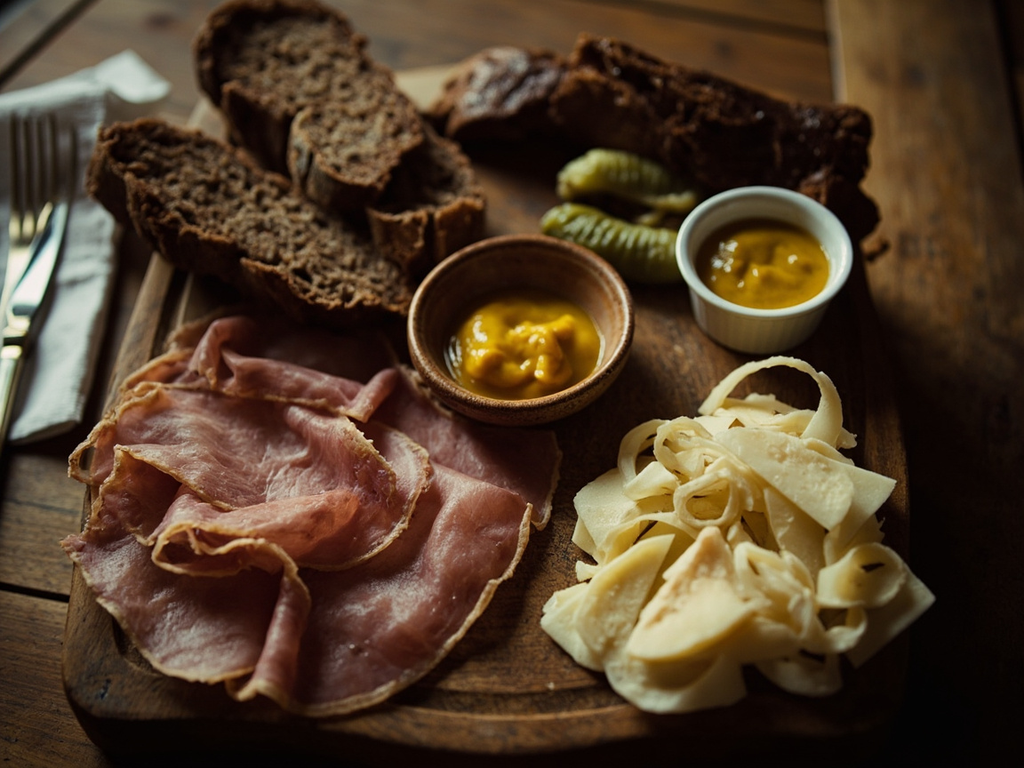
Why this dish? Hilbert's daily life: rye bread, cold cuts, meals eaten quickly to return to work. The Abendbrot—bread, fat, pickle—is the backbone of the German bourgeois supper, sober and nourishing.
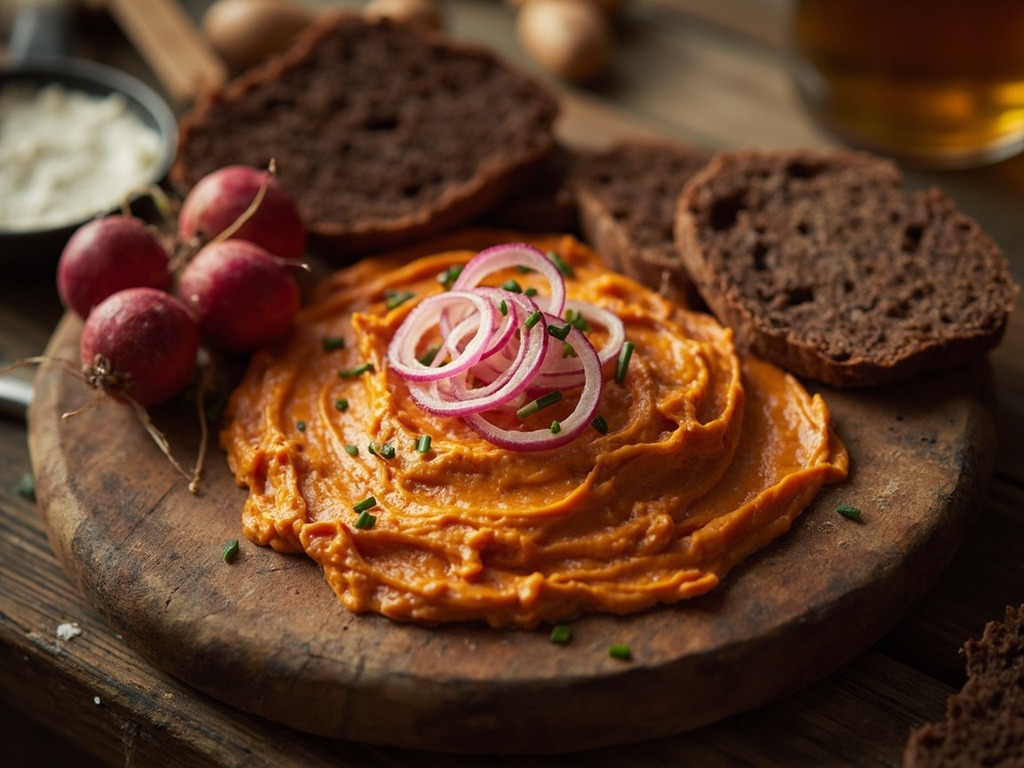
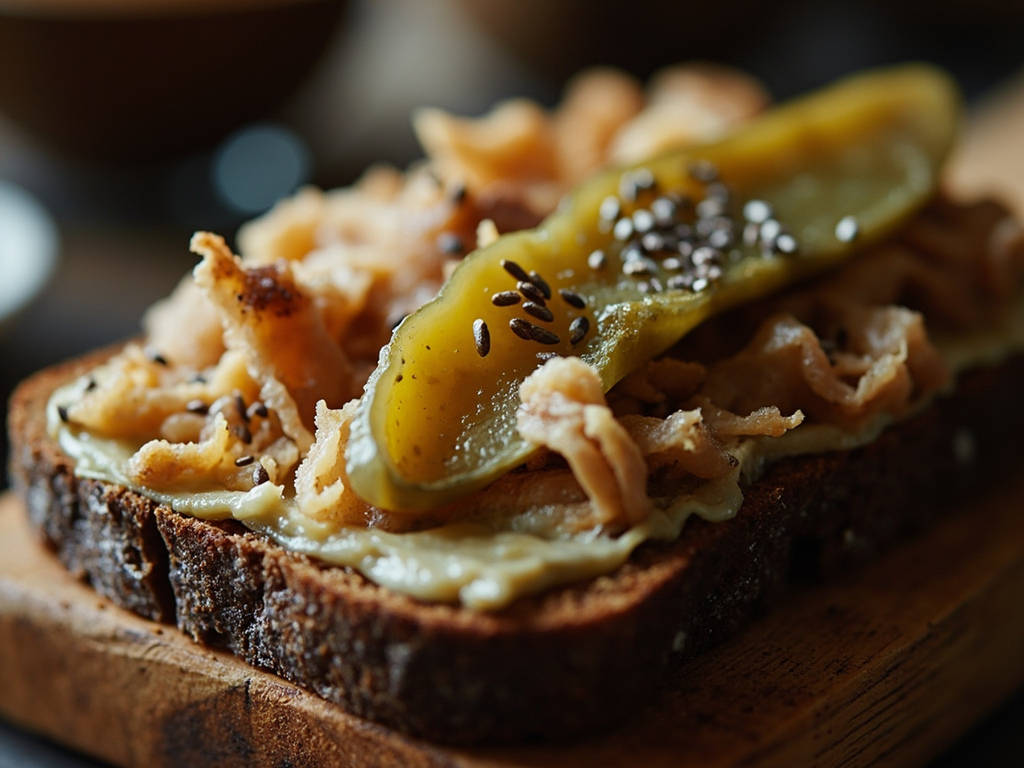
A thick slice of dense rye bread spread with seasoned lard (Griebenschmalz, with cracklings and apple), crowned with a lacto-fermented pickle and a pinch of caraway. The no-fuss supper of hardworking Germany.
In the evening, I asked for nothing more than a good slice of rye and some lard—the Schmalz, with its little cracklings and a hint of apple, that keeps a man going till morning. We'd add a pickle from the jar, nice and sour, and a few caraway seeds for the stomach. Eat standing if you must, but eat real bread: white bread is for those who have nothing to think about.
- •Dense rye bread (Graubrot) — one thick slice (base)
- •Lard with cracklings (Griebenschmalz) — to spread (fat)
- •Grated apple — a little (sweetness in the Schmalz)
- •Lacto-fermented pickle — one (fermented acidity)
- •Caraway (Kümmel) — a pinch (signature aromatic)
- •Salt — as needed (seasoning)
Graubrot mit Schmalz und Gurke — rye bread with lard and pickle
A thick slice of dense rye bread spread with seasoned lard (Griebenschmalz, with cracklings and apple), crowned with a lacto-fermented pickle and a pinch of caraway. The no-fuss supper of hardworking Germany.
Why this dish? Hilbert's daily life: rye bread, cold cuts, meals eaten quickly to return to work. The Abendbrot—bread, fat, pickle—is the backbone of the German bourgeois supper, sober and nourishing.
In the evening, I asked for nothing more than a good slice of rye and some lard—the Schmalz, with its little cracklings and a hint of apple, that keeps a man going till morning. We'd add a pickle from the jar, nice and sour, and a few caraway seeds for the stomach. Eat standing if you must, but eat real bread: white bread is for those who have nothing to think about.
Ingredients (period version)
- Dense rye bread (Graubrot) — one thick slice (base)
- Lard with cracklings (Griebenschmalz) — to spread (fat)
- Grated apple — a little (sweetness in the Schmalz)
- Lacto-fermented pickle — one (fermented acidity)
- Caraway (Kümmel) — a pinch (signature aromatic)
- Salt — as needed (seasoning)
Ingredients
- Sourdough rye bread — 1 thick slice (base)
- Lard (or store-bought Griebenschmalz) — 1 tbsp (fat)
- Finely grated apple — 1 tsp (sweetness (for homemade Schmalz))
- Salt-cured (lacto-fermented) pickle — 1 (fermented acidity)
- Caraway seeds — 1 pinch (signature)
- Flaky sea salt — 1 pinch (seasoning)
Method
- For homemade Schmalz: gently melt lard with a few diced bacon bits, a little onion and grated apple, until golden cracklings form; allow to set.
- Generously spread the rye bread slice.
- Top with a lacto-fermented pickle sliced into a fan.
- Sprinkle with caraway and a pinch of flaky salt; serve as is, with a glass of beer if desired.
How it was made : Schmalz replaced expensive butter in modest and even bourgeois households; it was stored in pots for weeks. Pickles were lacto-fermented in jars (not the industrial vinegar of today), a precious source of acidity and probiotics during the Prussian winter.
The contemporary twist : Serve as a 'Stulle' cut diagonally on a wooden board, the pickle fanned out: the Abendbrot reimagined as a Nordic tapa.
David Hilbert · Charactorium