 flip
flipMaza, the Barley Flatbread of the Athenians
Maza, the Barley Flatbread of the Athenians
Why this dish? A student of Aristotle at the Lyceum, Demetrius shared the frugal daily fare of the Athenians: barley maza, kneaded without leaven, was the bread of the people and the philosophers alike, the foundation of every day before the splendors of power and the court of Alexandria.
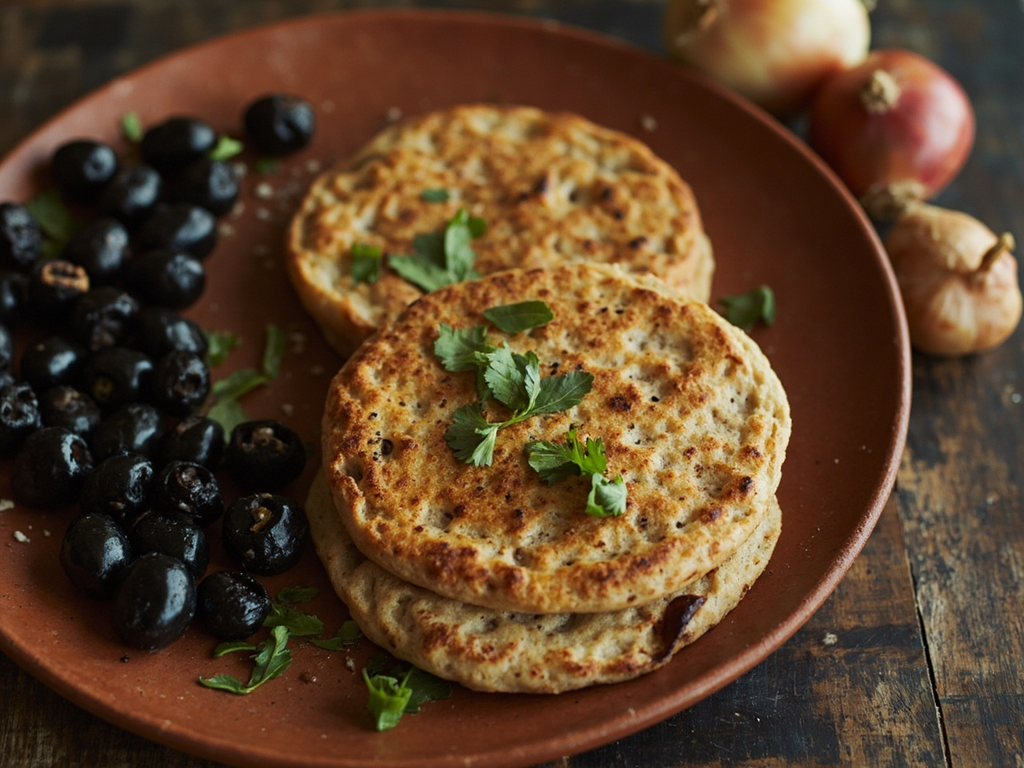
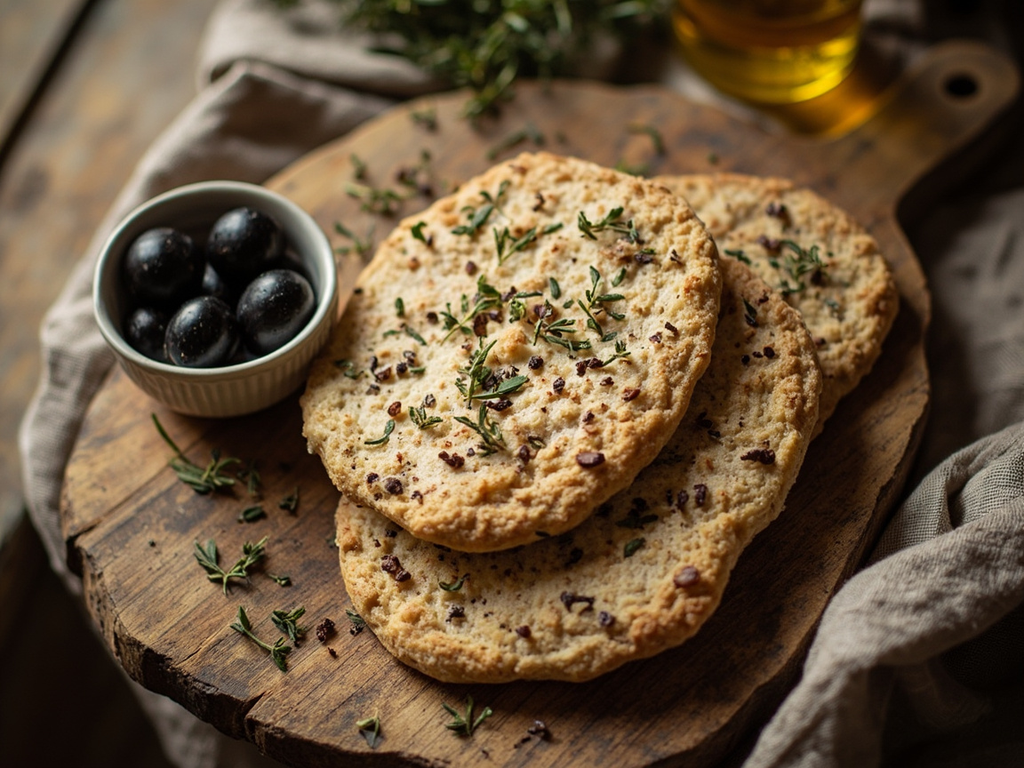
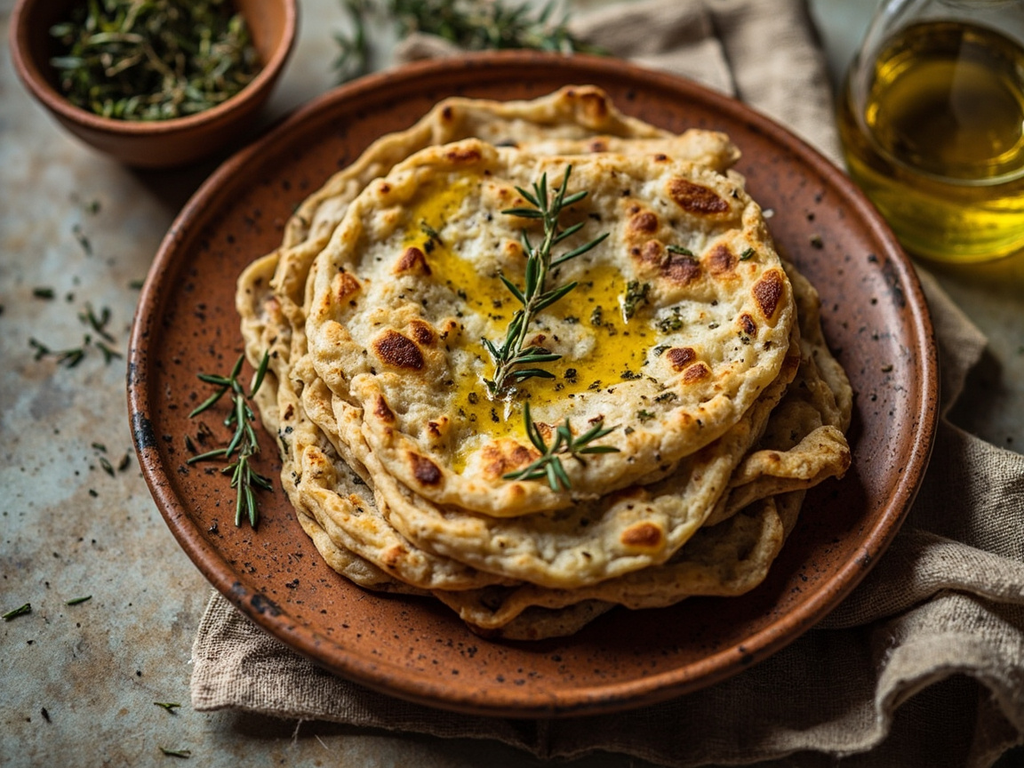
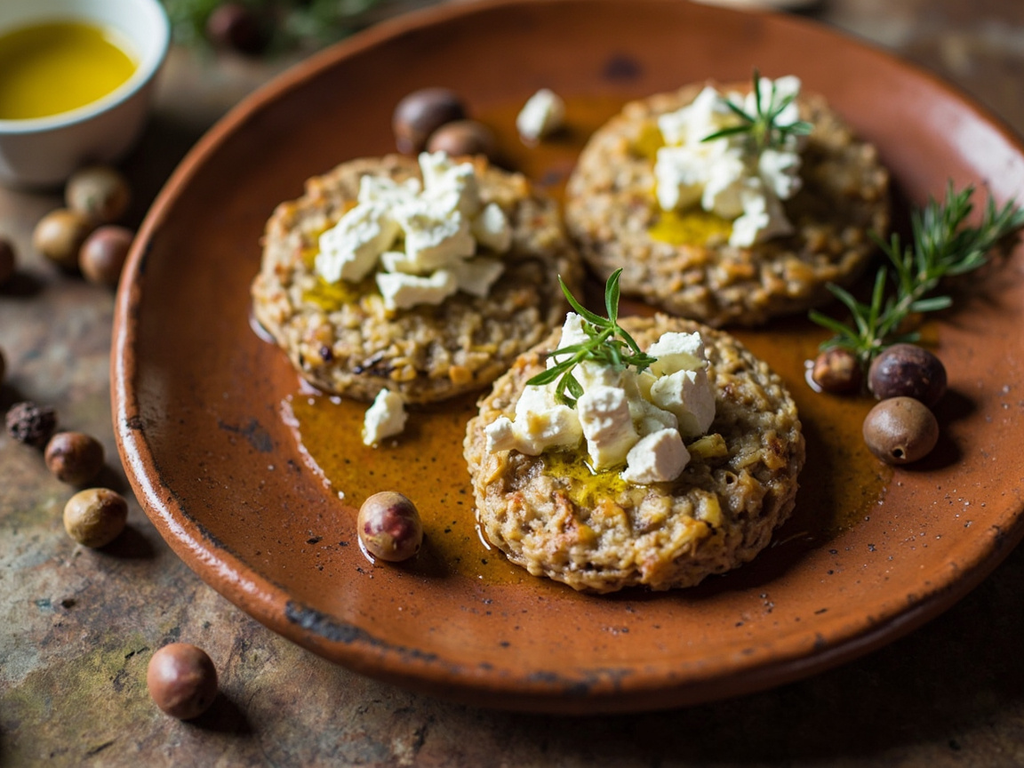
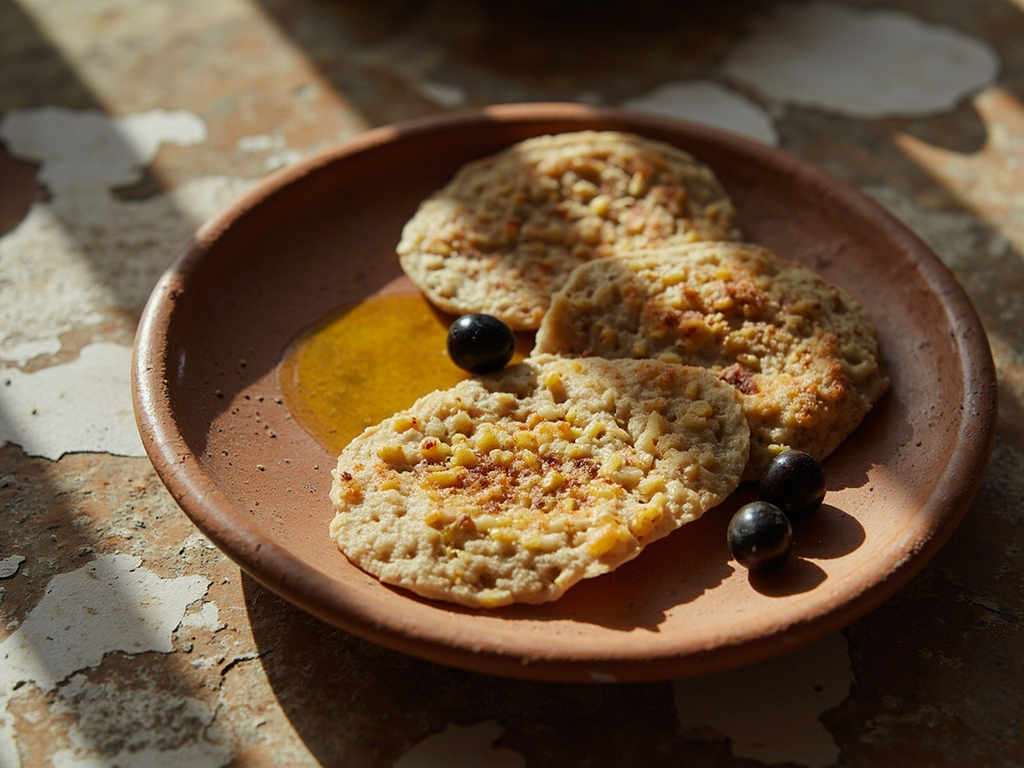
A dense flatbread of toasted barley flour, barely kneaded with water and olive oil, broken to hold olives, cheese, or fish. Rustic, earthy, slightly bitter: the invisible foundation of all Greek cuisine.
Before I speak of splendors, listen: it is barley that makes the Athenian, not gold. At the Lyceum, between two lessons of the Master, we broke this maza with our fingers, barely moistened with oil, and found it worthy of a free mind. First toast your flour on the hot stone — it gains that bitter nuttiness — knead it sparingly, and beware of too much care: simplicity, you see, is also a virtue to be learned.
- •Toasted barley flour — two full handfuls (staple cereal)
- •Spring water — as needed to bind (binder)
- •Olive oil — a drizzle (fat)
- •Sea salt — a pinch (seasoning)
Maza, the Barley Flatbread of the Athenians
A dense flatbread of toasted barley flour, barely kneaded with water and olive oil, broken to hold olives, cheese, or fish. Rustic, earthy, slightly bitter: the invisible foundation of all Greek cuisine.
Why this dish? A student of Aristotle at the Lyceum, Demetrius shared the frugal daily fare of the Athenians: barley maza, kneaded without leaven, was the bread of the people and the philosophers alike, the foundation of every day before the splendors of power and the court of Alexandria.
Before I speak of splendors, listen: it is barley that makes the Athenian, not gold. At the Lyceum, between two lessons of the Master, we broke this maza with our fingers, barely moistened with oil, and found it worthy of a free mind. First toast your flour on the hot stone — it gains that bitter nuttiness — knead it sparingly, and beware of too much care: simplicity, you see, is also a virtue to be learned.
Ingredients (period version)
- Toasted barley flour — two full handfuls (staple cereal)
- Spring water — as needed to bind (binder)
- Olive oil — a drizzle (fat)
- Sea salt — a pinch (seasoning)
Ingredients
- Barley flour — 250 g (staple cereal)
- Warm water — 120 to 150 ml (binder)
- Extra virgin olive oil — 2 tbsp (fat)
- Fine salt — 1 tsp (seasoning)
Method
- Toast the barley flour dry in a pan over medium heat for 3–4 minutes until it smells nutty (this mimics stone-toasted barley).
- Pour the flour into a bowl, add the salt, then the oil and warm water little by little while mixing.
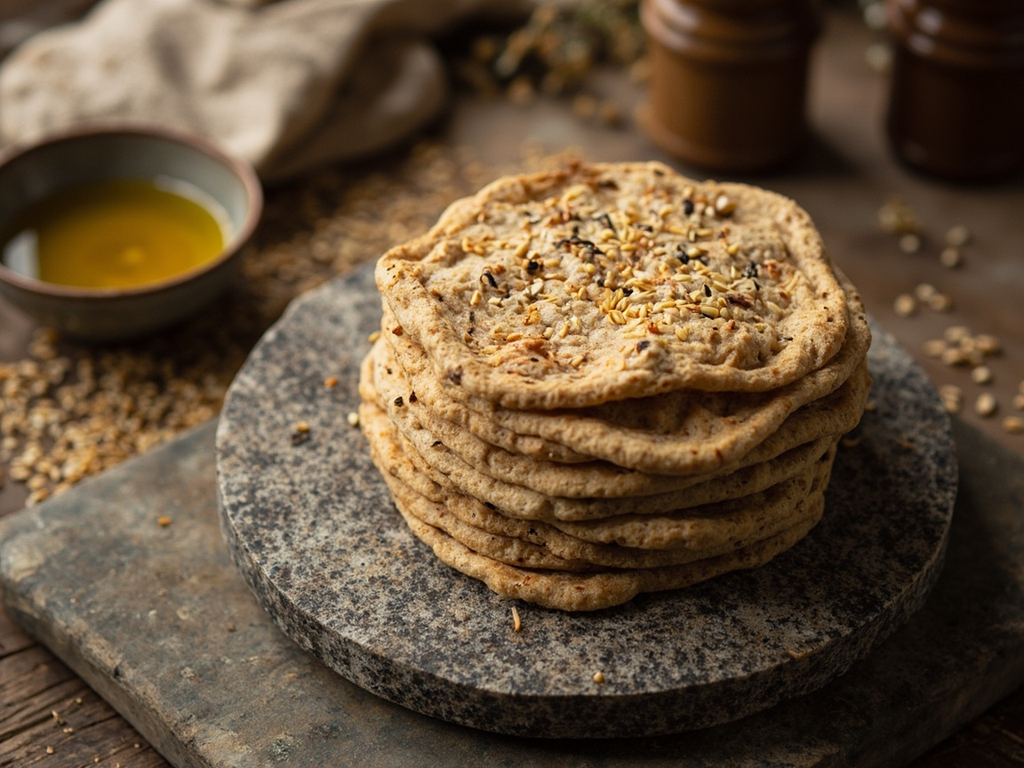
- Knead briefly to obtain a soft, non-sticky dough (barley has no gluten, the flatbread will remain dense).
- Shape into flatcakes 1 cm thick.
- Cook on a hot griddle or pan for 4–5 minutes per side, or bake at 200°C for 12–15 minutes.
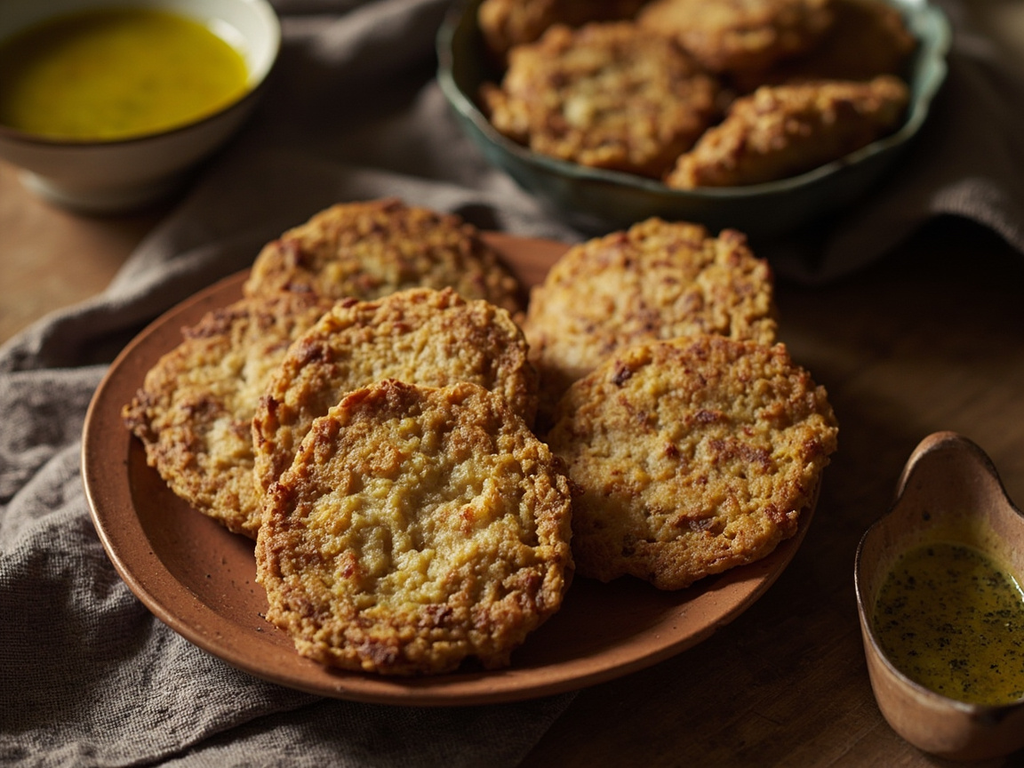
- Serve warm, broken by hand to hold olives, cheese, or fish.
How it was made : Maza was not always cooked: often toasted barley was simply kneaded with water, wine, or oil and eaten raw as a thick porridge. It was the most democratic food of Athens, contrasted with leavened wheat bread, which was more expensive and prestigious.
The contemporary twist : Serve it on an "appetizer board" Greek-style: warm flatcakes, new olive oil, crushed olives, and thyme honey alongside, each composing their own bite as in a deipnon.
Sources : Athenaeus of Naucratis, The Deipnosophists · Andrew Dalby, Siren Feasts: A History of Food and Gastronomy in Greece
Demetrius of Phalerum · Charactorium