 flip
flipNūnu wābilu — dried and grilled marsh fish
Nūnu wābilu — dried and grilled marsh fish
Why this dish? Dried fish from the marshes and rivers was part of Enheduanna's known diet; dried and salted, it kept for a long time and fed the temple household between deliveries.
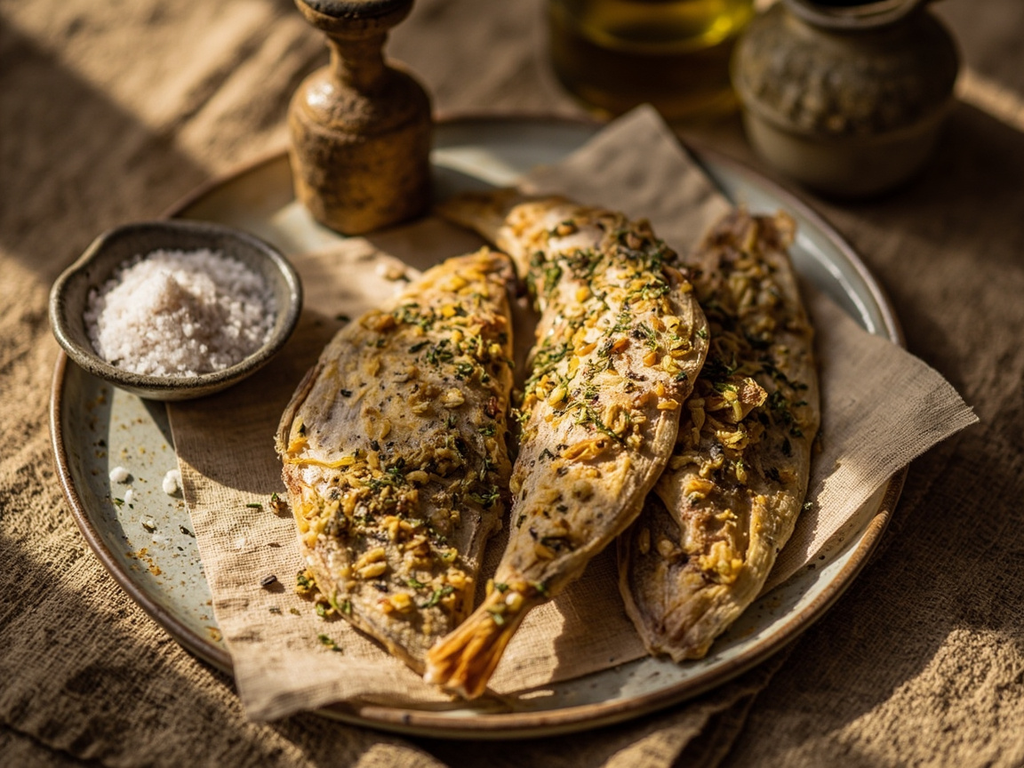
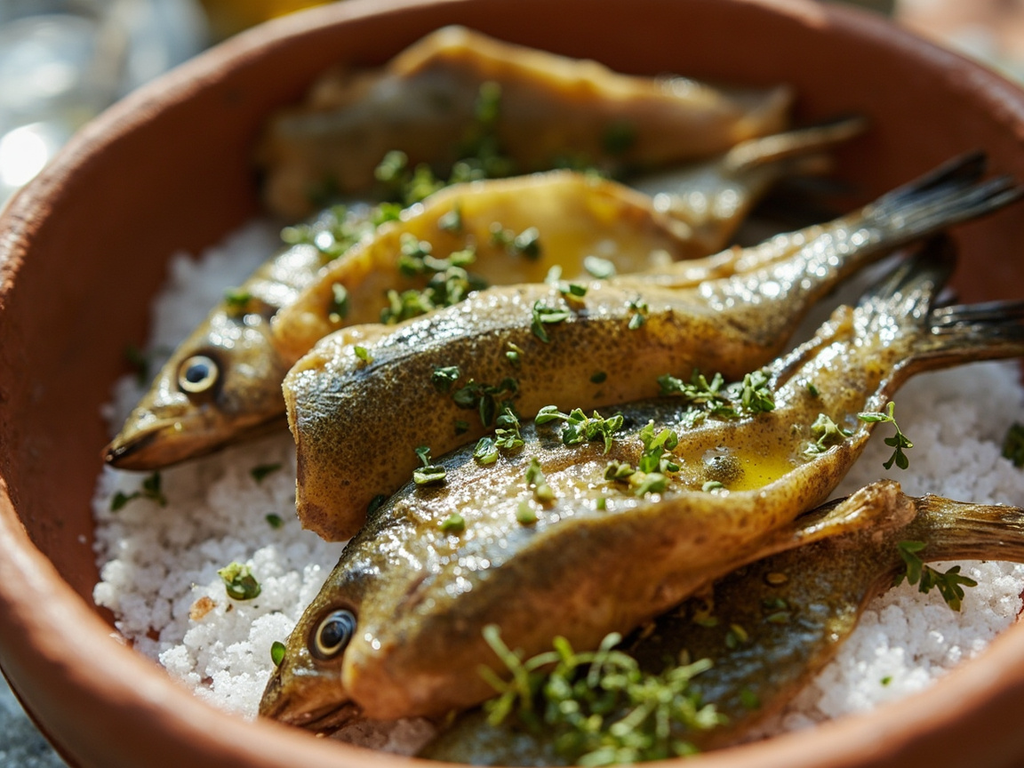
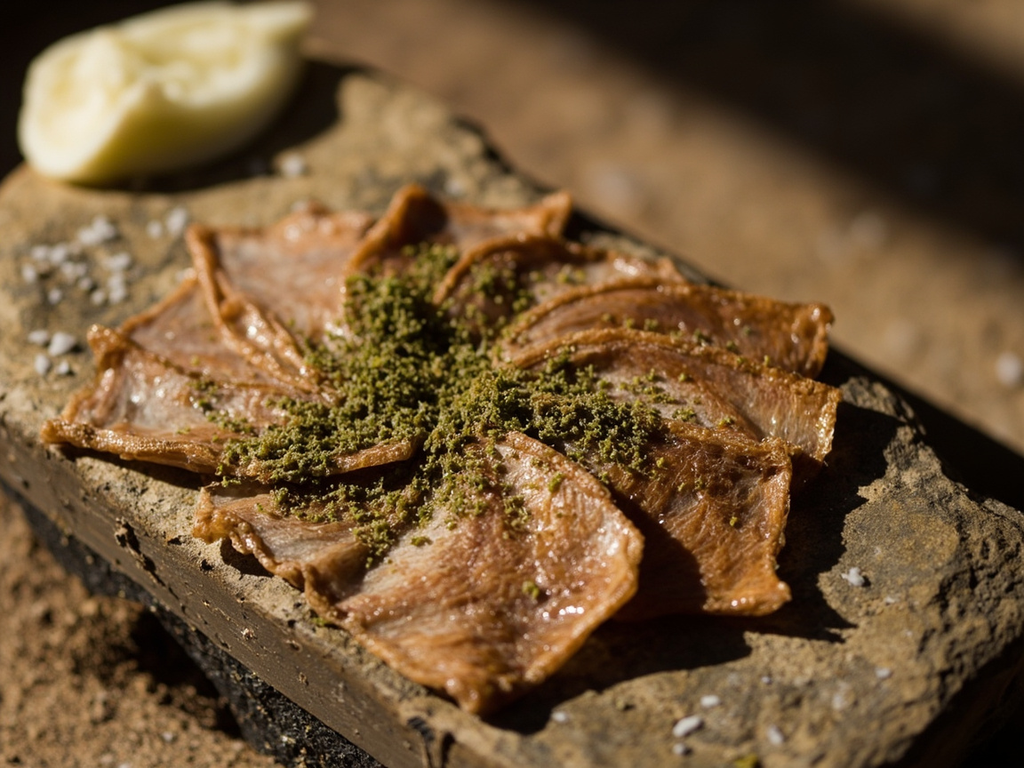
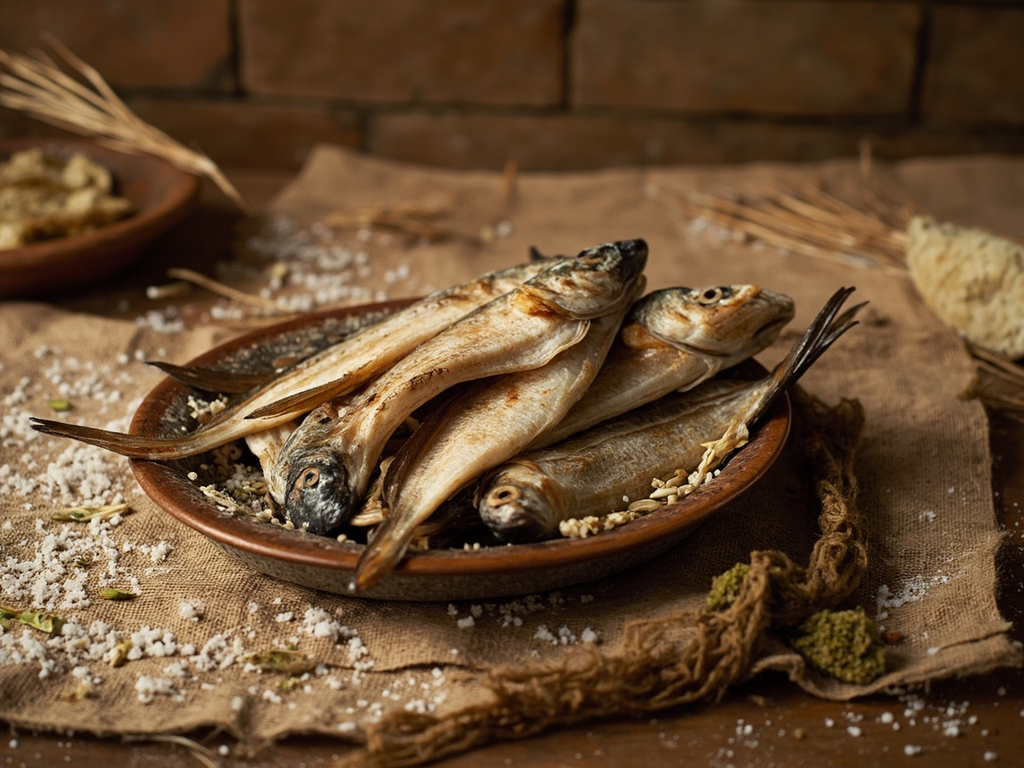
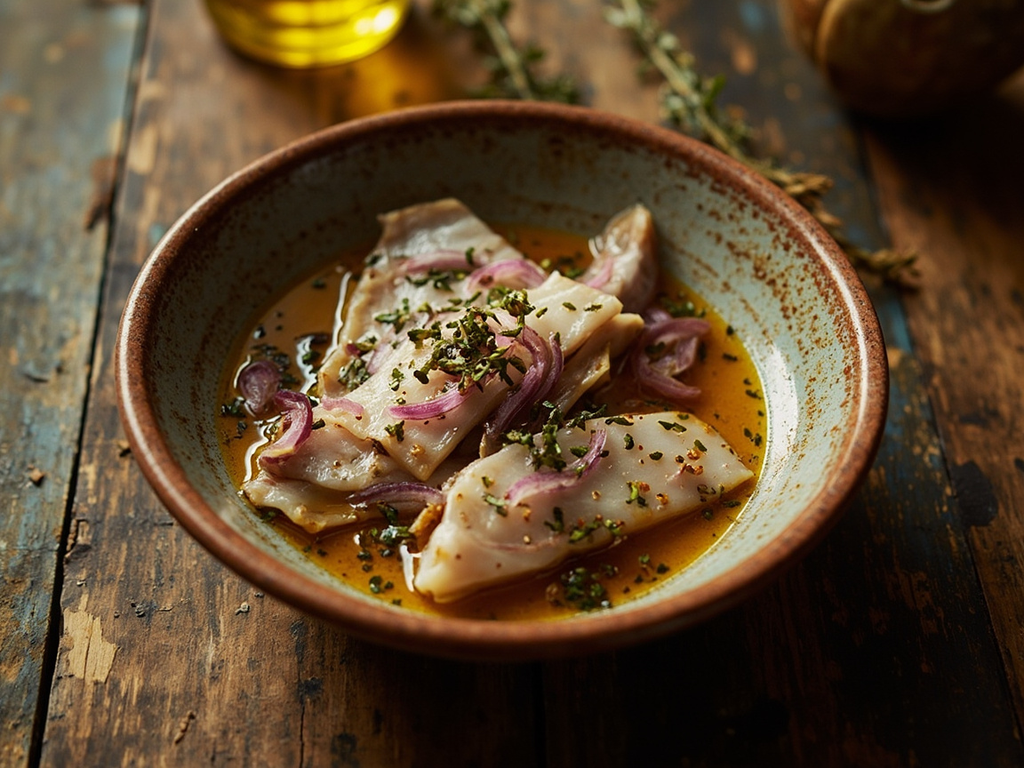
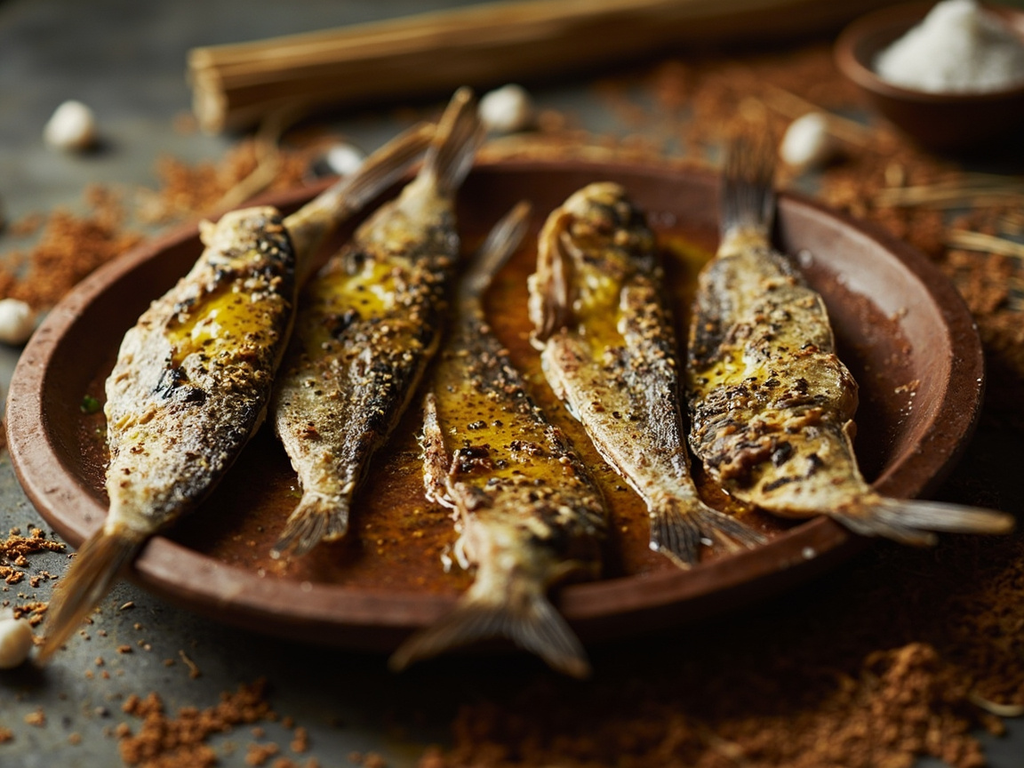
River fish split, salted, dried in the sun and wind, then grilled over embers and drizzled with sesame oil. A simple, powerful preserve — salty and deeply umami — crumbled onto bread or into stew.
The marshes between the two rivers feed Ur as much as the barley fields. We split the fish, rub it with salt, hang it in the wind until it becomes hard as a dry clay tablet. When hunger comes, we pass it over the embers, drizzle it with sesame oil, and crumble the flesh onto bread — this is the food of the traveler and the scribe, which does not spoil even on burning days.
- •River or marsh fish — what the net brings (base ingredient)
- •Salt — in abundance (preservative)
- •Sesame oil — a drizzle (for serving)
Nūnu wābilu — dried and grilled marsh fish
River fish split, salted, dried in the sun and wind, then grilled over embers and drizzled with sesame oil. A simple, powerful preserve — salty and deeply umami — crumbled onto bread or into stew.
Why this dish? Dried fish from the marshes and rivers was part of Enheduanna's known diet; dried and salted, it kept for a long time and fed the temple household between deliveries.
The marshes between the two rivers feed Ur as much as the barley fields. We split the fish, rub it with salt, hang it in the wind until it becomes hard as a dry clay tablet. When hunger comes, we pass it over the embers, drizzle it with sesame oil, and crumble the flesh onto bread — this is the food of the traveler and the scribe, which does not spoil even on burning days.
Ingredients (period version)
- River or marsh fish — what the net brings (base ingredient)
- Salt — in abundance (preservative)
- Sesame oil — a drizzle (for serving)
Ingredients
- Firm white fish fillets (carp, bream, mackerel) — 4 fillets (base ingredient)
- Coarse salt — 200 g (preservative)
- Sesame oil — 2 tablespoons (for serving)
- Cumin and coriander — a pinch each (flavor (optional))
Method
- Rub the fish fillets generously with coarse salt on all sides. Let them purge in the fridge for 12 hours.
- Rinse quickly, pat dry thoroughly.
- Dry for 24–48 hours in the fridge on a rack (or in a dehydrator at low temperature) until the flesh is firm and leathery.
- Grill the dried fish over embers or in a very hot pan for 2 minutes per side.
- Drizzle with sesame oil, sprinkle with cumin and coriander, and crumble over warm barley bread.
How it was made : Fish was a major protein in southern Mesopotamia, a land of marshes and canals. Without refrigeration, it was preserved by salting and sun-drying; administrative texts distinguish many varieties of fresh and dried fish delivered to temples. Dried fish traveled and stored well, unlike fresh fish.
The contemporary twist : Crumble the grilled fish over a barley flatbread with a little raw leek and sesame oil, like an "Ur toast" to share as an appetizer.
Sources : Jean Bottéro, La plus vieille cuisine du monde, 2002 · Sumerian administrative texts on fish deliveries to temples (Ur III period)
Enheduanna · Charactorium