 flip
flipAcarajé
Acarajé
Why this dish? As a child and young man in Salvador, Gil grew up to the rhythm of the *baianas* frying *acarajé* on street corners, a sacred fry of Yoruba origin linked to the cult of the *orixás*. It is the very taste of his native Bahia, which he sang and defended as living heritage.
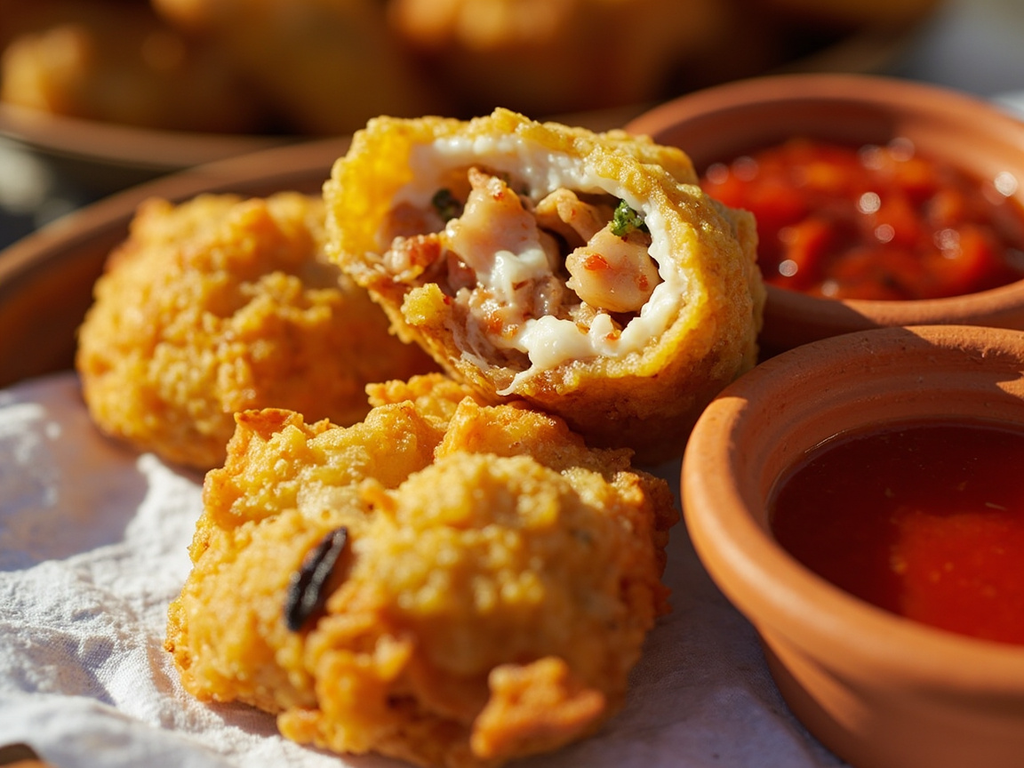
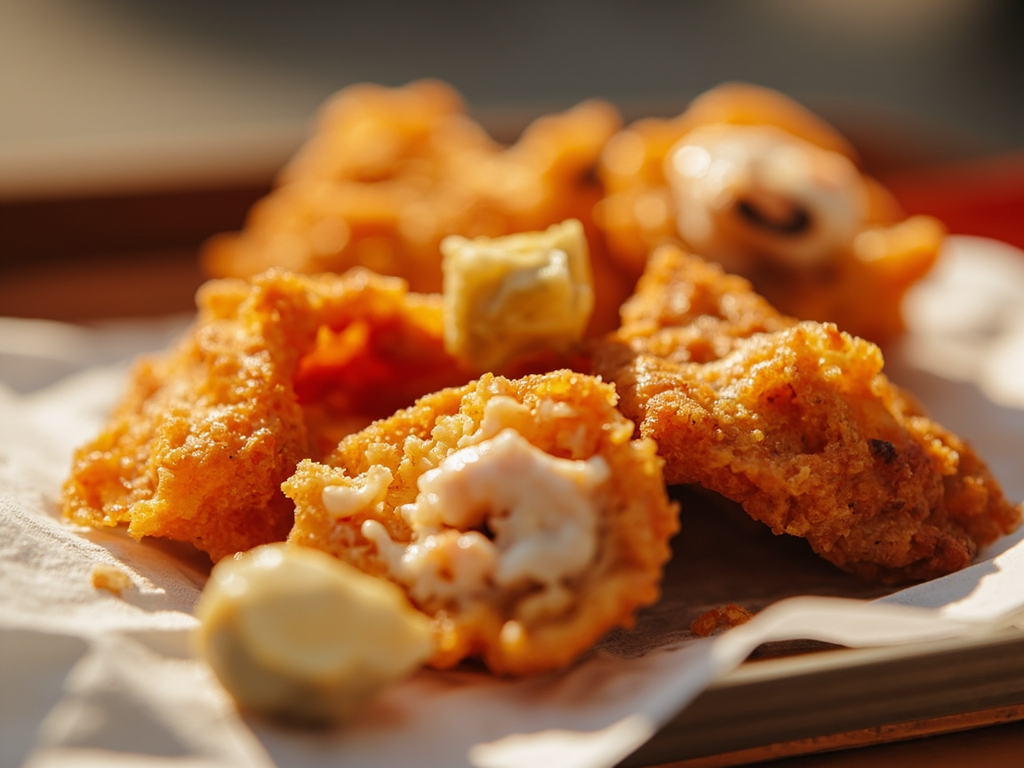
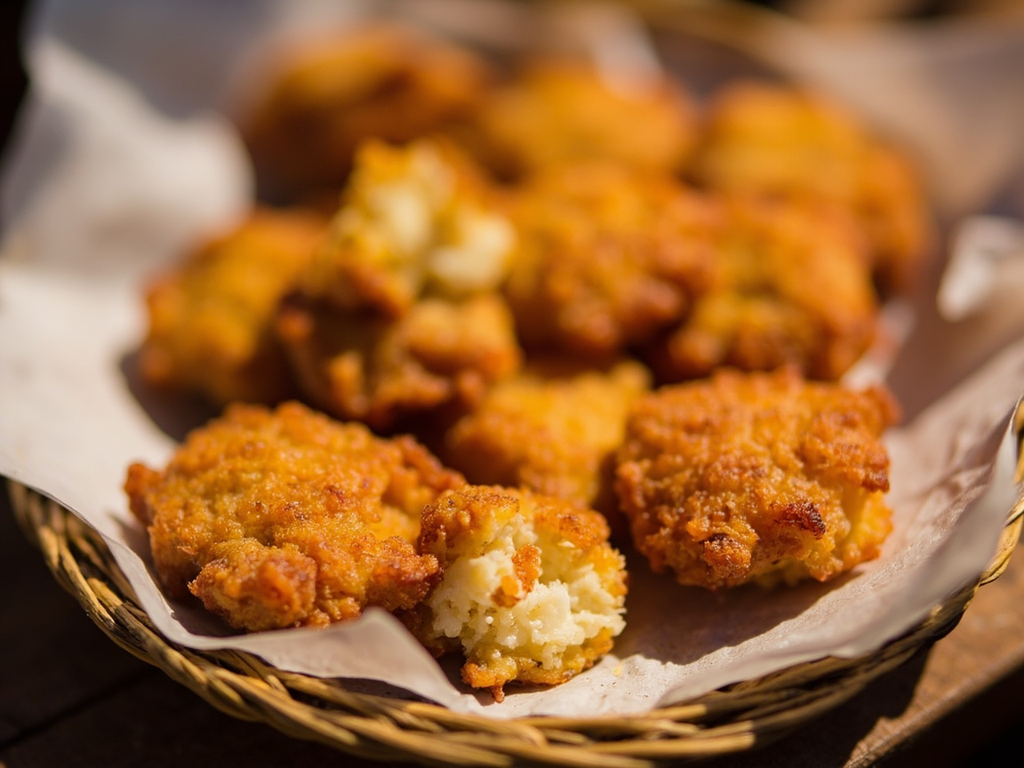
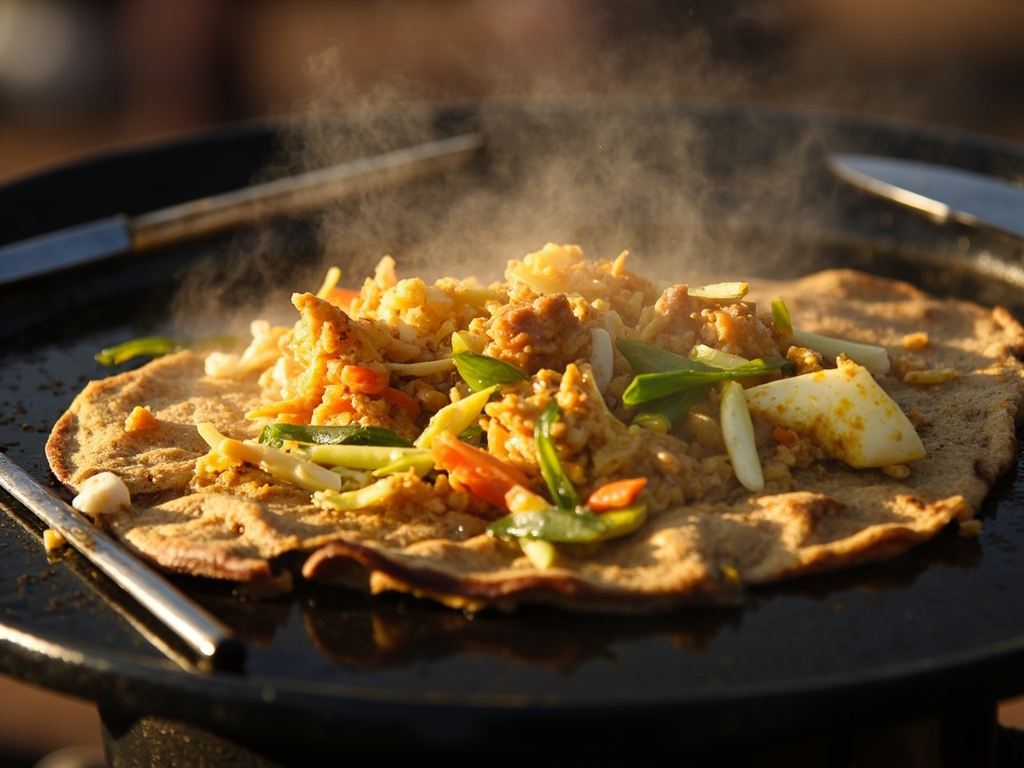
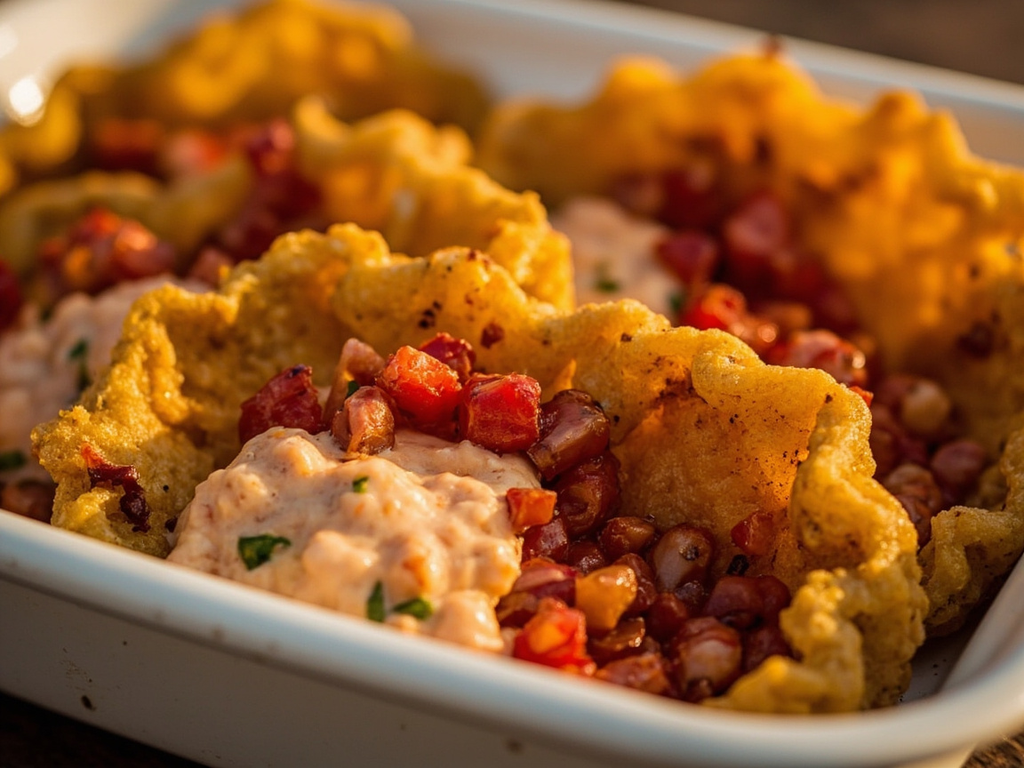
Golden fritters of mashed black-eyed peas (*feijão-fradinho*), fried in red palm oil, split open and filled with creamy *vatapá*, tomato salad, and spicy dried shrimp. Crispy on the outside, melting on the inside.
Olha, meu amigo, *acarajé* is not just a *fritura* — it's the voice of Africa speaking in the mouth of Bahia. As a child, I watched the *baiana*, all dressed in white at her *tabuleiro*, plunge the dough into the hot *dendê* that sang. She would split the fritter with a sharp motion, stuff it with *vatapá* and shrimp, and you felt the red oil run through your fingers. It is an offering food, *sagrado*, so we eat it with respect and with joy — *axé*!
- •Black-eyed peas (feijão-fradinho) — two good handfuls, soaked (base of the fritter)
- •Onion — one, grated (flavor of the batter)
- •Red palm oil (dendê) — enough to fill the pan (frying and signature)
- •Dried shrimp — a handful (umami of the filling)
- •Salt — to taste (seasoning)
Acarajé
Golden fritters of mashed black-eyed peas (*feijão-fradinho*), fried in red palm oil, split open and filled with creamy *vatapá*, tomato salad, and spicy dried shrimp. Crispy on the outside, melting on the inside.
Why this dish? As a child and young man in Salvador, Gil grew up to the rhythm of the *baianas* frying *acarajé* on street corners, a sacred fry of Yoruba origin linked to the cult of the *orixás*. It is the very taste of his native Bahia, which he sang and defended as living heritage.
Olha, meu amigo, *acarajé* is not just a *fritura* — it's the voice of Africa speaking in the mouth of Bahia. As a child, I watched the *baiana*, all dressed in white at her *tabuleiro*, plunge the dough into the hot *dendê* that sang. She would split the fritter with a sharp motion, stuff it with *vatapá* and shrimp, and you felt the red oil run through your fingers. It is an offering food, *sagrado*, so we eat it with respect and with joy — *axé*!
Ingredients (period version)
- Black-eyed peas (feijão-fradinho) — two good handfuls, soaked (base of the fritter)
- Onion — one, grated (flavor of the batter)
- Red palm oil (dendê) — enough to fill the pan (frying and signature)
- Dried shrimp — a handful (umami of the filling)
- Salt — to taste (seasoning)
Ingredients
- Dried black-eyed peas — 250 g (base of the fritter)
- Onion — 1 medium (flavor of the batter)
- Red palm oil (dendê) — 750 ml for frying (frying and signature)
- Dried shrimp — 100 g (vatapá and filling)
- Vatapá (stale bread, coconut milk, ginger, peanuts, dendê) — 1 bowl (creamy filling)
- Tomato, onion, cilantro — for the salad (acidic freshness)
- Malagueta chili — to taste (spicy heat)
- Salt — 1 tsp (seasoning)
Method
- Soak the beans for 8 h, then rub to remove the skins and rinse.
- Blend the peeled beans with onion and salt until you get a thick and airy batter; beat with a spoon to lighten.
- Heat the red palm oil; drop spoonfuls of batter and fry until golden and puffed.
- Drain, split each fritter in half without separating, fill with *vatapá*, tomato-onion-cilantro salad, dried shrimp, and chili to taste.
How it was made : *Acarajé* was brought by enslaved Africans of Yoruba culture; it was first an offering to the *orixá* Iansã (Oyá). The *baianas* sold it to buy their freedom, and it is still sold on the street by women in ritual clothing. The recipe presented is inspired by this living tradition, without reproducing its sacred dimension.
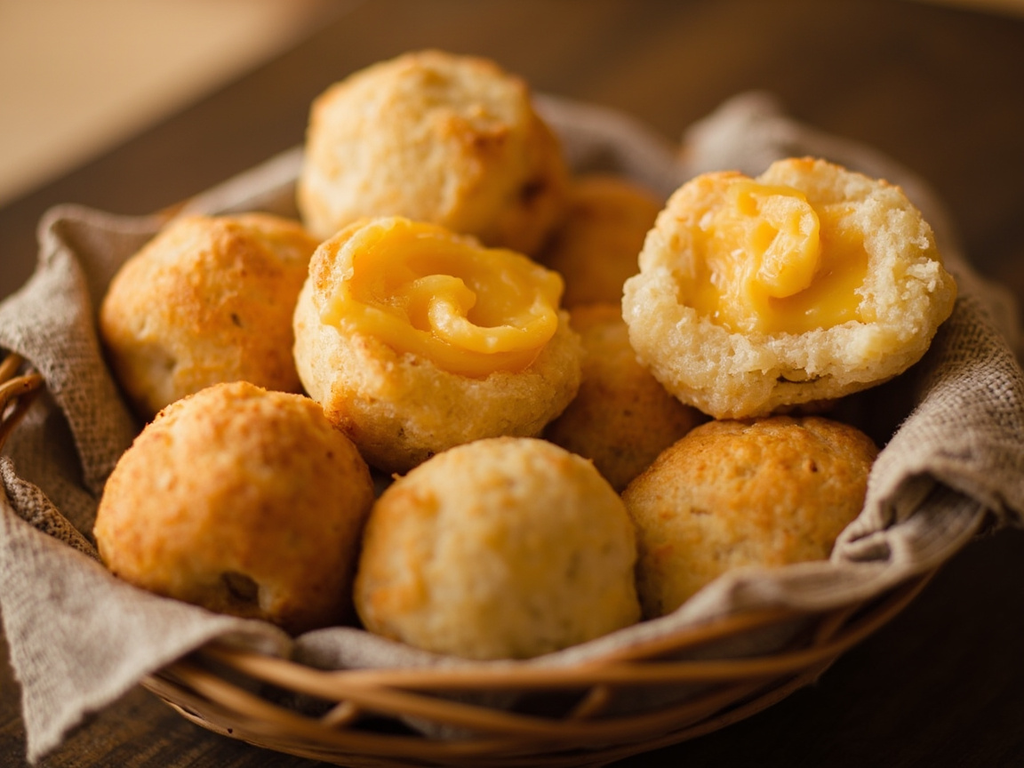
The contemporary twist : A mini version in bite-sized pieces for appetizers, filled with a lighter *vatapá*, that takes a whole table on a journey to Salvador.
Gilberto Gil · Charactorium