 flip
flipZuppa di magro — lean fish and herb soup from the Vatican
Zuppa di magro — lean fish and herb soup from the Vatican
Why this dish? A rigorous jurist pope, Gregory XIII kept a sober table that scrupulously followed the liturgical calendar he was about to reform. On Fridays and during Lent, the Vatican kitchens served lean fish soups, without meat or animal fat, in accordance with ecclesiastical fasting.
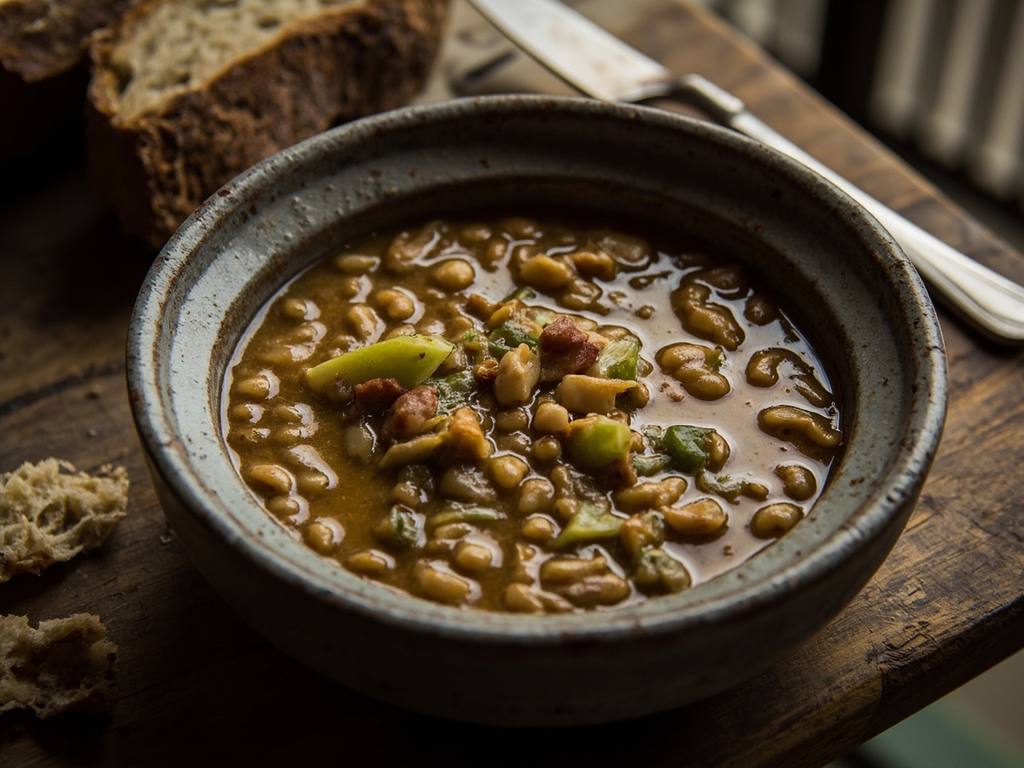
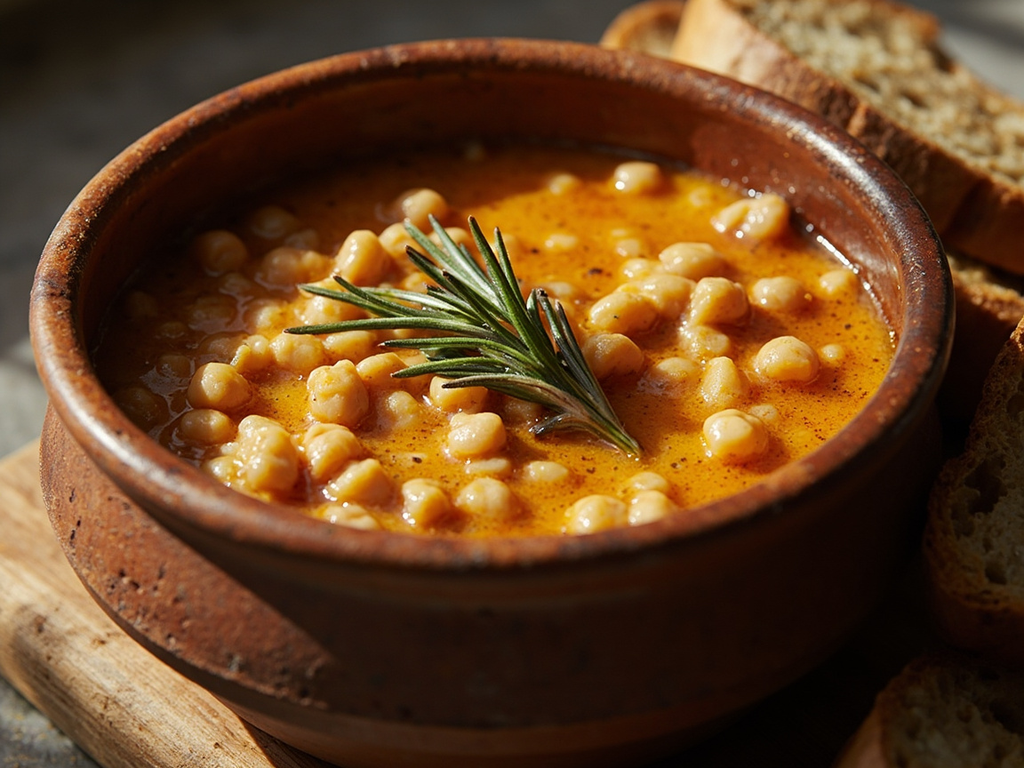
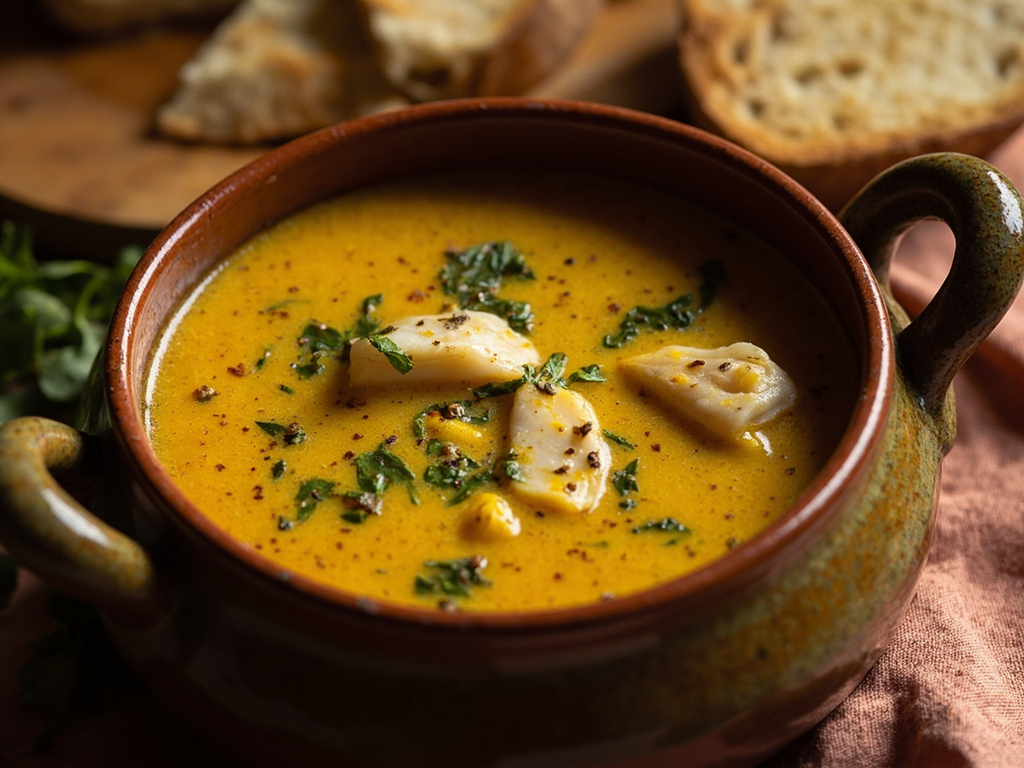
A comforting potage where river or sea fish simmers with herbs, stale bread, and a drizzle of olive oil, bound with saffron. Nourishing yet meatless, it embodies the lean-day cuisine of Roman palaces.
Know, my child, that a Sovereign Pontiff must set the example of fasting before imposing it on the faithful. On lean days, neither flesh nor lard was brought to Our table, only this fish soup that Our cooks perfumed with herbs from the garden and a little saffron, for the color of gold. Dip yesterday's bread into it, for nothing should be wasted in the house of God, and you will find a humble yet strengthening dish. This is how one eats under the gaze of Heaven.
- •River or sea fish (eel, pike, mullet) — sufficient amount (lean-day protein base)
- •Stale bread — a few slices (thickening and binding)
- •Olive oil — a drizzle (fat allowed on lean days)
- •Parsley, sage, marjoram — a handful (aromatics)
- •Saffron — a few pistils (color and fragrance)
- •Verjuice — a dash (touch of acidity)
Zuppa di magro — lean fish and herb soup from the Vatican
A comforting potage where river or sea fish simmers with herbs, stale bread, and a drizzle of olive oil, bound with saffron. Nourishing yet meatless, it embodies the lean-day cuisine of Roman palaces.
Why this dish? A rigorous jurist pope, Gregory XIII kept a sober table that scrupulously followed the liturgical calendar he was about to reform. On Fridays and during Lent, the Vatican kitchens served lean fish soups, without meat or animal fat, in accordance with ecclesiastical fasting.
Know, my child, that a Sovereign Pontiff must set the example of fasting before imposing it on the faithful. On lean days, neither flesh nor lard was brought to Our table, only this fish soup that Our cooks perfumed with herbs from the garden and a little saffron, for the color of gold. Dip yesterday's bread into it, for nothing should be wasted in the house of God, and you will find a humble yet strengthening dish. This is how one eats under the gaze of Heaven.
Ingredients (period version)
- River or sea fish (eel, pike, mullet) — sufficient amount (lean-day protein base)
- Stale bread — a few slices (thickening and binding)
- Olive oil — a drizzle (fat allowed on lean days)
- Parsley, sage, marjoram — a handful (aromatics)
- Saffron — a few pistils (color and fragrance)
- Verjuice — a dash (touch of acidity)
Ingredients
- Firm white fish fillets (cod, pollock) or mullet — 500 g (base)
- Rustic stale bread — 3 slices (binding)
- Extra virgin olive oil — 3 tbsp (fat)
- Fresh parsley + sage + marjoram — 1 small bunch (aromatics)
- Saffron — 1 good pinch (pistils) (color/aroma)
- Verjuice or lemon juice — 1 tbsp (acidity)
- Water or light fish stock — 1.2 L (broth)
- Salt — to taste (seasoning)
Method
- Infuse the saffron in a little warm water.
- In a pot, heat the olive oil and gently sauté the chopped herbs.
- Add the water (or stock) and infused saffron, bring to a simmer, and season with salt.
- Add the fish cut into pieces and poach for 8 to 10 minutes over low heat.
- Crumble the stale bread into the soup to thicken it, stirring gently.
- Finish with a dash of verjuice or lemon juice and serve hot over a slice of bread.
How it was made : In the 16th century, observing the fast was a serious matter: fat days and lean days were distinguished, and the kitchens of great houses had a whole repertoire of 'di magro' dishes based on fish, eggs (sometimes), vegetables, and almond milk. Stale bread was systematically used to thicken soups — nothing was wasted.
The contemporary twist : Serve in small individual bowls with a drizzle of new olive oil and a saffron bread chip, for a 'contemporary trattoria' presentation.
Sources : Bartolomeo Scappi, Opera dell'arte del cucinare (1570)
Gregory XIII · Charactorium