 flip
flipBachelor's spaghetti, listening to jazz
Bachelor's spaghetti, listening to jazz
Why this dish? Spaghetti is almost a signature of Murakami: his novel "The Wind-Up Bird Chronicle" opens with a narrator boiling pasta while listening to the radio, and several of his books feature this solitary ritual. Murakami, who lived and cooked alone for a long time before becoming a writer, made it the emblem of a modest and focused life.
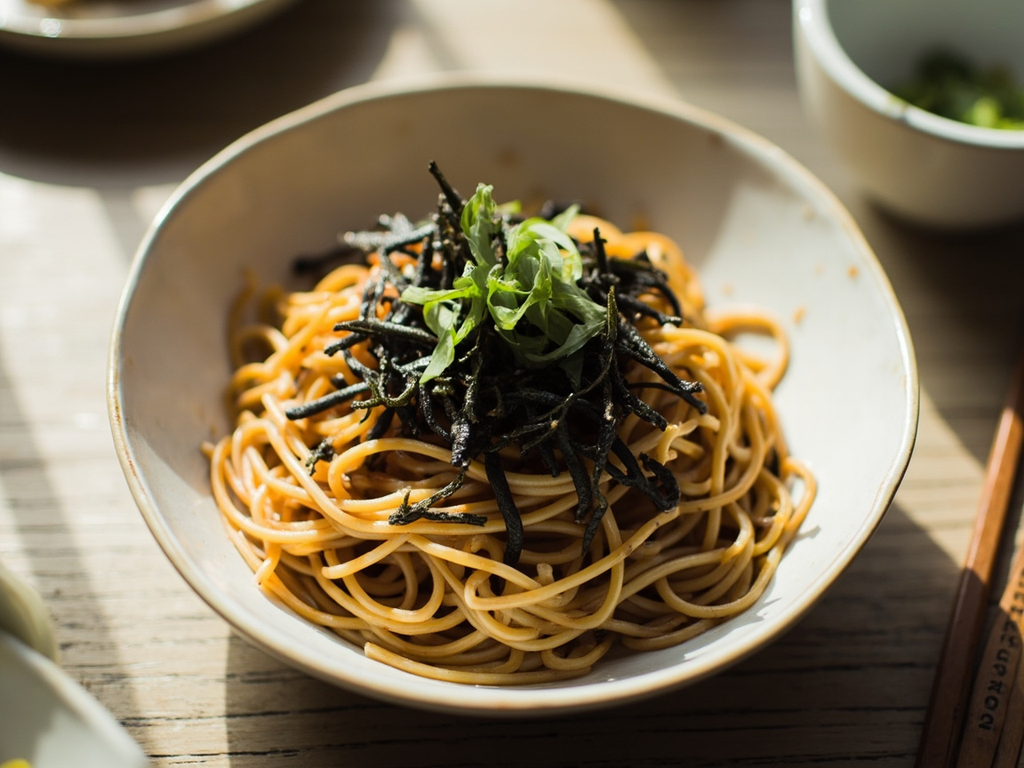
Spaghetti with garlic, olive oil, and soy sauce — a minimalist yōshoku, Japanized with a dash of soy sauce and a sheet of nori seaweed, prepared in one jazz record, no more, no less.
At noon, when I'm working alone at home, I put a pot of water on to boil and put on a record — something calm, a piano trio. While the pasta cooks, I just brown some garlic in oil, and at the last moment I add a splash of soy sauce, because we're in Japan after all. It's nothing, really nothing, but doing it well, attentively, all the way through: that's enough to fill a day. The phone may ring, but it'll be for someone else.
- •Spaghetti — a generous portion (base)
- •Garlic — a few cloves (aromatic)
- •Olive oil — a good drizzle (fat)
- •Soy sauce — a splash (umami seasoning)
- •Nori seaweed — one sheet (Japanizing garnish)
- •Dried chili (optional) — a pinch (spicy kick)
Bachelor's spaghetti, listening to jazz
Spaghetti with garlic, olive oil, and soy sauce — a minimalist yōshoku, Japanized with a dash of soy sauce and a sheet of nori seaweed, prepared in one jazz record, no more, no less.
Why this dish? Spaghetti is almost a signature of Murakami: his novel "The Wind-Up Bird Chronicle" opens with a narrator boiling pasta while listening to the radio, and several of his books feature this solitary ritual. Murakami, who lived and cooked alone for a long time before becoming a writer, made it the emblem of a modest and focused life.
At noon, when I'm working alone at home, I put a pot of water on to boil and put on a record — something calm, a piano trio. While the pasta cooks, I just brown some garlic in oil, and at the last moment I add a splash of soy sauce, because we're in Japan after all. It's nothing, really nothing, but doing it well, attentively, all the way through: that's enough to fill a day. The phone may ring, but it'll be for someone else.
Ingredients (period version)
- Spaghetti — a generous portion (base)
- Garlic — a few cloves (aromatic)
- Olive oil — a good drizzle (fat)
- Soy sauce — a splash (umami seasoning)
- Nori seaweed — one sheet (Japanizing garnish)
- Dried chili (optional) — a pinch (spicy kick)
Ingredients
- Spaghetti — 100 g (base)
- Garlic — 2 cloves, minced (aromatic)
- Olive oil — 3 tbsp (fat)
- Soy sauce — 1 tsp (umami seasoning)
- Nori sheet — 1, cut into strips (garnish)
- Togarashi chili flakes — 1 pinch (spicy kick)
- Scallion — 1 stalk, sliced (freshness)
Method
- Bring a large pot of salted water to a boil and cook the spaghetti al dente.
- Meanwhile, gently heat the olive oil with the minced garlic and chili, without browning.
- Drain the pasta, reserving a cup of cooking water, then toss it into the garlic oil pan.
- Add the splash of soy sauce and a little cooking water, toss vigorously to combine.
- Plate, sprinkle with nori strips and scallion. Serve with the record already playing.
How it was made : Pasta arrived massively in Japan after the war, during Murakami's childhood; it became the symbol of bachelor cooking, quick and solitary. Japanizing it with a splash of soy sauce and a sheet of nori is a typical yōshoku gesture, reinventing Western dishes with local flavors.
The contemporary twist : Crack a raw egg yolk over the steaming pasta (kamatama style), a nod to both Italy and Japanese udon.
Sources : Haruki Murakami, The Wind-Up Bird Chronicle (1994-1995) — opening scene of cooking spaghetti · Haruki Murakami, Norwegian Wood (1987)
Haruki Murakami · Charactorium