 flip
flipSunday teishoku — grilled mackerel, rice, and miso soup
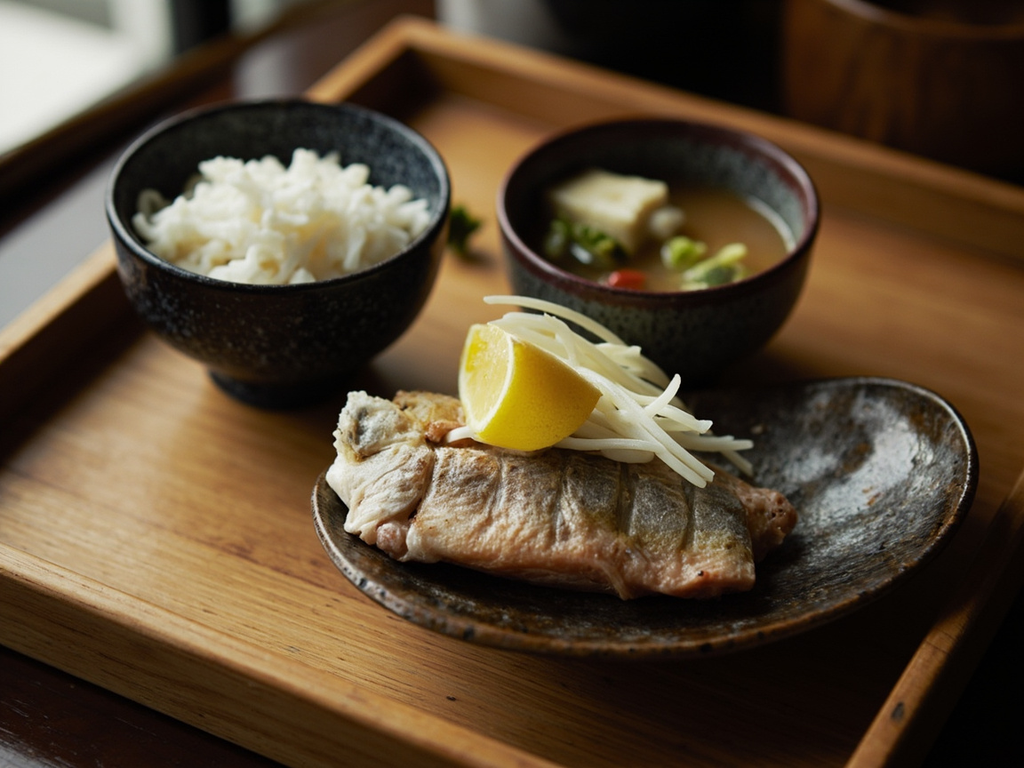
Sunday teishoku — grilled mackerel, rice, and miso soup
Why this dish? Behind the pasta and sandwiches, Murakami remains a Japanese born near Kobe, nourished by family washoku. The teishoku — a balanced meal around grilled fish — embodies this daily foundation that becomes, on Sunday or when you take your time, a quiet little feast. Mackerel (saba) is one of the most popular and affordable fish of his childhood Japan.
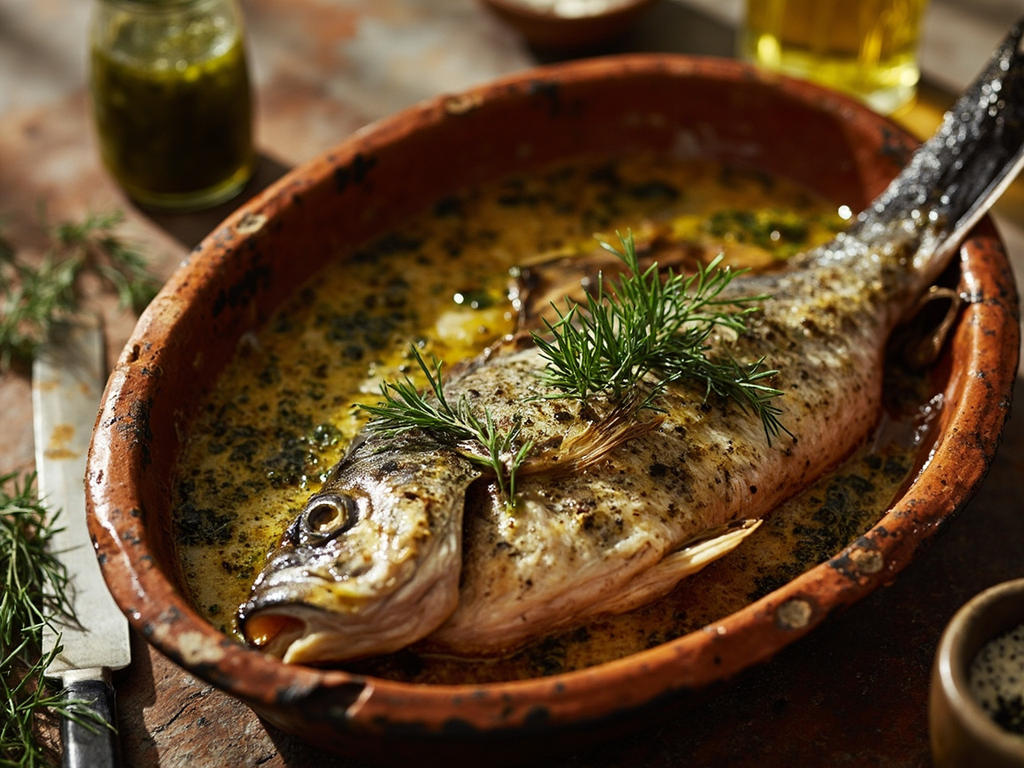
A full meal structured Japanese style: salt-grilled mackerel (saba shioyaki), a bowl of white rice, miso soup, and a bit of pickled vegetables. The ichijū-sansai balance — one soup, sides — taken to its comfort point.
When I really want to settle down, I go back to what I've known since I was little, around Kobe: salted mackerel grilled until the skin crackles, hot white rice, steaming miso soup. You salt the fish a while before, the salt makes the water bead and concentrates the flavor — it's not a secret, it's just the right way. Put it all together on the table, no fuss: that's a real meal. You eat slowly, maybe listen to a record, and Sunday finally takes shape.
- •Mackerel (saba) — 1 fillet per person (centerpiece)
- •Salt — for salting the fish (seasoning / texture)
- •Japanese rice — 1 bowl per person (base)
- •Miso paste — for the soup (fermented umami)
- •Dashi (kombu and bonito) — for the soup (umami broth)
- •Tofu and wakame seaweed — a little (soup garnish)
- •Pickled vegetables (tsukemono) — a few slices (tangy side)
- •Grated daikon radish — one spoonful (fish accompaniment)
Sunday teishoku — grilled mackerel, rice, and miso soup
A full meal structured Japanese style: salt-grilled mackerel (saba shioyaki), a bowl of white rice, miso soup, and a bit of pickled vegetables. The ichijū-sansai balance — one soup, sides — taken to its comfort point.
Why this dish? Behind the pasta and sandwiches, Murakami remains a Japanese born near Kobe, nourished by family washoku. The teishoku — a balanced meal around grilled fish — embodies this daily foundation that becomes, on Sunday or when you take your time, a quiet little feast. Mackerel (saba) is one of the most popular and affordable fish of his childhood Japan.
When I really want to settle down, I go back to what I've known since I was little, around Kobe: salted mackerel grilled until the skin crackles, hot white rice, steaming miso soup. You salt the fish a while before, the salt makes the water bead and concentrates the flavor — it's not a secret, it's just the right way. Put it all together on the table, no fuss: that's a real meal. You eat slowly, maybe listen to a record, and Sunday finally takes shape.
Ingredients (period version)
- Mackerel (saba) — 1 fillet per person (centerpiece)
- Salt — for salting the fish (seasoning / texture)
- Japanese rice — 1 bowl per person (base)
- Miso paste — for the soup (fermented umami)
- Dashi (kombu and bonito) — for the soup (umami broth)
- Tofu and wakame seaweed — a little (soup garnish)
- Pickled vegetables (tsukemono) — a few slices (tangy side)
- Grated daikon radish — one spoonful (fish accompaniment)
Ingredients
- Mackerel fillets — 2 (centerpiece)
- Salt — 1 tsp (salt 20 min ahead) (seasoning / firming)
- Japanese short-grain rice — 150 g uncooked (base)
- Dashi (or instant powder) — 500 ml (broth)
- Miso paste — 2 tbsp (fermented umami)
- Silken tofu — 100 g, cubed (soup garnish)
- Dried wakame — 1 tsp rehydrated (soup garnish)
- Grated daikon — 2 tbsp (fish accompaniment)
- Lemon / sudachi wedge — 1 (acidity)
- Japanese pickles (tsukemono) — a few slices (side)
Method
- Salt the mackerel fillets and let rest 20 minutes; pat dry the beaded water.
- Cook Japanese rice (rinsed) and keep warm.
- For the soup: heat the dashi, poach tofu and wakame, turn off heat, then dissolve miso off the boil.
- Grill the mackerel skin-side first, under the broiler or in a pan, until skin is golden and crispy and flesh is opaque.
- Serve separately: rice bowl, miso soup bowl, fish with grated daikon and lemon, small dish of pickles. Serve all at once.
How it was made : The traditional Japanese meal follows ichijū-sansai ("one soup, three dishes") around rice, without appetizer-main-dessert sequence. Fish was grilled over coals or a small grill; salting in advance (furi-jio) firms the flesh and reduces odor. Miso and dashi form the foundational umami-fermented duo of this cuisine.
The contemporary twist : Serve on a compartmentalized tray like a restaurant teishoku, and finish the rice with an umeboshi — a link to the running onigiri.
Sources : Washoku traditions — ichijū-sansai structure and saba shioyaki · Biographical elements on Murakami — childhood in the Kobe region
Haruki Murakami · Charactorium