 flip
flipSalt Herring for Lean Days
Salt Herring for Lean Days
Why this dish? The Church imposed many lean days — Lent, vigils, Fridays — when meat was forbidden even for the king himself. Salt herring, which kept all winter in barrels, was then the fish of everyone, from the royal kitchens of Paris to peasant tables. Hugh Capet, a Christian prince founding a 'most Christian' dynasty, observed these days like everyone of his time.
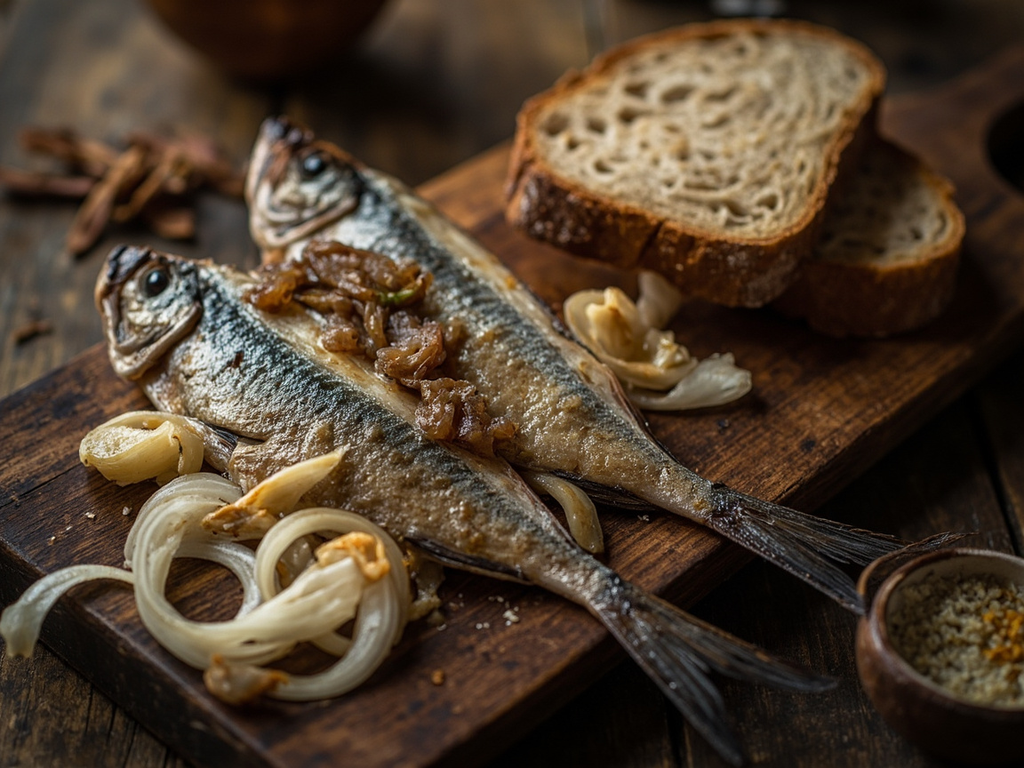
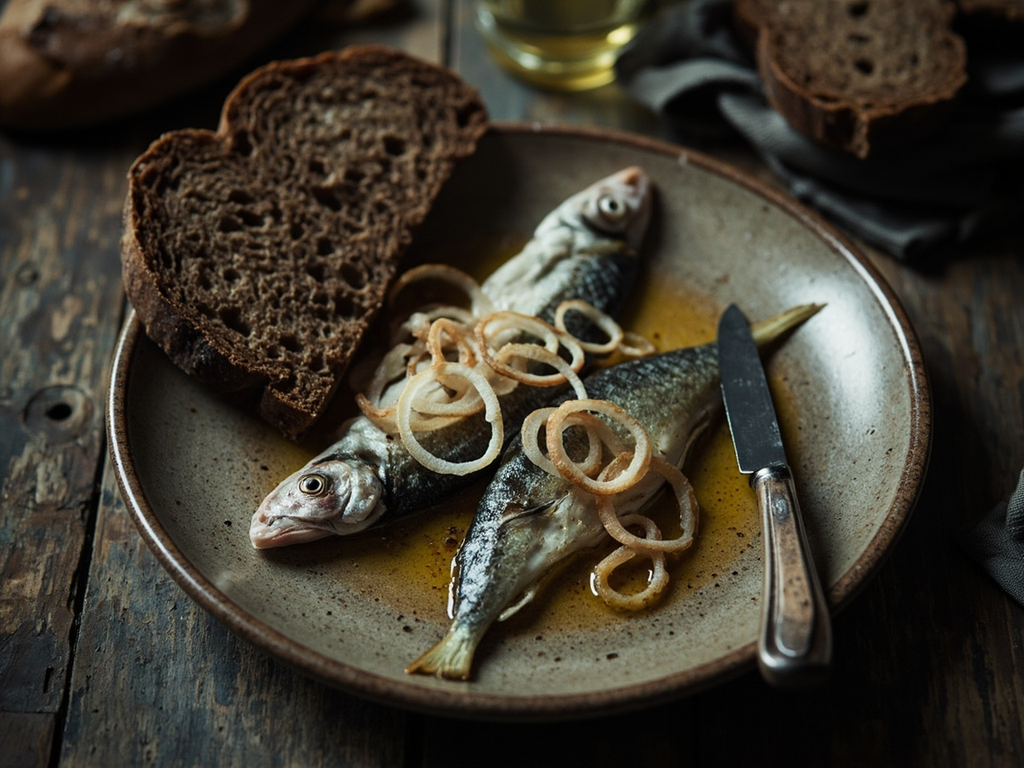
Herrings preserved in salt, desalted then softened with a little wine and onion, served with bread. The cuisine of necessity and faith, simple but flavorful, sustaining the entire winter.
King or peasant, no one escapes the lean days commanded by Holy Church, and on those days no meat upon my table. Then we take from the salt the herrings laid in at autumn, bathe them in clear water to remove the excess salt, then dress them with onion and a dash of wine. It is a humble dish, my friend, but the belly is content and the soul kept clean: eat it thinking that before God, the king fasts like the poor.
- •Whole herrings — several (preserved fish)
- •Coarse salt — in abundance (preservative)
- •Onion — one or two (garnish)
- •White wine or verjuice — a small cup (seasoning)
- •Wheat bread — as needed (accompaniment)
Salt Herring for Lean Days
Herrings preserved in salt, desalted then softened with a little wine and onion, served with bread. The cuisine of necessity and faith, simple but flavorful, sustaining the entire winter.
Why this dish? The Church imposed many lean days — Lent, vigils, Fridays — when meat was forbidden even for the king himself. Salt herring, which kept all winter in barrels, was then the fish of everyone, from the royal kitchens of Paris to peasant tables. Hugh Capet, a Christian prince founding a 'most Christian' dynasty, observed these days like everyone of his time.
King or peasant, no one escapes the lean days commanded by Holy Church, and on those days no meat upon my table. Then we take from the salt the herrings laid in at autumn, bathe them in clear water to remove the excess salt, then dress them with onion and a dash of wine. It is a humble dish, my friend, but the belly is content and the soul kept clean: eat it thinking that before God, the king fasts like the poor.
Ingredients (period version)
- Whole herrings — several (preserved fish)
- Coarse salt — in abundance (preservative)
- Onion — one or two (garnish)
- White wine or verjuice — a small cup (seasoning)
- Wheat bread — as needed (accompaniment)
Ingredients
- Salt herring fillets (or mild cured herring) — 4 fillets (preserved fish)
- Onion — 1 large (garnish)
- Dry white wine — 5 cl (seasoning)
- Wine vinegar or verjuice — 1 tbsp (acidity)
- Oil (walnut or olive) — 2 tbsp (mild binder)
- Country bread — a few slices (accompaniment)
Method
- If the herrings are very salty, desalt them in cold water (or milk) for 1 to 2 hours, changing the water once.
- Drain and pat the fillets dry thoroughly.
- Slice the onion finely and let it macerate in vinegar for a few minutes to mellow.
- Arrange the fillets on a plate, sprinkle with onion, drizzle with wine, verjuice/vinegar, and a little oil.
- Marinate in the refrigerator for at least 2 hours (better: overnight).
- Serve chilled with good bread.
How it was made : Before refrigeration, salting fish was the great preservation technique of the North: salt herring in barrels kept for months and became the key food for the countless lean days of the Christian calendar. This religious demand structured all medieval fish trade and fed both the humble and kings, bound by the same abstinences.
The contemporary twist : Serve as Northern-style open sandwiches: grilled rye bread, herring, red onion, and a tart apple cut into thin sticks (apple, a well-European fruit, is perfectly period).
Sources : Bruno Laurioux, Manger au Moyen Âge, Hachette · Massimo Montanari, La faim et l'abondance, Seuil
Hugh Capet · Charactorium