 flip
flipNân-e tanduri ba zira (clay oven flatbread with cumin)
Nân-e tanduri ba zira (clay oven flatbread with cumin)
Why this dish? Bread baked in a tandour (clay oven) is the daily staple in Bukhara. Nân ovens, installed in every neighborhood and within the citadel, produced the bread shared by soldiers, artisans, and courtiers. This cumin flatbread, simple but fragrant, is Ismail Samani's everyday bread — the one broken before all else.
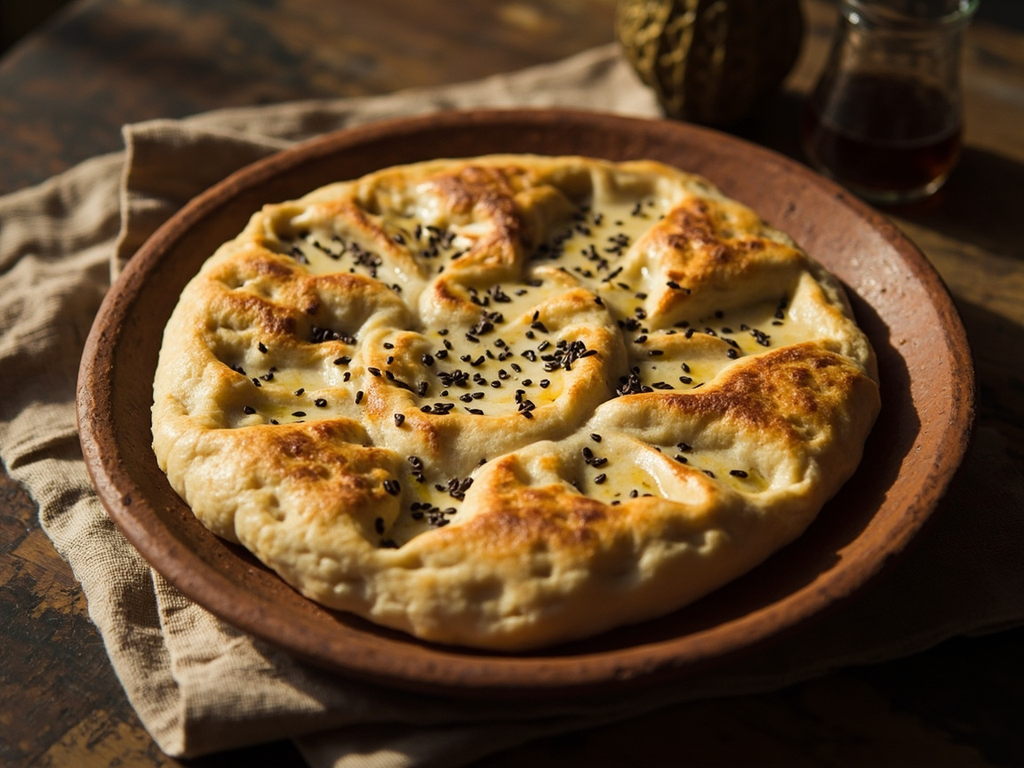
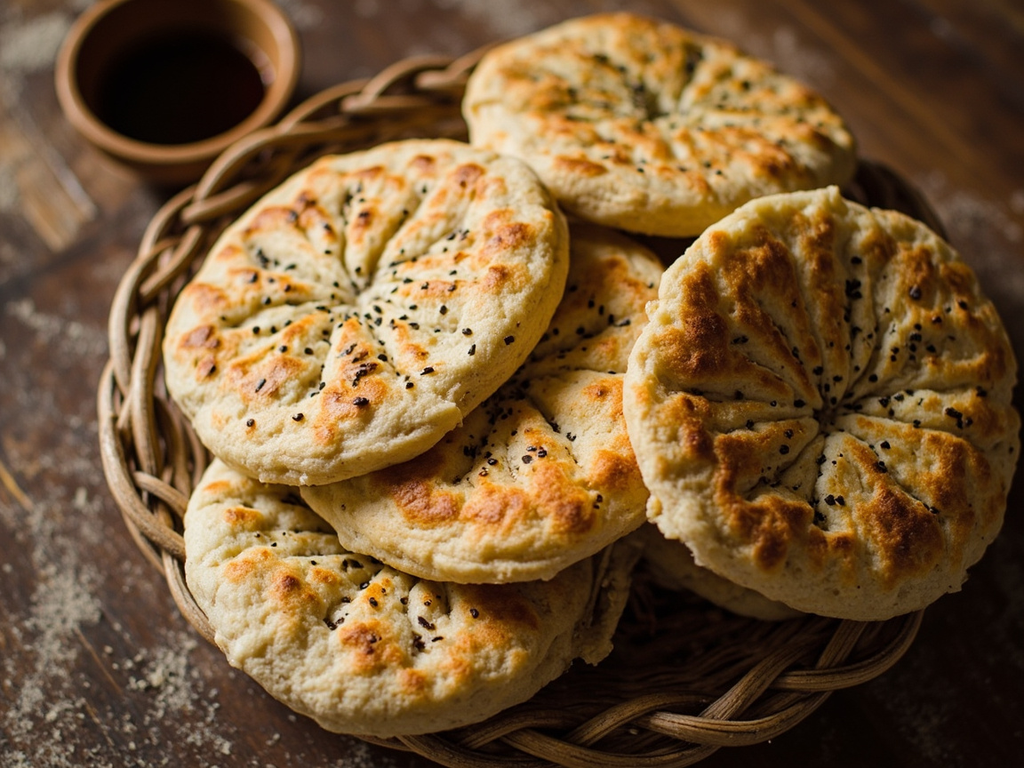
Round, golden flatbread with slight blistering, baked against the hot wall of a tandour oven. The dough, enriched with cumin seeds and a little fat, develops a crispy crust outside while remaining soft inside. Served warm, torn by hand.
Before the pilaf, before the meat, before anything — the nân. It is the first dish laid on the dastarkhan and the last one removed. My baker kneads the dough at dawn, presses his fingers into the center to mark the bread, and slaps it against the tandour wall where it puffs like a sail. The cumin I have added is not an emir's whim — it is the custom of Bukhara, for cumin aids digestion and perfumes the breath. Whoever eats at my table first breaks this bread.
- •Wheat flour — In abundance (Dough base)
- •Warm water — Enough to knead (Hydration)
- •Sourdough or yeast — A piece of yesterday's fermented dough (Leavening)
- •Cumin seeds — A good pinch (Fragrance and digestion)
- •Sheep tail fat — A little, melted (Softness)
- •Salt — To taste (Seasoning)
Nân-e tanduri ba zira (clay oven flatbread with cumin)
Round, golden flatbread with slight blistering, baked against the hot wall of a tandour oven. The dough, enriched with cumin seeds and a little fat, develops a crispy crust outside while remaining soft inside. Served warm, torn by hand.
Why this dish? Bread baked in a tandour (clay oven) is the daily staple in Bukhara. Nân ovens, installed in every neighborhood and within the citadel, produced the bread shared by soldiers, artisans, and courtiers. This cumin flatbread, simple but fragrant, is Ismail Samani's everyday bread — the one broken before all else.
Before the pilaf, before the meat, before anything — the nân. It is the first dish laid on the dastarkhan and the last one removed. My baker kneads the dough at dawn, presses his fingers into the center to mark the bread, and slaps it against the tandour wall where it puffs like a sail. The cumin I have added is not an emir's whim — it is the custom of Bukhara, for cumin aids digestion and perfumes the breath. Whoever eats at my table first breaks this bread.
Ingredients (period version)
- Wheat flour — In abundance (Dough base)
- Warm water — Enough to knead (Hydration)
- Sourdough or yeast — A piece of yesterday's fermented dough (Leavening)
- Cumin seeds — A good pinch (Fragrance and digestion)
- Sheep tail fat — A little, melted (Softness)
- Salt — To taste (Seasoning)
Ingredients
- All-purpose flour — 500 g (Dough base)
- Warm water — 300 ml (Hydration)
- Active dry yeast — 7 g (1 packet) (Leavening)
- Cumin seeds — 1.5 tbsp (Fragrance and digestion)
- Olive oil or ghee — 2 tbsp (Softness)
- Salt — 1 tsp (Seasoning)
- Sesame seeds — 1 tbsp (optional, garnish) (Decoration)
Method
- Dissolve yeast in warm water, let foam for 5 minutes. Mix flour, salt, and cumin seeds in a bowl.
- Add yeast water and oil, knead for 8-10 minutes until smooth and elastic. Cover with a cloth and let rise for 1 hour.
- Preheat oven to 250 °C with a baking sheet or pizza stone inside.
- Divide dough into 4 balls. Flatten each into a 20 cm disk of even thickness (about 1 cm). Press the center with fingers to create the traditional pattern.
- Brush with a little water, sprinkle with sesame if desired. Bake directly on the hot sheet for 6-8 minutes until puffed and golden.
- Serve warm, torn by hand.
How it was made : The tandour (cylindrical clay oven) is attested in Central Asia for millennia. Flatbread is slapped against the hot inner wall, giving it its characteristic domed shape and crispy crust. In Bukhara, nân ovens were community hubs. Cumin (zira), locally cultivated, is the most common spice in Central Asian breads — the obi non of Samarkand is its direct descendant.
Sources : Charles Perry, "The Taste for Layered Bread among the Nomadic Turks and the Central Asian Origins of Baklava", in A Taste of Thyme, Tauris, 2000
Ismail Samani · Charactorium