 flip
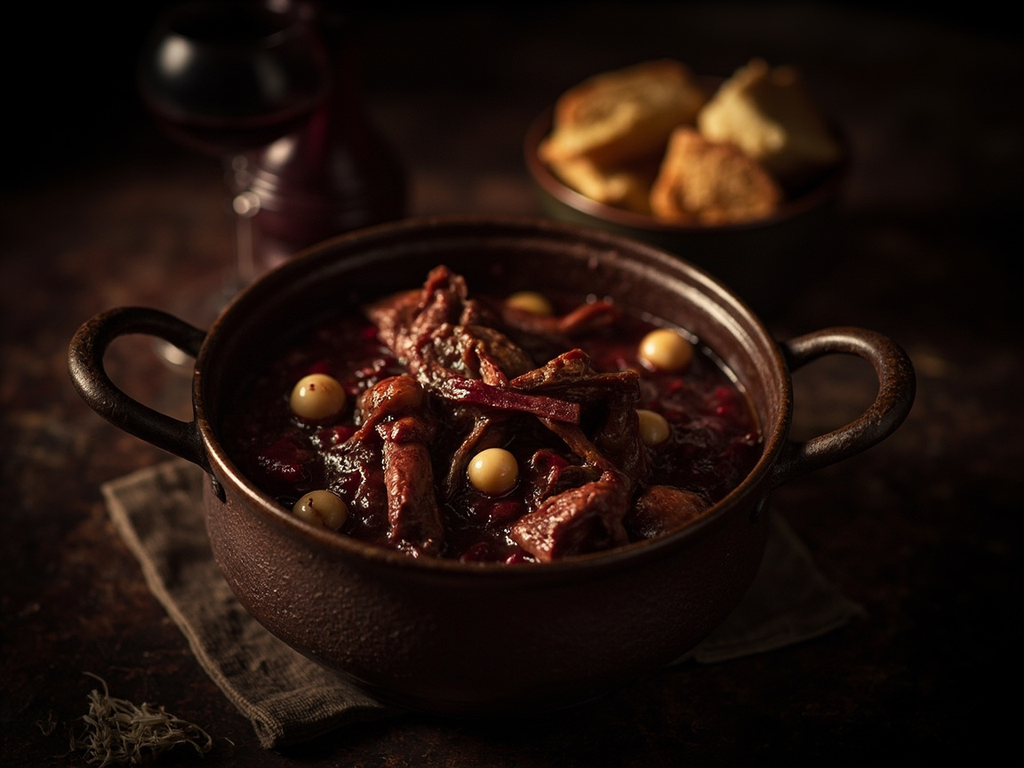
flipSeine Matelote in Red Wine
Seine Matelote in Red Wine
Why this dish? On good nights, Baudelaire treats Jeanne to a proper dinner. The matelote — a stew of river fish in wine — was the festive dish of the Seine-side guinguettes, shared on the tables of cabarets between the Latin Quarter and the Île Saint-Louis.
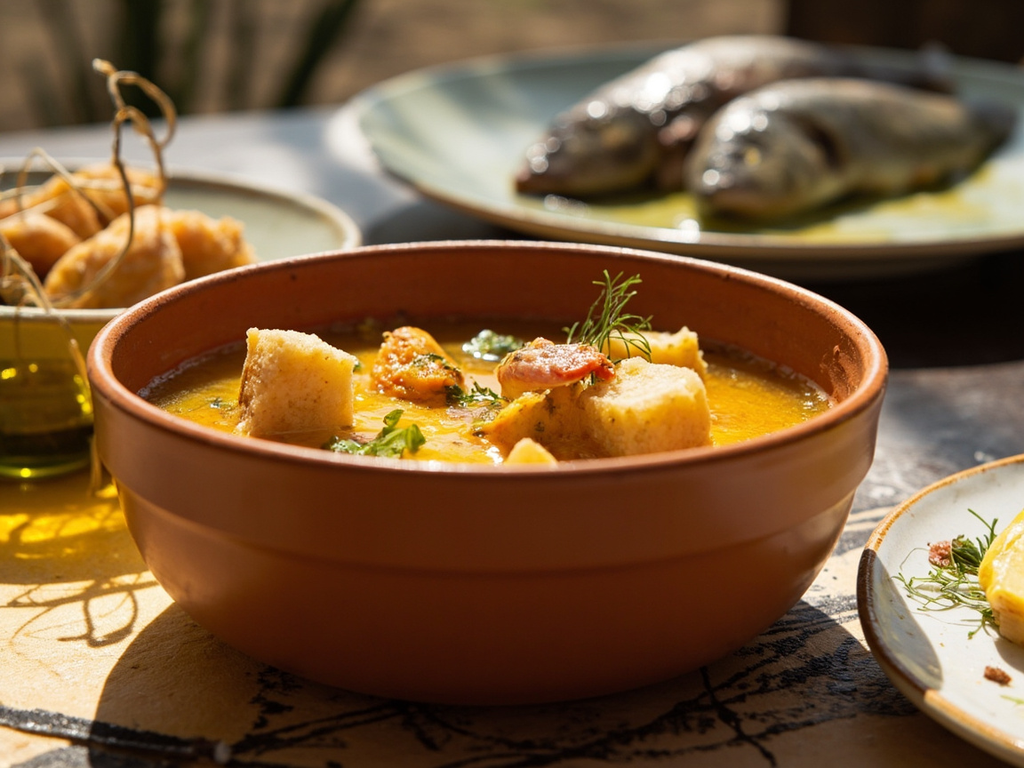
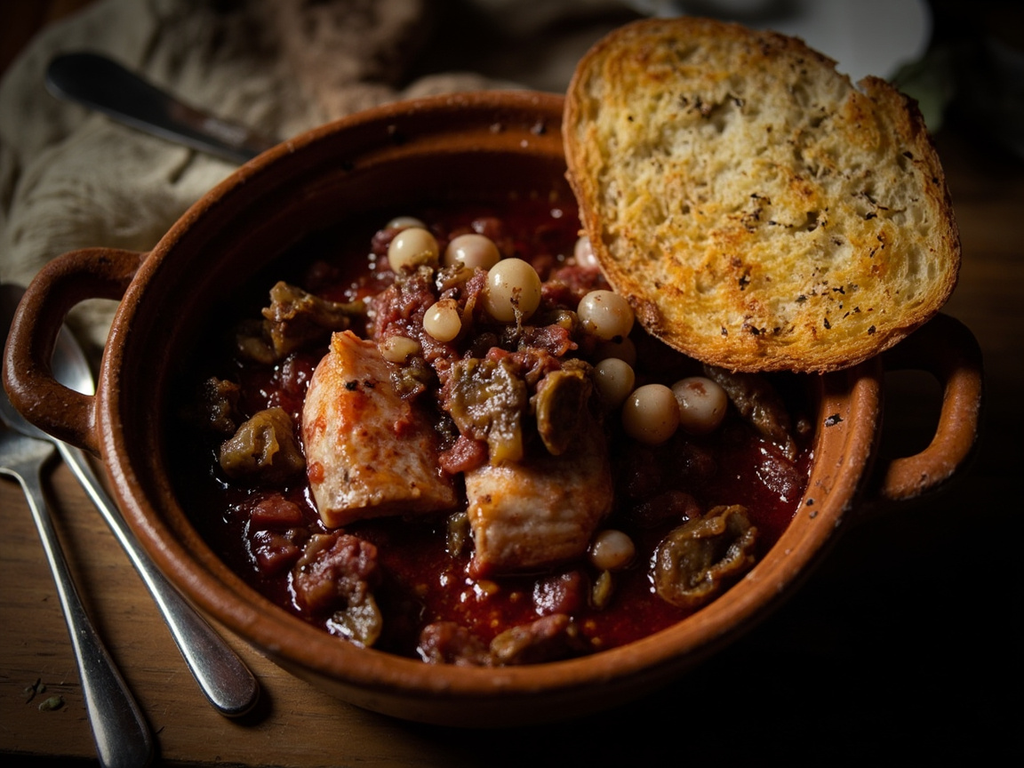
A stew of river fish (eel, carp) simmered in red wine with onions and lardons, bound with butter, brightened with a touch of acidity. The dish of well-lubricated dinners, sopped up with rubbed toasted bread.
Ah, the fine evenings! When Charles had received some money, he would take me to the cabaret and we would order the matelote, steaming in its wine. I let the head waiter serve, dipped a golden crust in the dark sauce, and laughed — for a beloved woman deserves that the fish be drowned in wine rather than in tears. That was our luxury: a river dish, but served like a feast.
- •Eel and carp from the Seine — according to the catch (fish for the stew)
- •Full-bodied red wine — one bottle (cooking liquid)
- •Belly pork — a thick slice (fat and umami)
- •Small onions — a handful (garnish)
- •Kneaded butter — a little (thickener)
- •Garlic-rubbed croutons — a few (accompaniment)
Seine Matelote in Red Wine
A stew of river fish (eel, carp) simmered in red wine with onions and lardons, bound with butter, brightened with a touch of acidity. The dish of well-lubricated dinners, sopped up with rubbed toasted bread.
Why this dish? On good nights, Baudelaire treats Jeanne to a proper dinner. The matelote — a stew of river fish in wine — was the festive dish of the Seine-side guinguettes, shared on the tables of cabarets between the Latin Quarter and the Île Saint-Louis.
Ah, the fine evenings! When Charles had received some money, he would take me to the cabaret and we would order the matelote, steaming in its wine. I let the head waiter serve, dipped a golden crust in the dark sauce, and laughed — for a beloved woman deserves that the fish be drowned in wine rather than in tears. That was our luxury: a river dish, but served like a feast.
Ingredients (period version)
- Eel and carp from the Seine — according to the catch (fish for the stew)
- Full-bodied red wine — one bottle (cooking liquid)
- Belly pork — a thick slice (fat and umami)
- Small onions — a handful (garnish)
- Kneaded butter — a little (thickener)
- Garlic-rubbed croutons — a few (accompaniment)
Ingredients
- Eel or monkfish fillets + carp (or pike-perch) — 800 g (fish for the stew)
- Full-bodied red wine — 50 cl (cooking liquid)
- Smoked lardons — 150 g (fat and umami)
- Pearl onions — 12 (garnish)
- Butter + flour (kneaded butter) — 30 g + 20 g (thickener)
- Mushrooms (Paris variety) — 200 g (garnish)
- Wine vinegar + bouquet garni — 1 tbsp (acidity and aroma)
- Country bread + garlic — 4 slices (croutons)
Method
- Sauté the lardons, pearl onions, and mushrooms in butter; set aside.
- Deglaze with red wine, add bouquet garni, a splash of vinegar, salt and pepper, and let reduce for 10 minutes.
- Place the fish pieces in the simmering wine and poach gently for 8 to 10 minutes without boiling.
- Remove the fish, thicken the sauce with kneaded butter until it coats a spoon, then return fish and garnish.
- Rub the grilled bread slices with garlic and serve the matelote piping hot over them.
How it was made : The matelote, inherited from boatmen, was the great dish of the guinguettes along the Seine and Marne in the 19th century. It was made with the day's catch, bound with butter and sometimes blood; red wine made it an affordable festive dish, served in the cabarets where artists and grisettes gathered.
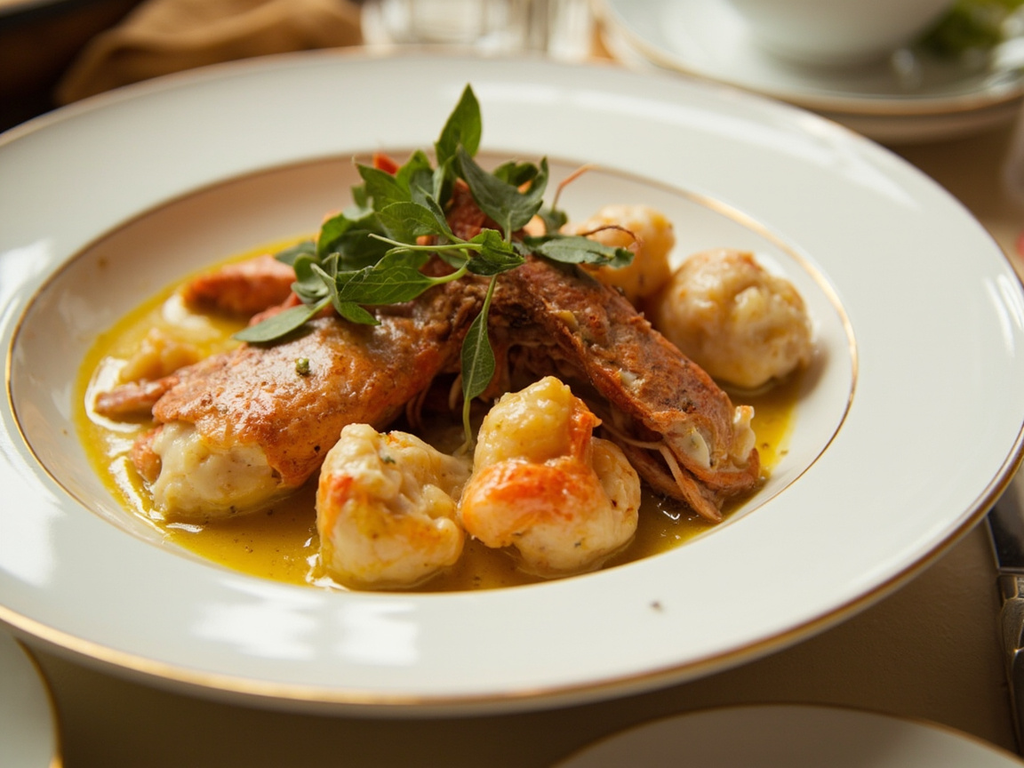
The contemporary twist : Plate the fish pieces coated in mirror sauce, with a garlic crouton planted upright and a veil of flat-leaf parsley — the guinguette invited to a starred bistro table.
Sources : Jules Gouffé, Le Livre de cuisine (1867)
Jeanne Duval · Charactorium