 flip
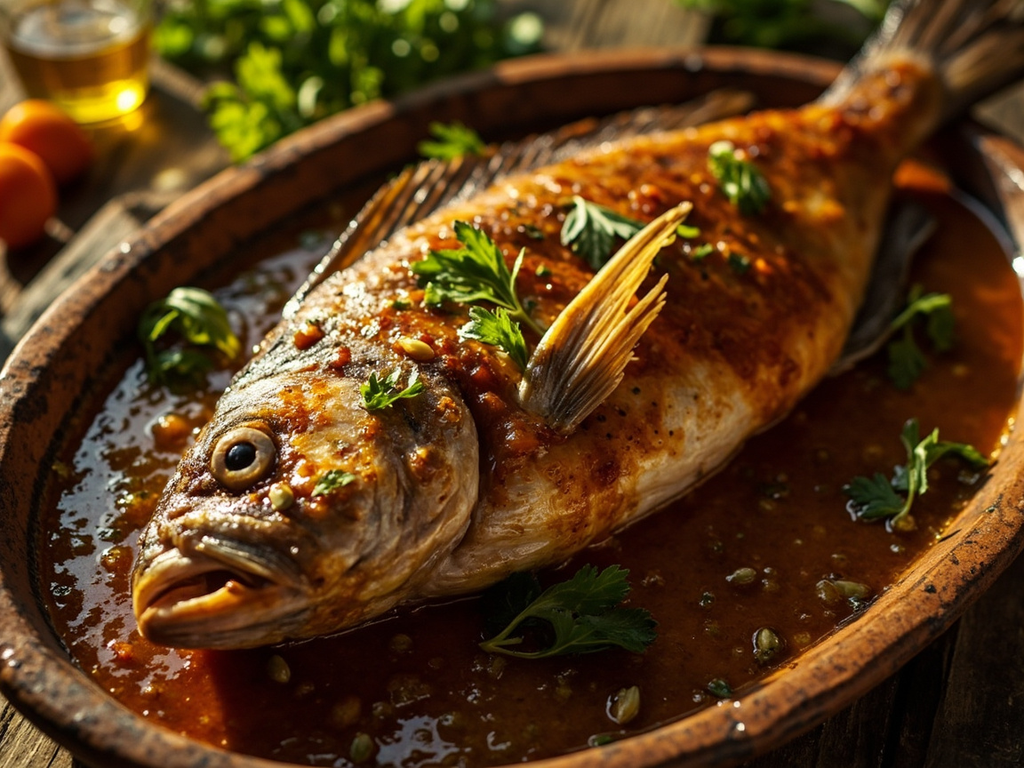
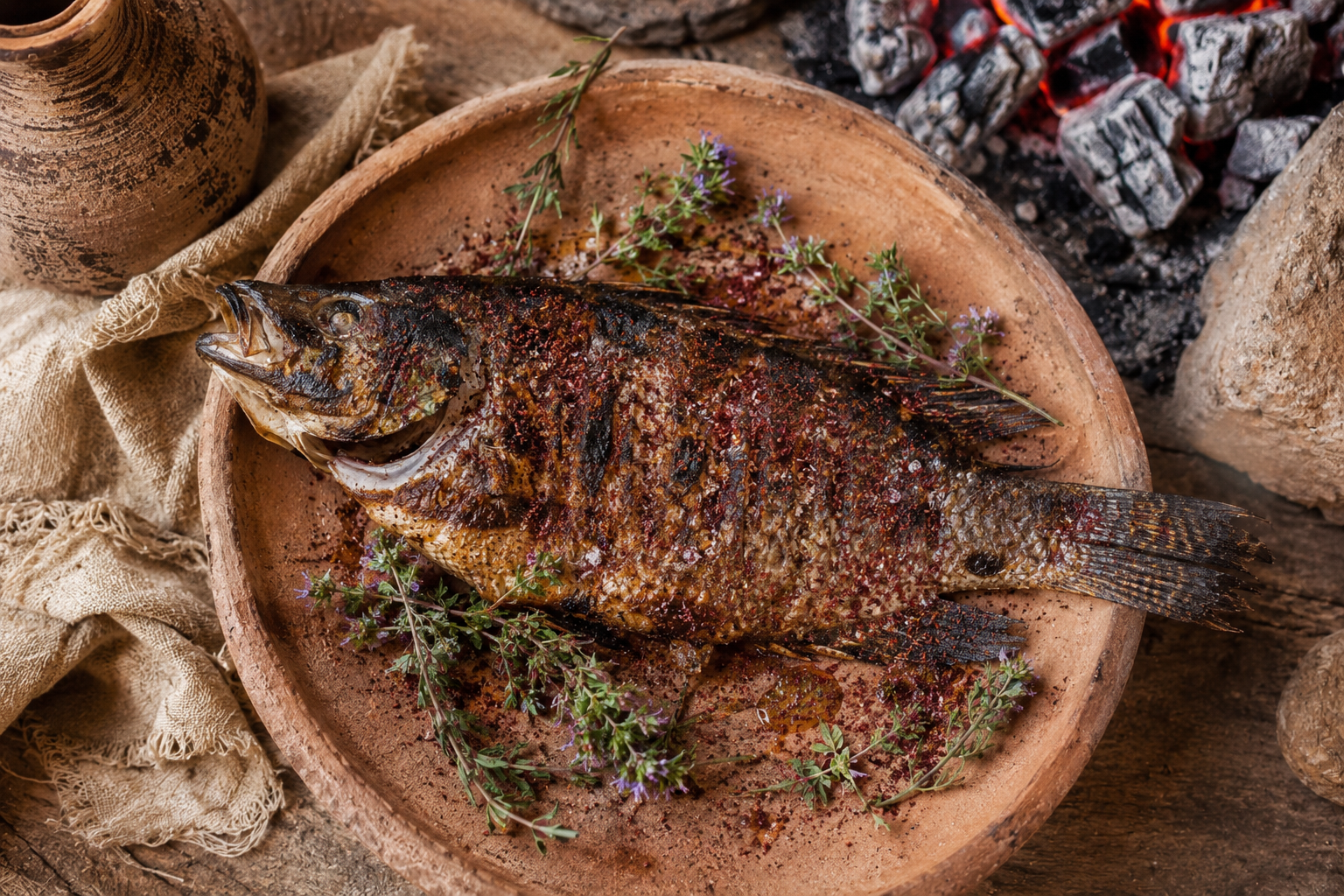
flipDag tzaluy — lake fish grilled with sumac and hyssop
Dag tzaluy — lake fish grilled with sumac and hyssop
Why this dish? Jonah comes from Galilee, very close to the fish-rich Sea of Galilee, and the great fish is at the heart of his story. Serving grilled fish evokes both the festive table of his childhood and the sign by which the Lord caught up with him at sea.
A freshwater fish split open, rubbed with salt, oil, and hyssop, grilled over embers then finished with a sprinkle of tangy sumac. The skin crisps, the flesh stays tender.
Come closer, it is a feast day and the smell of embers rises to heaven like a prayer. The fish, I know it: it was in the belly of one of them that the Lord held me for three days, and I learned that one cannot flee His face, even in the depths of the waters. Rub the flesh with salt and oil, slide it onto the coals, and when it turns golden, sprinkle on the red powder of sumac, sour like repentance. Eat it slowly, and remember: even the sea obeys Him who made it.
- •Lake fish (tilapia/musht or carp) — one, gutted (centrepiece)
- •Olive oil — for coating (prevents sticking, browns)
- •Salt — for rubbing (seasoning and firming the flesh)
- •Hyssop (wild za'atar) — a few sprigs (local aromatic herb)
- •Sumac — a pinch (red sour touch)
Dag tzaluy — lake fish grilled with sumac and hyssop
A freshwater fish split open, rubbed with salt, oil, and hyssop, grilled over embers then finished with a sprinkle of tangy sumac. The skin crisps, the flesh stays tender.
Why this dish? Jonah comes from Galilee, very close to the fish-rich Sea of Galilee, and the great fish is at the heart of his story. Serving grilled fish evokes both the festive table of his childhood and the sign by which the Lord caught up with him at sea.
Come closer, it is a feast day and the smell of embers rises to heaven like a prayer. The fish, I know it: it was in the belly of one of them that the Lord held me for three days, and I learned that one cannot flee His face, even in the depths of the waters. Rub the flesh with salt and oil, slide it onto the coals, and when it turns golden, sprinkle on the red powder of sumac, sour like repentance. Eat it slowly, and remember: even the sea obeys Him who made it.
Ingredients (period version)
- Lake fish (tilapia/musht or carp) — one, gutted (centrepiece)
- Olive oil — for coating (prevents sticking, browns)
- Salt — for rubbing (seasoning and firming the flesh)
- Hyssop (wild za'atar) — a few sprigs (local aromatic herb)
- Sumac — a pinch (red sour touch)
Ingredients
- Whole tilapia, sea bream, or trout — 1 per person (~400 g) (centrepiece)
- Olive oil — 3 tbsp (coating)
- Salt — 1 tsp (seasoning)
- Za'atar blend (hyssop, thyme, sesame) — 1 tbsp (flavour)
- Sumac — 1 tsp (final acidity)
- Lemon (optional, attested in the Levant in Roman times — modern option) — a few wedges (serving)
Method
- Gut and score the fish on both sides. Coat inside and out with olive oil and salt.
- Stuff the hyssop/za'atar into the fish's belly.
- Cook over embers (or on a griddle/at 220 °C) for 6–8 minutes per side, until the skin is golden and the flesh opaque.
- Upon removal, sprinkle generously with sumac.
- Serve with barley bread; add lemon wedges as a contemporary option.
How it was made : Fish from the Sea of Galilee was caught, salted, and dried in large quantities from the Iron Age onward, then exported inland. Grilled over embers, it was a choice dish reserved for feast days and the Sabbath, as cattle meat was too valuable for everyday use. It was seasoned with local herbs and sour plants for lack of citrus (lemons arrived much later).
The contemporary twist : Plated on a fig leaf, a drizzle of sumac oil and a touch of tahini: the "prophet's fish" becomes a gourmet dish without losing any of its ancient soul.
Sources : Oded Borowski, Daily Life in Biblical Times, SBL, 2003 · Mendel Nun, The Sea of Galilee and Its Fishermen in the New Testament, 1989 · Book of Jonah 1–2
Jonas · Charactorium