 flip
flipPropontis Sea Bass Roasted with Garos and Greek Wine
Propontis Sea Bass Roasted with Garos and Greek Wine
Why this dish? While the emperor ate frugally, his court feasted: Mediterranean fish, roasted meats, and Greek wines. Constantinople, situated between the Propontis and the Bosphorus, drew renowned fish from the strait; this roasted sea bass evokes the official banquets that Justinian presided over beneath golden mosaics.
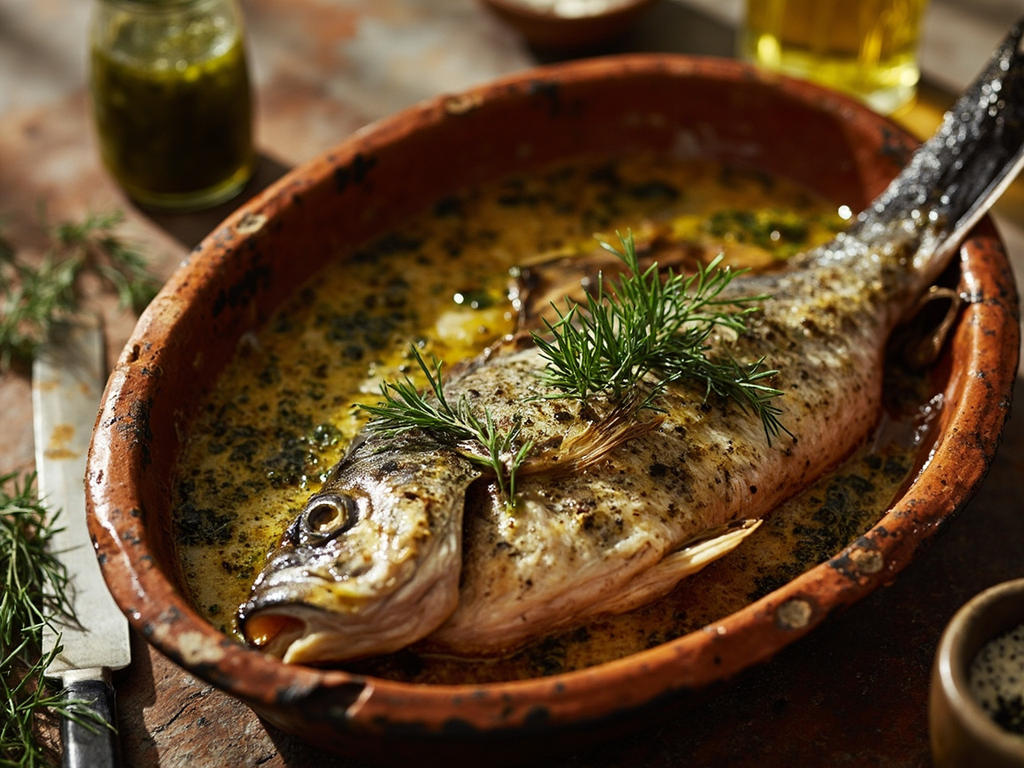
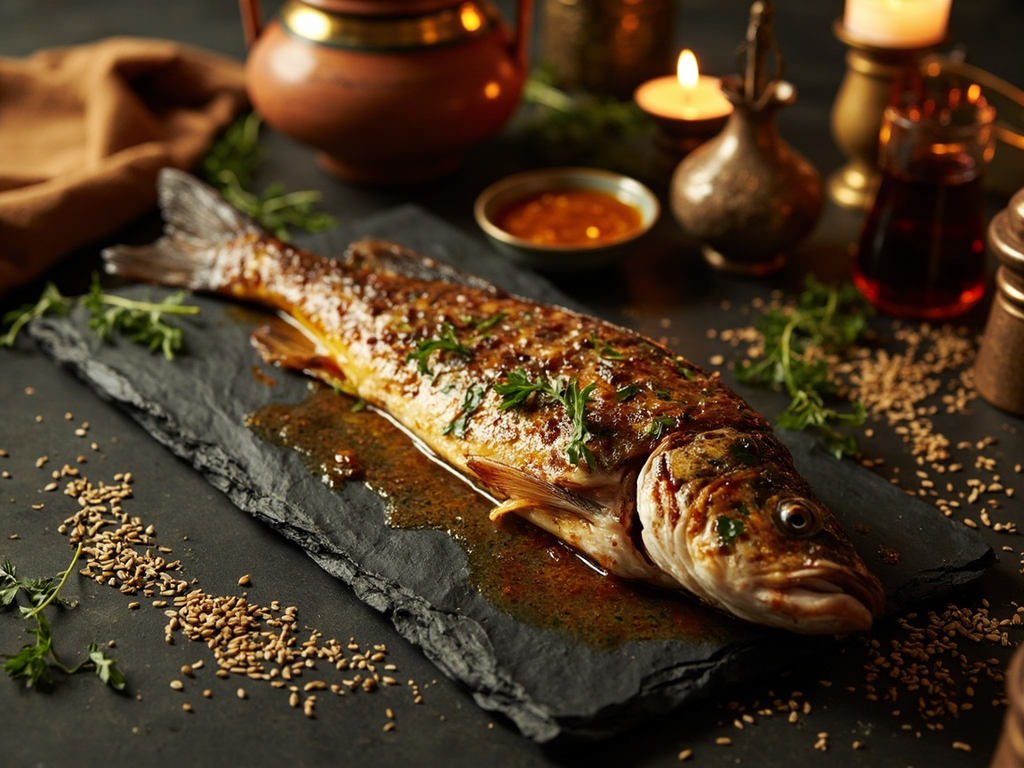
A whole sea bass roasted, brushed with oil and *garos*, scented with coriander, cumin, and a dash of Greek wine, served under a rain of fresh herbs. The great prestige dish of Byzantine tables.
For my guests, however, let the table be worthy of the Empire! This sea bass was caught this morning from the strait that bathes the City; it is anointed with oil and *garos*, coriander and cumin are slipped into its belly, then it is moistened with a Greek wine before being given to the oven. See how its flesh flakes, pearly: this is what the sea offers to him to whom God has entrusted two continents. Drink, eat—and may this feast seal the friendship between us.
- •Whole sea bass (loup) from the Propontis — one fine fish (centerpiece)
- •Olive oil — as needed (roasting)
- •Garos (garum) — a little (umami seasoning)
- •Greek white wine — a cup (deglazing and aroma)
- •Coriander, cumin, rue — a handful (aromatics)
- •Honey — a spoonful (sauce binder)
Propontis Sea Bass Roasted with Garos and Greek Wine
A whole sea bass roasted, brushed with oil and *garos*, scented with coriander, cumin, and a dash of Greek wine, served under a rain of fresh herbs. The great prestige dish of Byzantine tables.
Why this dish? While the emperor ate frugally, his court feasted: Mediterranean fish, roasted meats, and Greek wines. Constantinople, situated between the Propontis and the Bosphorus, drew renowned fish from the strait; this roasted sea bass evokes the official banquets that Justinian presided over beneath golden mosaics.
For my guests, however, let the table be worthy of the Empire! This sea bass was caught this morning from the strait that bathes the City; it is anointed with oil and *garos*, coriander and cumin are slipped into its belly, then it is moistened with a Greek wine before being given to the oven. See how its flesh flakes, pearly: this is what the sea offers to him to whom God has entrusted two continents. Drink, eat—and may this feast seal the friendship between us.
Ingredients (period version)
- Whole sea bass (loup) from the Propontis — one fine fish (centerpiece)
- Olive oil — as needed (roasting)
- Garos (garum) — a little (umami seasoning)
- Greek white wine — a cup (deglazing and aroma)
- Coriander, cumin, rue — a handful (aromatics)
- Honey — a spoonful (sauce binder)
Ingredients
- Whole sea bass, gutted and scaled — 1 (1.2 kg) (centerpiece)
- Olive oil — 5 tbsp (roasting)
- Fish sauce (reconstituted garum) — 2 tsp (umami)
- Dry white wine (e.g., Greek Assyrtiko) — 150 ml (sauce)
- Fresh coriander and cumin seeds — 1 bunch + 1 tsp (aromatics)
- Honey — 1 tsp (sauce balance)
- Lemon — 1 (freshness (at end))
Method
- Preheat oven to 200°C. Score the fish, season lightly with salt.
- Mix oil, fish sauce, cumin, and half the coriander; brush inside and on the skin.
- Stuff some herbs into the belly, place in an oiled dish.
- Roast for 25–30 minutes, basting halfway through with cooking juices.
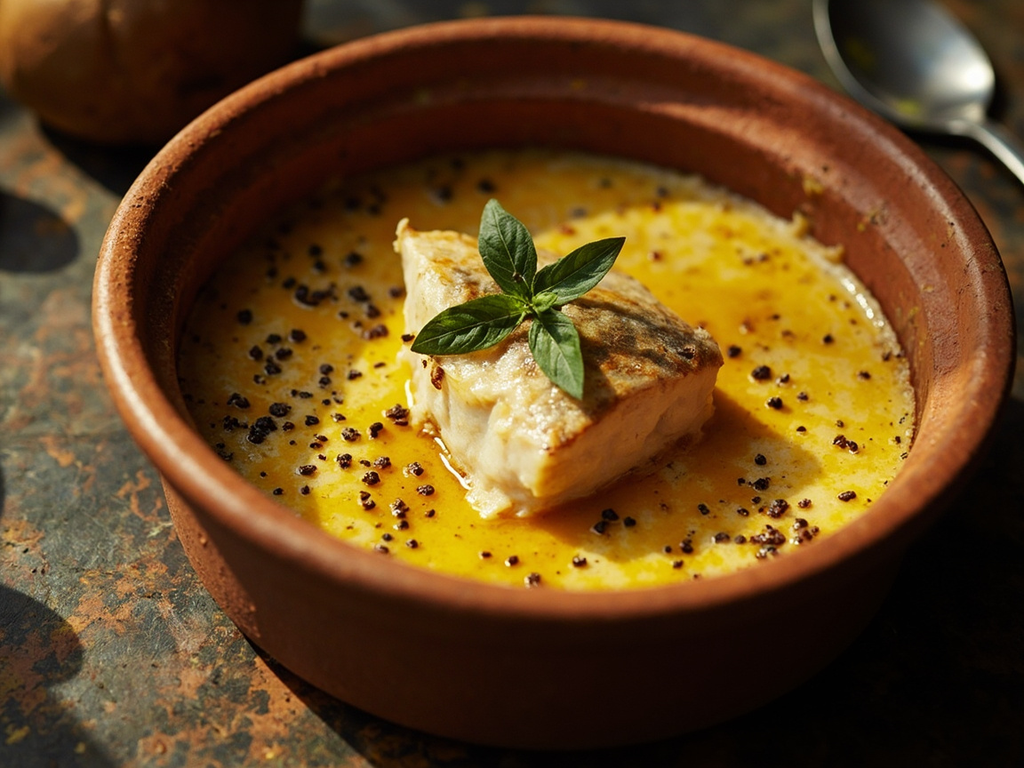
- Deglaze the dish with wine and honey over low heat for a short sauce; spoon over fish.
- Sprinkle with remaining coriander, serve with a squeeze of lemon.
How it was made : Byzantines loved fish even more than meat, and Constantinople lived on the edge of fish-rich waters. Fish were roasted or grilled, always enhanced with *garos*; wine and honey were used to create sweet-and-sour sauces worthy of Apicius.
The contemporary twist : Presented on a long slate with a ribbon of wine sauce and herbs, banquet-style revisited from the Grand Palace.
Sources : Andrew Dalby, *Flavours of Byzantium* (Prospect Books, 2003) · Apicius, *De re coquinaria* (garum and wine sauces)
Justinian · Charactorium