 flip
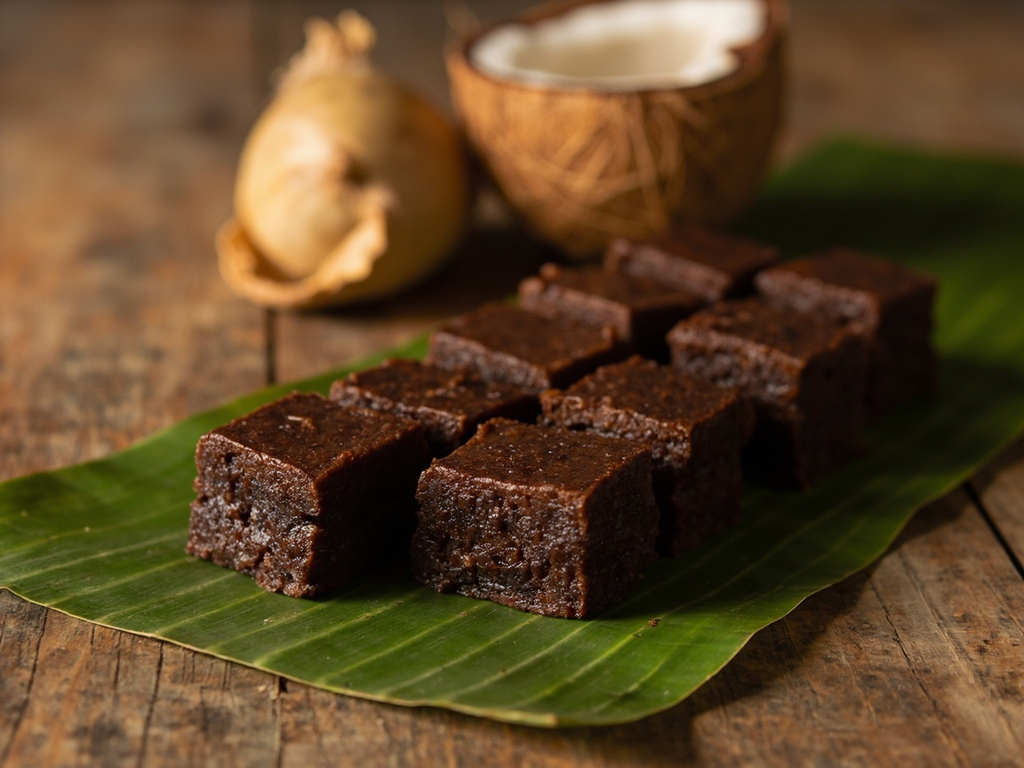
flipKūlolo (imu-baked taro and coconut pudding)
Kūlolo (imu-baked taro and coconut pudding)
Why this dish? Kūlolo was a dense, nourishing food carried on canoe voyages between islands — precisely the kind of travel Kamehameha constantly undertook in waʻa kaulua (double-hulled canoes) to administer and conquer the archipelago. Its long shelf life and high energy value also made it a military campaign food, suitable for inter-island war expeditions.
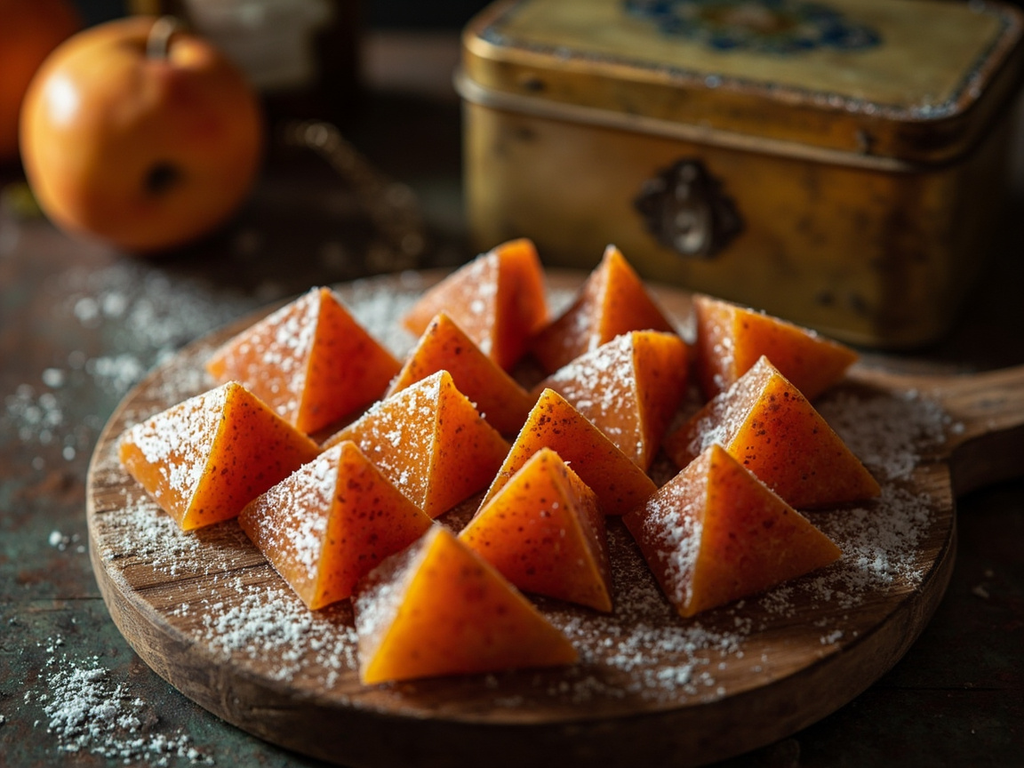
A dense, sweet preparation made from grated taro and coconut cream, slowly baked in ti leaves in an imu. Its texture is firm, melting, and slightly caramelized. Kūlolo keeps for several days without refrigeration, making it an ideal travel food.
When my warriors and I cross the channel between Maui and Hawaiʻi, the sea can be rough and the journey long. Kūlolo, wrapped in its kī leaves, holds firm in the bottom of the canoe. One piece is enough to restore strength. The pounded taro and thick coconut milk are cooked together in the imu, long, until the whole becomes brown and firm like the earth of Kohala. It is the food of the traveler and the warrior — it does not rot, it does not take on water, and it tastes of home.
- •Finely grated taro (kalo) — A good amount (Starchy base)
- •Thick coconut cream (extracted from grated meat) — Equal amount to taro (Fat binder and natural sweetener)
- •Ti leaves (kī) — Several layers (Cooking wrap)
Kūlolo (imu-baked taro and coconut pudding)
A dense, sweet preparation made from grated taro and coconut cream, slowly baked in ti leaves in an imu. Its texture is firm, melting, and slightly caramelized. Kūlolo keeps for several days without refrigeration, making it an ideal travel food.
Why this dish? Kūlolo was a dense, nourishing food carried on canoe voyages between islands — precisely the kind of travel Kamehameha constantly undertook in waʻa kaulua (double-hulled canoes) to administer and conquer the archipelago. Its long shelf life and high energy value also made it a military campaign food, suitable for inter-island war expeditions.
When my warriors and I cross the channel between Maui and Hawaiʻi, the sea can be rough and the journey long. Kūlolo, wrapped in its kī leaves, holds firm in the bottom of the canoe. One piece is enough to restore strength. The pounded taro and thick coconut milk are cooked together in the imu, long, until the whole becomes brown and firm like the earth of Kohala. It is the food of the traveler and the warrior — it does not rot, it does not take on water, and it tastes of home.
Ingredients (period version)
- Finely grated taro (kalo) — A good amount (Starchy base)
- Thick coconut cream (extracted from grated meat) — Equal amount to taro (Fat binder and natural sweetener)
- Ti leaves (kī) — Several layers (Cooking wrap)
Ingredients
- Fresh taro — 500 g, peeled and finely grated (Starchy base)
- Thick coconut milk (coconut cream) — 400 ml (1 can) (Binder and flavor)
- Brown sugar or muscovado — 100 g (Added sugar (traditional relied only on coconut))
- Banana leaves or aluminum foil — To line the mold (Cooking wrap)
Method
- Preheat oven to 180 °C. Line a square pan (20 × 20 cm) with banana leaves softened over a flame (or buttered aluminum foil).
- Peel the taro (with gloves) and grate finely using a grater or food processor.
- Mix the grated taro, coconut cream, and brown sugar in a large bowl until a homogeneous paste forms.
- Pour into the prepared pan. Smooth the surface and cover tightly with banana leaves or foil.
- Bake for 2 to 2½ hours, until the top is firm and caramelized brown.
- Let cool completely before unmolding. Cut into squares or diamonds.
- Kūlolo keeps 3 to 4 days at room temperature, wrapped.
How it was made : Kūlolo was traditionally cooked in the imu, wrapped in multiple layers of ti leaves, for a whole night. With no added sugar — the only sweetness came from coconut — it was less sweet than the modern version but remarkably rich. It was a delicacy favored by chiefs and offered at ceremonies. Its keeping quality made it a strategic food for inter-island crossings.
The contemporary twist : Cut into small squares and wrap individually in fresh ti leaves tied with a strand of coconut fiber — travel bites as beautiful to gift as to carry.
Sources : E.S. Craighill Handy & Elizabeth Green Handy, Native Planters in Old Hawaii: Their Life, Lore, and Environment, Bishop Museum Press, 1972 · Rachel Laudan, The Food of Paradise: Exploring Hawaii's Culinary Heritage, University of Hawaii Press, 1996
Kamehameha I · Charactorium