 flip
flipPoke iʻa (seasoned raw fish)
Poke iʻa (seasoned raw fish)
Why this dish? Poke was the quintessential daily dish of the Hawaiian coasts where Kamehameha lived, especially at Kailua-Kona and Kealakekua Bay. A keen fisherman, he knew the fish-rich waters of the west coast of Hawaiʻi Island. Fresh fish seasoned with salt and seaweed was the protein base of his everyday meals, an inseparable complement to poi.
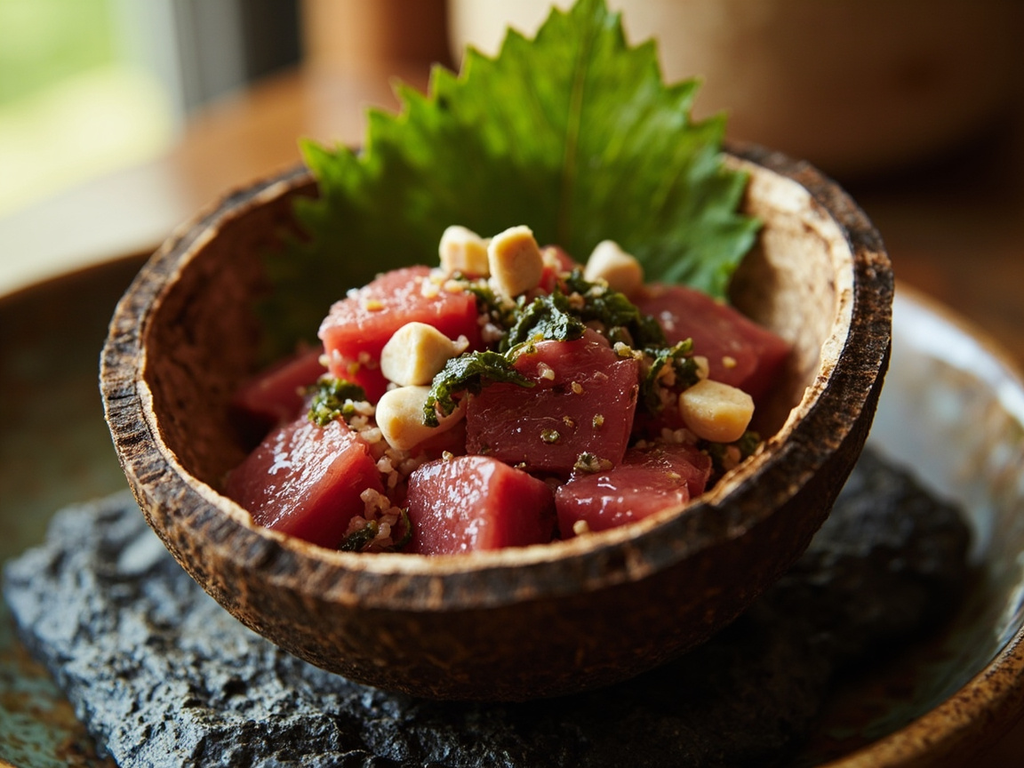
Diced raw fish — aku (bonito) or heʻe (octopus) — simply seasoned with sea salt, chopped limu (seaweed), and roasted, crushed kukui (candlenut) kernels. A fisherman's dish, direct and pure, highlighting the freshness of the product without masking it.
My fishermen know every reef of Kealakekua. When the aku arrive in schools, the canoe returns heavy, and then it is a day of joy. We slice the fish into thick pieces, salt it with paʻakai gathered from the pools of Kaʻūpūlehu, mix in the limu kohu picked from the rocks at low tide, and the pounded kukui nut that makes everything smooth. That is the true taste of the sea, the dish of one who lives facing the ocean. No need for fire for what is already perfect.
- •Aku (bonito) or other fresh fish — One nice fish, cut into pieces (Base of the dish)
- •Paʻakai (Hawaiian sea salt) — A good pinch (Seasoning)
- •Limu kohu (red seaweed) — A handful, chopped (Iodized condiment)
- •Roasted kukui (candlenut) kernels — A few nuts, crushed (Texture and richness)
Poke iʻa (seasoned raw fish)
Diced raw fish — aku (bonito) or heʻe (octopus) — simply seasoned with sea salt, chopped limu (seaweed), and roasted, crushed kukui (candlenut) kernels. A fisherman's dish, direct and pure, highlighting the freshness of the product without masking it.
Why this dish? Poke was the quintessential daily dish of the Hawaiian coasts where Kamehameha lived, especially at Kailua-Kona and Kealakekua Bay. A keen fisherman, he knew the fish-rich waters of the west coast of Hawaiʻi Island. Fresh fish seasoned with salt and seaweed was the protein base of his everyday meals, an inseparable complement to poi.
My fishermen know every reef of Kealakekua. When the aku arrive in schools, the canoe returns heavy, and then it is a day of joy. We slice the fish into thick pieces, salt it with paʻakai gathered from the pools of Kaʻūpūlehu, mix in the limu kohu picked from the rocks at low tide, and the pounded kukui nut that makes everything smooth. That is the true taste of the sea, the dish of one who lives facing the ocean. No need for fire for what is already perfect.
Ingredients (period version)
- Aku (bonito) or other fresh fish — One nice fish, cut into pieces (Base of the dish)
- Paʻakai (Hawaiian sea salt) — A good pinch (Seasoning)
- Limu kohu (red seaweed) — A handful, chopped (Iodized condiment)
- Roasted kukui (candlenut) kernels — A few nuts, crushed (Texture and richness)
Ingredients
- Ahi tuna (sashimi grade) — 400 g (Base of the dish)
- Sea salt (or fleur de sel) — 1 tsp (Seasoning)
- Fresh or rehydrated seaweed (ogo, wakame, or dulse) — 30 g, chopped (Iodized condiment)
- Roasted macadamia nuts — 30 g, coarsely crushed (Replaces kukui (texture and richness))
- Sesame oil (optional) — 1 tsp (Round out flavor (modern substitute for kukui))
Method
- Cut the tuna into cubes of about 2 cm. The fish must be very fresh and cold.
- Finely chop the rehydrated seaweed (if dry, soak in cold water for 10 minutes, then squeeze dry).
- Coarsely crush the roasted macadamia nuts with a knife or in a mortar.
- In a bowl, gently mix the fish, salt, seaweed, and crushed nuts. Add sesame oil if desired.
- Let rest 5 to 10 minutes in the refrigerator for flavors to meld.
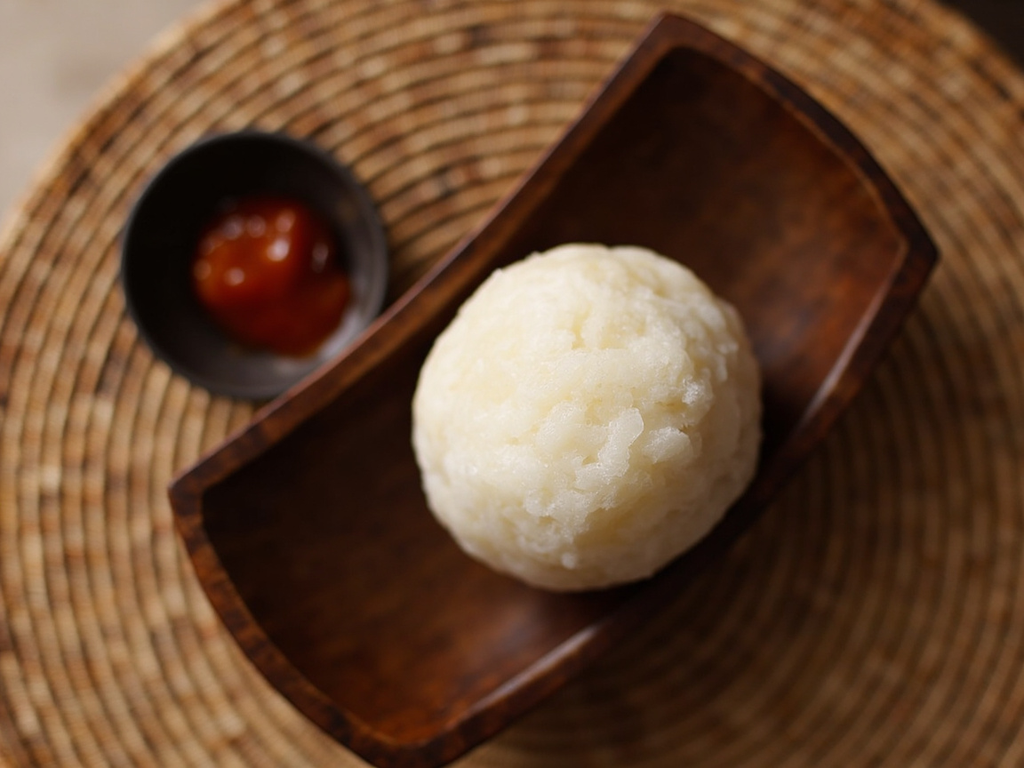
- Serve immediately, plain or accompanied by poi.
How it was made : Pre-contact poke (meaning "to cut into pieces" in Hawaiian) was an extremely simple dish: raw fish, salt, seaweed, sometimes kukui. There was no soy sauce (arrived with Japanese immigrants in the 19th century), no sesame oil, no rice. Limu kohu, an endemic red seaweed with a peppery taste, was the most prized. Kukui nuts, slightly toxic when raw, had to be carefully roasted before consumption.
The contemporary twist : Serve the poke cubes in a polished half coconut shell on a bed of ti leaves, with a pinch of Hawaiian black volcanic salt for a spectacular visual effect.
Sources : Rachel Laudan, The Food of Paradise: Exploring Hawaii's Culinary Heritage, University of Hawaii Press, 1996 · Samuel M. Kamakau, Ka Poʻe Kahiko: The People of Old, Bishop Museum Press, 1964
Kamehameha I · Charactorium