 flip
flipNgalax — Millet Couscous with Peanut and Baobab Fruit
Ngalax — Millet Couscous with Peanut and Baobab Fruit
Why this dish? Ngalax is the sweet that Senegalese families prepare and offer to each other on Easter Sunday. Senghor, born into a Catholic Serer family in Joal, was himself a Christian: this dish shared between Christians and Muslims directly connects to his childhood and to that coexistence of cultures he defended all his life. It is the offering of brotherhood.
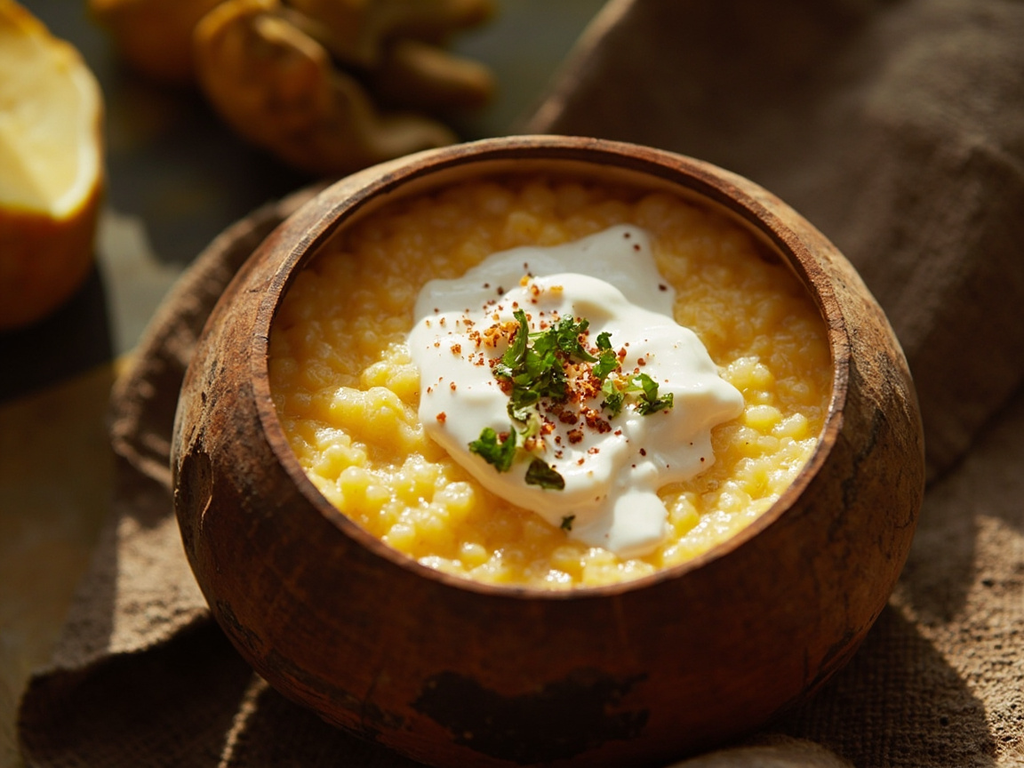
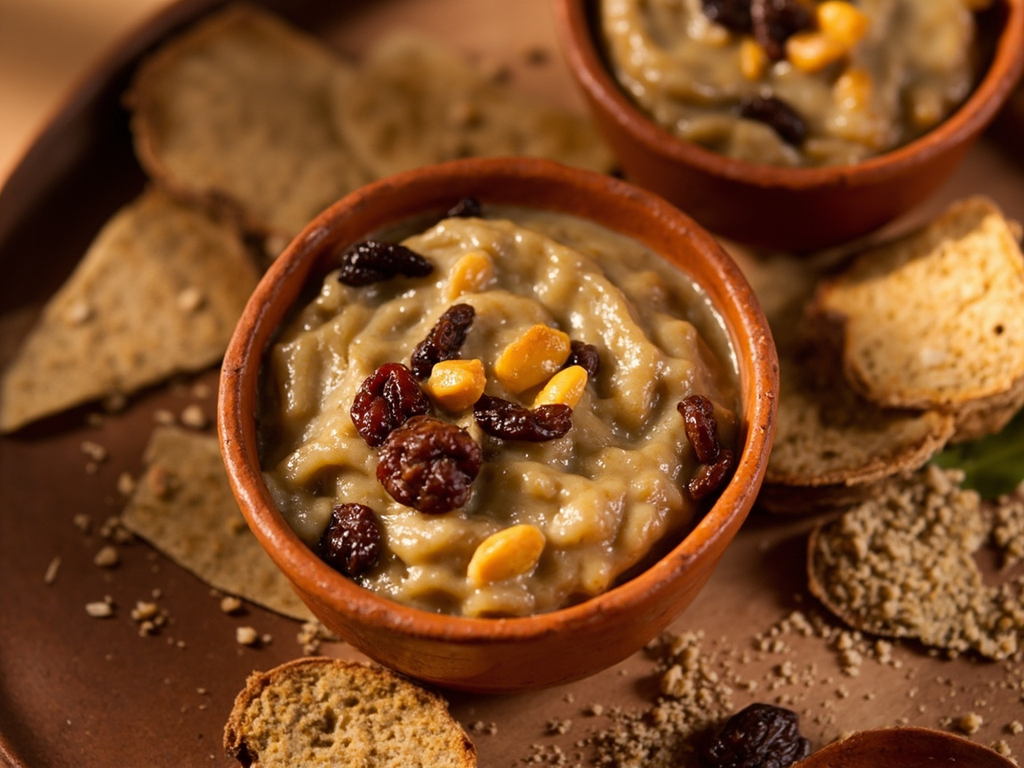
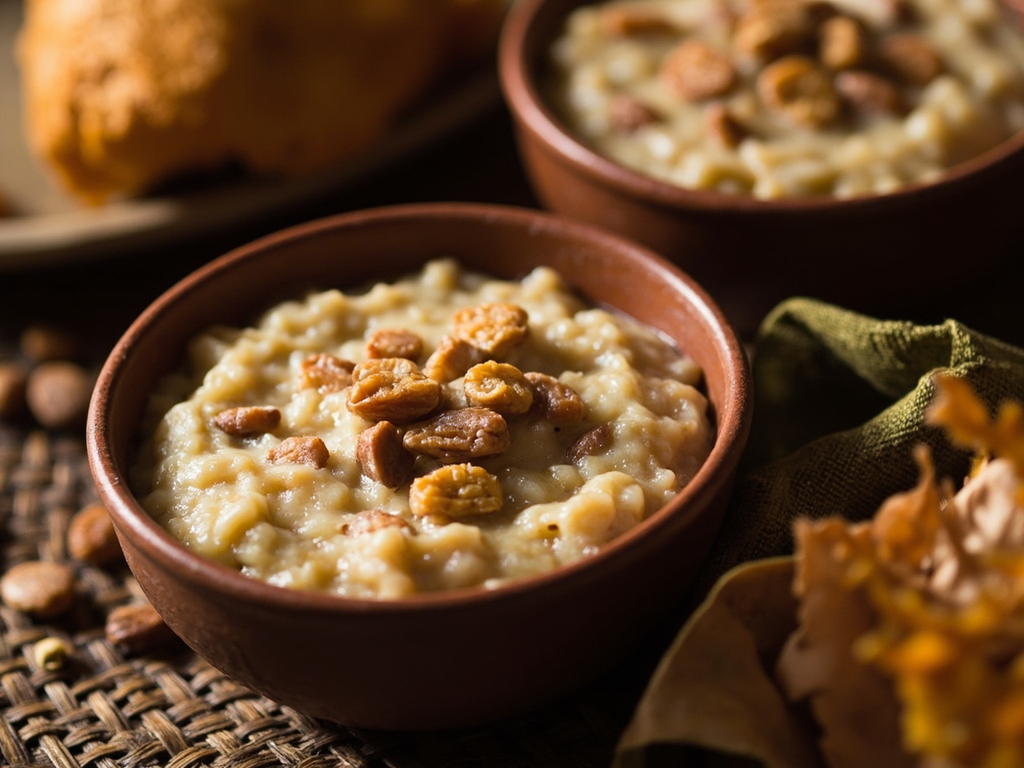
A creamy porridge of millet couscous, bound by peanut paste and the tangy pulp of the baobab fruit (monkey bread), scented with orange blossom or vanilla. Cool, sweet, comforting, made to be given as much as eaten.
On Easter morning in Joal, my mother would prepare full bowls of it that we would take to the neighbors — Christians and Muslims alike, for this sweetness knows no border. You take the millet steamed, you marry it to the peanut paste and the baobab pulp, that monkey bread which brings its soft chalky acidity. You sweeten, you scent, and you offer. Here, taste: it is sweet as reconciliation. I built my entire thought on this gesture — share first, then believe that men are brothers.
- •Millet couscous (thiéré) — a large bowl (base)
- •Peanut paste — generous (binder and richness)
- •Monkey bread (baobab pulp, bouye) — a soaked handful (acidity and binder)
- •Sugar — to taste (sweetness)
- •Orange blossom water — a dash (scent)
- •Raisins — a handful (garnish)
Ngalax — Millet Couscous with Peanut and Baobab Fruit
A creamy porridge of millet couscous, bound by peanut paste and the tangy pulp of the baobab fruit (monkey bread), scented with orange blossom or vanilla. Cool, sweet, comforting, made to be given as much as eaten.
Why this dish? Ngalax is the sweet that Senegalese families prepare and offer to each other on Easter Sunday. Senghor, born into a Catholic Serer family in Joal, was himself a Christian: this dish shared between Christians and Muslims directly connects to his childhood and to that coexistence of cultures he defended all his life. It is the offering of brotherhood.
On Easter morning in Joal, my mother would prepare full bowls of it that we would take to the neighbors — Christians and Muslims alike, for this sweetness knows no border. You take the millet steamed, you marry it to the peanut paste and the baobab pulp, that monkey bread which brings its soft chalky acidity. You sweeten, you scent, and you offer. Here, taste: it is sweet as reconciliation. I built my entire thought on this gesture — share first, then believe that men are brothers.
Ingredients (period version)
- Millet couscous (thiéré) — a large bowl (base)
- Peanut paste — generous (binder and richness)
- Monkey bread (baobab pulp, bouye) — a soaked handful (acidity and binder)
- Sugar — to taste (sweetness)
- Orange blossom water — a dash (scent)
- Raisins — a handful (garnish)
Ingredients
- Millet couscous (or fine semolina if unavailable) — 300 g steamed (base)
- Peanut paste (unsweetened) — 150 g (binder)
- Baobab powder (monkey bread) — 60 g dissolved (acidity)
- Sugar — 80 g (adjust to taste) (sweetness)
- Orange blossom water or vanilla — 1 tsp (scent)
- Raisins — 50 g (garnish)
Method
- Steam the millet couscous (or rehydrate the semolina), fluff it and let it cool slightly.
- Dissolve the baobab powder in a little water, strain to remove fibers.
- Thin the peanut paste with warm water until a fluid cream.
- Mix peanut, baobab pulp and sugar, then incorporate the couscous to obtain a creamy porridge.
- Scent with orange blossom water, add the raisins, adjust sugar.
- Chill and serve very cold, in small bowls — and offer some to the neighbors.
How it was made : Ngalax is traditionally consumed on Good Friday and Easter, but offered beyond the Christian community, in the spirit of Senegalese interfaith sharing. Before refined sugar, it was sweetened with honey or dates, and the millet was pounded then cooked in earthenware couscoussiers.
The contemporary twist : Serve in chilled verrines, restaurant-dessert style, with a thin layer of tangy baobab pulp on top and a few roasted peanut crumbles.
Léopold Sédar Senghor · Charactorium