 flip
flipBeef daube with La Brède wine
Beef daube with La Brède wine
Why this dish? Montesquieu spent most of the year at his Château de La Brède in Gironde, living the life of a sober provincial lord. The daube, long-simmered in wine from his own vineyards, is the foundational dish of Bordeaux cuisine: hearty, requiring little attention, perfect for a table that preached moderation.
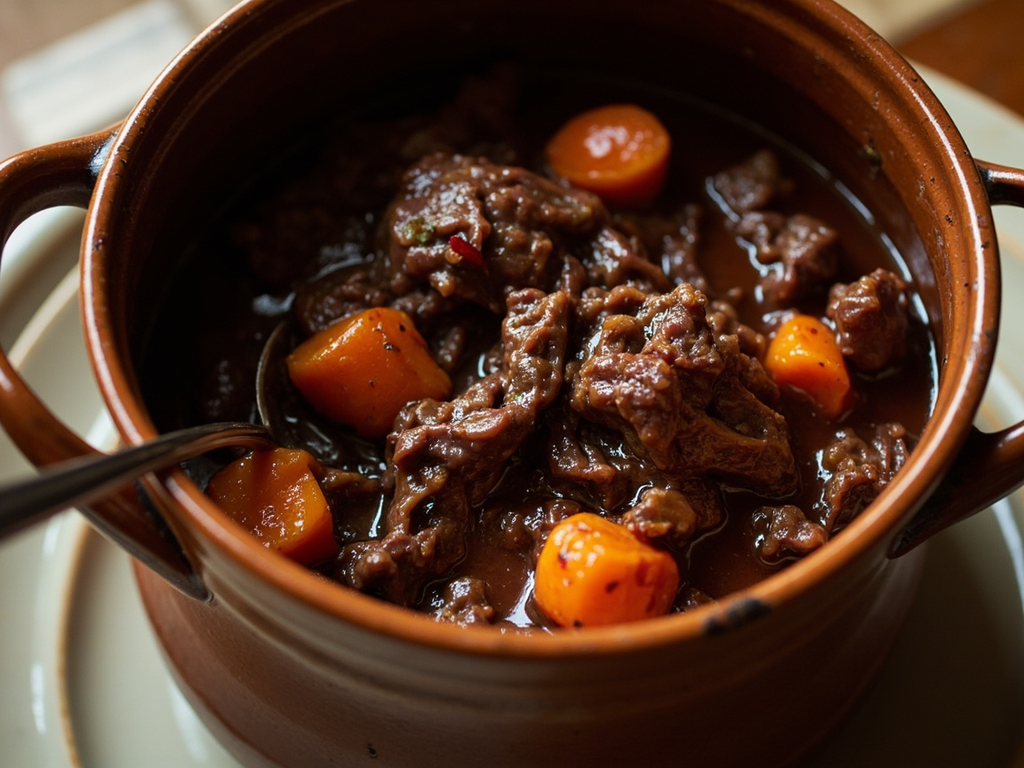
A melting piece of beef, braised for hours in red Bordeaux wine with bacon, onions, orange peel, and a bouquet of herbs. The meat falls apart with a spoon and the sauce becomes syrupy.
You see, I maintain that a good daube should be governed like a well-ordered state: by slowness and patience, never by haste. It is left at the corner of the hearth from morning until evening, in the wine from my La Brède vineyards, and one is careful not to touch it. I have often said that one must be sober at table; but of such an honest dish, born of my own land, I confess one gladly helps oneself again.
- •Beef (chuck or blade) — a large piece (base)
- •Red Bordeaux wine — enough to cover (cooking, signature)
- •Fat bacon — a few slices (richness)
- •Onions and carrots — sufficient (aromatic garnish)
- •Dried orange peel — a piece (flavor)
- •Bouquet garni (thyme, bay, parsley) — a bouquet (flavor)
Beef daube with La Brède wine
A melting piece of beef, braised for hours in red Bordeaux wine with bacon, onions, orange peel, and a bouquet of herbs. The meat falls apart with a spoon and the sauce becomes syrupy.
Why this dish? Montesquieu spent most of the year at his Château de La Brède in Gironde, living the life of a sober provincial lord. The daube, long-simmered in wine from his own vineyards, is the foundational dish of Bordeaux cuisine: hearty, requiring little attention, perfect for a table that preached moderation.
You see, I maintain that a good daube should be governed like a well-ordered state: by slowness and patience, never by haste. It is left at the corner of the hearth from morning until evening, in the wine from my La Brède vineyards, and one is careful not to touch it. I have often said that one must be sober at table; but of such an honest dish, born of my own land, I confess one gladly helps oneself again.
Ingredients (period version)
- Beef (chuck or blade) — a large piece (base)
- Red Bordeaux wine — enough to cover (cooking, signature)
- Fat bacon — a few slices (richness)
- Onions and carrots — sufficient (aromatic garnish)
- Dried orange peel — a piece (flavor)
- Bouquet garni (thyme, bay, parsley) — a bouquet (flavor)
Ingredients
- Beef chuck or blade — 1.2 kg, cut into large cubes (base)
- Red Bordeaux wine (Graves preferred) — 75 cl (cooking, signature)
- Smoked bacon belly — 150 g, cut into lardons (richness)
- Onions — 2 (garnish)
- Carrots — 3 (garnish)
- Untreated orange peel — 1 strip (flavor)
- Thyme, bay, parsley — 1 bouquet garni (flavor)
- Salt, pepper — to taste (seasoning)
Method
- The day before, marinate the beef cubes in the wine with onions, carrots, herbs, and orange peel.
- Drain the meat, brown it in a casserole with the lardons.
- Add back the garnish, pour in the marinade wine, season with salt and pepper.
- Cover and simmer over very low heat for 3 to 4 hours until the meat falls apart.
- Uncover at the end of cooking to reduce the sauce if needed. Serve with bread or fresh pasta.
How it was made : In the 18th century, the daube was cooked in a sealed earthenware "daubière" placed among the embers, sometimes buried in the ashes for gentle, constant heat all day — slow cooking compensated for the lack of a thermostat.
The contemporary twist : Serve the daube as an upside-down shepherd's pie under a thin purée, or reduce the sauce to a shiny glaze coating the shredded meat like a chic rillette.
Montesquieu · Charactorium