 flip
flipSpit-roasted lamb leg, Theban royal deîpnon
Spit-roasted lamb leg, Theban royal deîpnon
Why this dish? As king of Thebes, victor over the Sphinx, Oedipus presides over great banquets where roasted meat is shared — a privilege of festivals and sacrifices. Each person's portion, distributed by the king, seals the order of the city he believes he has saved.
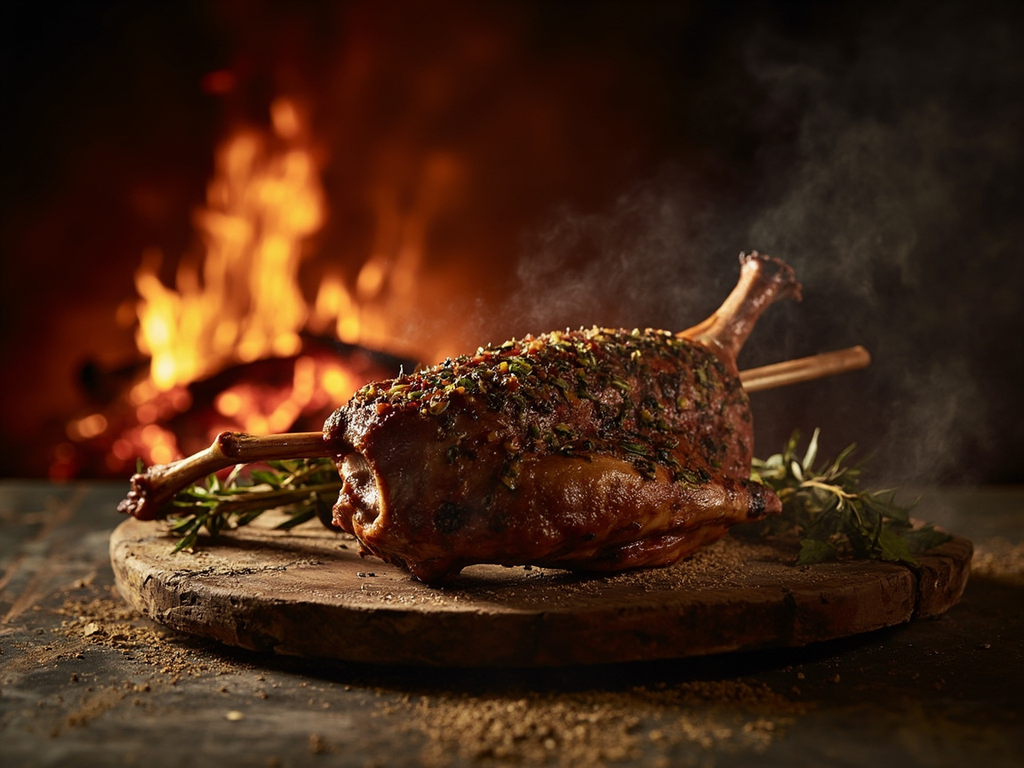
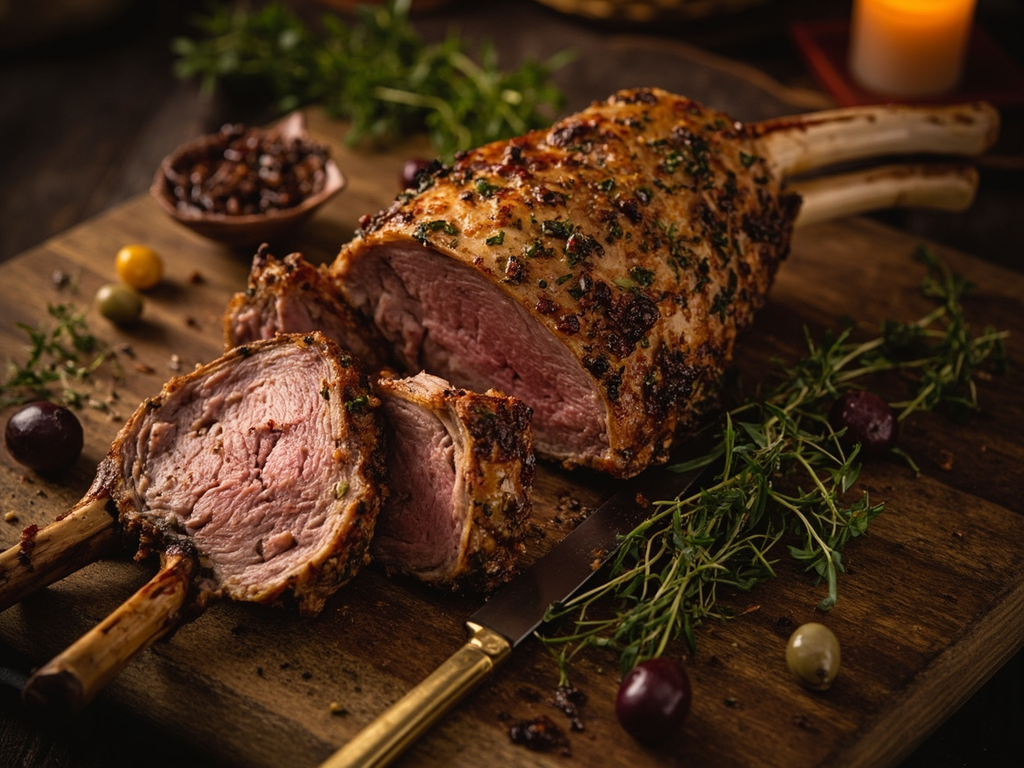
Lamb rubbed with salt, wild oregano, and thyme, slowly roasted on a spit until golden-crusted, basted with olive oil and a splash of wine. The meat, rare and festive, is served in portions cut with a bronze knife.
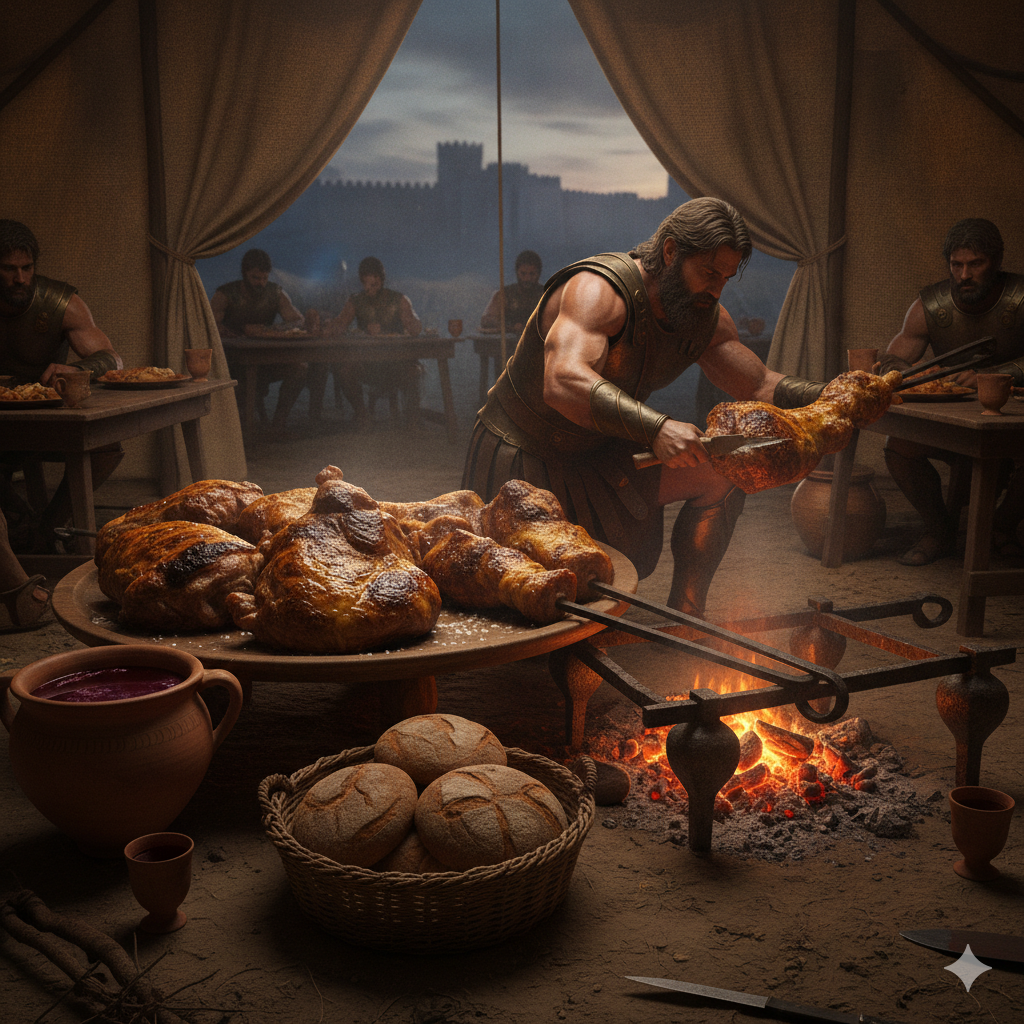
When I had delivered Thebes from the riddle-beast, the people hailed me king and long tables were set. See this ram that my men turn over the embers: they rub it with salt and the bitter herbs of our hills, they baste it with oil and wine until the skin sings under the fire. It is I who carve and distribute the portions, for such is the duty of a king: to give each his due. Feast, and may the gods be kind to us — at least I thought so then.
- •Leg or shoulder of lamb — a fine piece (festival meat)
- •Sea salt — generously (seasoning, crust)
- •Wild oregano and thyme — a bunch (herbs)
- •Olive oil — as much as you like (basting)
- •Wine mixed with water — a cyathus (basting, deglazing)
Spit-roasted lamb leg, Theban royal deîpnon
Lamb rubbed with salt, wild oregano, and thyme, slowly roasted on a spit until golden-crusted, basted with olive oil and a splash of wine. The meat, rare and festive, is served in portions cut with a bronze knife.
Why this dish? As king of Thebes, victor over the Sphinx, Oedipus presides over great banquets where roasted meat is shared — a privilege of festivals and sacrifices. Each person's portion, distributed by the king, seals the order of the city he believes he has saved.
When I had delivered Thebes from the riddle-beast, the people hailed me king and long tables were set. See this ram that my men turn over the embers: they rub it with salt and the bitter herbs of our hills, they baste it with oil and wine until the skin sings under the fire. It is I who carve and distribute the portions, for such is the duty of a king: to give each his due. Feast, and may the gods be kind to us — at least I thought so then.
Ingredients (period version)
- Leg or shoulder of lamb — a fine piece (festival meat)
- Sea salt — generously (seasoning, crust)
- Wild oregano and thyme — a bunch (herbs)
- Olive oil — as much as you like (basting)
- Wine mixed with water — a cyathus (basting, deglazing)
Ingredients
- Leg of lamb — 1.5 kg (festival meat)
- Sea salt — 2 tsp (seasoning, crust)
- Dried oregano — 2 tbsp (herb)
- Fresh thyme — a few sprigs (herb)
- Olive oil — 5 tbsp (basting)
- Dry white wine — 150 ml (basting)
- Honey — 1 tbsp (final glaze (optional))
Method
- Score the leg, rub with salt, oregano, and olive oil; tuck thyme into the slits. Let rest 1 hour.
- Sear the piece in a very hot oven (240 °C) for 15 minutes to form a crust.
- Reduce to 160 °C and continue roasting 1½–2 hours, basting regularly with the juices, oil, and wine.
- At the end of cooking, brush with a little honey for the glaze, let rest 15 minutes, then slice and distribute the portions.
How it was made : Meat was mostly consumed during sacrifices and festivals: the bones and fat were burned for the gods, the rest was eaten roasted on a spit (optáo) or boiled. The equitable distribution of portions by the chief or king was a fundamental political and religious act, described as early as Homer.
The contemporary twist : Serve on an olive wood board with olives, fresh herbs, and a drizzle of virgin oil: a "king's share" to carve at the table in front of guests.
Sources : Homer, Iliad (scenes of sacrifice and meat sharing) · Andrew Dalby, Food in the Ancient World from A to Z (2003)
Oedipus · Charactorium