 flip
flipKhubz shaʿīr — Barley Bread of the Ascetics
Khubz shaʿīr — Barley Bread of the Ascetics
Why this dish? Hagiographic sources describe Rābiʿa contenting herself with a piece of dry barley bread and water, refusing the softer wheat dishes offered by her admirers. This bread is the absolute center of her table: one did not eat with utensils, one broke the bread to grasp the rest.
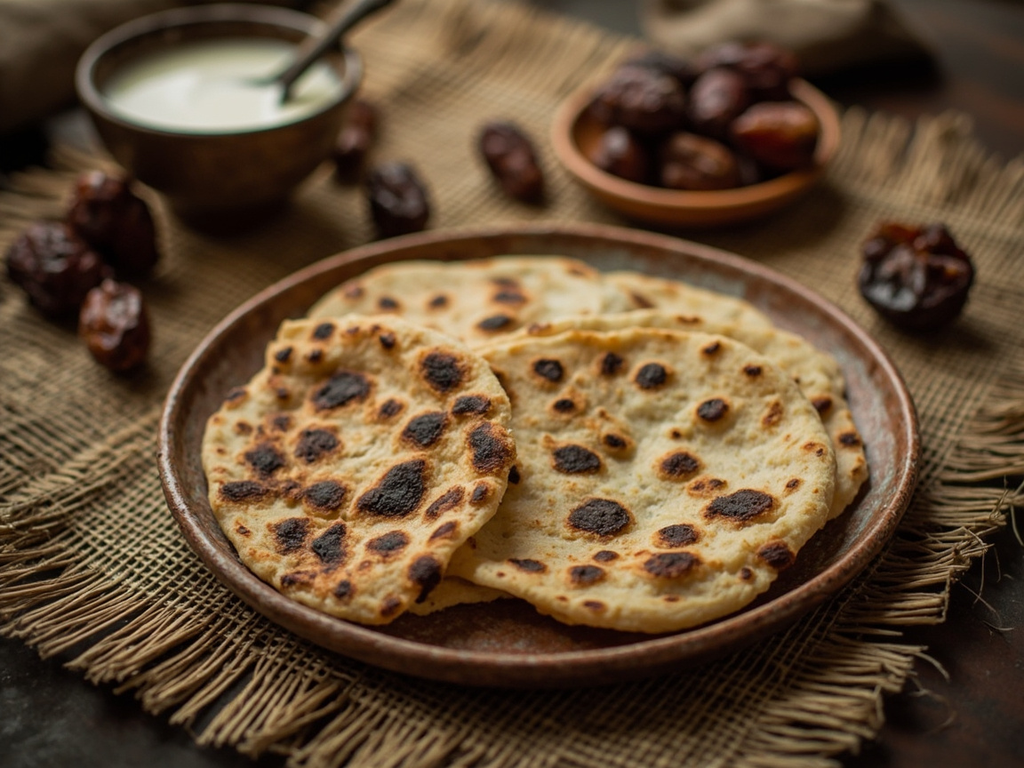
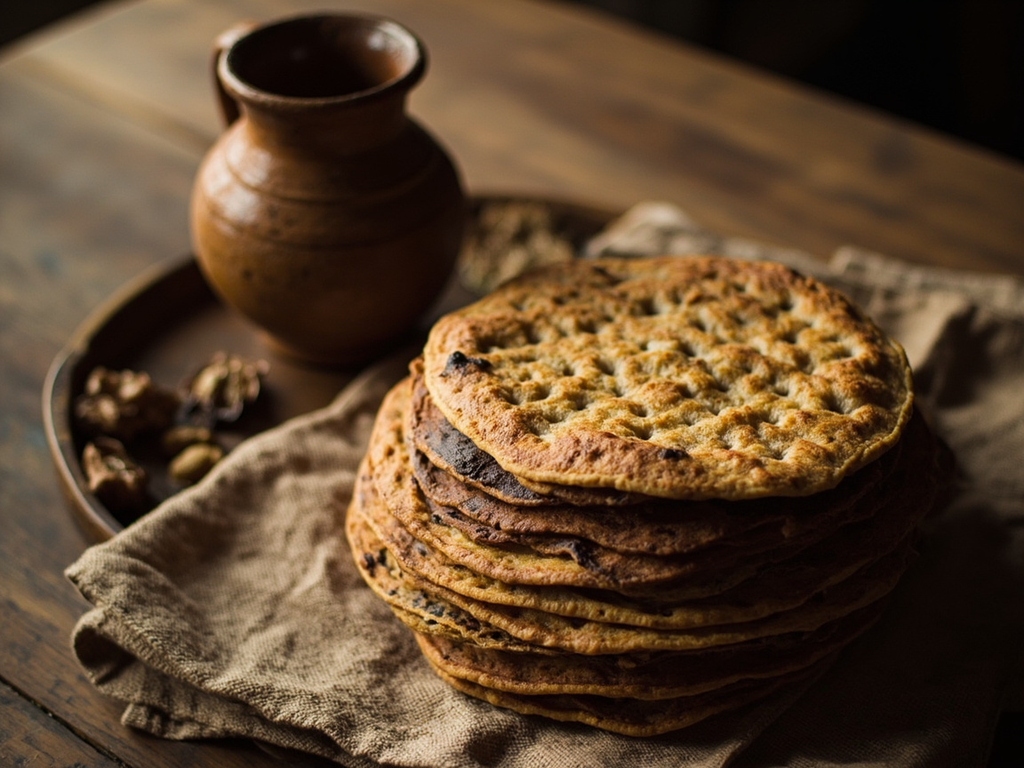
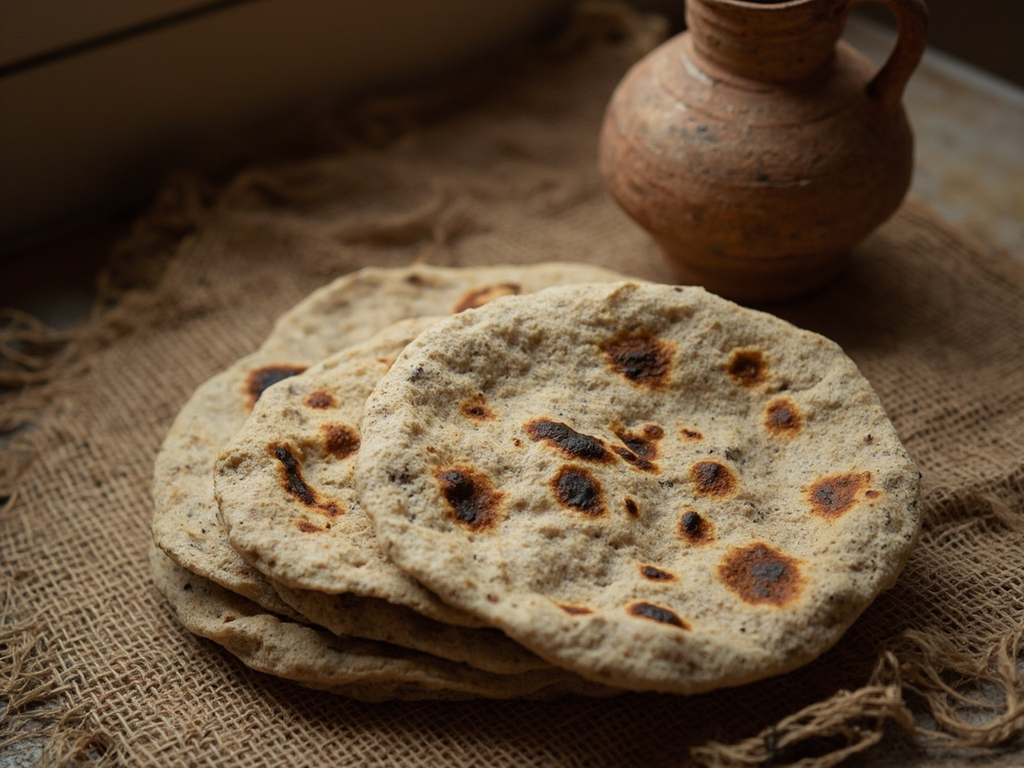
A flat, dense barley flatbread with a slightly gray crumb and a rustic, earthy taste. It is baked against the scorching wall of a clay oven (tannūr) or on a hot stone. Dry, it keeps for several days and softens in water or broth.
Come close, and do not fear the simplicity of my table. This barley flatbread, I knead with my hands at dawn, let it barely rise, then throw it against the wall of the clay oven until it browns. They press me to mix in the wheat of the rich; I refuse, for he who loves his Lord does not need his mouth to be flattered. Break off a piece, dip it in water, and give thanks: a dry bread eaten in the peace of God is worth more than all the feasts of the emir.
- •Whole barley flour — two handfuls per flatbread (base grain, earthy taste)
- •Water from the jug — enough for a firm dough (binder)
- •Salt — a pinch (seasoning)
- •Starter from the day before — a little, sometimes (optional light leavening)
Khubz shaʿīr — Barley Bread of the Ascetics
A flat, dense barley flatbread with a slightly gray crumb and a rustic, earthy taste. It is baked against the scorching wall of a clay oven (tannūr) or on a hot stone. Dry, it keeps for several days and softens in water or broth.
Why this dish? Hagiographic sources describe Rābiʿa contenting herself with a piece of dry barley bread and water, refusing the softer wheat dishes offered by her admirers. This bread is the absolute center of her table: one did not eat with utensils, one broke the bread to grasp the rest.
Come close, and do not fear the simplicity of my table. This barley flatbread, I knead with my hands at dawn, let it barely rise, then throw it against the wall of the clay oven until it browns. They press me to mix in the wheat of the rich; I refuse, for he who loves his Lord does not need his mouth to be flattered. Break off a piece, dip it in water, and give thanks: a dry bread eaten in the peace of God is worth more than all the feasts of the emir.
Ingredients (period version)
- Whole barley flour — two handfuls per flatbread (base grain, earthy taste)
- Water from the jug — enough for a firm dough (binder)
- Salt — a pinch (seasoning)
- Starter from the day before — a little, sometimes (optional light leavening)
Ingredients
- Whole barley flour — 250 g (base grain)
- Wheat flour (for structure) — 50 g (easier modern shaping)
- Warm water — about 180 ml (hydration)
- Salt — 5 g (seasoning)
- Starter or yeast — 1 tsp dry yeast (leavening)
Method
- Mix the flours and salt in a large bowl.
- Dissolve the yeast in warm water, pour over the flour and knead for 8-10 minutes until you get a firm, supple dough.
- Let rest for 1 hour under a cloth.
- Divide into balls, roll out into thin flatbreads 1 cm thick.
- Cook on a stone or a very hot cast-iron skillet, 3-4 minutes per side, until brown spots appear.
- Serve warm, or let dry for storage.
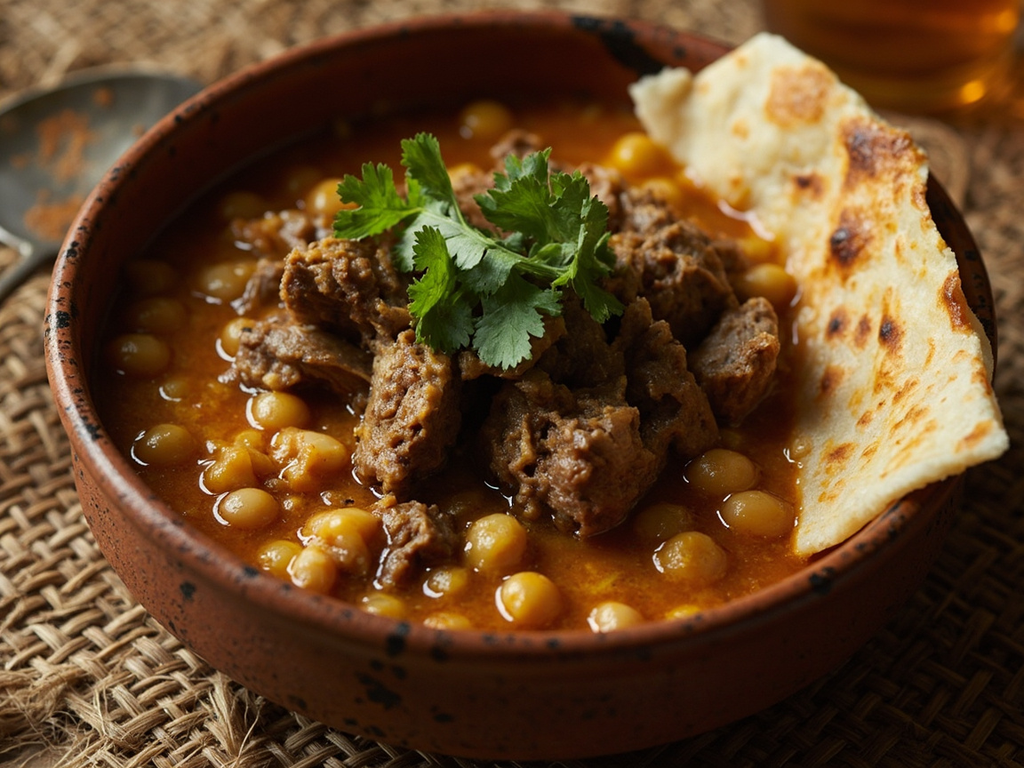
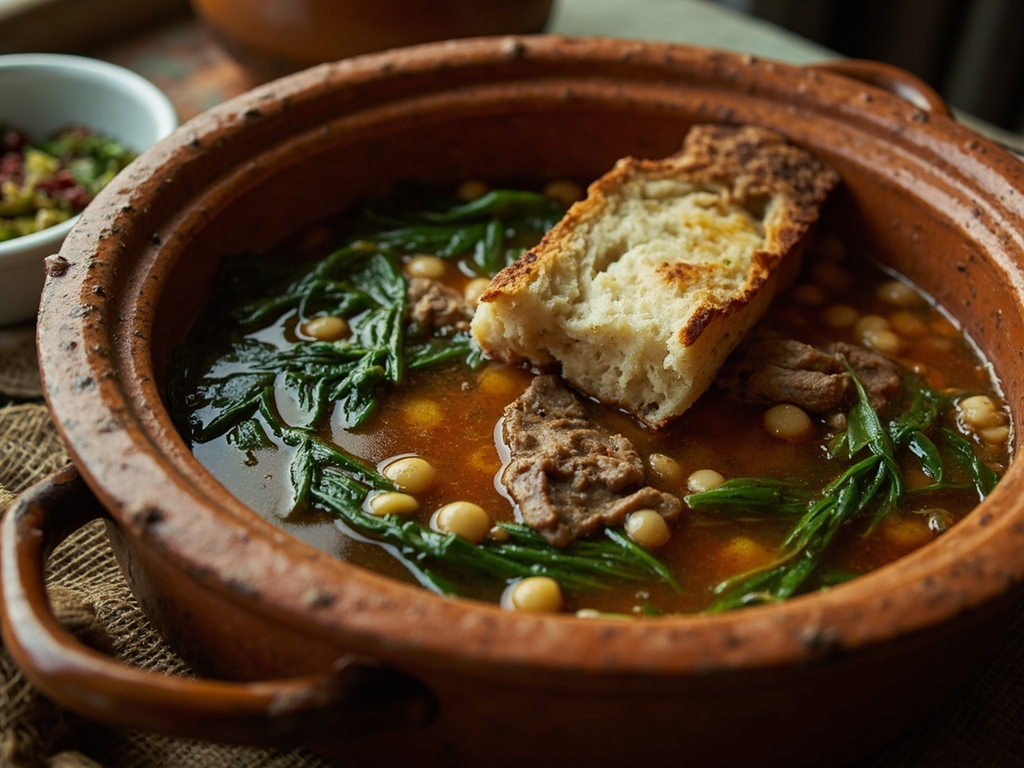
How it was made : Barley was the grain of the poor and ascetics; wheat, more expensive and whiter, marked wealth. Bread was baked in the tannūr, a clay oven heated with wood, where the flatbread sticks to the vertical wall. Stale bread was never thrown away: it was soaked again in water or broth (this is the origin of tharīd).
The contemporary twist : Serve the flatbread warm, just torn by hand, with a drizzle of olive oil and a few Medjool dates — a contemporary nod to the austerity of the sufra.
Sources : Lilia Zaouali, La grande cuisine arabe du Moyen Âge / Medieval Cuisine of the Islamic World, University of California Press, 2007 · Nawal Nasrallah (trad.), Annals of the Caliphs' Kitchens : Ibn Sayyār al-Warrāq's Kitāb al-Ṭabīkh, Brill, 2007 · Margaret Smith, Rabiʿa the Mystic and Her Fellow-Saints in Islam, Cambridge University Press, 1928
Rābiʿa al-ʿAdawiyya · Charactorium