Opor ayam
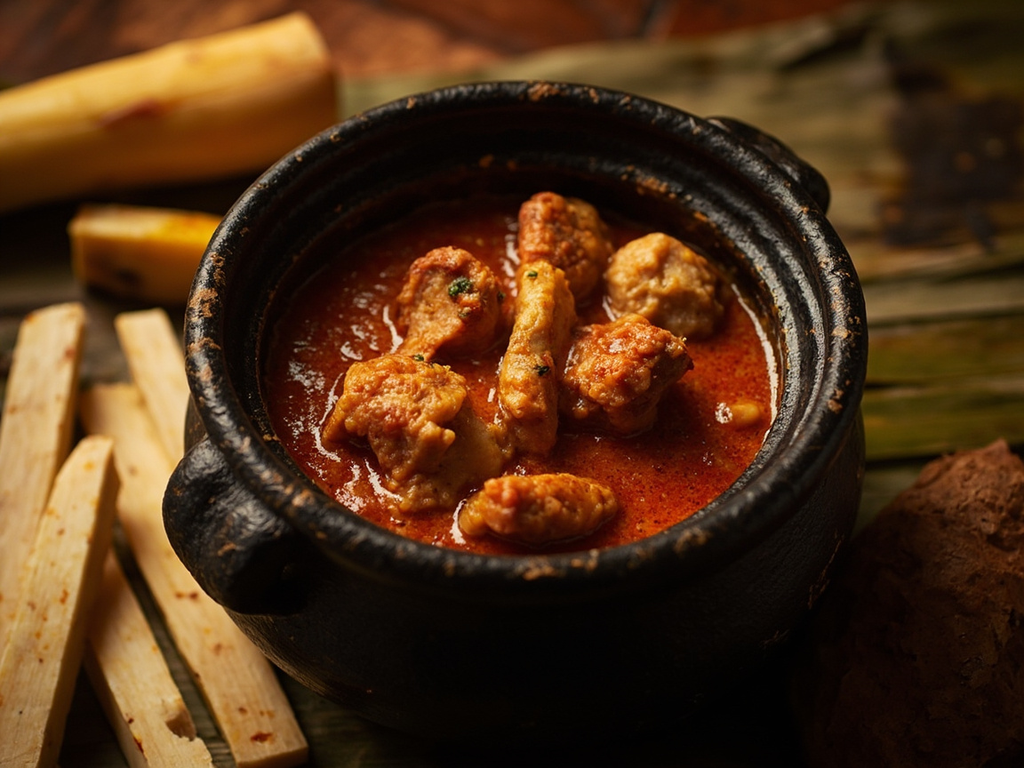
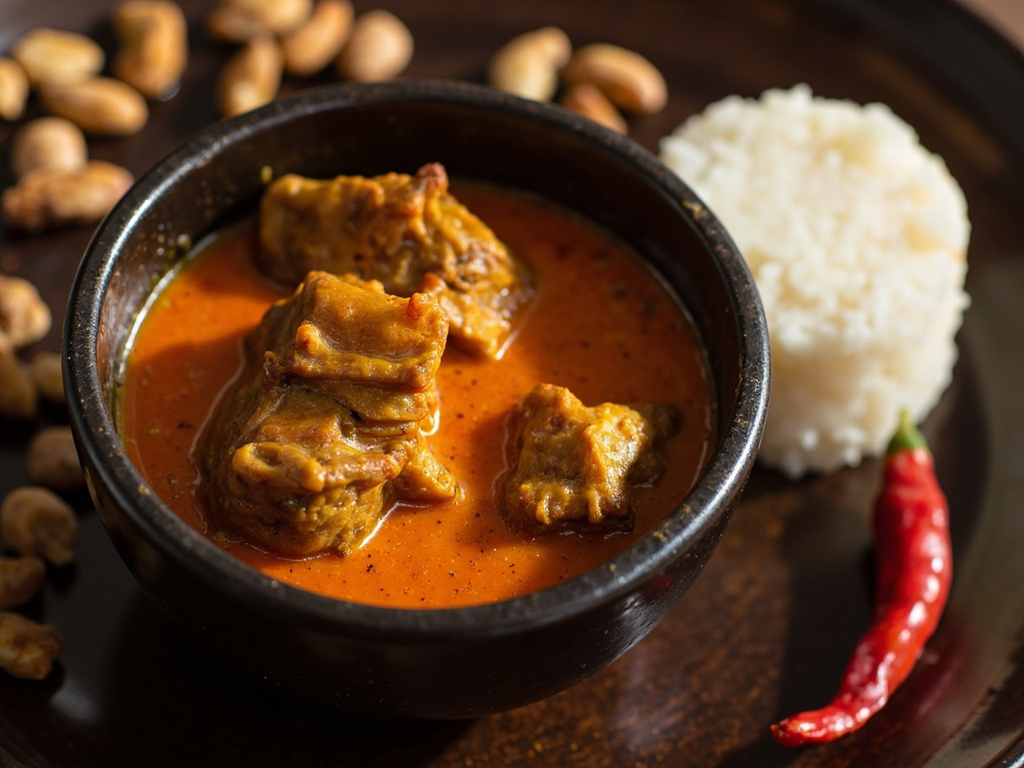
Chicken slowly simmered in a white coconut milk broth richly spiced — galangal, lemongrass, coriander, cumin — until the sauce thickens and coats each piece in a creamy, fragrant veil. Served with lontong (compressed rice) on special occasions.
Chicken slowly simmered in a white coconut milk broth richly spiced — galangal, lemongrass, coriander, cumin — until the sauce thickens and coats each piece in a creamy, fragrant veil. Served with lontong (compressed rice) on special occasions.
When my father, the regent, hosted a selamatan, the kitchen awakened well before dawn. The scent of fresh coconut mingled with pounded coriander filled the entire house. The opor had to simmer long, patiently — the women watched over the fire as one watches over a child. I, confined to my rooms by the rules of pingitan, inhaled these aromas through the half-open window. This dish tastes of celebration and, for me, of a freedom long denied me.
- •Free-range chicken — one whole chicken, cut up (main protein)
- •Fresh coconut milk (santan) — two coconuts, pressed (sauce)
- •Shallots — a handful (bumbu base)
- •Garlic — several cloves (bumbu base)
- •Galangal (laos) — a good piece (aromatic)
- •Lemongrass (serai) — two stalks (aromatic)
- •Salam leaves — three leaves (aromatic)
- •Kaffir lime leaves — a few leaves (aromatic)
- •Coriander seeds — one spoonful (spice)
- •Cumin seeds — half a spoonful (spice)
- •Candlenuts (kemiri) — a few nuts (thickener)
- •Palm sugar (gula Jawa) — a small piece (balance)
- •Salt — to taste (seasoning)
Opor ayam
Chicken slowly simmered in a white coconut milk broth richly spiced — galangal, lemongrass, coriander, cumin — until the sauce thickens and coats each piece in a creamy, fragrant veil. Served with lontong (compressed rice) on special occasions.
Why this dish? Opor ayam is the quintessential Javanese festive dish, prepared for selamatan (community ceremonies), weddings, and great occasions. In the family of the regent of Jepara, selamatan punctuated social life. Kartini, who lamented that young priyayi girls were confined precisely during these festivities (the period of pingitan), saw these dishes prepared around her without always being able to participate in the celebrations.
When my father, the regent, hosted a selamatan, the kitchen awakened well before dawn. The scent of fresh coconut mingled with pounded coriander filled the entire house. The opor had to simmer long, patiently — the women watched over the fire as one watches over a child. I, confined to my rooms by the rules of pingitan, inhaled these aromas through the half-open window. This dish tastes of celebration and, for me, of a freedom long denied me.
Ingredients (period version)
- Free-range chicken — one whole chicken, cut up (main protein)
- Fresh coconut milk (santan) — two coconuts, pressed (sauce)
- Shallots — a handful (bumbu base)
- Garlic — several cloves (bumbu base)
- Galangal (laos) — a good piece (aromatic)
- Lemongrass (serai) — two stalks (aromatic)
- Salam leaves — three leaves (aromatic)
- Kaffir lime leaves — a few leaves (aromatic)
- Coriander seeds — one spoonful (spice)
- Cumin seeds — half a spoonful (spice)
- Candlenuts (kemiri) — a few nuts (thickener)
- Palm sugar (gula Jawa) — a small piece (balance)
- Salt — to taste (seasoning)
Ingredients
- Chicken thighs and drumsticks — 800 g (main protein)
- Canned coconut milk — 800 ml (2 cans) (sauce)
- Shallots — 6, sliced (bumbu base)
- Garlic — 4 cloves (bumbu base)
- Fresh galangal (or 1 tsp powder) — 4 cm, crushed (aromatic)
- Lemongrass — 2 stalks, crushed (aromatic)
- Bay leaves (salam substitute) — 3 leaves (aromatic)
- Kaffir lime leaves (or lime zest) — 4 leaves (aromatic)
- Ground coriander — 1 tbsp (spice)
- Ground cumin — 1 tsp (spice)
- Macadamia nuts (kemiri substitute) — 4, pounded (thickener)
- Palm sugar or brown sugar — 1 tbsp (balance)
- Salt — 1 tsp (seasoning)
Method
- Blend or pound the shallots, garlic, macadamia nuts, coriander, and cumin into a smooth paste (the bumbu).
- In a heavy casserole or pot, fry the spice paste over medium heat in a little oil for 3 to 4 minutes, until fragrant.
- Add the crushed galangal, lemongrass, bay leaves, and kaffir lime leaves. Stir for one minute.
- Add the chicken pieces and coat them with the spice paste.
- Pour in the coconut milk. Add the palm sugar and salt. Bring to a gentle boil.
- Reduce the heat and simmer uncovered for 45 to 50 minutes, stirring occasionally, until the chicken is very tender and the sauce is thick and creamy.
- Taste and adjust seasoning. The sauce should coat the pieces without being too reduced.
- Serve with white rice or, for a festive touch, with lontong (compressed rice cakes cooked in banana leaves).
How it was made : Opor ayam was always prepared in a kwali (terracotta pot) over a wood fire, which gave a very gentle and even cooking. The bumbu was pounded in a cobek (volcanic stone mortar), never cut with a knife — the pounded texture releases more essential oils from the spices. The chicken used was an ayam kampung, a village free-range chicken, with firmer and more flavorful meat than modern farmed chicken.
The contemporary twist : Serve in small individual white ceramic bowls, with a drizzle of virgin coconut oil as a finish and a few fresh coriander leaves, for a clean contemporary presentation.
Sources : Sri Owen, Indonesian Food and Cookery, 1986 · Heinz von Holzen & Lother Arsana, The Food of Indonesia, 1999
Raden Ajeng Kartini · Charactorium