 flip
flipQadid, Spiced Dried Lamb Strips
Qadid, Spiced Dried Lamb Strips
Why this dish? Before Hattin, before the recapture of Jerusalem, armies had to be fed while marching through desert and mountain. Dried meat — qadid — was the soldier's and caravaner's provision: light, durable, impervious to heat and the road.
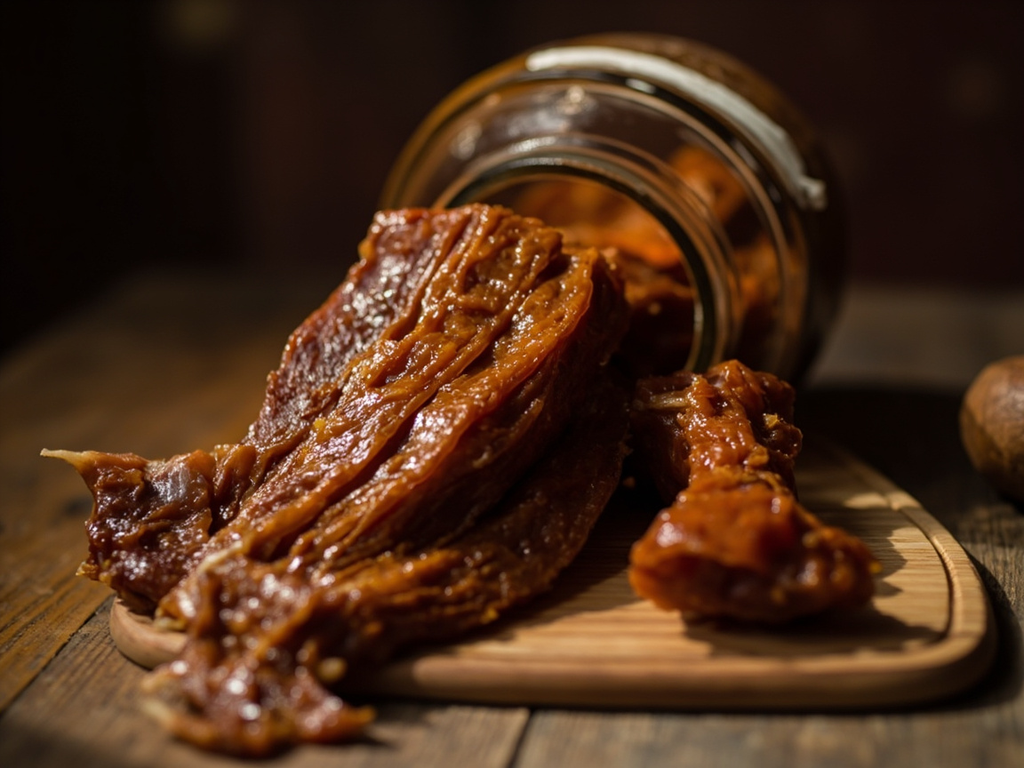
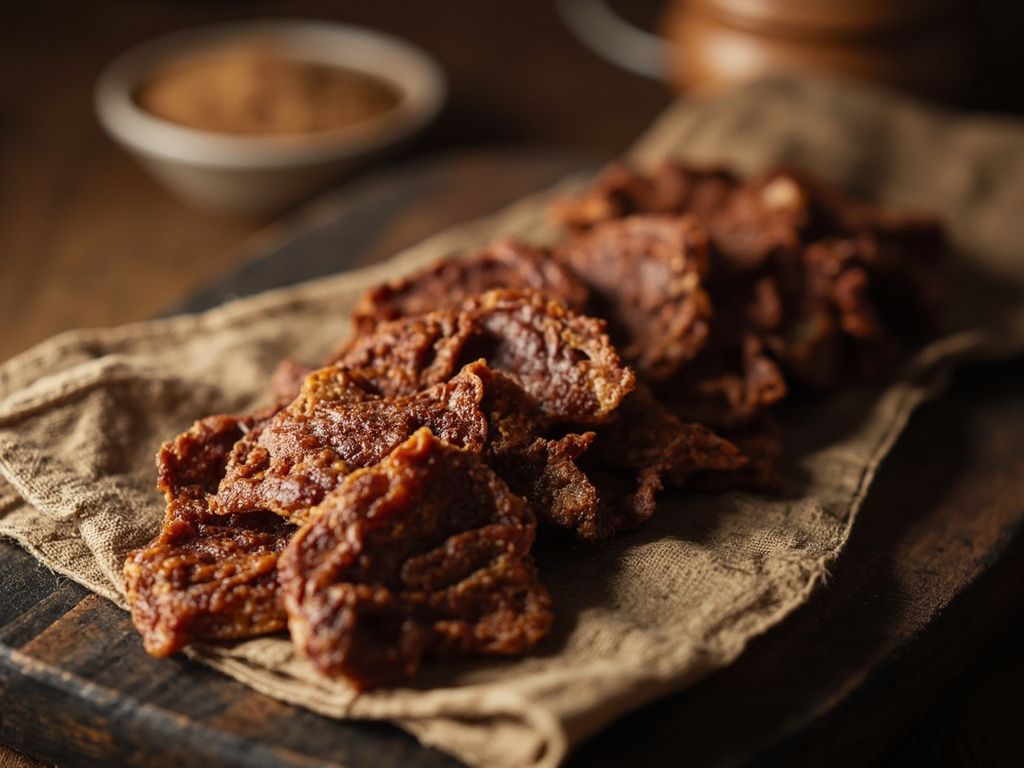
Thin lamb strips rubbed with salt and spices, then air-dried until hard and concentrated. Snacked on as is along the way, or rehydrated in a broth. The quintessential nomadic preserve.
An army does not march on its prayers alone, O you who have never camped in the desert. Before leading my horsemen to the Horns of Hattin, I ensured each man carried his share of qadid: the meat sliced thin, salted with full hands, rubbed with cumin and coriander, then offered to the dry wind until it hardened like leather. You chew it in the saddle, or throw it into boiling water to become soup again. Keep it in the shade and dry, and it will follow you from one moon to the next without ever betraying you.
- •Lean lamb or mutton — cut into thin strips (base)
- •Salt — in abundance (preservation)
- •Cumin and coriander — generously (spices and preservation)
- •Vinegar — a little (sanitize the meat)
Qadid, Spiced Dried Lamb Strips
Thin lamb strips rubbed with salt and spices, then air-dried until hard and concentrated. Snacked on as is along the way, or rehydrated in a broth. The quintessential nomadic preserve.
Why this dish? Before Hattin, before the recapture of Jerusalem, armies had to be fed while marching through desert and mountain. Dried meat — qadid — was the soldier's and caravaner's provision: light, durable, impervious to heat and the road.
An army does not march on its prayers alone, O you who have never camped in the desert. Before leading my horsemen to the Horns of Hattin, I ensured each man carried his share of qadid: the meat sliced thin, salted with full hands, rubbed with cumin and coriander, then offered to the dry wind until it hardened like leather. You chew it in the saddle, or throw it into boiling water to become soup again. Keep it in the shade and dry, and it will follow you from one moon to the next without ever betraying you.
Ingredients (period version)
- Lean lamb or mutton — cut into thin strips (base)
- Salt — in abundance (preservation)
- Cumin and coriander — generously (spices and preservation)
- Vinegar — a little (sanitize the meat)
Ingredients
- Lean lamb leg — 500 g (base)
- Fine salt — 3 tbsp (preservation)
- Ground cumin — 1 tbsp (spice)
- Ground coriander — 1 tbsp (spice)
- Wine vinegar — 2 tbsp (sanitize)
- Dried garlic powder (optional) — 1 tsp (flavor)
Method
- Slice the lamb into very thin strips (easier if the meat is half-frozen).
- Mix salt, spices, and vinegar, and massage the strips thoroughly with this mixture.
- Let rest in the refrigerator for 12 hours, then pat dry carefully.
- Dry in a dehydrator (60 °C) or in an oven with the door ajar (70 °C) for 6 to 10 hours, until the meat is firm and dry but pliable.
- Store in a cloth or jar in a dry place. Snack as is or rehydrate for a few minutes in hot broth.
How it was made : Meat drying (qadid) is a very ancient technique throughout the Mediterranean and Near East, essential before refrigeration. In the 12th century, meat was dried in the sun and dry wind, heavily salted and spiced to prevent spoilage. Armies and caravans depended on it for long marches.
The contemporary twist : Crumble the qadid into shavings over warm hummus with a drizzle of olive oil: an "Oriental jerky" version for appetizers.
Sources : Lilia Zaouali, L'Islam à table. Du Moyen Âge à nos jours, La Découverte, 2004 · Charles Perry (trad.), A Baghdad Cookery Book, Prospect Books, 2005
Saladin · Charactorium