 flip
flipIsland olives in herb brine
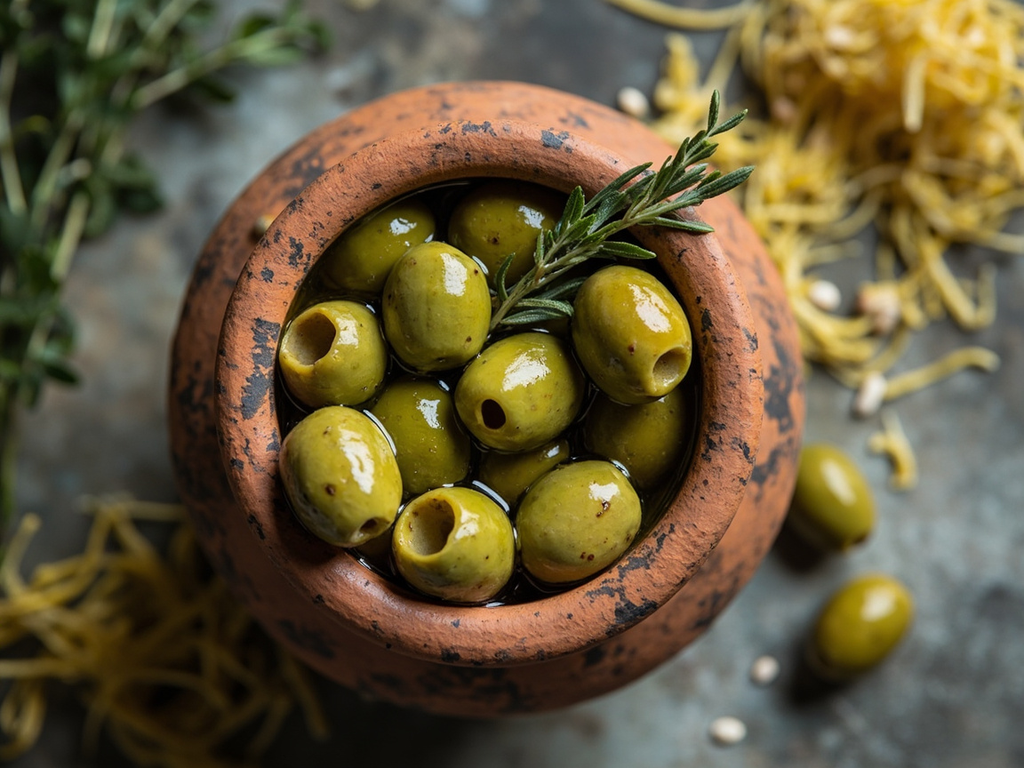
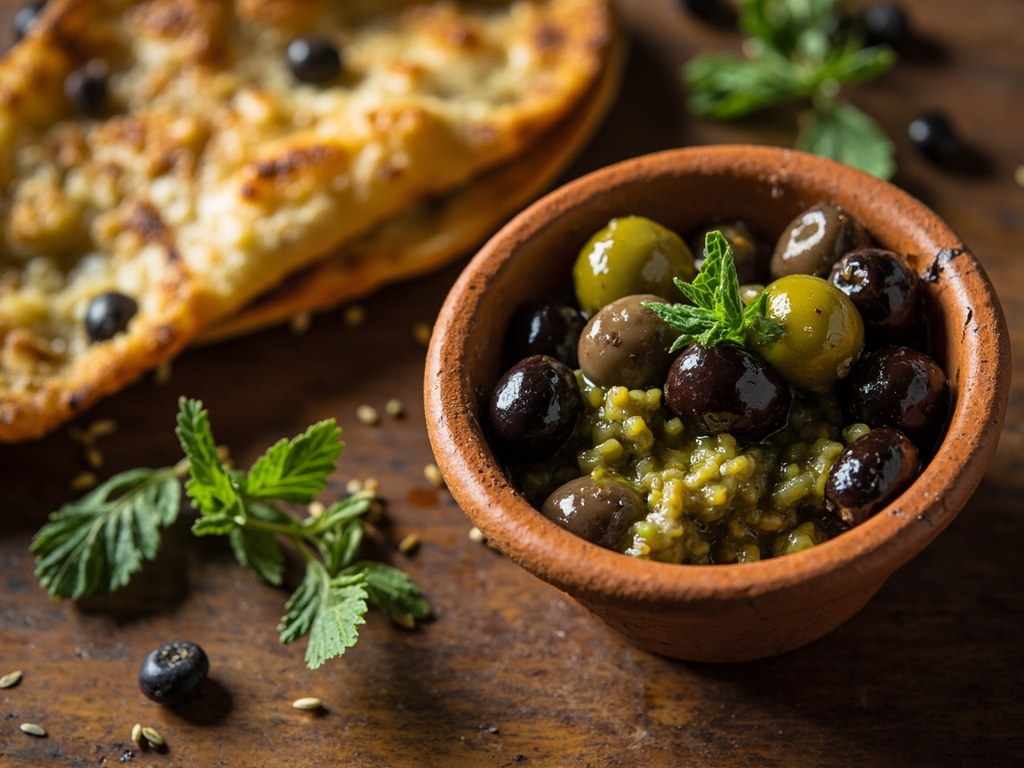
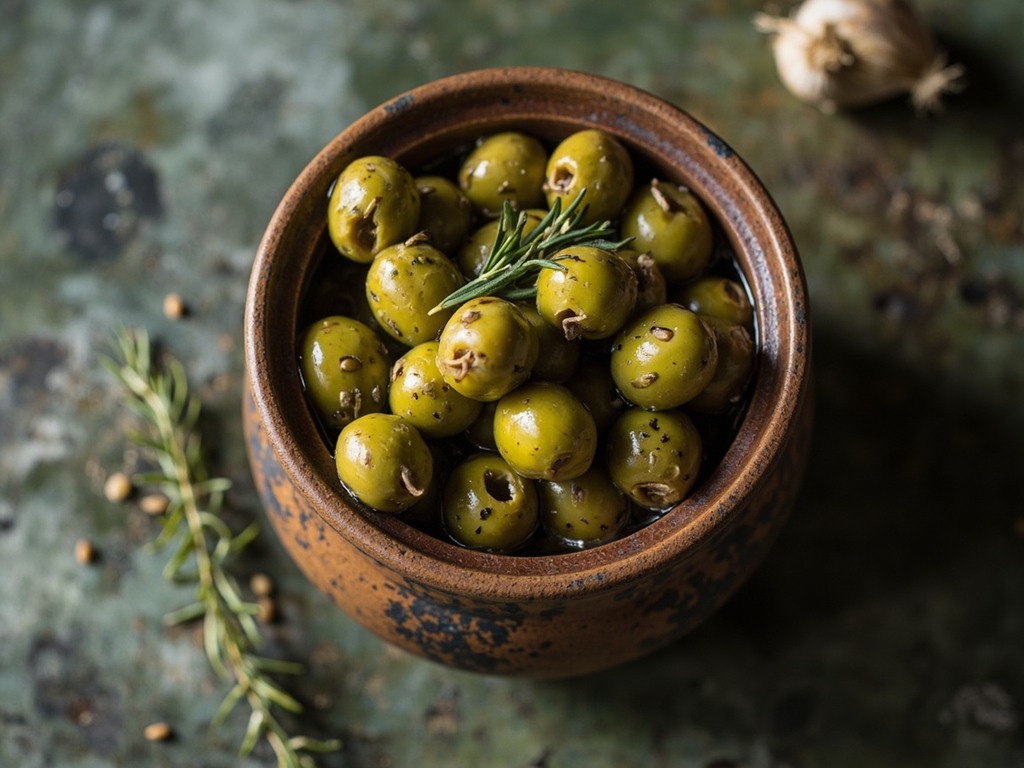
Island olives in herb brine
Why this dish? The olive tree is the tree of Greece, and Lesbos oil enriches every dish of Sappho. Olives preserved in brine keep all year: the discreet pantry reserve that accompanies maza and wine, present at every Aegean table, modest or aristocratic.
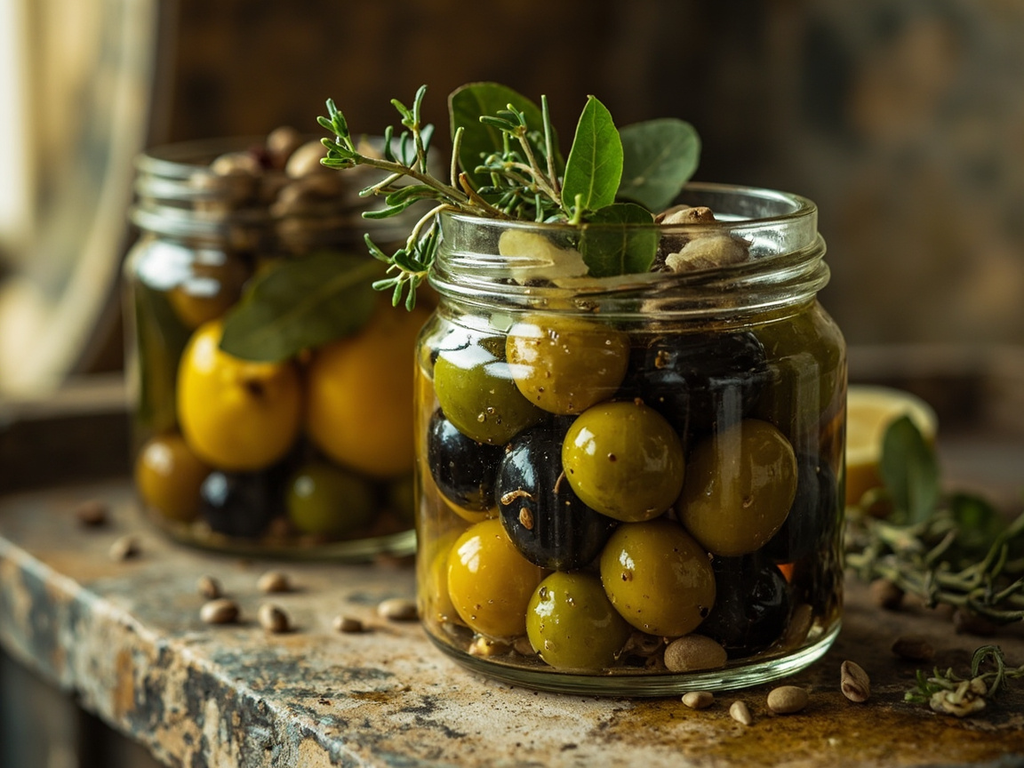
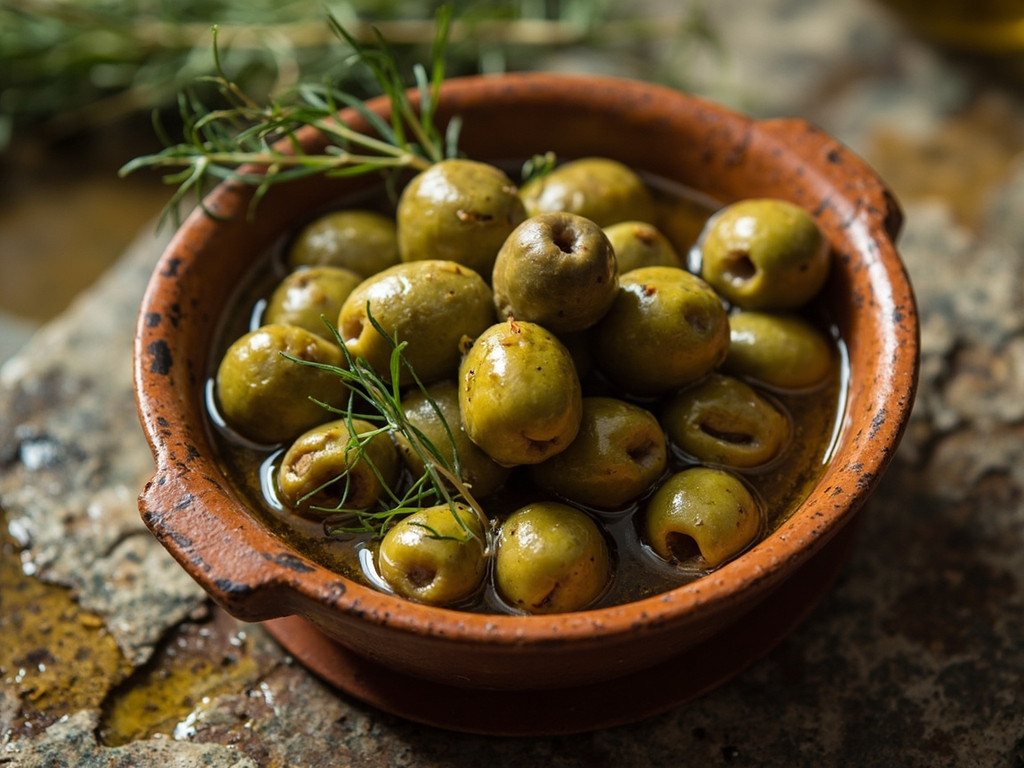
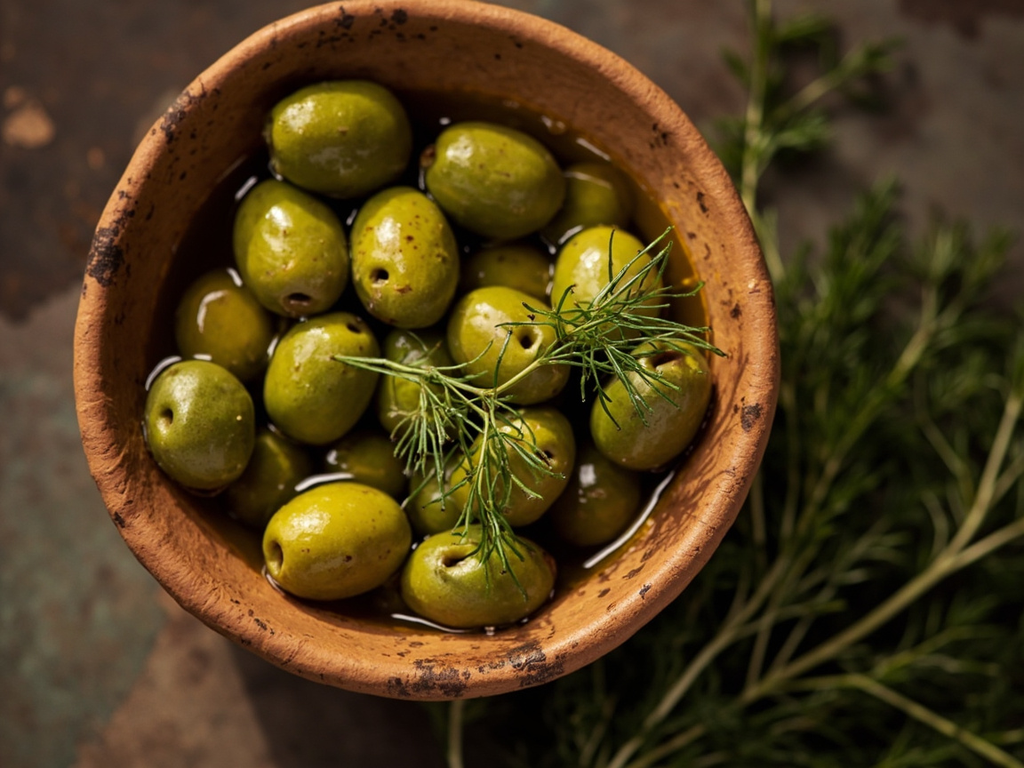
Olives split and long soaked to remove bitterness, preserved in a brine perfumed with herbs and fennel seeds: bitter, salty, alive, they keep for months and enliven the simplest meal.
Patience, my guest: the olive does not give itself quickly. I split each fruit, I bathe and rebathe it in spring water to drive out its bitterness, for days on end, then I lay it in brine with fennel and herbs from our hills. Thus kept, they wait in the jar for winter, and when the sea roars and no fisherman goes out, they still enliven our barley cake and call for a cup of wine.
- •Fresh island olives — full jar (base)
- •Spring water — abundant, renewed (leaching bitterness)
- •Sea salt — enough for brine (preservation)
- •Fennel seeds and herbs (oregano, thyme) — to taste (aromatics)
Island olives in herb brine
Olives split and long soaked to remove bitterness, preserved in a brine perfumed with herbs and fennel seeds: bitter, salty, alive, they keep for months and enliven the simplest meal.
Why this dish? The olive tree is the tree of Greece, and Lesbos oil enriches every dish of Sappho. Olives preserved in brine keep all year: the discreet pantry reserve that accompanies maza and wine, present at every Aegean table, modest or aristocratic.
Patience, my guest: the olive does not give itself quickly. I split each fruit, I bathe and rebathe it in spring water to drive out its bitterness, for days on end, then I lay it in brine with fennel and herbs from our hills. Thus kept, they wait in the jar for winter, and when the sea roars and no fisherman goes out, they still enliven our barley cake and call for a cup of wine.
Ingredients (period version)
- Fresh island olives — full jar (base)
- Spring water — abundant, renewed (leaching bitterness)
- Sea salt — enough for brine (preservation)
- Fennel seeds and herbs (oregano, thyme) — to taste (aromatics)
Ingredients
- Fresh green olives (untreated) — 500 g (base)
- Water — to cover, changed daily (leaching)
- Sea salt — 100 g per liter of water (brine) (preservation)
- Fennel seeds, oregano, thyme, garlic — to taste (aromatics)
- Wine vinegar — a splash (acidity and preservation)
Method
- Split or score each green olive.
- Cover them with cold water and change the water daily for 8–10 days to remove bitterness (taste to check).
- Prepare a brine: 100 g salt per liter of water, boiled and cooled.
- Drain the olives, pack them in a jar with herbs, fennel and garlic, cover with brine and a splash of vinegar.
- Seal and let rest in a cool place for at least 3–4 weeks before eating; keeps for several months.
How it was made : Raw olives were leached of their very bitter oleuropein by repeatedly changing the water, then preserved in brine, sometimes with vinegar or oil. This technique, attested since antiquity, made olives a year-round staple, essential in a maritime city with harsh winters.
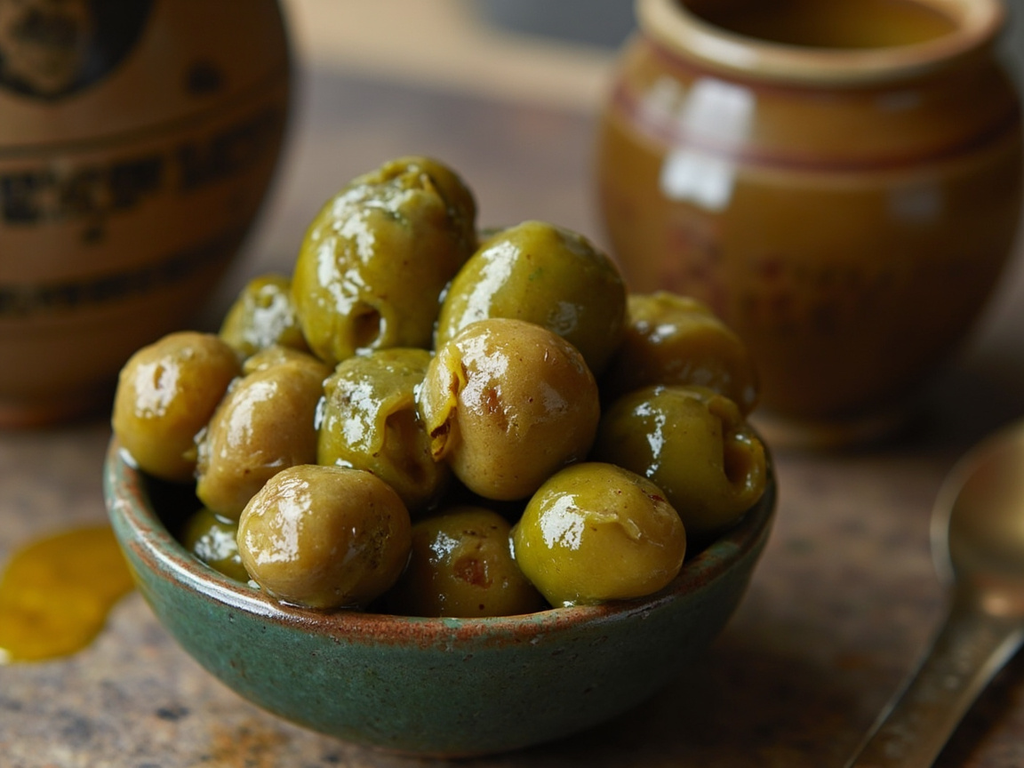
The contemporary twist : Serve as a modern meze, warm olives reheated with citrus zest and thyme, alongside shards of grilled maza.
Sappho · Charactorium