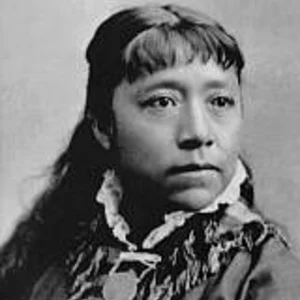

A Paiute activist and author from Nevada, Sarah Winnemucca defended the rights of her Native American people in the face of American colonization. In 1883, she became the first Native American woman to publish a book in English, a major testimony on the condition of Indigenous nations.
Sarah Winnemucca(1844 — 1891)
Sarah Winnemucca
États-Unis
7 min read
Frequently asked questions
Key Facts
- Born around 1844 in northwestern Nevada among the Northern Paiute people
- Served as an interpreter and mediator between the Paiutes and the U.S. Army during the Indian Wars of the 1860s and 1870s
- Gave numerous lectures on the East Coast to denounce the treatment of Native Americans on the reservations
- Published in 1883 “Life Among the Piutes: Their Wrongs and Claims,” the first book written in English by a Native American woman
- Died in 1891 in Montana after founding a school for Paiute children
Works & Achievements
The first book published in English by a Native American woman; a landmark account of Paiute life and reservation policy.
From San Francisco to the major cities of the East, she alerted the public to the plight of her people and became one of the first celebrated Native American women orators.
In the service of General Howard, she translated, carried messages, and organized the rescue of her father, who was being held prisoner.
Received in Washington, she pleaded directly with the federal government to secure land and better conditions for the Paiutes.
She gathered thousands of signatures to demand outright land ownership for the Paiutes, securing the passage of a bill that was never carried out.
A school she opened near Lovelock, Nevada, where she taught Paiute children in their own language and in English—a rare model of bilingual education for the time.
Anecdotes
When Sarah was very little, a rumor was going around among the Paiutes that the white settlers ate Indians. One day, as white men were approaching, her relatives buried the children up to their necks and covered their faces with sage leaves to hide them. Left under the earth for hours, terrified at the thought of being dug up and eaten, she later recounted this scene in her book.
Her grandfather Truckee, who had guided American explorers, carefully kept a letter of recommendation that some white men had given him. Convinced that this paper could “speak” for him and prove his friendship, he called it his “rag friend” and proudly showed it to everyone he met.
During the Bannock War, in 1878, Sarah served as a scout and interpreter for the U.S. Army. At the risk of her life, she rode more than one hundred and fifty kilometers on horseback through hostile territory to free her father and other Paiutes held prisoner by Bannock fighters.
To move audiences in the great cities of the East, Sarah gave nearly three hundred lectures dressed in a fringed buckskin gown, presented under the name “Princess Sarah.” On stage, she skillfully denounced the misery inflicted on her people on the reservations.
In 1883, she became the first Native American woman to publish a book in English. Her memory is honored today by a statue in her likeness that represents the State of Nevada in the United States Capitol, in the National Statuary Hall, since 2005.
Primary Sources
I was born somewhere about 1844, but I am not sure of the precise time. I was a very small child when the first white people came into our country. They came like a lion, yes, like a roaring lion, and have continued so ever since, and I have never forgotten their first coming.
Oh, can any one imagine my feelings buried alive, thinking every minute that I was to be unburied and eaten up by the people that my grandfather loved so much?
It is the first outbreak of the American Indian in human literature, and has a single aim — to tell the truth as this woman saw it with her own eyes.
Key Places
Territory of the Northern Paiute where Sarah was born around 1844, in a Great Basin still little affected by colonization.
Nevada Paiute reservation where part of her family and her people lived, marked by the Pyramid Lake War in 1860.
Reservation where Sarah worked as an interpreter for the Indian agent and witnessed firsthand the abuses of the administration.
Federal capital where she traveled in 1880 to meet President Hayes and plead the Paiute cause, then present her petition to Congress.
Center of her lecture tours in the East, where her supporters Elizabeth Peabody and Mary Mann helped her publish her book in 1883.
Place where Sarah Winnemucca died in 1891, at her sister's home, near Henry's Lake, after withdrawing from public life.
Typical Objects
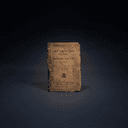
An autobiography and political appeal published in 1883, the first book written in English by a Native American woman. It blends life story, ethnography of her people, and a denunciation of the injustices they suffered.

A fringed and ornamented deerskin outfit she wore on stage during her lectures. Presented as the costume of an “Indian princess,” it captured the imagination of Eastern audiences.

A document covered with thousands of signatures that she carried to Washington to demand land and freedom for the Paiutes. A symbol of her peaceful political struggle.

A finely woven basket made from willow strands, used to gather, winnow, and carry seeds. Paiute women made them for everyday life.

Rich, nourishing seeds from the pinyon pine, harvested in autumn during great gathering expeditions. They were a staple food of the Great Basin Paiutes.

A cloak or blanket made from twisted, woven strips of rabbit fur, providing protection against the cold desert winters. A traditional Paiute garment.
School Curriculum
Vocabulary & Tags
Key Vocabulary
Tags
Daily Life
Morning
In her Paiute childhood, the morning began with the extended family gathered around the fire, before setting out to gather seeds, fish, or hunt small game. As a committed adult, Sarah often spent her mornings translating, writing letters, or preparing her speeches.
Afternoon
As a child, the afternoon was devoted to gathering pine nuts, weaving baskets, or moving the camp with the seasons. During her years of activism, she met with Indian agents, officers, or influential supporters to defend the cause of her people.
Evening
In the evening, the Paiutes gathered to share a meal, tell stories, and pass on their knowledge. On her speaking tours, Sarah took the stage before audiences of Easterners, denouncing in English the injustices endured by Native nations.
Food
The Great Basin Paiute diet relied on pine nuts, wild seeds, roots, lake fish, and game such as hare and duck. During her travels in the East, Sarah discovered the cuisine of American cities.
Clothing
In daily life, people wore skin garments and rabbit-fur blankets suited to the desert climate. For her lectures, Sarah donned an ornate, fringed buckskin dress, presenting herself under the name “Princess Sarah.”
Housing
The Northern Paiutes lived in dome-shaped huts called karnee (wickiups), made of a willow frame covered with rushes and grasses, easy to assemble as they moved with the seasons. On the reservations and during her travels, Sarah also came to know the settlers' wooden houses.
Historical Timeline
Period Vocabulary
Liens externes & ressources
Références
Œuvres
Life Among the Piutes: Their Wrongs and Claims
1883
Tournées de conférences (env. 300 discours)
1879-1884
Service d'interprète et d'éclaireuse pendant la guerre des Bannocks
1878
Rencontre avec le président Hayes
1880
Pétition au Congrès
1884
Peabody Indian School
1885