 flip
flipMaza, the barley cake of the sage
Maza, the barley cake of the sage
Why this dish? Maza is the daily bread of the Greeks of Ionia, and even more so of the philosophers who pride themselves on frugality. Thales, counted among the Seven Sages for his measure, ate this barley staple like any Milesian: simple, quickly kneaded, without an oven — the food of a man who preferred to scan the sky than to fuss over his table.
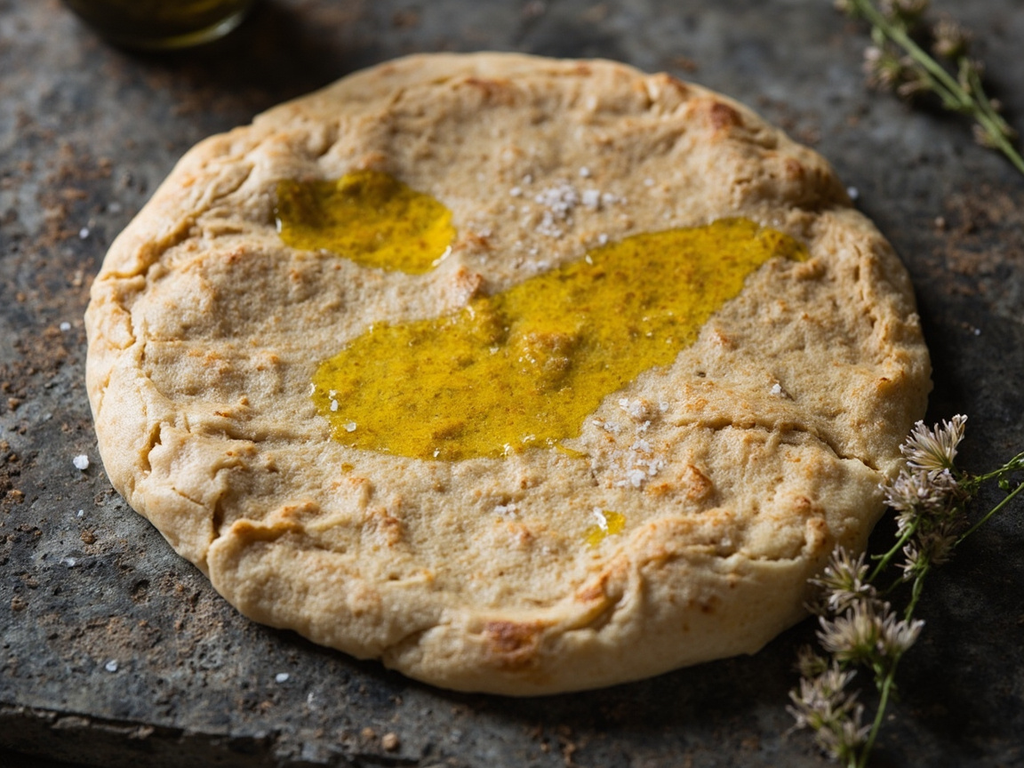
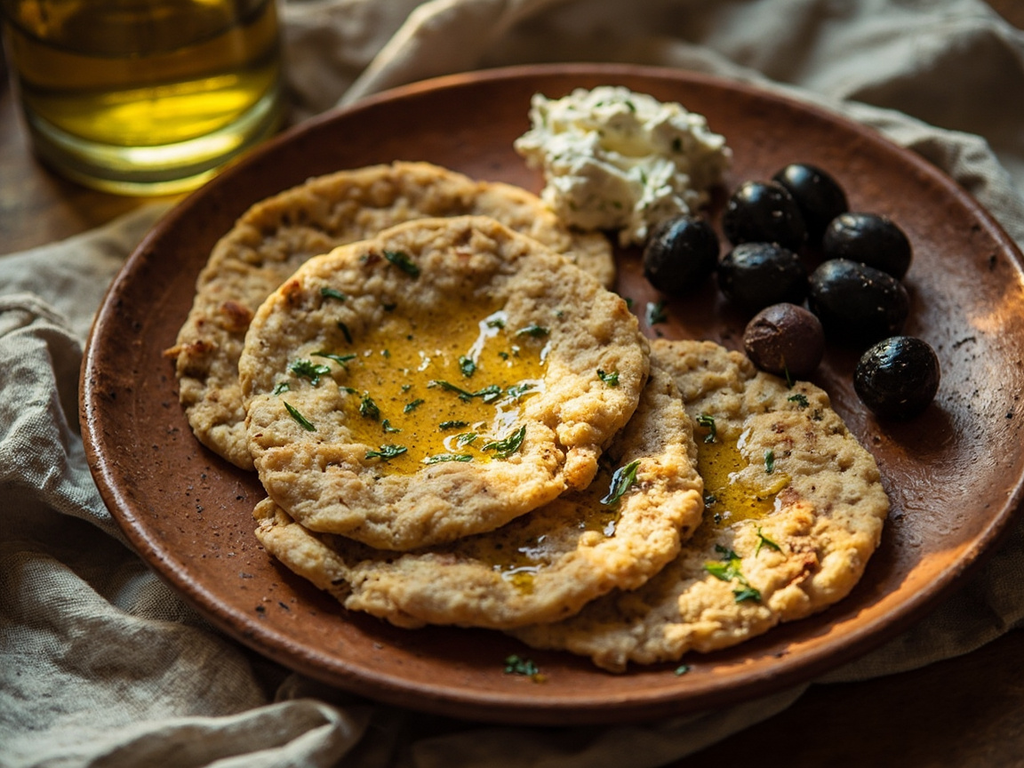
A dense cake of toasted and ground barley, barely bound with water and oil, scented with a little thyme. It is not always cooked: often it is kneaded raw and left to dry, ready to be dipped in wine or oil.
Come closer, passer-by, and seek no king's fare here. I toast my barley as the women of Miletus taught me, then crush it fine on the stone — alphita we call it. A little water from our spring, a drizzle of green oil from our olive trees, a pinch of thyme from the hills, and the cake fits in the palm. See: he who knows how little the body needs already has the leisure to measure the stars. Eat, and keep your spirit light.
- •Toasted barley flour (alphita) — two handfuls (base)
- •Spring water — enough to bind (binder)
- •Olive oil — a drizzle (binder and flavor)
- •Dried thyme — a pinch (aromatic)
- •Sea salt — a pinch (seasoning)
Maza, the barley cake of the sage
A dense cake of toasted and ground barley, barely bound with water and oil, scented with a little thyme. It is not always cooked: often it is kneaded raw and left to dry, ready to be dipped in wine or oil.
Why this dish? Maza is the daily bread of the Greeks of Ionia, and even more so of the philosophers who pride themselves on frugality. Thales, counted among the Seven Sages for his measure, ate this barley staple like any Milesian: simple, quickly kneaded, without an oven — the food of a man who preferred to scan the sky than to fuss over his table.
Come closer, passer-by, and seek no king's fare here. I toast my barley as the women of Miletus taught me, then crush it fine on the stone — alphita we call it. A little water from our spring, a drizzle of green oil from our olive trees, a pinch of thyme from the hills, and the cake fits in the palm. See: he who knows how little the body needs already has the leisure to measure the stars. Eat, and keep your spirit light.
Ingredients (period version)
- Toasted barley flour (alphita) — two handfuls (base)
- Spring water — enough to bind (binder)
- Olive oil — a drizzle (binder and flavor)
- Dried thyme — a pinch (aromatic)
- Sea salt — a pinch (seasoning)
Ingredients
- Barley flour — 150 g (base)
- Warm water — 80 to 100 ml (binder)
- Extra virgin olive oil — 2 tbsp (binder and flavor)
- Dried thyme — 1 tsp (aromatic)
- Salt — 1 pinch (seasoning)
Method
- If the barley flour is not toasted, dry-toast it in a pan for a few minutes until it smells nutty, then let cool.
- Mix the flour, salt, and thyme. Add the oil, then the water little by little, kneading until you get a firm but pliable dough.
- Shape two thick cakes in your palm. For the traditional raw version, let them dry for 30 minutes and eat as is, dipped in oil.
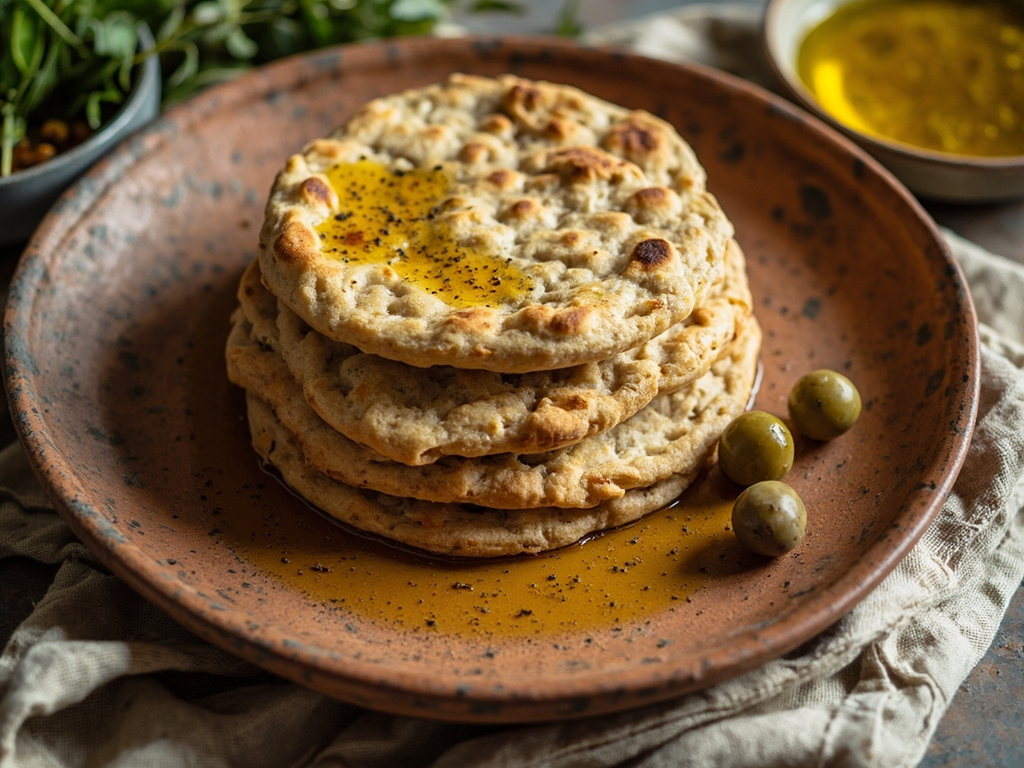
- For a cooked version, place on a hot griddle or dry pan for 4 to 5 minutes each side, until they color.
How it was made : Barley was the dominant grain of Archaic Greece, less demanding than wheat. It was toasted before grinding (hence the name alphita), which made it digestible without long cooking. Maza was often eaten uncooked, simply moistened — a food of peasants, soldiers, and philosophers.
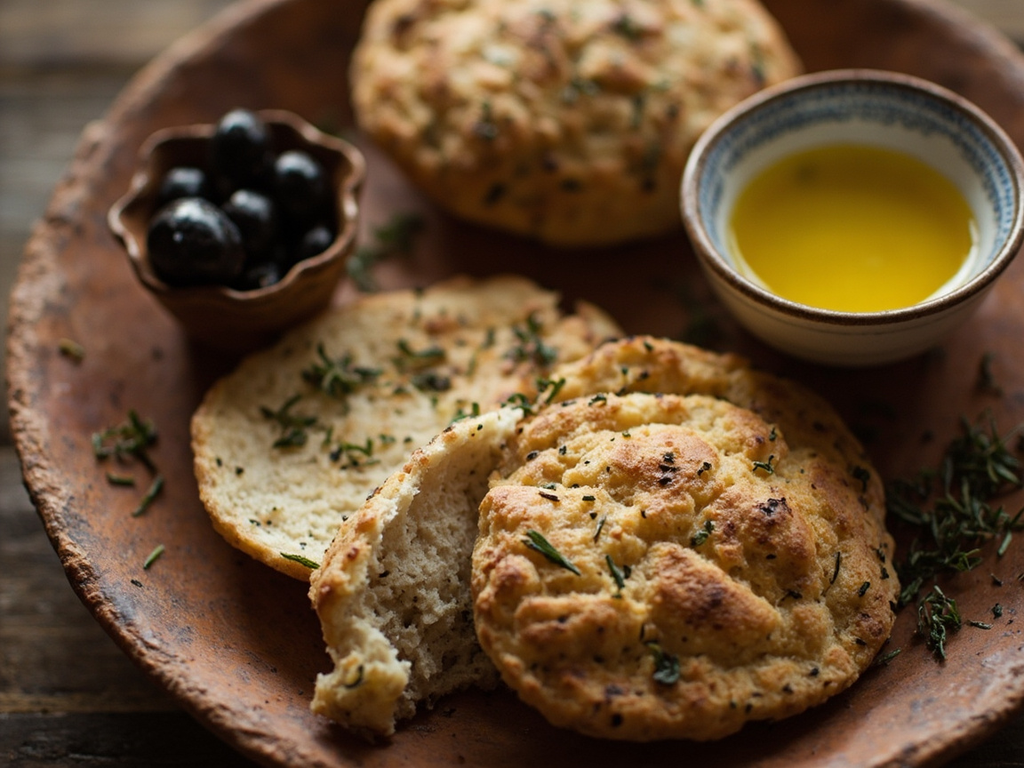
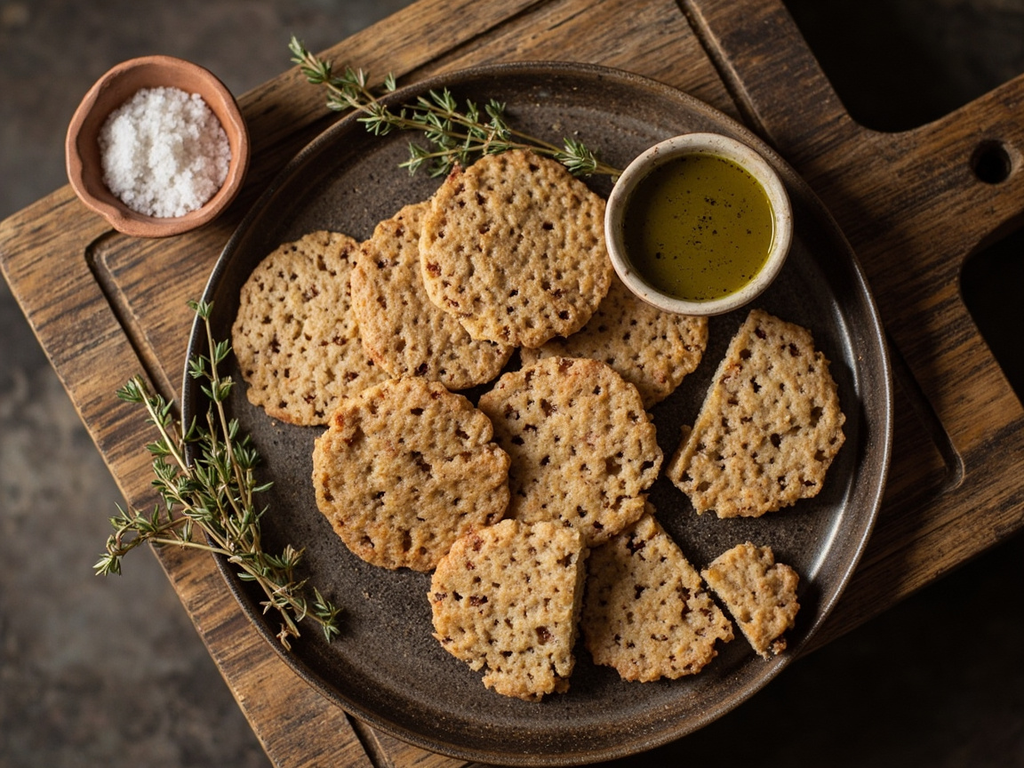
The contemporary twist : Serve the maza broken into pieces on an olive wood board, with a bowl of new oil and a small dish of coarse salt: a 'sage's bread' to share as an appetizer.
Thales · Charactorium