 flip
flipPuls, the Original Spelt Porridge
Puls, the Original Spelt Porridge
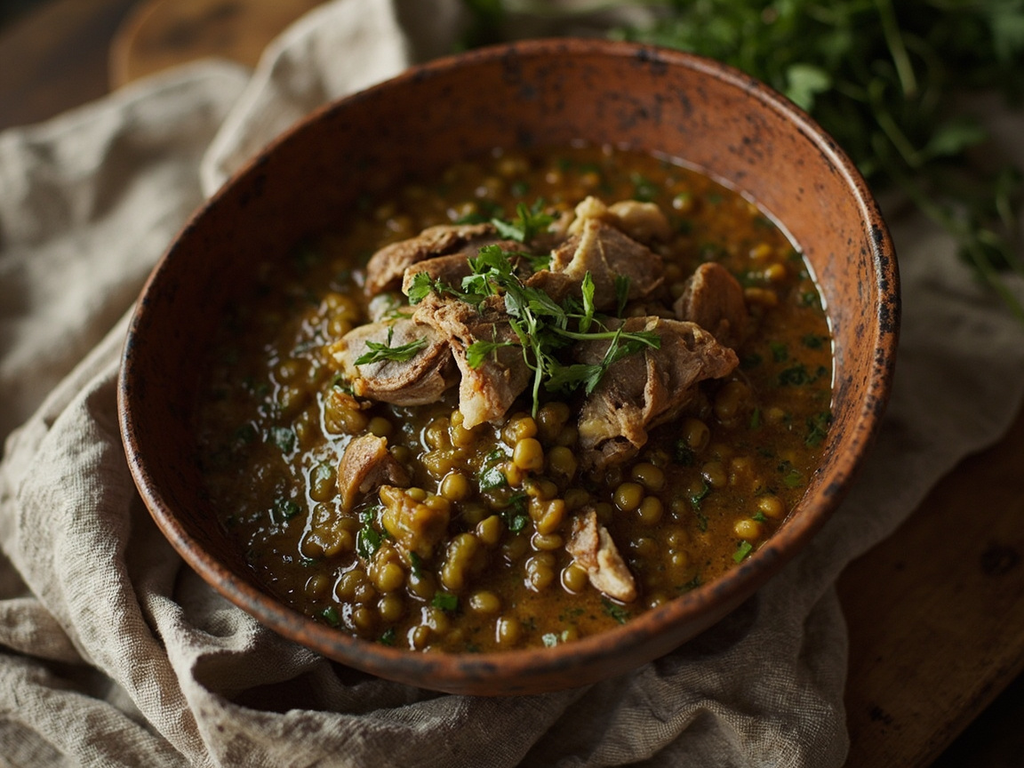
Why this dish? Puls, a spelt porridge, was the national dish of the Romans before bread took over — so much so that Romans were nicknamed 'pultiphagi' (porridge-eaters). Economical, nourishing, and easy to prepare on the road, it accompanied journeys; Virgil, who traveled Italy from Mantua to Naples and even to Greece, knew this frugal staple of the Latin table.
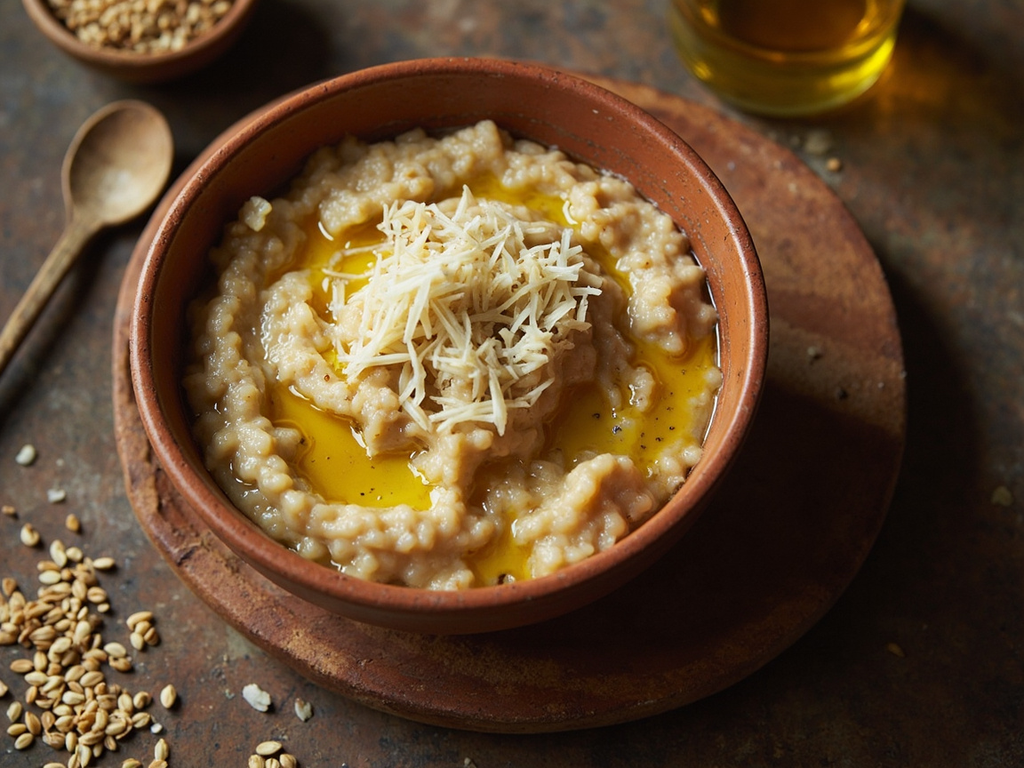
A thick, comforting porridge of crushed spelt, cooked in salted water, enriched with olive oil, cheese, and a dash of garum. The oldest and humblest dish of Rome.
Before bread, reader, there was puls: our ancestors, those sturdy farmers, had no other meal than this spelt porridge cooked in the pot. You salt it, pour a trickle of oil, grate a little cheese on top — and there you have enough to walk a whole day on the roads of Italy. The Greeks mocked us, calling us 'porridge-eaters'; let them mock! From this modest grain grew the greatness of Rome, as the ear springs from the furrow I sing.
- •Crushed spelt (far) — one measure (base grain)
- •Water — three measures (cooking liquid)
- •Salt — to taste (seasoning)
- •Olive oil — a drizzle (fat)
- •Cheese — a little (garnish)
- •Garum — a few drops (umami (optional))
Puls, the Original Spelt Porridge
A thick, comforting porridge of crushed spelt, cooked in salted water, enriched with olive oil, cheese, and a dash of garum. The oldest and humblest dish of Rome.
Why this dish? Puls, a spelt porridge, was the national dish of the Romans before bread took over — so much so that Romans were nicknamed 'pultiphagi' (porridge-eaters). Economical, nourishing, and easy to prepare on the road, it accompanied journeys; Virgil, who traveled Italy from Mantua to Naples and even to Greece, knew this frugal staple of the Latin table.
Before bread, reader, there was puls: our ancestors, those sturdy farmers, had no other meal than this spelt porridge cooked in the pot. You salt it, pour a trickle of oil, grate a little cheese on top — and there you have enough to walk a whole day on the roads of Italy. The Greeks mocked us, calling us 'porridge-eaters'; let them mock! From this modest grain grew the greatness of Rome, as the ear springs from the furrow I sing.
Ingredients (period version)
- Crushed spelt (far) — one measure (base grain)
- Water — three measures (cooking liquid)
- Salt — to taste (seasoning)
- Olive oil — a drizzle (fat)
- Cheese — a little (garnish)
- Garum — a few drops (umami (optional))
Ingredients
- Crushed spelt or spelt semolina — 100 g (base grain)
- Water or broth — 40 cl (cooking liquid)
- Salt — 1 pinch (seasoning)
- Olive oil — 2 tablespoons (fat)
- Grated pecorino — 30 g (garnish)
- Nuoc-mâm (substitute for garum) — a few drops (umami (optional))
Method
- Bring the salted water (or broth) to a boil in a saucepan.
- Pour in the crushed spelt in a rain, stirring to avoid lumps.
- Cook over low heat for 20 to 30 minutes, stirring often, until thick porridge forms.
- Off the heat, stir in the olive oil and, if desired, a few drops of nuoc-mâm.
- Serve hot, sprinkled with grated pecorino.
How it was made : Puls was originally made with far (spelt), the only widely cultivated cereal in early Latium. It was eaten plain, salted, or enriched according to means (eggs, cheese, honey for a sweet version). It was both the food of the poor and the ritual offering (mola salsa).
The contemporary twist : Pour the warm porridge onto a tray, let it set, cut into diamonds, and grill: an 'ancient polenta' made from spelt.
Sources : Pliny the Elder, Natural History, book XVIII (on far and puls) · Cato the Elder, De agri cultura
Virgil · Charactorium