 flip
flipSalt-Cured Tuna in Oil with Fennel (the Sailors' salazón)
Salt-Cured Tuna in Oil with Fennel (the Sailors' salazón)
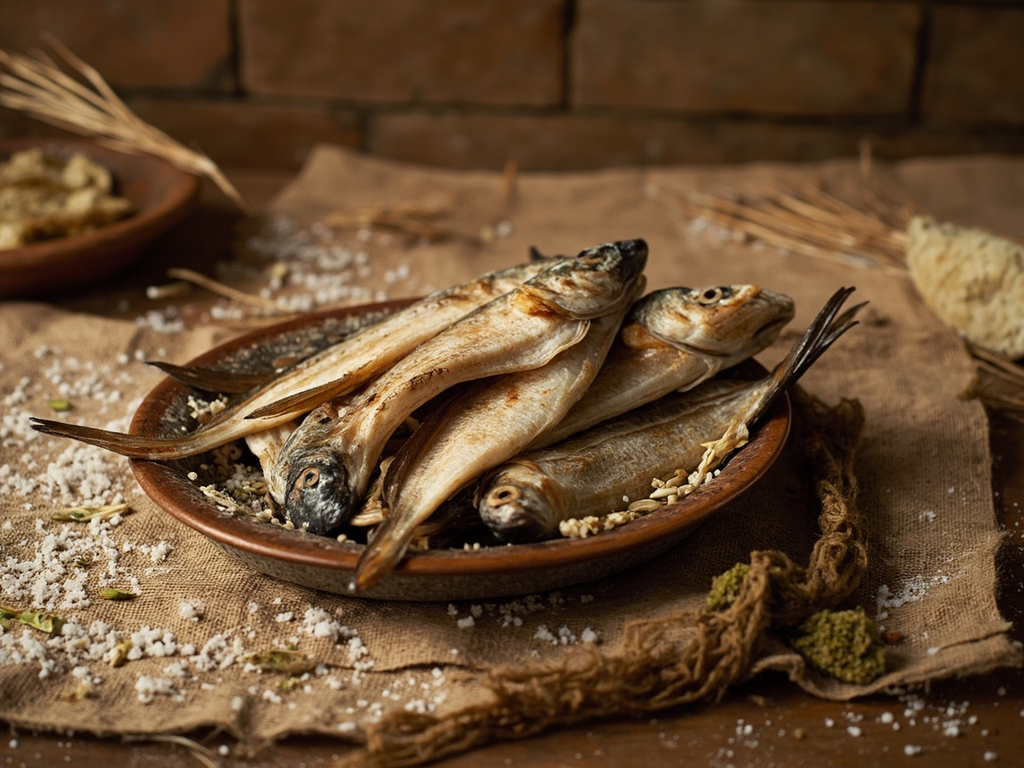
Why this dish? Dido did not cross the Mediterranean in a single bound: her Tyrian ships had to feed themselves for weeks. The salting of tuna and mackerel, a Phoenician skill par excellence, was the preserve that kept fleets going — and the fortune of Carthage's trading posts.
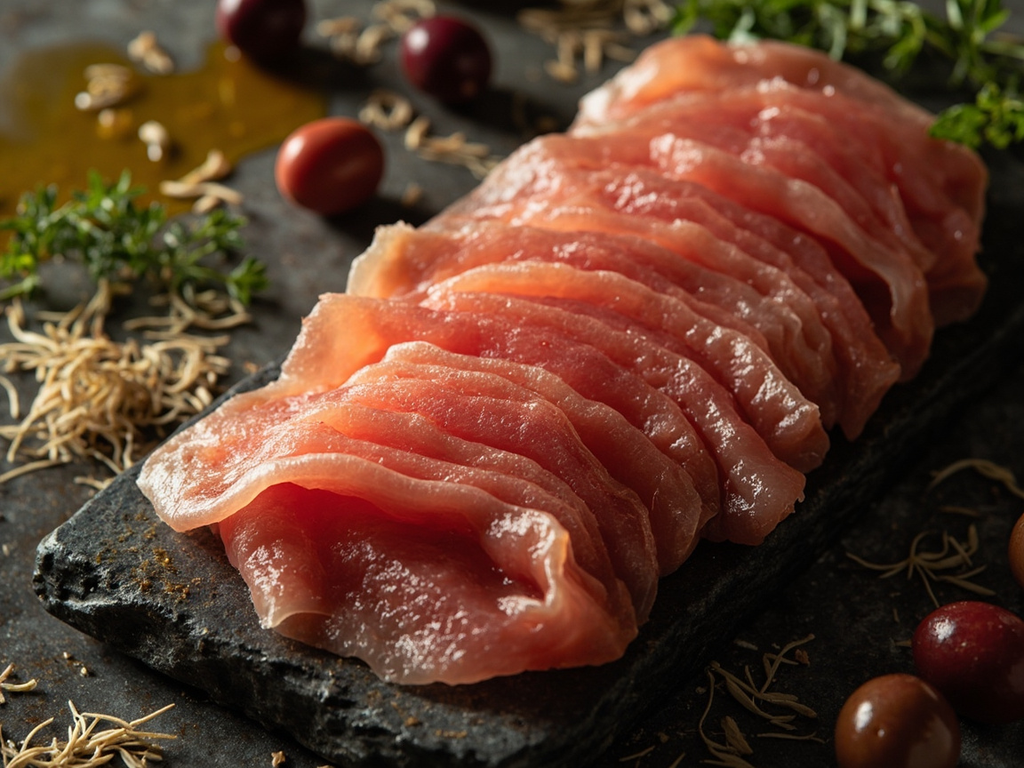
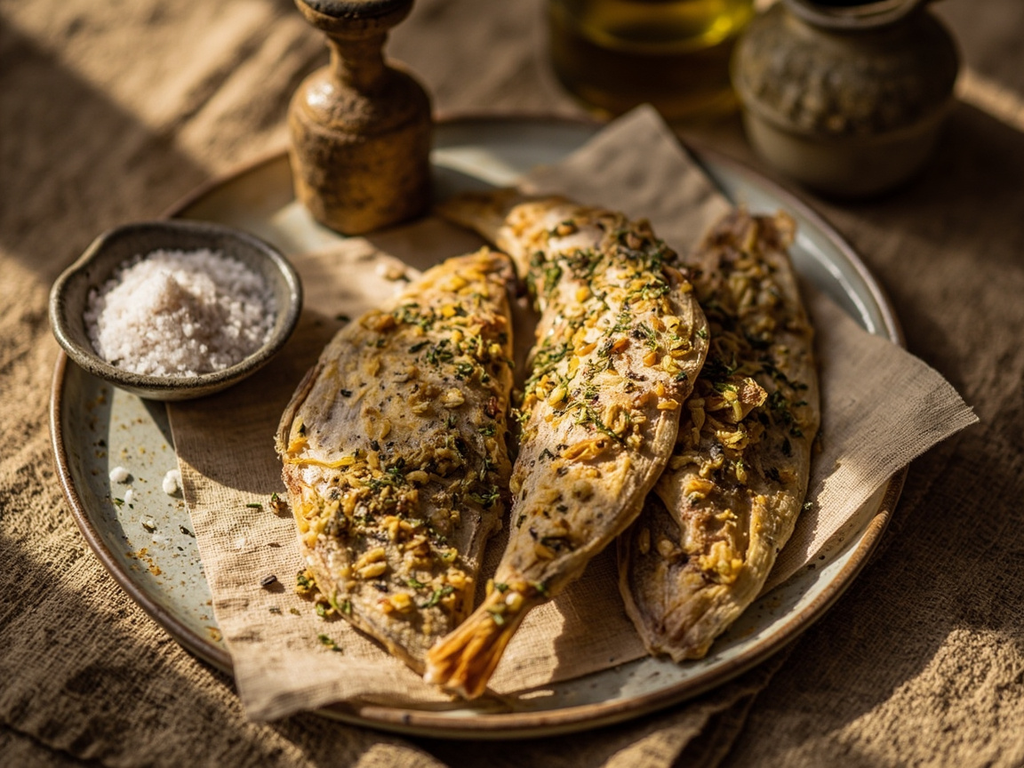
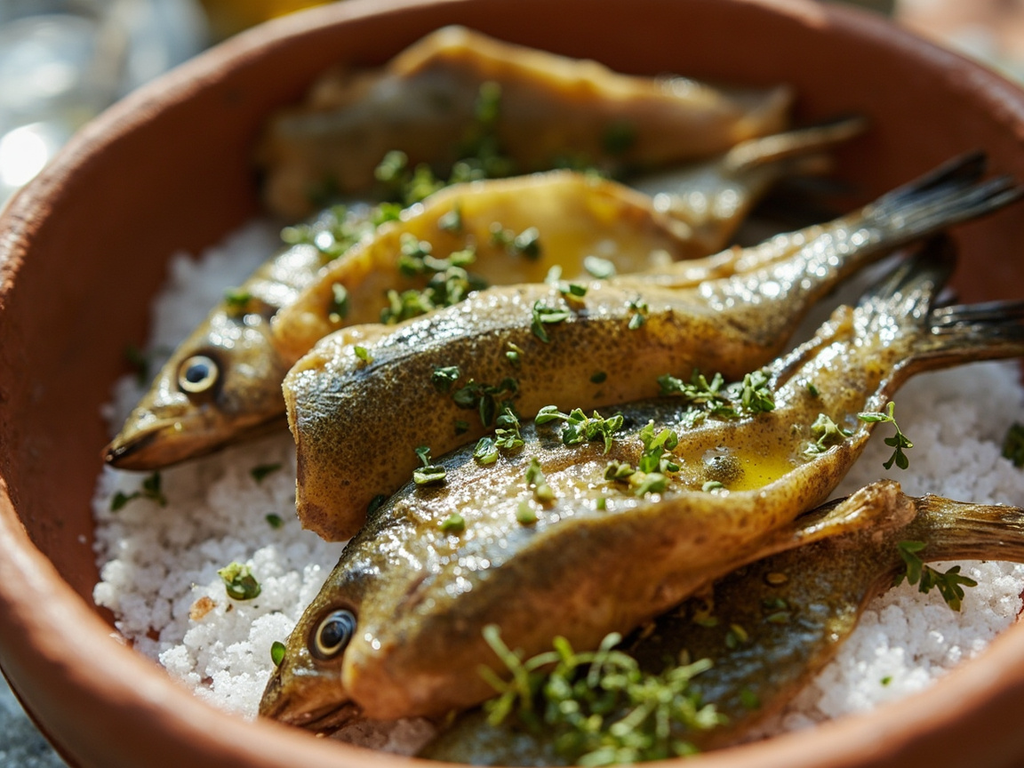
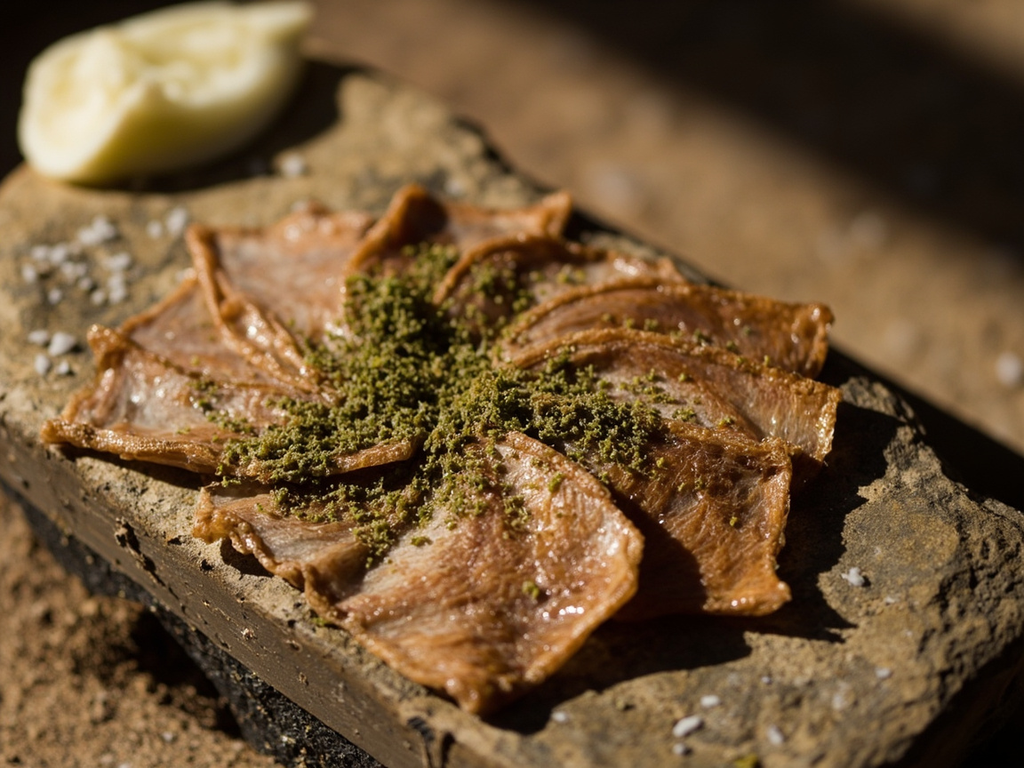
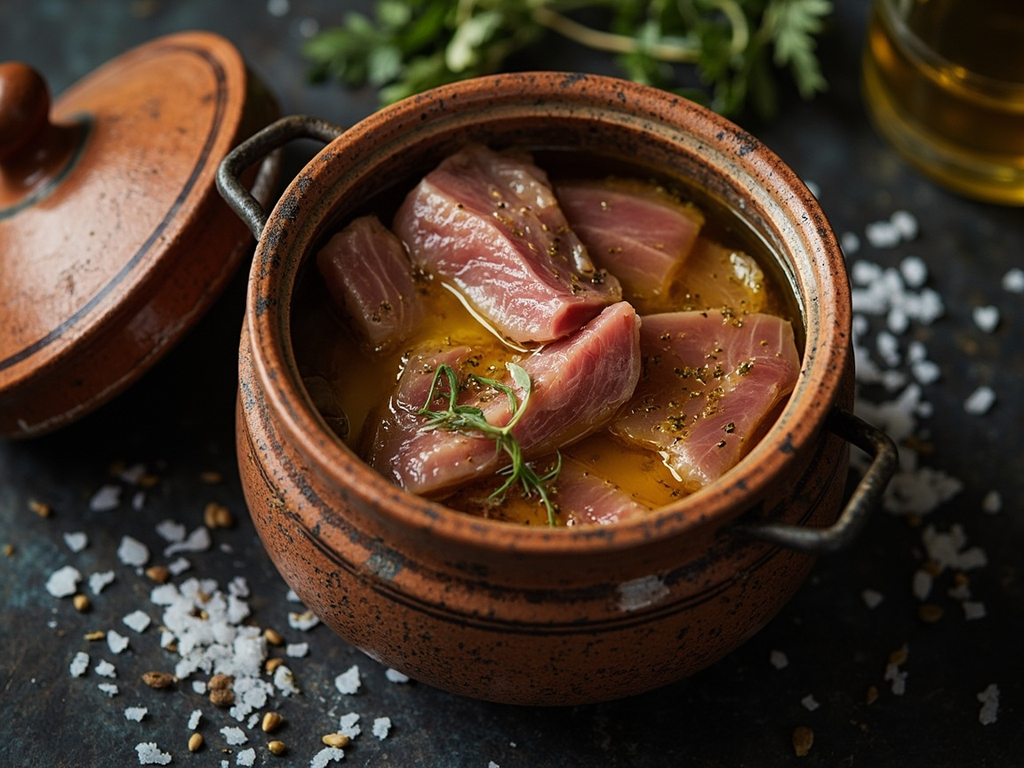
Tuna fillets salted then preserved under olive oil with fennel and coriander seeds. Salty, dense, ready to last — the preserve of Phoenician sailors that keeps and travels.
Do you think we cross the great sea on an empty stomach? My sailors carried the tuna that we had buried in salt until it became firm and dark, then drowned in oil, safe from the air. Take out a piece at sea, with a hunk of barley bread: it is the sea itself preserved, the taste of Tyre that followed me to this African coast.
- •Tuna (or mackerel) fillets — according to the catch (flesh to preserve)
- •Sea salt — in abundance (salting and preservation)
- •Olive oil — to cover (barrier and preservation)
- •Fennel and coriander seeds — a pinch (aroma)
Salt-Cured Tuna in Oil with Fennel (the Sailors' salazón)
Tuna fillets salted then preserved under olive oil with fennel and coriander seeds. Salty, dense, ready to last — the preserve of Phoenician sailors that keeps and travels.
Why this dish? Dido did not cross the Mediterranean in a single bound: her Tyrian ships had to feed themselves for weeks. The salting of tuna and mackerel, a Phoenician skill par excellence, was the preserve that kept fleets going — and the fortune of Carthage's trading posts.
Do you think we cross the great sea on an empty stomach? My sailors carried the tuna that we had buried in salt until it became firm and dark, then drowned in oil, safe from the air. Take out a piece at sea, with a hunk of barley bread: it is the sea itself preserved, the taste of Tyre that followed me to this African coast.
Ingredients (period version)
- Tuna (or mackerel) fillets — according to the catch (flesh to preserve)
- Sea salt — in abundance (salting and preservation)
- Olive oil — to cover (barrier and preservation)
- Fennel and coriander seeds — a pinch (aroma)
Ingredients
- Fresh tuna fillet (or mackerel) — 400 g (flesh to preserve)
- Coarse sea salt — 500 g (for coating) (salting)
- Extra virgin olive oil — approx. 300 ml (preservation)
- Fennel seeds — 1 tsp (aroma)
- Coriander seeds — 1 tsp (aroma)
- Bay leaves — 2 (aroma)
Method
- Completely bury the tuna fillets in coarse salt and refrigerate for 24-36 hours to firm and dehydrate.
- Rinse off the salt thoroughly and dry the flesh with a clean cloth.
- Gently poach the fillets for 8-10 minutes in simmering olive oil (not frying) with fennel, coriander, and bay leaves.
- Let cool slightly, then place the pieces in a jar and cover completely with the flavored oil.
- Store in the refrigerator; consume after 2 days, flaked on barley bread or a salad.
How it was made : The Phoenicians and Carthaginians spread fish salting throughout the Mediterranean; their workshops (cetariae) and amphorae preceded the Roman industry of salsamentum and garum. Salt from African and Iberian salt pans made preservation possible for long voyages.
The contemporary twist : Serve it as an ancient tapa-style "conserva": flaked on a slice of grilled bread rubbed with oil, an olive, and a drop of brine on top.
Dido · Charactorium