 flip
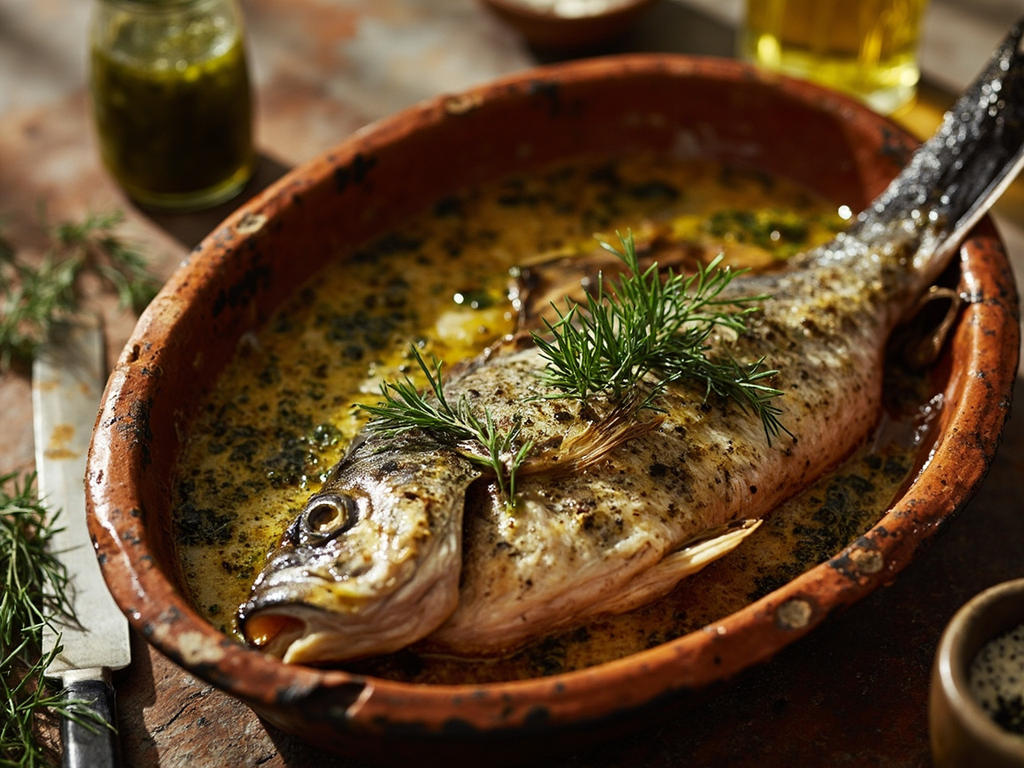
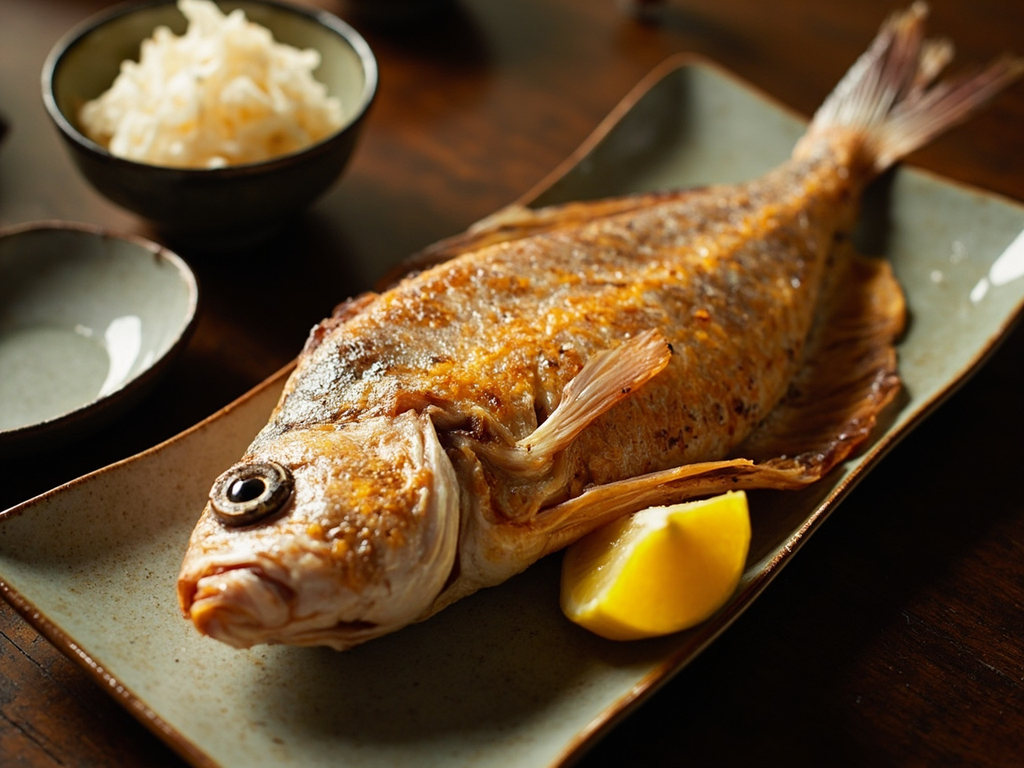
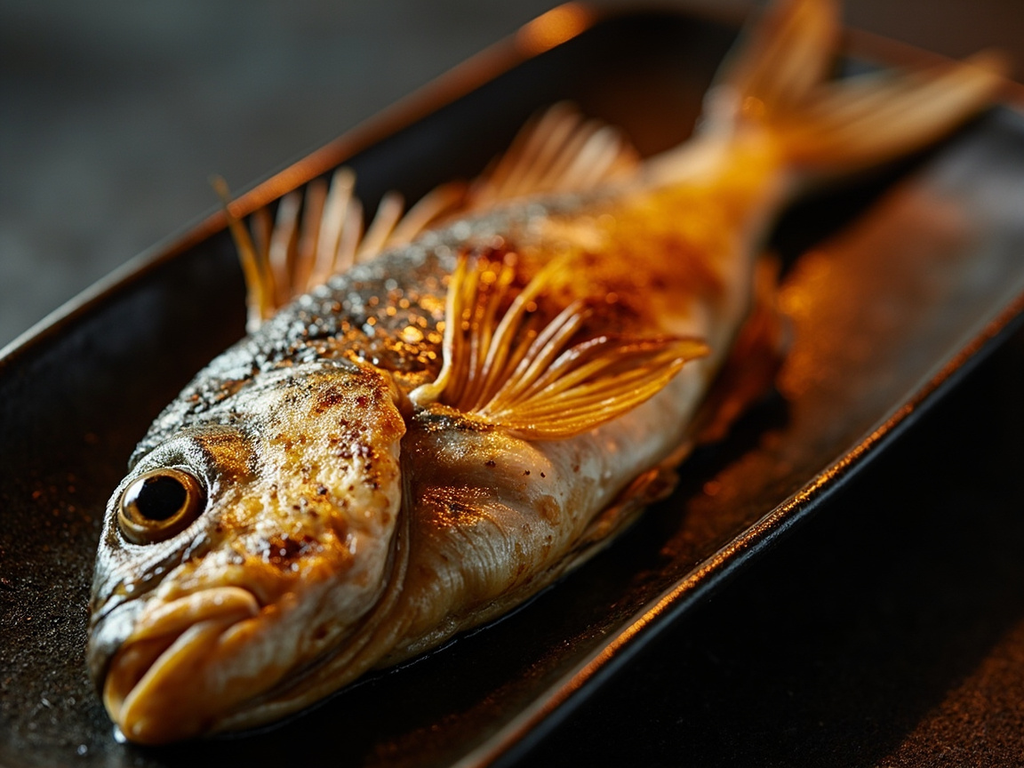
flipTai no shioyaki — sea salt-grilled sea bream
Tai no shioyaki — sea salt-grilled sea bream
Why this dish? Sea bream (tai) has always been the auspicious fish of Japan, served at celebrations of victory and birth. According to tradition, Jingū returned victorious from the Korean peninsula and then gave birth at Kashii: a sea bream banquet celebrates both triumph and the child promised to the gods.
A whole fish rubbed with sea salt and grilled over embers, skin golden and crispy, flesh pearly and tender. The salt alone reveals the deep umami of the sea. It is the dish for great occasions, shared after the kami have received their portion.
The tai, you see, is the fish of fortunate days—the one we prepare when victory returns with the tide. Upon my return from the seas of Silla, they grilled it over the coals at Kashii, for a child of the gods was about to be born and that had to be honored. Rub it with salt drawn from seawater, plenty, without fear, until it crackles under your finger. Skewer it on a branch and turn it over red coals, never in the flame. The skin sings when it is ready: only then do we sit, and eat what the sea has given back.
- •Fresh whole sea bream (tai) — one (centerpiece)
- •Sea salt (moshio, seaweed salt) — generously (seasoning and crust)
Tai no shioyaki — sea salt-grilled sea bream
A whole fish rubbed with sea salt and grilled over embers, skin golden and crispy, flesh pearly and tender. The salt alone reveals the deep umami of the sea. It is the dish for great occasions, shared after the kami have received their portion.
Why this dish? Sea bream (tai) has always been the auspicious fish of Japan, served at celebrations of victory and birth. According to tradition, Jingū returned victorious from the Korean peninsula and then gave birth at Kashii: a sea bream banquet celebrates both triumph and the child promised to the gods.
The tai, you see, is the fish of fortunate days—the one we prepare when victory returns with the tide. Upon my return from the seas of Silla, they grilled it over the coals at Kashii, for a child of the gods was about to be born and that had to be honored. Rub it with salt drawn from seawater, plenty, without fear, until it crackles under your finger. Skewer it on a branch and turn it over red coals, never in the flame. The skin sings when it is ready: only then do we sit, and eat what the sea has given back.
Ingredients (period version)
- Fresh whole sea bream (tai) — one (centerpiece)
- Sea salt (moshio, seaweed salt) — generously (seasoning and crust)
Ingredients
- Whole sea bream, gutted and scaled — 1 (400–600 g) (centerpiece)
- Coarse sea salt — 2 tbsp (crust and seasoning)
- Fine salt for skin — 1 tsp (finishing)
Method
- Dry the sea bream, lightly score the sides.
- Rub generously with salt all over and inside the gills; sprinkle a little more on the fins to protect them.
- Grill on a barbecue or under a broiler, 6 to 8 minutes each side, until the skin is golden and crispy.
- Serve whole, with the head turned to the left according to Japanese custom.
How it was made : Salt was not mined but obtained by evaporating seawater on seaweed (moshio technique), then boiling the brine. Grilling the whole fish skewered on a spit over embers was the simplest and noblest festive cooking method.
The contemporary twist : A few fins lacquered with salt forming a raised fan (kesho-jio): the ceremonial touch of today's top Japanese restaurants.
Empress Jingu · Charactorium